PhotonPay Upgrades Embedded Wallet API: Building an "Invisible Yet Indispensable" Stablecoin Payment Infrastructure Foundation

链捕手Published on 2026-05-27Last updated on 2026-05-27

Abstract

PhotonPay announces a major upgrade to its Embedded Wallet API, enabling traditional businesses to integrate stablecoin payments rapidly without managing private keys or complex compliance burdens. This "hands-off" infrastructure aims to make blockchain settlement invisible to both enterprises and end-users, offering a structural alternative to costly and slow traditional cross-border payments, which average 6.36% in fees. Key features include rapid developer integration, built-in regulatory compliance (AML/CFT, KYC), high-security key management, and seamless interoperability between fiat and stablecoins. The company argues that in an era of increasing regulatory clarity (e.g., MiCA) and mature institutional infrastructure (Visa, Stripe), "compliance-first" design is a competitive moat. PhotonPay's solution targets platform businesses like B2B marketplaces and SaaS providers, helping them tap into the growing $28 trillion (adjusted) stablecoin transaction volume driven by global demand for efficient settlements.

While media headlines remain fixated on the crypto market's bull and bear cycles, a more profound transformation has been brewing beneath the surface: stablecoins are quietly becoming the default settlement layer for cross-border trade.

According to Chainalysis data, adjusted stablecoin transaction volume in 2025 (after excluding bot activity and wash trading to reflect real economic demand) reached a staggering $28 trillion, with a compound annual growth rate of 133% since 2023.

However, the vast majority of platform-based businesses—from B2B e-commerce platforms and SaaS providers to global cross-border e-commerce hubs—remain shut out from this immense liquidity. This isn't due to a lack of awareness, but because the barriers to entry are dauntingly high: complex asset custody, opaque compliance obligations, and the potential legal risks of touching digital assets without the proper licenses.

PhotonPay is breaking this deadlock. Today, PhotonPay announced a major upgrade to its Embedded Wallet API, enabling non-crypto-native traditional businesses to start integration within minutes and launch officially in as fast as 5 days—all without the heavy burden of managing private keys or navigating regulatory compliance.
Tackling the "Structural Cost" Pain Points of Traditional Payments

The traditional global payments model essentially levies a "structural tax" on global commerce. According to the World Bank's "Remittance Prices Worldwide" database, the current global average cost for international remittances is as high as 6.36%—more than double the United Nations' Sustainable Development Goal target for 2030 (to reduce costs to below 3%). Meanwhile, bank-to-bank wire transfer fees average 13.40%, and in some parts of Sub-Saharan Africa, even exceed 30%.

For the 50 million SMEs reliant on international trade, this payment friction is not merely an "inconvenience"; it is a silent killer of business growth.

"The issue isn't a lack of awareness—CFOs are acutely aware of the value," said Chao, PhotonPay's Product Lead. "The real gap lies in 'safe implementation.' Our API bridges this gap by providing 'natively compliant' infrastructure, allowing businesses to focus on their core operations without having to become experts in the underlying technology."

In contrast, stablecoins offer an extremely attractive structural alternative: 24/7 near-instant settlement, extremely low fees measured in basis points rather than percentage points, and fully programmable liquidity. Stripe noted in its 2025 annual letter that a staggering 60% of its approximately $400 billion in stablecoin payment volume came from B2B transactions. Mastercard's massive $1.8 billion acquisition of BVNK in March 2026 firmly locks onto the immense opportunity in B2B cross-border payments. These signals indicate that this transformation is no longer a conceptual experiment but a structural inevitability.

Traditional wire transfers act like a "structural tax" on global commerce, often taking days to settle with fees as high as 7%. For the 50 million SMEs involved in international trade, such severe payment friction is a killer of business growth.

Invisible Infrastructure: The "Hands-Off" Underlying Architecture

This embedded wallet solution is built around PhotonPay's core "Hands-Off" architecture—a design philosophy whose essence is to make blockchain settlement functionally highly "invisible," with neither the business deploying the technology nor the end-user ever needing to sense the underlying blockchain's existence.

When businesses integrate PhotonPay's API, they are not required to custody digital assets, manage private keys, or expend resources operating their own compliance systems. Instead, they gain access to a fully automated orchestration layer that handles the complete lifecycle of a stablecoin transaction in one place—from KYC verification and wallet provisioning to on-chain settlement and fiat payout—while preserving the most familiar, seamless experience for end-users.

This "asset-light" model holds significant strategic value. The architecture draws a clear compliance boundary, allowing businesses to enjoy the efficiency benefits of stablecoins within PhotonPay's well-established regulated framework, completely bypassing the arduous task of applying for high-threshold digital asset licenses themselves.

Chao added, "We provide this 'invisible infrastructure' precisely to allow businesses to return to their core business. Our goal is to build a bridge between complex blockchain protocols and everyday business operations—making the experience of accessing global stablecoin liquidity as straightforward and smooth as integrating standard credit card payments."

Core Features

  • Efficient Deployment & Smooth Integration: A developer-first API suite ensures seamless transition from sandbox testing to production. With comprehensive documentation, pre-built SDKs, and dedicated integration support, technical teams can validate and deploy products within days, eliminating lengthy development cycles.

  • Compliance as Infrastructure: AML/CFT risk controls, sanctions screening, and real-time transaction monitoring are centrally managed within PhotonPay's regulated compliance layer. This not only helps businesses access compliant financial rails at speed but also significantly saves the time and high cost of building equivalent compliance capabilities in-house from scratch.

  • High-Spec Security Eliminating Single Points of Failure: Completely frees businesses from the operational burden and compliance risk of centralized key management. The architecture disperses key control across multiple parties and independent environments, eliminating the most critical single vulnerability in digital asset operations—no single point of failure and no target for concentrated attacks or internal mismanagement.

  • Seamless Synergy Between Global Fiat & Stablecoins: PhotonPay's infrastructure seamlessly bridges traditional fiat environments and on-chain settlement networks, empowering businesses to offer their users flexible options that leverage the advantages of both. As the global financial system gradually moves away from a "fiat vs. crypto" dichotomy towards an era of multi-rail coexistence, this powerful interoperability becomes a core asset.

Why "Compliance-First" Is a Competitive Moat, Not Just a Feature

In the Web3 space, compliance is often labeled a "cost center"—seen as a "necessary evil" that hinders the pace of innovation. However, PhotonPay's core argument completely overturns this traditional view.

As global regulators—from the Financial Action Task Force (FATF), the Monetary Authority of Singapore (MAS), to the UK's Financial Conduct Authority (FCA)—continue to tighten and refine regulatory frameworks for digital assets, possessing "institution-grade compliance capabilities" is rapidly becoming a core prerequisite for enterprise adoption, not an afterthought.

Lewison, Founder and CEO of PhotonPay, stated: "The businesses that will emerge as leaders in the global commercial tide of the next decade are those with the foresight to integrate the best settlement infrastructure today. And what defines superior settlement infrastructure are systems that have compliance embedded in their DNA from the outset."

PhotonPay's compliance tech stack—comprehensively covering KYC/AML, real-time transaction monitoring, and sanctions screening—ensures every transaction through its embedded wallets meets mainstream international standards, paving a clear, safe path for business partners towards global expansion.

Market Momentum: The Tipping Point Has Arrived

Several powerful structural forces are converging, collectively making the present a decisive moment for enterprise adoption of stablecoins:

  1. The Era of Regulatory Clarity Has Formally Begun: The EU's Markets in Crypto-Assets Regulation (MiCA) is fully in effect, the US is accelerating stablecoin legislation, and jurisdictions like Singapore, Hong Kong, and the UAE have all introduced comprehensive digital asset licensing regimes. Businesses can now, for the first time, deploy stablecoin infrastructure within clear, defined legal boundaries.

  2. Institution-Grade Infrastructure Has Matured: Global financial giants including Visa, Stripe, and PayPal have all announced or launched stablecoin settlement products. This sends a strong signal: stablecoins have evolved from a marginal "conceptual experiment" to a mainstream "commercial standard."

  3. Strong Market Demand from the Ground Up: Freelancers in Southeast Asia, suppliers in Sub-Saharan Africa, and service providers across Latin America are increasingly preferring stablecoin settlements over enduring the traditional correspondent banking system. Business platforms that cannot meet this preference risk losing their core supply-side partners in the future.

PhotonPay's Embedded Wallet API is precisely designed to empower businesses to meet this market desire at scale and with efficiency, starting today.

About PhotonPay

PhotonPay is a stablecoin-powered global financial infrastructure operating system. Designed for modern enterprises and platform-based businesses, PhotonPay empowers companies to easily send, receive, convert, and settle funds between traditional fiat and on-chain stablecoin rails through a single, compliance-first system integration. Its service network currently covers over 200 countries and regions worldwide, and it holds relevant regulatory licenses in multiple key international markets. In the digital asset era, PhotonPay is redefining the future of global payroll and cross-border payments.

Disclaimer

This material is for general informational purposes only and does not constitute any legal, regulatory, tax, accounting, or investment advice, nor does it constitute an offer or solicitation for any product or service. The availability, features, and regulatory treatment of PhotonPay's products and services may vary depending on the user's geographic location, business model, and applicable local laws and regulations.


Related Questions

QWhat is the core problem that PhotonPay's upgraded Embedded Wallet API aims to solve for traditional platform-based enterprises?

APhotonPay's upgraded Embedded Wallet API aims to solve the problem of high entry barriers that prevent most platform-based enterprises (like B2B e-commerce platforms and SaaS providers) from accessing the global liquidity of stablecoins. These barriers include complex asset custody, opaque compliance obligations, and significant legal risks associated with dealing in digital assets without appropriate licenses. The API allows non-crypto-native businesses to integrate stablecoin payments within minutes, go live in as little as 5 days, and do so without the burdens of managing private keys or navigating regulatory compliance.

QAccording to the article, what are the main structural advantages of stablecoin payments over traditional global payment models?

AThe main structural advantages of stablecoin payments over traditional global payment models are: 1) Near-instant, 24/7 settlement, 2) Extremely low fees measured in basis points rather than percentage points, and 3) Fully programmable liquidity. This is in stark contrast to traditional models like bank wires, which are described as a 'structural tax' on global commerce, often taking days to settle and costing an average of 13.40% (and over 30% in some regions).

QWhat does PhotonPay's 'Hands-Off' architecture mean for its enterprise clients?

APhotonPay's 'Hands-Off' architecture means the blockchain settlement layer is functionally 'invisible' to both the integrating enterprise and its end-users. For the enterprise client, it means they do not need to custody digital assets, manage private keys, or operate their own compliance systems. They gain access to an automated orchestration layer that handles the entire stablecoin transaction lifecycle (KYC, wallet setup, on-chain settlement, fiat off-ramps) within PhotonPay's regulated framework, allowing the business to focus on its core operations.

QWhy does the article argue that 'compliance-first' is a competitive moat, not just a feature?

AThe article argues that 'compliance-first' is a competitive moat because as global regulators (like FATF, MAS, FCA) tighten frameworks for digital assets, possessing 'institutional-grade compliance capabilities' is rapidly becoming a core prerequisite for enterprise adoption, not an afterthought. PhotonPay's compliance tech stack (covering KYC/AML, real-time transaction monitoring, sanctions screening) ensures all transactions meet high international standards, providing partners a secure path for global expansion. This built-in compliance foundation is a strategic advantage that is difficult for competitors to replicate quickly.

QWhat three structural forces, mentioned in the article, indicate a critical inflection point for enterprise adoption of stablecoins?

AThe three structural forces indicating a critical inflection point are: 1) **Regulatory clarity**: With frameworks like the EU's MiCA in effect and legislation advancing in the US, Singapore, Hong Kong, and the UAE, businesses can now deploy stablecoin infrastructure within clear legal boundaries. 2) **Mature institutional infrastructure**: Major financial players like Visa, Stripe, and PayPal have launched stablecoin products, signaling a shift from experimental concept to commercial standard. 3) **Strong end-market demand pull**: Freelancers in Southeast Asia, suppliers in Sub-Saharan Africa, and service providers in Latin America are increasingly preferring stablecoin settlements, forcing platforms to adapt or risk losing partners.

Related Reads

The Evolution Path of Physical Bitcoin

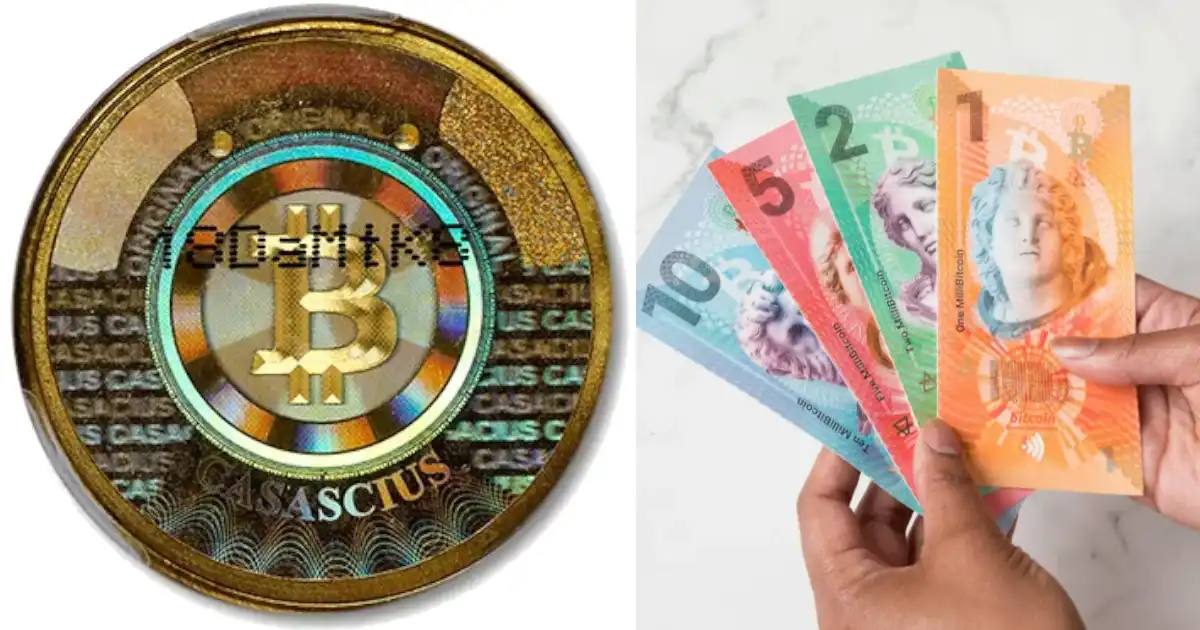
The Evolution of Physical Bitcoin Bitcoin's digital nature is its core strength, enabling self-custody and rapid global transfers. However, its intangibility also hinders mainstream adoption. For over a decade, creators have attempted to materialize Bitcoin while preserving its cash-like properties, yielding notable results. Casascius Coins, launched in 2011, were the first and most iconic physical Bitcoin. Creator Mike Caldwell generated private keys offline, printed them on coins, and sealed them with tamper-evident holograms. This model relied on user trust in the centralized issuer. Production ceased in 2013 due to regulatory pressure from FinCEN. RavenBit Coins emerged in 2014 aiming to decentralize minting by letting users generate and apply their own keys. However, this led to trust issues with numerous untrusted minters and insecure key generation methods. In 2016, Coinkite introduced Opendimes—a breakthrough in bearer asset technology. These USB-shaped devices generate and store keys internally. Funds can be received by checking the public key, but spending requires physically breaking the device to extract the private key. While innovative and open-source, its cost (~$20) and form factor limit its use for small, everyday transactions. Satochip's Satodime, a card-shaped device using similar secure chip technology, followed. It supports NFC interaction and comes in various forms. While potentially cheaper in bulk (~13€), it remains a high-security hardware wallet, not a low-cost cash substitute. A fundamental cost barrier exists. For physical Bitcoin to achieve widespread commercial use, hardware costs must drop below $1 to match the production cost of fiat banknotes. Current secure chips capable of running Bitcoin's cryptographic algorithms (like secp256k1) are too expensive. Chips like NXP's NTAG X DNA (~$3) show cost-reduction potential but lack native Bitcoin curve support. Projects like OfflineCash embed chips in banknote-like paper, but face challenges with durability, the need for custom Bitcoin-enabled chips, and the inherent requirement for users to verify balances online—which conflicts with Bitcoin's trustless ideal. Coinkite's Tapsigner, a ~$20 card with a proprietary Bitcoin NFC chip, is seen as a more practical step forward. It functions as a reloadable hardware wallet for contactless payments, solving the "change" problem and focusing on real-world retail integration, a direction also pursued by companies like Cash App and Square. In summary, the journey to physical Bitcoin has progressed from trusted centralized mints (Casascius) to user-generated keys (RavenBit) and finally to self-contained secure hardware (Opendimes, Satodime, Tapsigner). The core challenge remains developing a sufficiently low-cost, durable, and truly trustless physical bearer asset that can function like cash in daily transactions. Current solutions are either too expensive or introduce new trust assumptions, keeping the ideal of ubiquitous physical Bitcoin just out of reach for now.

marsbit50m ago

The Evolution Path of Physical Bitcoin

marsbit50m ago

Samsung Relies on Technology Cycles, SK Hynix on HBM, How Did Micron Win a Trillion-Dollar Market Cap?

Micron Technology, the third-largest memory chip maker alongside Samsung and SK Hynix, recently saw its market cap surpass $1 trillion. Founded in 1978 in Boise, Idaho, Micron survived brutal industry cycles while American peers and Japan's memory sector faltered. Its survival is attributed to a dual strategy: leveraging political and legal avenues for critical breathing room, coupled with relentless manufacturing cost control. Historically, Micron sought U.S. government intervention three times. In 1985, it filed an anti-dumping complaint against Japanese firms, leading to the U.S.-Japan Semiconductor Agreement. Ironically, this created an opening for Samsung, which later became its toughest competitor. In 2002, Micron turned "whistleblower" in a DRAM price-fixing investigation, escaping penalties while rivals were fined. In 2017, it sued China's Fujian Jinhua, contributing to its placement on a U.S. entity list, stifling a nascent competitor. However, a major strategic misstep occurred in 2013 with the acquisition of bankrupt Japanese firm Elpida. Integrating Elpida's mobile-DRAM-focused technology diverted resources, causing Micron to miss the critical early decade of development for High Bandwidth Memory (HBM)—the high-performance memory essential for AI chips like NVIDIA GPUs. By the time AI demand exploded in 2022, SK Hynix, which launched the first HBM in 2013, held about 85% of the HBM3 market, leaving Micron with roughly 3%. Micron now faces a triple squeeze. In the high-end HBM market, it lags significantly behind SK Hynix and Samsung. In the mid-to-low end DRAM market, it faces aggressive price competition from China's CXMT. Furthermore, a 2023 Chinese cybersecurity ban on its products slashed its revenue from China, a once-core market, from over 10% to just 7.1% by FY2025, causing it to exit China's data center server business. Beneath its political maneuvering lies Micron's core strength: exceptional manufacturing efficiency and cost control. Decades of engineering have yielded DRAM chips with a smaller cell area than rivals, meaning more chips per wafer and lower unit costs. This efficiency, not subsidies, has allowed it to withstand price wars. While political leverage bought time, Micron is now paying a "time debt" in the HBM race. It is racing to ramp up HBM3E production and develop HBM4, but catching up to competitors who started a decade earlier is a monumental challenge. Its future hinges on whether its expertise in cost control and political strategy can compensate for the lost time in a technology race where early-mover advantage is decisive.

链捕手1h ago

Samsung Relies on Technology Cycles, SK Hynix on HBM, How Did Micron Win a Trillion-Dollar Market Cap?

链捕手1h ago

New AMD Paper Overturns Conventional Wisdom: FP4 Training Instability's Cause Is Not Insufficient Randomness

AMD's new research challenges the conventional understanding of FP4 training instability. While reducing precision from FP8 to FP4 promises doubled computational throughput and is supported by new hardware like NVIDIA Blackwell and AMD MI350 series, training large language models natively with FP4 has been notoriously unstable, often attributed to insufficient stochasticity. The paper "Pretraining large language models with MXFP4 on Native FP4 Hardware" demonstrates successful end-to-end FP4 pre-training of Llama 3.1-8B on AMD MI355X GPUs using the MXFP4 format, achieving a 9-10% overall speedup over FP8. Crucially, it identifies the root cause of instability: not randomness, but the accumulation of *structural micro-scaling errors* along the sensitive weight gradient (Wgrad) path. Through controlled experiments, researchers found that quantizing the Wgrad operation to FP4 caused significant convergence degradation. Counterintuitively, common stochasticity-based mitigation techniques like stochastic rounding and randomized Hadamard transforms worsened performance. In contrast, applying a *deterministic* Hadamard transform successfully stabilized training by ensuring consistent error patterns, reducing the extra token cost from 26-27% to just 8-9%. This work has significant implications: 1) It provides a clear diagnostic for low-precision training instability, steering focus towards structural errors. 2) It pushes FP4 from a primarily inference-focused format into the realm of viable training. 3) It leverages the open OCP Microscaling (MX) standard, promoting cross-vendor compatibility. The research marks a critical step towards more economical large model training by further pushing the boundaries of low-precision computation.

marsbit1h ago

New AMD Paper Overturns Conventional Wisdom: FP4 Training Instability's Cause Is Not Insufficient Randomness

marsbit1h ago

Will ONDO's 'Tokenization Narrative' Change After Its CEO's Unexpected Passing?

Ondo Finance founder and CEO Nathan Allman has passed away unexpectedly. Allman, a Brown University graduate with a background in private credit and Goldman Sachs' digital asset team, was a key architect of Ondo's pivot from DeFi structured yield products to becoming a leading Real-World Asset (RWA) protocol. He drove the strategy to tokenize traditional financial assets like US Treasuries (OUSG), yield-generating dollar assets (USDY), and US stocks/ETFs (Ondo Global Markets) for on-chain accessibility. The company announced that President Ian De Bode, a former McKinsey partner with a strong institutional strategy and operations background, will succeed Allman as CEO. While Allman's sudden departure presents a near-term challenge, testing market confidence and Ondo's continuity, the project is seen as more than a founder-driven narrative. It has an established product suite and a management team with deep traditional finance experience. The long-term impact hinges on the new leadership's ability to execute. De Bode's expertise in compliance, distribution, and institutional partnerships aligns with RWA's next phase of scaling infrastructure. The core question is whether Ondo can maintain its product momentum and institutional relationships. Ondo's native ONDO token represents governance and RWA narrative value, not direct revenue from the underlying assets. Its future as a "top tokenization play" will depend on the team's continued delivery of product growth, asset scale, and real-world demand, moving beyond the initial emotional shock.

marsbit2h ago

Will ONDO's 'Tokenization Narrative' Change After Its CEO's Unexpected Passing?

marsbit2h ago

Trading

Spot
Futures
活动图片