From $5 Billion Market Cap to the Brink of Delisting: Canan, the 'Blockchain Stock', Can No Longer Sell Its 'Shovels'?

marsbitPublished on 2026-01-28Last updated on 2026-01-28

Abstract

JiaNan Technology, once hailed as the "first blockchain stock," faces potential delisting from Nasdaq after receiving a notice on January 14, 2026, due to its stock trading below $1 for 30 consecutive days. The company has 180 days to regain compliance, possibly through a reverse stock split. This marks the second such warning in a year. As a major Bitcoin mining machine manufacturer, JiaNan’s market position has weakened amid intense competition, with its share dropping to 10-15% as MicroBT gained traction. From 2021 to 2024, its net profit plummeted from over $300 million to a loss of nearly $250 million, driven by inventory devaluation, high R&D costs, and shrinking demand. Despite an early move into AI chips—launching its first model in 2018—JiaNan struggled to compete with giants like NVIDIA, generating only $900,000 in AI revenue in 2024. The company shut down its non-core AI division in mid-2025 after failing to find a buyer. While JiaNan secured a large mining equipment order and $72 million in funding in late 2025, the broader market shift from cryptocurrency to AI investment continues to challenge its business model. The company’s story reflects wider struggles in the crypto hardware sector, where stagnant growth and fierce competition have led to declining valuations.

On January 16, 2026, Canan Technology announced that it had received a notice from the Nasdaq exchange on January 14. The notice indicated that Canan's stock price had been below $1 for the past 30 consecutive trading days, resulting in a warning. According to Nasdaq listing rules, if Canan cannot bring its stock price back to $1 or above within 180 days (by July 13, 2026), it may face delisting.

Canan Technology stated that, if necessary, the company will implement a reverse stock split to meet the requirement. A reverse stock split is an operation that reduces the total number of outstanding shares by consolidating existing shares, thereby increasing the price per share. The author contacted Canan Technology regarding the warning, but had not received a response by the time of publication.

This is the second delisting warning Canan has received in the past year. The first was in May 2025, after which the stock price rose above $1 due to an increase in Bitcoin's price, temporarily averting the crisis. However, the overall downturn in the cryptocurrency market in recent months has caused Canan's stock price to fall nearly 30% over the past 30 trading days.

On December 13, 2025, Bitcoin treasury company Kindly MD received a warning for the same reason, while BNB treasury company Windtree Therapeutics was delisted in August 2025. Unlike cryptocurrency treasury companies, as one of the leading players in the Bitcoin mining machine manufacturing sector, Canan's current situation is somewhat lamentable.

Canan Technology went public on the Nasdaq in November 2019, becoming the world's first pure blockchain concept company to complete an IPO. After listing, Canan's stock price remained below its IPO price for over a year. However, with the arrival of the cryptocurrency bull market, its stock price began to recover steadily from the end of 2020, reaching a historical high of nearly $40 in March 2021, with a market capitalization exceeding $5 billion.
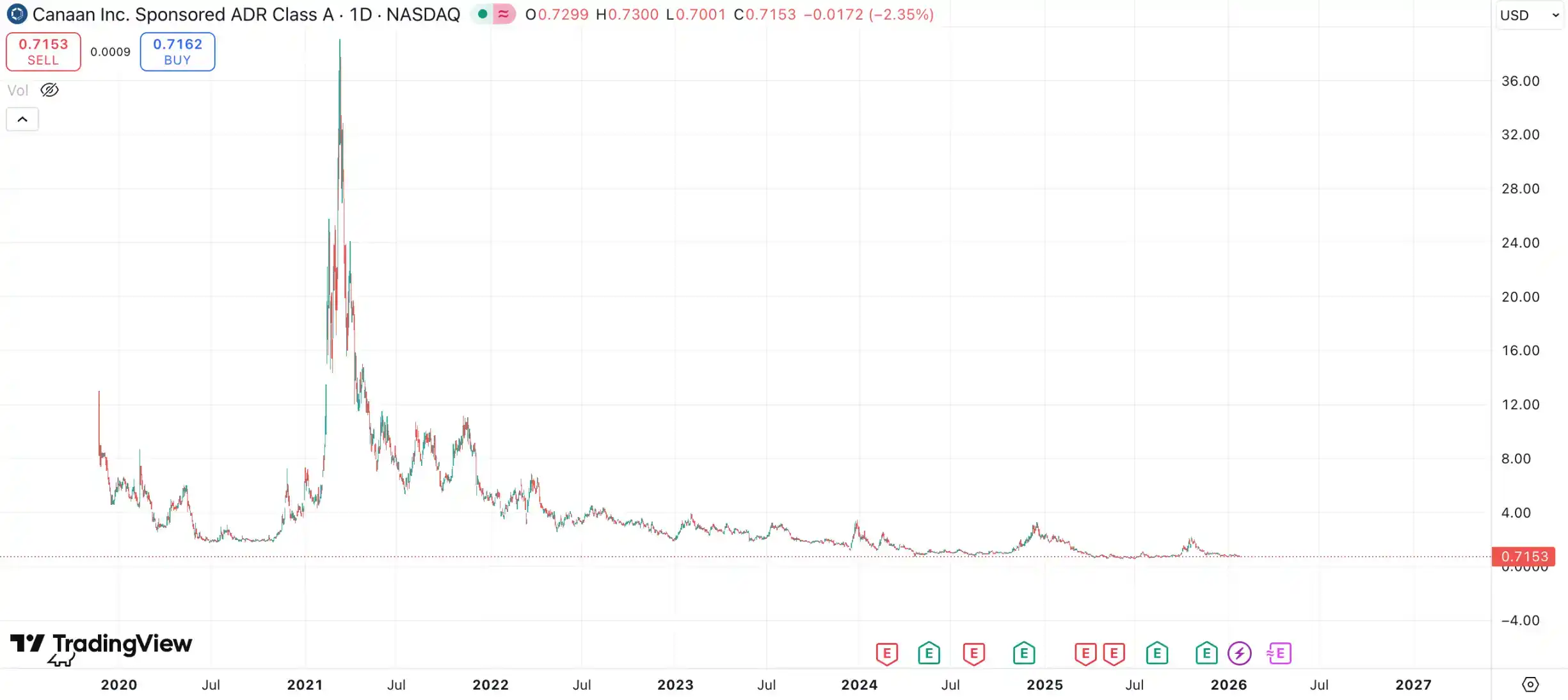
The good times did not last long. With the issuance of China's mining ban and the bear market that persisted throughout 2022, Canan's stock price continued to decline, returning to pre-bull market levels. In the current cycle, although Bitcoin's price reached new highs, even nearly double its 2021 peak at one point, Canan's stock price did not rise but instead fell, dropping below $1 for the first time in April 2024.

Aside from objective market conditions, the industry and Canan itself are also contributing factors to its poor performance in the capital markets.

In the Bitcoin mining machine market, Bitmain is the absolute leader. Canan consistently held the second position until 2021, when MicroBT rapidly rose to prominence with higher power efficiency, pushing Canan to third place. According to a report released by Intel Market Research in December 2025, MicroBT holds a market share of 15% to 20%, while Canan holds 10% to 15%.
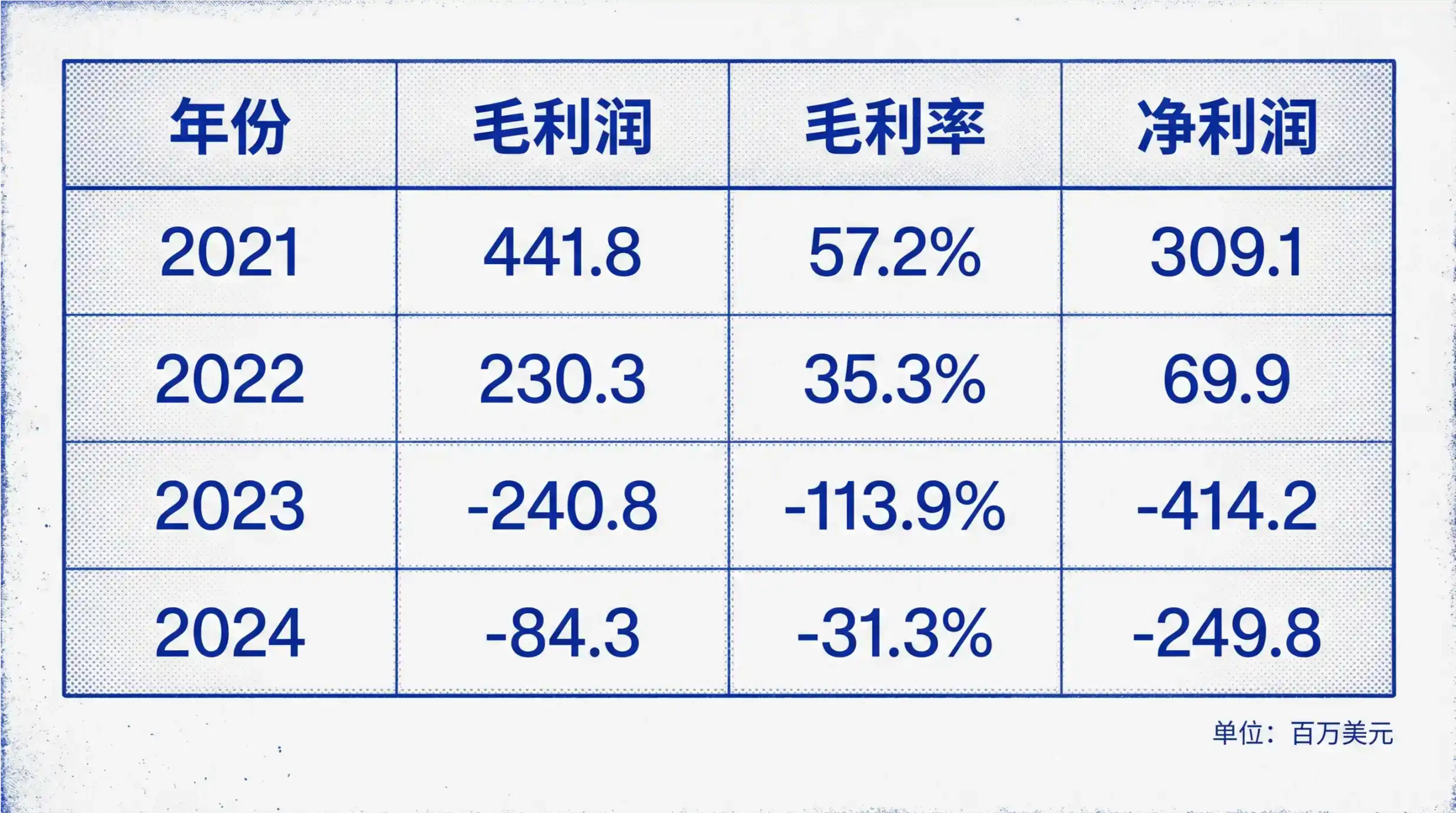
Canan's annual reports from 2021 to 2024 show a continuous decline in net profit over the four years, from earning over $300 million in 2021 to a loss of nearly $250 million in 2024. The reasons include inventory write-downs due to the 2022 bear market, which impacted profits, and fierce competition that kept R&D expenses and operating costs high without effectively increasing market share.

Amid these multiple challenges, a sharp drop in demand became the final straw. According to analysis by MSX researcher Frank, the overhyped expectations of Bitcoin mining narratives and visibly intensifying competition have led many Bitcoin mining companies to transition to AI computing infrastructure. Although "selling shovels" has always been a solid business model, in the current capital market, the Bitcoin story clearly lacks the certainty of AI, and capital has naturally voted with its feet, shifting toward AI-related companies.

In fact, Canan began developing AI chips nearly a decade ago. In 2018, it launched its first commercial edge AI chip based on the RISC-V architecture, the Kendryte K210, designed for edge computing and supporting AI vision and audio processing. Over the next six years, Canan released three more chips, each with significant innovations built on the previous generation.
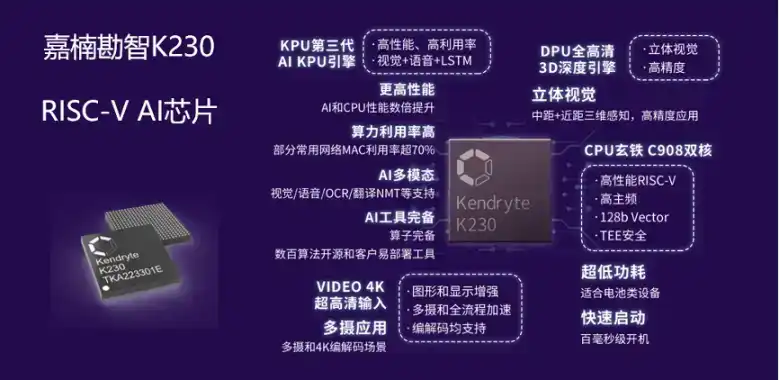
Although Canan's chips had technical highlights and an early start, they lacked the ecosystem support and large-scale demand compared to giants like NVIDIA and Intel. In 2024, its AI-related business revenue was only about $900,000, while operating expenses accounted for 15% of the entire company. In June 2025, Canan announced it would discontinue non-core AI semiconductor operations and shut down its AI chip division. The related announcement stated that the company had been exploring the sale of its AI business since March 2022 but failed to find a buyer, ultimately deciding to abandon it to focus on crypto mining machines and the North American market.

Canan Technology is a microcosm of the实体业务 (physical business) in the Web3 industry. Another listed Bitcoin mining machine manufacturer, Ebang International, has seen its stock price fall from nearly $450 at its 2020 peak to around $3, a drop of over 99%. For hardware manufacturers, there is a mature and fixed valuation model. If the industry they are in shows no clear growth prospects, it is easy to fall into a vicious cycle.

On a positive note, in late 2025, Canan first signed a large order for 4.5 MV in October, followed by completing a $72 million financing round in November. Clearly, there are still those in the market who believe that the former "Pumpkin Zhang" can overcome its difficulties. But to break free from its predicament, Canan Technology may need a new story.


Related Questions

QWhy did Canaan Creative receive a delisting warning from Nasdaq in January 2026?

ACanaan Creative received a delisting warning because its stock price had been below $1 for 30 consecutive trading days, violating Nasdaq's listing rules.

QWhat was Canaan Creative's peak market capitalization, and how does it compare to its current situation?

ACanaan Creative's market capitalization peaked at over $5 billion in March 2021 when its stock price reached nearly $40. Currently, it faces potential delisting due to its stock trading below $1.

QWhat are the main reasons for Canaan Creative's financial decline from 2021 to 2024?

ACanaan's financial decline was due to the 2022 bear market causing inventory write-downs, intense competition leading to high R&D and operational costs without market share growth, and a sharp drop in demand.

QWhy did Canaan Creative decide to shut down its AI chip business in 2025?

ACanaan shut down its non-core AI semiconductor business due to a lack of ecosystem support, insufficient large-scale demand (only $900,000 in AI revenue in 2024), and high operational costs, after failing to find a buyer for the division.

QWhat recent developments indicate that some investors still have faith in Canaan Creative's future?

AIn late 2025, Canaan secured a large order for 4.5 megavolts of mining equipment and completed a $72 million financing round, showing that some investors believe the company can overcome its challenges.

Related Reads

Hermes Agent Guide: Surpassing OpenClaw, Boosting Productivity by 100x

A guide to Hermes Agent, an open-source AI agent framework by Nous Research, positioned as a powerful alternative to OpenClaw. It is described as a self-evolving agent with a built-in learning loop that autonomously creates skills from experience, continuously improves them, and solidifies knowledge into reusable assets. Its core features include a memory system (storing environment info and user preferences in MEMORY.md and USER.md) and a skill system that generates structured documentation for complex tasks. The agent boasts over 40 built-in tools for web search, browser automation, vision, image generation, and text-to-speech. It supports scheduling automated tasks and can run on various infrastructures, from a $5 VPS to GPU clusters. Popular tools within its ecosystem include the Hindsight memory plugin, the Anthropic Cybersecurity Skills pack, and the mission-control dashboard for agent orchestration. Key differentiators from OpenClaw are its architecture philosophy—centered on the agent's own execution loop rather than a central controller—and its autonomous skill generation versus OpenClaw's manually written skills. Installation is a one-line command, and setup is guided. It integrates with messaging platforms like Telegram, Discord, and Slack. It's suited for scenarios requiring a persistent, context-aware assistant that improves over time, automates workflows, and operates across various deployment environments.

marsbit4m ago

Hermes Agent Guide: Surpassing OpenClaw, Boosting Productivity by 100x

marsbit4m ago

Brother Sun "Rights Protection" Stands Up Against the Trump Family, WLFI Is the Real Scythe in the Crypto Circle

The article details the controversy surrounding World Liberty Financial (WLFI), a cryptocurrency project linked to the Trump family. It reports that WLFI allegedly used the DeFi lending protocol Dolomite, whose co-founder is also a WLFI advisor, as a disguised channel to sell tokens by collateralizing around 5 billion WLFI tokens to borrow approximately $75 million in stablecoins. Despite WLFI's claims that the loans were for ecosystem development and posed no liquidation risk, critics argue it was a way for insiders to cash out, shifting risk to retail investors. The piece highlights WLFI's significant price decline—over 66% since its September 2025 launch—and suggests the Trump family and insiders are the main source of selling pressure, as they control nearly 74% of the token supply. It also revisits WLFI’s prior move to blacklist 272 addresses, including those of investor Justin Sun, under the pretext of preventing large-scale sell-offs, which now appears to be an effort to reduce competition for their own sales. Sun publicly accused WLFI of exploiting users, freezing assets, and treating the crypto community as a "personal ATM." WLFI countered by threatening legal action. The author notes that while Sun’s criticism may gain sympathy, a legal battle in the U.S. against the well-connected Trump family would be risky for him. Finally, the article concludes that WLFI exemplifies how powerful elites can exploit crypto’s regulatory gray areas for profit, and urges the community to reject such projects driven more by political privilege than genuine decentralized finance ideals.

Odaily星球日报58m ago

Brother Sun "Rights Protection" Stands Up Against the Trump Family, WLFI Is the Real Scythe in the Crypto Circle

Odaily星球日报58m ago

Tsinghua's Prediction 2 Years Ago Is Becoming Global Consensus: Meta and Two Other Major AI Institutions Have Reached the Same Conclusion

Summary: In a remarkable validation of Chinese AI research, Meta and METR have independently reached conclusions that align perfectly with the "Density Law" proposed by a Tsinghua University and FaceWall Intelligent team two years ago. Published in Nature Machine Intelligence in late 2025, the law states that the computational power required to achieve a specific level of AI performance halves every 3.5 months. This convergence was starkly evident in April 2026. METR reported that AI capabilities are doubling every 88.6 days, while Meta's new model, Muse Spark, demonstrated it could match the performance of a model from the previous year using less than one-tenth of the training compute. When plotted, the growth curves from all three sources—using different metrics (parameters, compute, task length)—show an almost identical exponential slope. The findings have profound implications: AI inference costs are collapsing faster than anticipated, powerful edge-computing AI is becoming rapidly feasible, and the industry's strategy of simply scaling model size is becoming economically inefficient. The Chinese team, which has been building its "MiniCPM" model series based on this law since 2024, is seen as having a significant two-year lead in practical engineering experience, marking a rare instance where Chinese researchers pioneered a fundamental predictive trend in AI.

marsbit1h ago

Tsinghua's Prediction 2 Years Ago Is Becoming Global Consensus: Meta and Two Other Major AI Institutions Have Reached the Same Conclusion

marsbit1h ago

Trading

Spot
Futures
活动图片