40% altcoins near cycle lows, but here’s why THESE 22 tokens are NOT among them!

ambcryptoPublished on 2026-03-31Last updated on 2026-03-31

Abstract

The crypto market has declined over the past six months, with total valuation down 45% from its peak. According to a CryptoQuant report, nearly 40% of altcoins are trading near or at all-time lows, reflecting deeper stress compared to the previous cycle. Broader macro pressures, including inflation and geopolitical tensions, have contributed to the downturn. Additionally, capital dilution has intensified due to the expansion of cryptocurrencies, fragmenting liquidity. Despite the weakness, select altcoins have shown resilience. The 90-day Altcoin Season Index remained relatively firm, with 22 altcoins in profit during this period. Top performers include Hyperliquid (HYPE), MemeCore (M), Canton Network (CC), and Bittensor (TAO), with gains of 47%, 66%, 14%, and 44%, respectively. Categories like bridge tokens, AI-related assets, utilities, social tokens, and exchange tokens were among the least affected. The accumulation/distribution indicator suggests buying activity is underway, but this may be short-term relief rather than a confirmed reversal. A breakout above the descending resistance line is needed to confirm building demand and potential broader market recovery.

The crypto market has extended its decline over the past six months, with little evidence of a sustained rebound on the charts. With total market valuation down about 45% from its peak above $4.27 trillion, a growing number of altcoins are now sitting near their historical lows.

This compression has reduced the number of assets positioned to benefit meaningfully from a recovery, concentrating potential upside in a smaller subset of tokens.

Altcoins approach cycle extremes

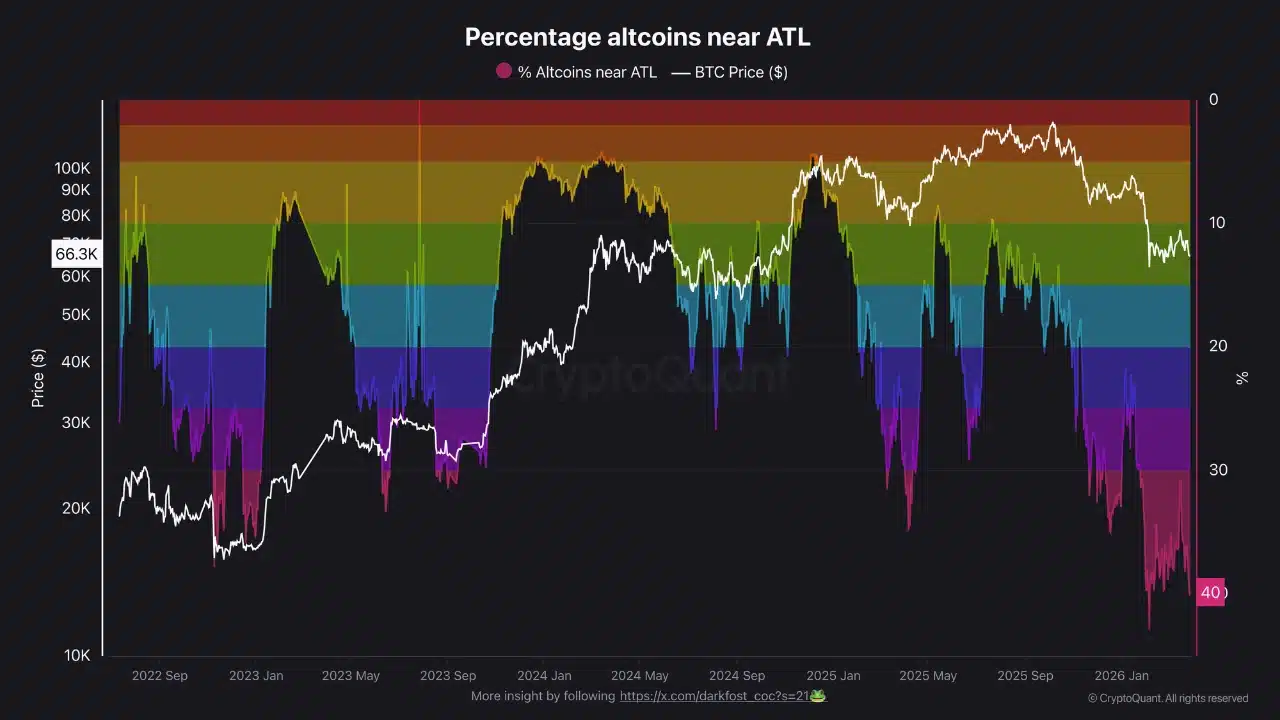
According to a recent CryptoQuant report, nearly 40% of altcoins have either reached their all-time lows or are now trading within close range of those levels.

This downturn is primarily a product of broader macro pressures, including persistent inflation concerns tied to oil markets and escalating geopolitical tensions across West Asia.

Relative to the previous cycle, current conditions are slightly more severe though. During the last downturn, about 38% of altcoins fell to or near all-time lows before establishing a base and reversing higher. The current figure exceeds that level by 2%, highlighting deeper market stress.
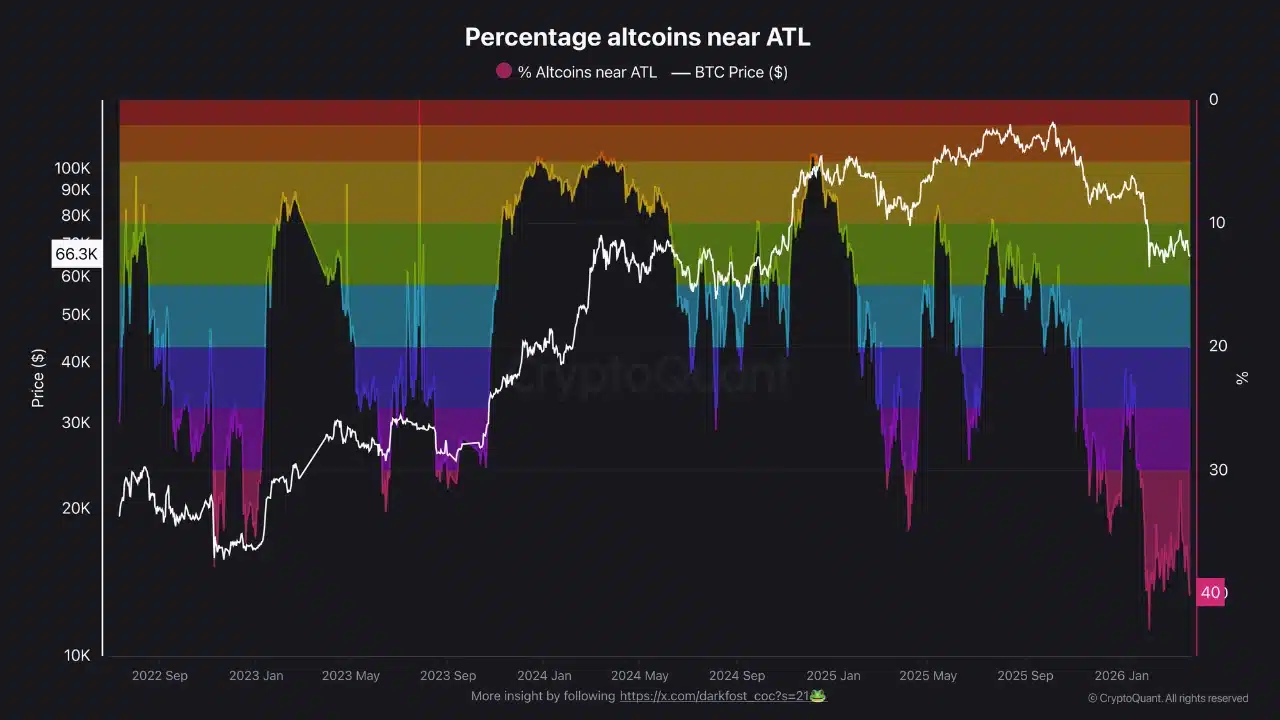
Source: CryptoQuant

At the same time, capital dilution has intensified too. The number of cryptocurrencies has expanded to roughly 47 million, with about 44 million concentrated across Solana, Base, and BNB. This surge in token supply has fragmented liquidity, spreading capital thinly across an increasingly crowded market.

Despite the broader weakness, however, select sectors and tokens have continued to outperform lately – A sign that they may attract disproportionate capital if market conditions stabilize again.

Select altcoins show resilience

Consider this – The 90-day Altcoin Season Index, which tracks performance outside Bitcoin, has held relatively firm despite the broader market’s decline.

Within this period, 22 altcoins have been in profit, positioning them as key assets drawing investor attention.

Leading performers include Hyperliquid [HYPE], MemeCore [M], Canton Network [CC] and Bittensor [TAO], with these alts up 47%, 66%, 14% and 44%, respectively.
Source: Artemis

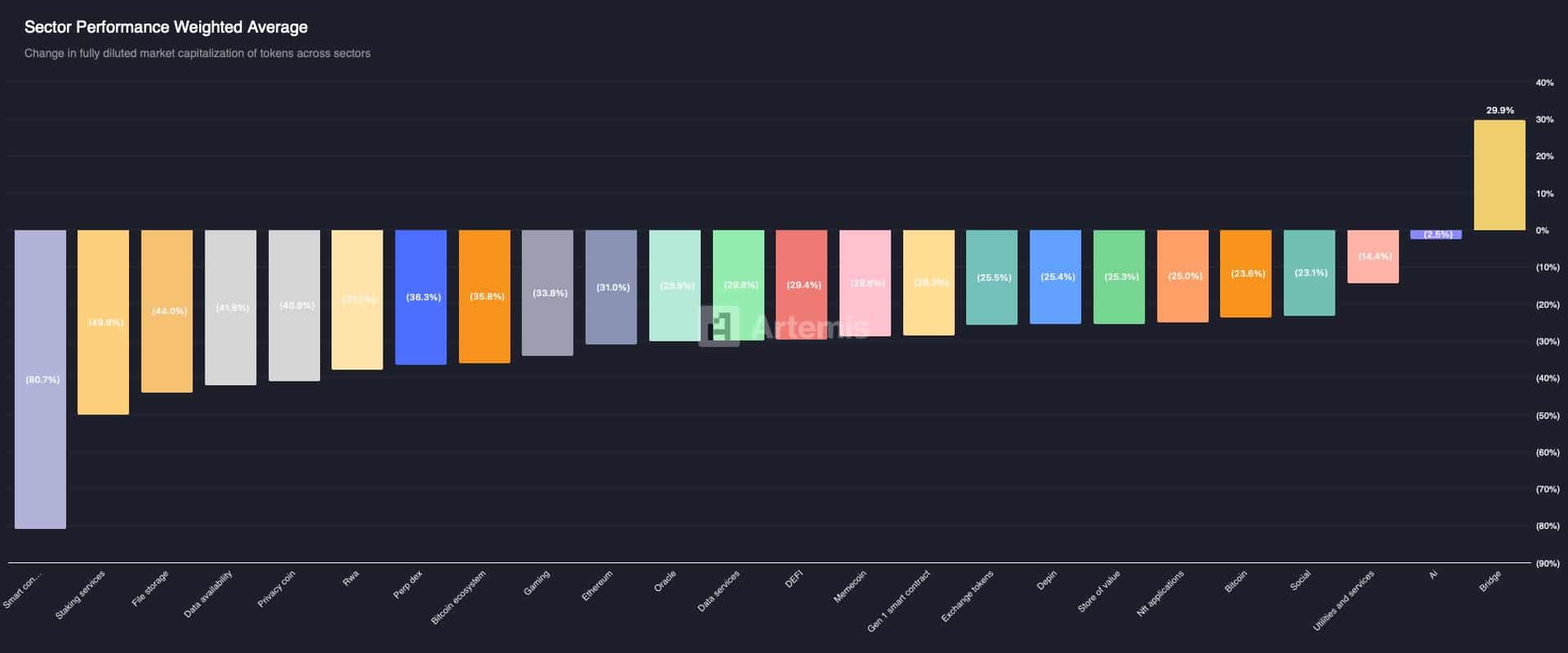
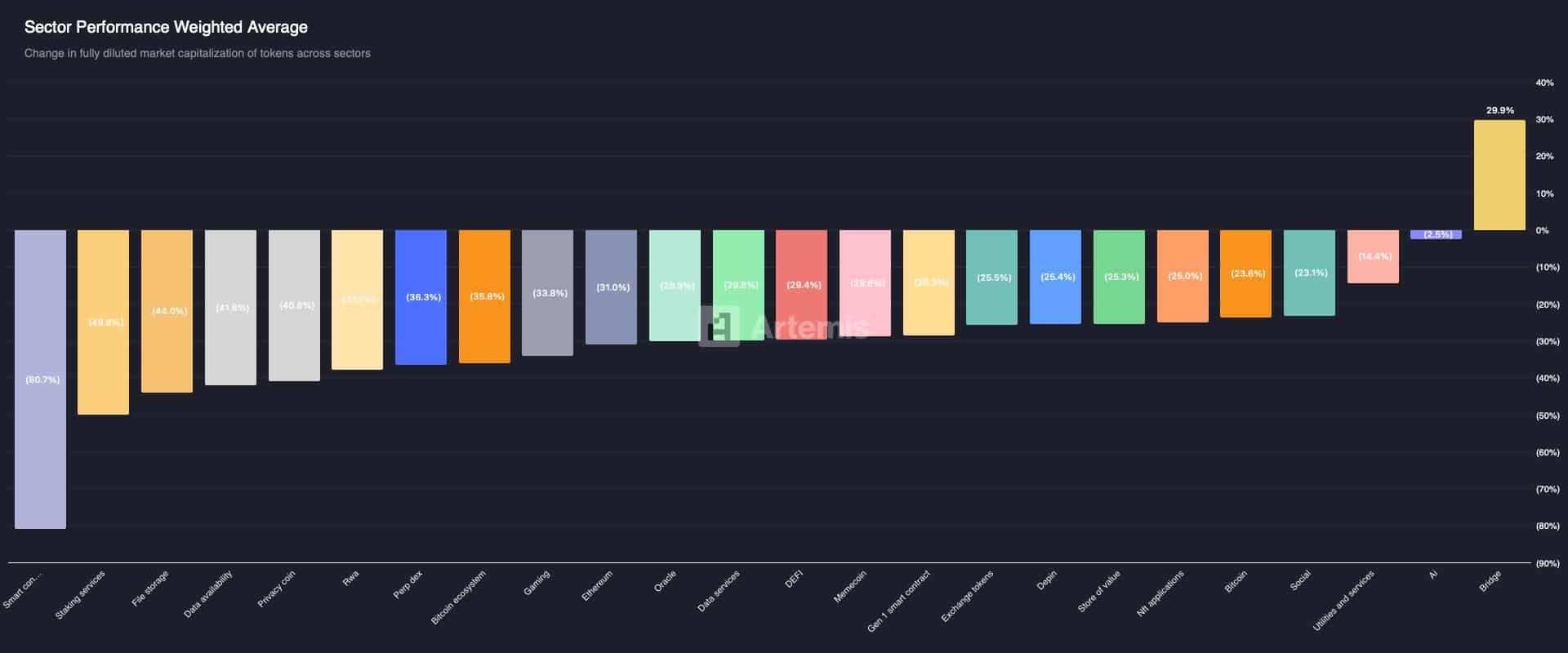
AMBCrypto further grouped these assets by three-month performance to identify segments likely to attract capital.

Artemis year-to-date data from January through March revealed that bridge tokens, AI-related assets, utilities and services, social tokens, and exchange tokens have been among the least affected categories.

Signs of accumulation, but confirmation remains key!

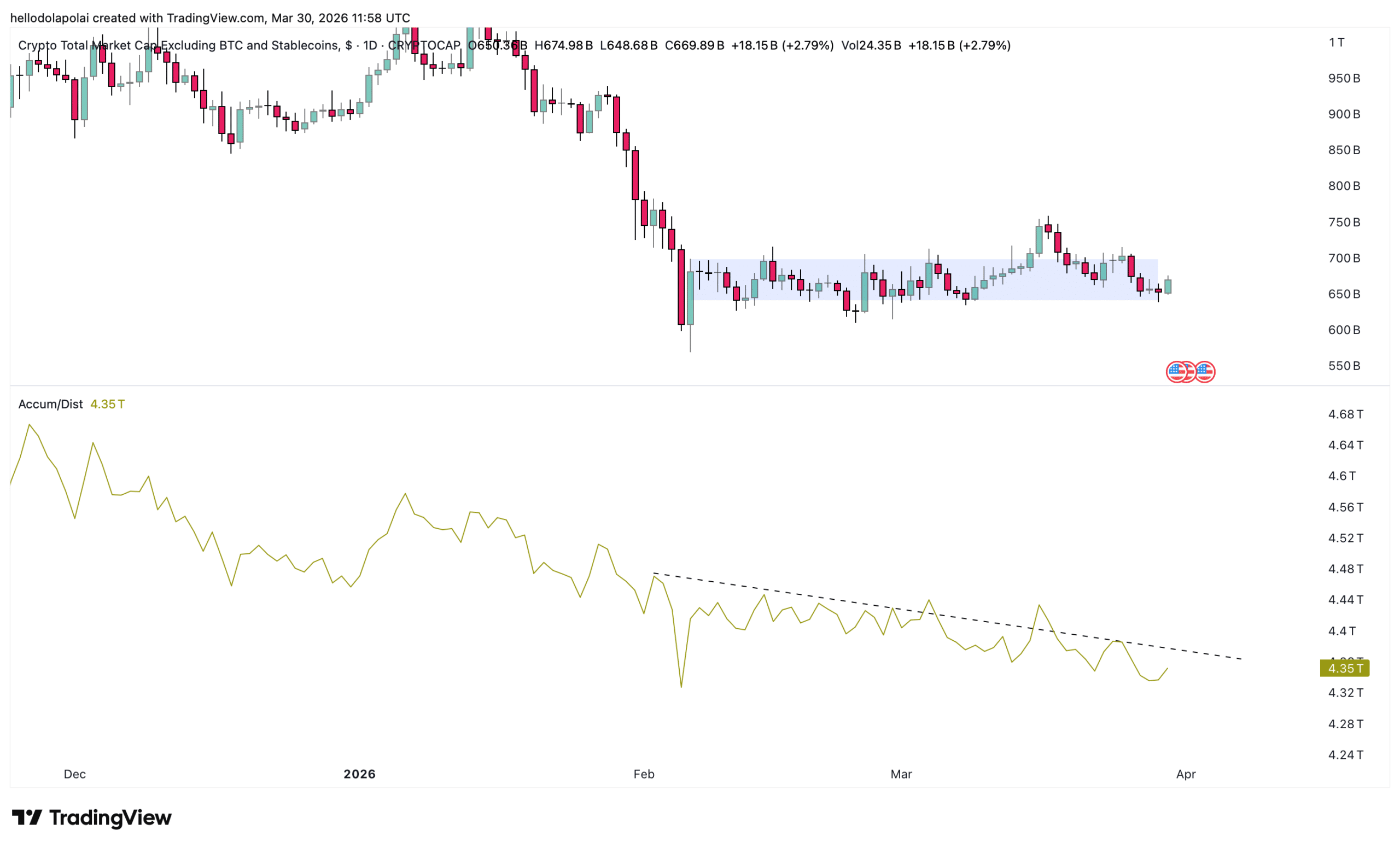
At the time of writing, the accumulation/distribution (A/D) indicator suggested that broad-based buying activity was underway, with trading volume hitting approximately 4.5 billion tokens.

However, this accumulation may reflect a short-term relief phase rather than a confirmed reversal. Especially since the price action remains under a descending resistance line.
Source: TradingView

A breakout above this level, followed by sustained upward movement, would confirm building demand. Such a shift could drive broader market recovery and amplify momentum in the market’s best performers this quarter.


Final Summary

  • Roughly 40% of altcoins are trading near their all-time lows, with many already deep in losses.
  • Despite the broader downturn, 22 altcoins have sustained bullish momentum over the past 90 days.

Related Questions

QAccording to the CryptoQuant report, what percentage of altcoins are trading near their all-time lows?

ANearly 40% of altcoins have either reached their all-time lows or are trading within close range of those levels.

QWhich four altcoins are mentioned as leading performers with significant gains in the last 90 days?

AHyperliquid [HYPE], MemeCore [M], Canton Network [CC], and Bittensor [TAO] are the leading performers, up 47%, 66%, 14%, and 44% respectively.

QWhat are the five token categories that have been least affected by the market downturn according to Artemis data?

ABridge tokens, AI-related assets, utilities and services, social tokens, and exchange tokens have been among the least affected categories.

QWhat does the Accumulation/Distribution (A/D) indicator suggest is happening in the market at the time of writing?

AThe A/D indicator suggests that broad-based buying activity is underway, with trading volume hitting approximately 4.5 billion tokens.

QWhat key condition is needed to confirm a building demand and potential broader market recovery?

AA breakout above the descending resistance line, followed by sustained upward movement, would confirm building demand and could drive a broader market recovery.

Related Reads

Why Has Bitcoin Risen Against the Trend Amid Turmoil?

Title: Why Bitcoin Defies Market Turmoil and Rises Against the Odds? Amidst the recent Iran conflict, Bitcoin demonstrated unexpected strength, rising 12% while traditional risk assets like the S&P 500 fell 1% and gold dropped 10%. This challenges the conventional view of Bitcoin is a risk-on asset. Matt Hougan, Bitwise CIO, argues that Bitcoin’s surge is not due to ignorance of geopolitical tensions or long-term money printing expectations, but is directly driven by the conflict itself. Hougan proposes a dual-investment thesis for Bitcoin: it acts both as a "digital gold" competing in the $38 trillion store-of-value market, and as a speculative bet on becoming a genuine global currency. While the first narrative has dominated the past five years, the second—once a distant possibility—is gaining relevance as global financial systems become increasingly weaponized. The 2022 SWIFT sanctions against Russia marked a turning point, prompting nations to explore alternative financial networks. Iran’s recent move to demand Bitcoin payments for shipping tolls in the Strait of Hormuz exemplifies this shift. Such developments increase the probability of Bitcoin being used as a neutral, apolitical settlement medium and amplify global monetary system volatility. This dual role suggests Bitcoin’s potential market extends beyond gold’s $38 trillion valuation. Its pricing is now influenced not only by liquidity or tech stock trends but also by growing uncertainties in the international financial architecture. As geopolitical friction elevates Bitcoin’s monetary attributes, its upside potential may be significantly revalued.

marsbit2h ago

Why Has Bitcoin Risen Against the Trend Amid Turmoil?

marsbit2h ago

Trading

Spot
Futures
活动图片