Author: Tide Research

On Tuesday, Wall Street witnessed a thriller of "kill first, rescue later."
The morning session progressed calmly, with the Nasdaq once gaining nearly 0.7%, and chip stocks continuing their rebound from Monday. In the afternoon, Trump posted on Truth Social that Iran had shot down a U.S. Apache helicopter over the Strait of Hormuz. Both pilots were safely rescued, but the U.S. "must respond to this attack."
The Nasdaq instantly plunged, falling as much as -3.5% at its intraday low.
Over the following two hours, the market gradually climbed back as Trump provided follow-up statements like "negotiations are still ongoing" and "a deal could be reached within two or three days," eventually paring losses. The Nasdaq closed down 0.97% at 25,678.82 points, and the Nasdaq 100 fell 1.12%. The S&P 500 dropped 0.26% to 7,386.65 points. The Dow Jones, supported by its non-tech components, bucked the trend to close up 0.17% (+86 points) at 50,872.11 points.
From -3.5% to -0.97%, the Nasdaq recovered over 70% of its intraday decline in the two hours before the close. This strength of recovery sends two signals: first, bears are hesitant to aggressively increase positions on the eve of CPI; second, the market still holds a firm belief that the "Iran issue will eventually be resolved," it's just a matter of time.
Helicopter Incident: The First Time U.S. Military Assets Were Hit
This is the first time since the U.S.-Iran conflict erupted at the end of February that the U.S. side has lost an Apache helicopter. Although there were no casualties, "hitting U.S. military assets" itself crosses a psychological line. Trump used the phrase "must respond," some of his toughest rhetoric on the Iran issue.
CNN reported that a U.S. military unmanned vessel rescued the two pilots. Iranian Foreign Minister Araghchi later responded on X: "Foreign military forces approaching our territory always face the risk of their own human error, accidents, or being caught in crossfire." The subtext is clear: no admission of actively shooting it down, but no denial either.
Vice President Vance stated in a CBS interview that a deal is "very close," but "there's still some work to do." After attending the NBA Finals (Spurs vs. Knicks), Trump told reporters that a final deal might be reached "within two or three days," and the Strait of Hormuz would reopen "immediately" after the agreement is signed. He also emphasized that the U.S. blockade of Iranian ports would not be lifted before a deal is reached.
The reason the market could digest this bombshell intraday is that from March to June, investors have been repeatedly taught a lesson over 100 days regarding the Middle East situation: every escalation is followed by a de-escalation; behind every missile launch, there's a tweet saying "negotiations are still ongoing." This is a form of "war fatigue"—not fatigue with the war itself, but fatigue with the market being repeatedly held hostage by it.
Sector Divergence: Tech Takes Another Hit, Dow Holds Steady
Among the S&P's 11 sectors, only Technology (-2%) and Energy closed in the red. The other 9 sectors all closed higher. The Dow's non-tech components held the line.
This has been a persistent pattern over the past week: the Dow is stable, the Nasdaq is crumbling. From June 4th (Thursday) to June 9th (Tuesday), the Nasdaq has accumulated a loss of over 5%, while the Dow has fallen less than 1.5%. The trend of funds flowing continuously from AI chips to defensive sectors like healthcare, finance, and consumer staples shows no signs of slowing down.
Nvidia slipped 0.22%, Micron fell 1.41%. Following last Friday's trillion-dollar chip massacre, chip stocks have neither seen a panic-driven secondary sell-off nor a convincing V-shaped rebound; they are simply consolidating at low levels. Institutions are waiting for one thing: tomorrow's CPI.
Crude Oil: Helicopter Shot Down, Yet Oil Prices Fell
The most counter-intuitive market move on Tuesday happened in the oil market.
Logically, the downing of a U.S. military helicopter should have caused oil prices to surge. However, WTI crude plummeted 3.93% to $87.73/barrel, and Brent fell 1.3% to $93.02/barrel. The reason was three simultaneous bearish factors: Trump and Vance's "deal is at hand" remarks suppressed the war premium; OPEC+ approved a further production increase of 188,000 barrels per day for July; and after last week's strong non-farm payrolls report, the market began to worry that Fed rate hikes would curb demand.
WTI falling below $90 is a psychological threshold. The last time it was at this level was after the initial ceasefire in mid-April. If CPI data shows inflation cooling due to the drop in oil prices, it would provide the Fed with the perfect excuse to pause rate hikes.
Gold continued to be under pressure, hovering around $4,300, a two-month low. A strong dollar and rate hike expectations both suppressed safe-haven buying for the precious metal. Silver rose slightly by 0.81% to $68.90, finding some support from industrial demand.
Bitcoin fell to around $62,500, down 27% year-to-date for 2026, having halved from its all-time high. Spot BTC ETFs have seen net outflows for four consecutive weeks, with a cumulative withdrawal of $5.4 billion over the past four weeks. Strategy (formerly MicroStrategy) plunged 24.29% last week, its worst weekly performance since the FTX crash in November 2022, showing that even the staunchest bulls in the crypto space are bleeding.
Looking Ahead: CPI Day, June's Most Important 8:30 AM
Tomorrow (Wednesday) at 8:30 AM ET, the May CPI data will be released.
The weight of this data point goes beyond being just a monthly economic indicator. It is the key evidence the market will use to answer all the following questions:
Has last week's overheated jobs number of 172K translated into price pressures? How deeply has the Middle East war-driven oil price increase penetrated into core inflation? At the Fed's June 16-17 meeting, will they maintain a wait-and-see stance or clearly turn hawkish?
The market is currently pricing in a 70% probability of a rate hike in December. If CPI exceeds expectations to the upside, this probability could surge towards 90%, putting the Nasdaq under renewed selling pressure. If CPI surprisingly cools, especially core CPI, it would become the strongest catalyst for chip stocks to bottom out, potentially triggering a fierce technical rebound from short covering.
Oracle's earnings are also due after Wednesday's close. As a key player in AI cloud infrastructure, it holds over $500 billion in remaining performance obligations (RPO), and the market needs to see these contracts translating into real revenue. Thursday brings a triple whammy: PPI, the ECB interest rate decision, and the OPEC monthly report.
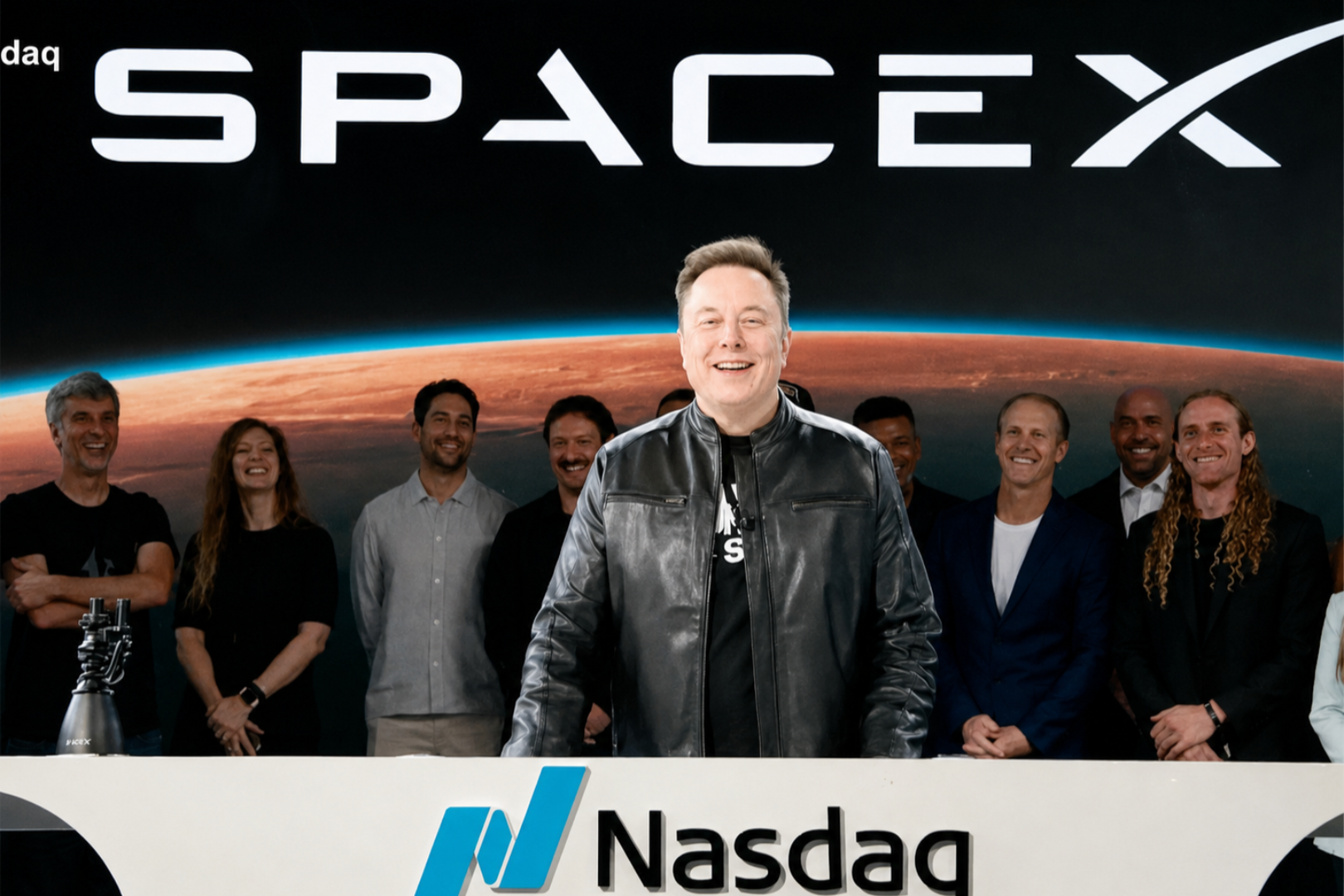
Larger IPO events are also approaching. SpaceX is expected to price on June 11th and list on the Nasdaq on June 12th (ticker SPCX), with a valuation range of $1.75 trillion to $2 trillion. The FIFA World Cup kicks off in the U.S. on June 11th.
But all of this comes after tomorrow's 8:30 AM.
Over the past six trading sessions, the Nasdaq has fallen 5.2% from its all-time high of 27,094 points to 25,679 points. The VIX has surged from 16 to 19. The chip sector has evaporated over $1 trillion in value. The Middle East ceasefire exists in name only. Bitcoin has halved. This is a market under comprehensive pressure.
Against this backdrop, a CPI reading below 4% would be a shot in the arm; a reading above 4.5% might mean last week's sell-off was just an appetizer.
At least for today, one thing is clear: oil prices falling below $90 indicate the market is pricing in peace. But whether peace actually arrives depends on whether the Iranian deal, claimed to be "reached within two or three days," is yet another empty promise or the real thing this time.
It's been a hundred days. The market is no longer willing to guess. It just wants to see results.