Peeking Through Windows, Precision Hijacking? Two Giants of Prediction Markets Engage in Corporate Espionage

foresightnews_apiPublished on 2026-06-05Last updated on 2026-06-05

Abstract

Polymarket, a prediction market platform, is investigating a suspected corporate espionage case involving its main rival, Kalshi. Polymarket accuses Kalshi of stealing business information and copying product launches through potentially illicit means, compiling a "plagiarism file" documenting over a dozen suspiciously coincidental product releases and marketing campaigns. Key incidents include a February 2026 free-grocery pop-up event, where Kalshi launched an almost identical campaign just nine days before Polymarket's scheduled launch, seemingly to siphon attention. Furthermore, an article leaked Kalshi's plans for a perpetual futures trading product merely an hour before Polymarket's own planned announcement for a similar tool in April 2026. Polymarket executives suspect either an internal mole or physical surveillance, noting that the office of Paradigm—a Kalshi investor—directly faces their Manhattan workspace, leading them to install dark window film. Both Paradigm and Kalshi have dismissed the allegations as baseless and ridiculous. Kalshi claims its product developments are independent and coincidental timing is merely market-driven. The rivalry intensifies as both companies secure significant funding, with Polymarket seeking a $15 billion valuation and Kalshi valued at $22 billion amid growing regulatory scrutiny of the prediction market industry.


By: Marc Vartabedian, New York Post

Compiled by: Luffy, Foresight News


The prediction market platform Polymarket is investigating a suspected case of corporate espionage by a competitor. The platform allows users to place bets on sports events, weather, and geopolitical conflicts. The company alleges its top rival, Kalshi, used improper methods to steal business information and copycat its products.


Led by its 27-year-old CEO Shayne Coplan, the New York-based prediction platform has compiled a "copycat file," documenting over a dozen suspicious incidents: the launch times and product designs of several Kalshi new offerings were strikingly similar to Polymarket's, with coincidences in release timing being alarmingly abnormal.


Matthew Modabber, head of markets at Polymarket, said in a phone interview that the coincidences were simply too many and too abnormal, suggesting a deliberate and aggressive effort to copy their business.
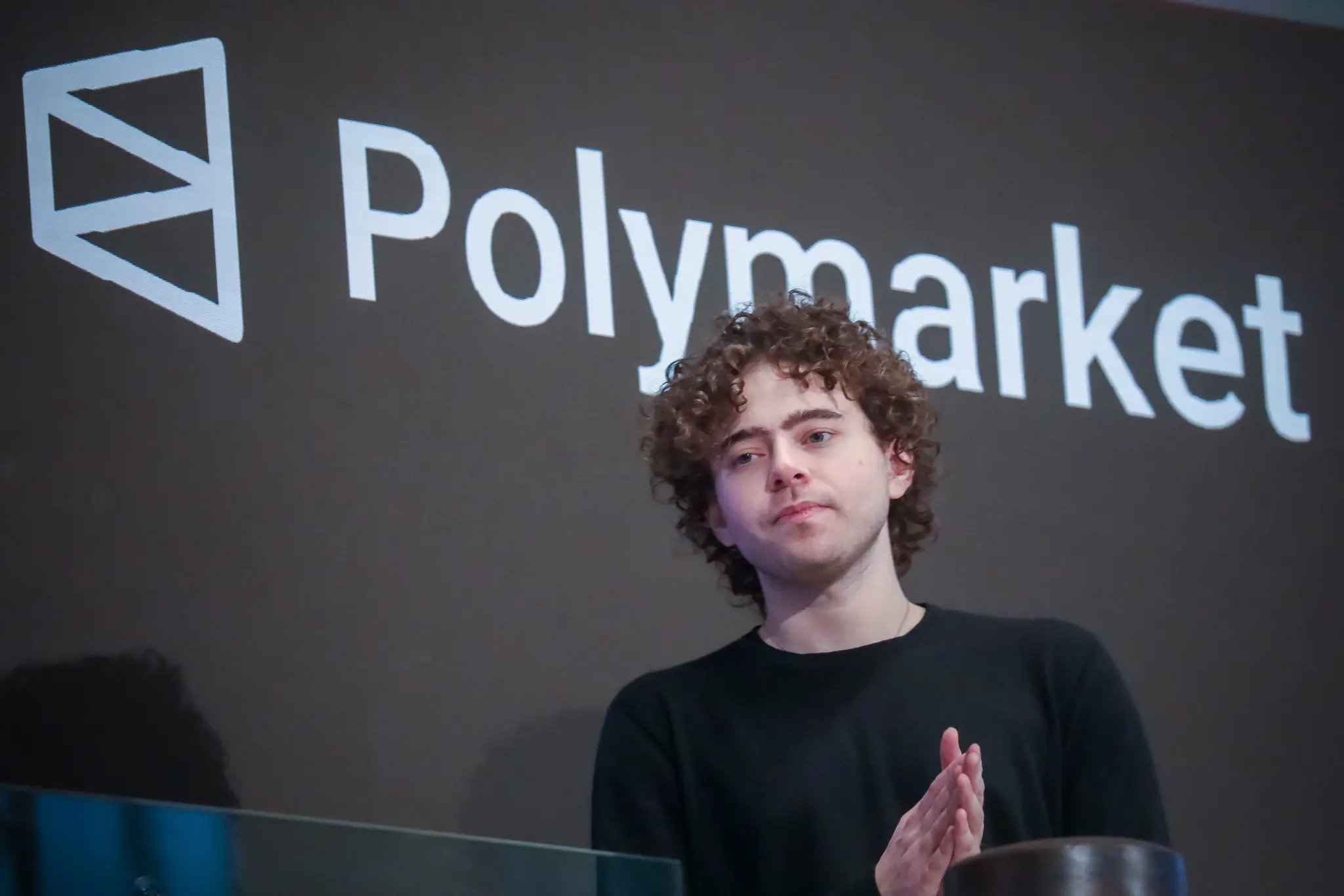

Polymarket CEO Shayne Coplan speaking at the New York Stock Exchange on November 13 last year


The executive did not disclose further details, but people familiar with the matter revealed the company internally suspects two possibilities: one is a mole planted inside Polymarket; the other is a more bizarre suspicion of surveillance.


In recent months, several employees have suggested that Paradigm, an investor in Kalshi, may have been monitoring Polymarket's Lower Manhattan office from across the street. Paradigm's office in New York's SoHo district faces Polymarket's office, with floor-to-ceiling windows offering a direct view into Polymarket's workspace, potentially even observing employees' computer screens. The street-level below houses trendy clothing stores and the upscale restaurant Balthazar.


Due to surveillance concerns, Polymarket specifically applied dark tinted window film to its office windows this spring. An internal employee stated: "The possibility of being spied on was discussed in company meetings. The final conclusion was that, given Kalshi's past conduct, such clandestine surveillance is entirely plausible."


When asked about the espionage allegations, a Paradigm spokesperson responded: "That claim is laughable." Kalshi spokesperson Jack Such responded: "The related accusations are baseless, bordering on delusional. Polymarket is welcome to spend its energy on self-investigation. Kalshi will continue to diligently improve its products."
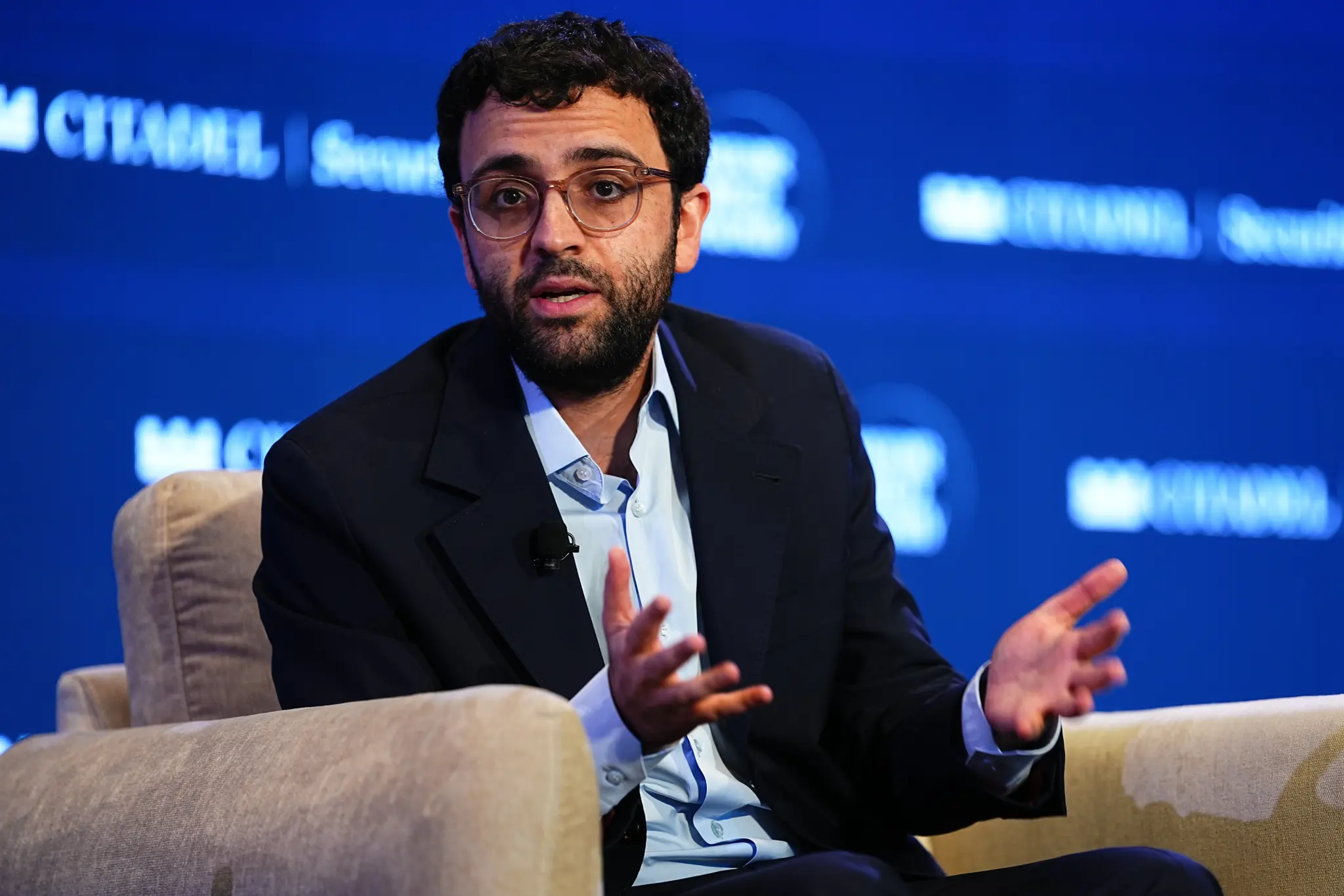

Kalshi co-founder Tarek Mansour speaking at the Semafor World Economy Summit in Washington, D.C., on April 15


Polymarket's investigation focuses on two points: how Kalshi precisely obtained advance knowledge of its new product launches and marketing campaign schedules, and what level of detail they acquired to enable such efficient and comprehensive replication.


Suspicions within the platform have been accumulating over the past year, and an incident at an offline event in February became the catalyst for the current conflict. Polymarket had been preparing a pop-up grocery store event since last November, scheduled to open in Manhattan on February 12: the first 300 in-store customers would receive free groceries. For this, they signed contracts totaling $643,380 for venue, branding, and execution.


Just nine days before Polymarket's opening, Kalshi suddenly launched an identical free grocery marketing campaign at a Westside supermarket in New York, distributing $50 grocery vouchers with the promotional slogan "Free Market," while simultaneously launching prediction markets on topics like monthly egg price increases.


A Polymarket insider claimed the move was clearly intended to divert traffic from their event. Founder Shayne, who grew up in New York, said the event held special significance for the company, and being maliciously hijacked was very disappointing for the team.


Kalshi's head of communications, Elisabeth Diana, denied copying, stating their grocery marketing plan had been in preparation for a long time and they did not obtain the competitor's event timing through an insider. Kalshi spokesperson Such added that both companies' event inspirations came from the New York Mayor's campaign platform promoting grocery subsidies.


Furthermore, since January, Polymarket had been secretly developing a spot perpetual contract trading tool, allowing users to bet on real-time price movements of assets like stocks without holding the underlying asset, originally scheduled for announcement and launch on April 21. However, just one hour before Polymarket's announcement, the tech media outlet *The Information* published an exclusive article citing anonymous sources, revealing Kalshi was about to launch a similar perpetual contract product.


Polymarket's office is located in a fashionable New York neighborhood, directly across the street from Paradigm


According to sources, Polymarket executives were furious about this.


One source said, "It seemed like they knew we would announce that day, which is very suspicious."


Such explained that Kalshi's perpetual product development started in 2024. He believed *The Information* learned about the plan from a social media teaser Kalshi posted on X on April 13. The teaser showed a video of what appeared to be an infinite loop spring toy with the caption "Timeless," which in finance refers to perpetual futures contracts, contracts that never expire.


Polymarket's "copycat file" includes over a dozen sets of screenshots comparing official announcements, social media posts, and product interfaces from both companies. An executive stated these archived cases represent only one-tenth of all similar incidents.


One page of the file records: On June 10, 2025, at 9:01 AM, Polymarket announced on X an hourly crypto price prediction product, garnering nearly 24 million impressions. On the same day at 9:00 AM, the brokerage Webull jointly announced with Kalshi the launch of an identical product. Polymarket's file notes: "Same day?"


But Such countered, stating Kalshi had already launched a similar product before June 10, 2025, and that day was merely its listing on Webull through partnership. He argued it was actually Polymarket that launched later, making it clear who copied whom.


There are also cases of advertising material collisions. On Friday, August 22 last year, Polymarket ran a Meta ad in California for football betting, with the prominent headline "Hey, California"; just one weekend later, Kalshi launched an almost identical targeted ad with the same headline.


Such stated "Hey, California" is generic promotional language, not protected by trademark or copyright. He argued that claiming corporate espionage based solely on an advertising slogan is illogical.


The feud between the two prediction platforms has intensified in 2026. U.S. lawmakers and regulators are tightening oversight of prediction markets, with the industry facing criticism related to insider trading and war gambling. Meanwhile, capital continues to pour heavily into both leading platforms.


According to data from analytics firm PitchBook, Polymarket, founded in 2020, has raised approximately $2 billion to date, with its latest funding round aiming for a valuation of $15 billion. Kalshi, founded in 2018, has raised $2.6 billion, with its latest valuation at $22 billion, double its valuation from December last year.

Related Questions

QWhat are the two main prediction market platforms involved in the alleged corporate espionage case, as described in the article?

AThe two main prediction market platforms are Polymarket and Kalshi.

QWhat specific incident in February did Polymarket cite as a key event leading to heightened suspicions against Kalshi?

APolymarket cited an incident where, just 9 days before their planned Manhattan pop-up grocery event, Kalshi launched a similar free-groceries promotional event in New York, which Polymarket believed was an attempt to divert traffic from their own event.

QWhat two possibilities does Polymarket internally suspect regarding how Kalshi might have obtained its confidential information?

APolymarket internally suspects two possibilities: that there is a mole within Polymarket, or that Kalshi's investor Paradigm has been conducting surveillance from their office across the street.

QHow did Polymarket reportedly respond to the surveillance concerns regarding Paradigm's office location?

AIn response to the surveillance concerns, Polymarket reportedly installed dark, tinted window film on their office windows during the spring.

QAccording to the article, what was Kalshi's explanation for the coincidental timing of their perpetual futures product announcement with Polymarket's?

AKalshi's spokesperson, Such, explained that their perpetual product development started in 2024 and suggested that the media outlet The Information learned of their plans from a social media teaser Kalshi posted on April 13th, not from inside information about Polymarket's schedule.

Related Reads

Coinbase Vice President: The Wars Over Cryptocurrency Regulation Are Over

Coinbase's new Vice President, Ryan VanGrak, declared that regulatory wars in the cryptocurrency sector are over. Since taking office on July 9, 2026, he has shifted the company's approach from litigation and sanctions to focusing on growth and innovation. The industry can now concentrate on development rather than fighting for its right to exist. He highlighted that the Digital Asset Market Clarity Act (CLARITY Act), which aims to establish a clear federal regulatory framework dividing oversight between the SEC and CFTC, has gained significant momentum. This framework is intended to provide proper supervision, investor protection, and maintain U.S. leadership in digital assets. VanGrak's appointment marks a strategic shift from a "wartime" to a "peacetime" advisor, replacing former Chief Legal Officer Paul Grewal, who oversaw major litigation, including a dismissed 2023 SEC lawsuit. With his background at Citadel Securities and the SEC, VanGrak brings deep regulatory and institutional finance expertise as Coinbase expands beyond a simple exchange into a broader financial services provider, offering stocks, futures, prediction markets, and AI tools. For investors, bipartisan support for crypto legislation like the CLARITY Act represents a major shift from the enforcement-focused environment of 2023-2024. Lawmakers are now focused on *how* to regulate crypto, not *if* it should exist. However, risks remain, as the bill's passage is not yet guaranteed.

cryptonews.ru36m ago

Coinbase Vice President: The Wars Over Cryptocurrency Regulation Are Over

cryptonews.ru36m ago

Deep Dive into FWA: An Intriguing Experiment Turning NFTs into "On-Chain Gachapon"

A Deep Dive into FWA: The “On-Chain Gacha” Experiment for NFTs Fake World Assets (FWA), created by TokenWorks, introduces an innovative “NFT gacha machine” fully operating on-chain. Users can deposit eligible NFTs paired with ETH (called Backing) to create a Position, acting as a prize pool. Others can then pay a uniform Acquisition Price for a chance to win a random NFT from the pool. The core mechanism features a reverse probability system: Positions with lower Backing have a higher chance of being selected, serving as common prizes, while high-Backing Positions are rare “jackpots.” The acquisition price is calculated based on the harmonic mean of all Backings, keeping entry costs low. When a Position is won, the purchaser must choose: keep the NFT or accept the Standing Bid (85% of the Backing, claimable in ETH or $FWA tokens), returning the NFT to the original depositor. The protocol involves two main roles. Depositors provide liquidity (NFT + ETH), earning a share of fees from each draw, distributed equally per active Position, plus potential $FWA rewards. Purchasers pay to spin the gacha, receiving $FWA rewards for participation. A special “Crown” reward goes to the Position with the highest Backing. The $FWA token has a fixed supply and is initially obtainable only through protocol participation (depositing or purchasing), with external buying disabled early on to reduce sell pressure. Its value is supported by a built-in buy pressure: when purchasers opt for the $FWA settlement on a Standing Bid, the protocol uses the backing ETH to buy $FWA from the market. Revenue for the protocol comes from a 1% fee on each draw, a 1% settlement fee when an NFT is kept, and the 15% discount from Standing Bid settlements (currently allocated to the protocol). The design cleverly blends Uniswap-style liquidity provision, gacha mechanics, and tokenomics to create a novel, self-regulating marketplace for NFT liquidity and engagement.

marsbit50m ago

Deep Dive into FWA: An Intriguing Experiment Turning NFTs into "On-Chain Gachapon"

marsbit50m ago

10,000 Scientists Get 1 Year of Free Access: OpenAI Brings the Scientific Research Pipeline into ChatGPT

OpenAI has launched the "ChatGPT for Academic Researchers" program, offering free one-year access to its flagship models for 100,000 university researchers globally, with 10,000 spots available this summer. Selected institutions include prestigious centers like ENS Paris and the IAS at Princeton. The initiative provides an integrated research workspace within ChatGPT, bundling tools like ChatGPT, ChatGPT Work, and Codex, along with expanded Deep Research capabilities, higher usage limits, and specialized tools for life sciences. The suite connects to platforms like Zotero and GitHub, aiming to streamline the entire research workflow from literature review and coding to data analysis and manuscript drafting. OpenAI notes that about 1.3 million people already use ChatGPT weekly for advanced science and math. The program targets building long-term user dependency by embedding these tools into daily research habits. However, access comes with limitations: it does not include API credits or model weights, and eligibility is restricted to verified academic researchers from supported countries. This approach contrasts with Anthropic's "AI for Science" program, which offers API credits but not an integrated workspace. Both companies emphasize preventing misuse by withholding model weights, a point of contention for AI researchers seeking transparency. The core strategy remains clear: provide a powerful, integrated environment to foster user reliance ahead of the post-free period.

marsbit55m ago

10,000 Scientists Get 1 Year of Free Access: OpenAI Brings the Scientific Research Pipeline into ChatGPT

marsbit55m ago

What's Going On with Gigadevice? Major Shareholder Cashes Out 44 Billion, Then Announces 20 Billion Buyback

Gigadevice Innovation, a leading Chinese memory chip company, has executed a controversial financial maneuver. The company's controlling shareholder and chairman, Zhu Yiming, sold approximately 44 billion RMB worth of his shares between early May and mid-June 2026, capitalizing on a soaring stock price that peaked at 846.66 RMB on June 29th. Following a subsequent stock crash—plummeting to around 350 RMB in 22 trading days and erasing over 330 billion RMB in market value—Zhu announced a combined "market rescue" plan on July 29th. This plan includes his personal commitment to buy back at least 1 billion RMB in shares and a company proposal to repurchase 1 to 2 billion RMB worth of stock. This sequence of high-selling followed by a low-buying plan has confused and unsettled many of the company's 240,000 retail investors. The stock's dramatic decline was attributed to several factors: the successful IPO of its sister company, Changxin Technologies, which ended Gigadevice's status as a primary investment proxy for the domestic memory sector; a Morgan Stanley report warning of a potential peak in the memory chip cycle; and a severe loss of market confidence triggered by the chairman's massive sell-off. While the sell-off was procedurally compliant, its timing has been criticized. The company's fundamentals appear strong, with preliminary H1 2026 results showing revenue up 177% year-on-year to 11.5 billion RMB and net profit skyrocketing 1099% to 6.9 billion RMB, driven by a boom in memory chips and MCU demand. However, a significant portion (2.05 billion RMB) of this profit came from non-recurring gains like securities investment, and the memory industry is notoriously cyclical. Analysts highlight the company's role in the domestic substitution of niche DRAM and NOR Flash memory, with some maintaining bullish price targets. Yet, the recent events underscore key risks: its fabless model creates dependency on foundries like Changxin, and the chairman's actions have raised serious questions about management's alignment with minority shareholders. The promised buybacks cannot commence until December 13th due to a mandatory six-month cooling-off period following an insider sale, leaving the stock vulnerable in the interim.

marsbit55m ago

What's Going On with Gigadevice? Major Shareholder Cashes Out 44 Billion, Then Announces 20 Billion Buyback

marsbit55m ago

Trading

Spot
活动图片