Stratosphere, Pudgy Penguins and Streamex Host Founders Table VIP Dinner During ETHConf 2026 and NYC Tech Week

TheNewsCryptoPublished on 2026-06-18Last updated on 2026-06-18

Abstract

During ETHConf 2026 and NYC Tech Week, Stratosphere, Pudgy Penguins, and Streamex co-hosted an exclusive Founders Table VIP Dinner in New York City. The June 9th event assembled a select group of founders, C-level executives, investors, and institutional leaders from firms such as Citi, BitGo, Delphi Digital, and Pyth Network for private, agenda-free networking. The dinner aimed to foster natural conversations among key figures across digital assets, tech, AI, and traditional finance. Stratosphere contributed its extensive network, Pudgy Penguins added its strong consumer brand community, and Streamex provided expertise in tokenized commodities and institutional markets. Stratosphere CEO Hassan Shaikh highlighted the importance of such gatherings for discussing market trends, particularly commodity tokenization. The Founders Table series, which runs alongside major industry conferences, is designed to build high-quality, relationship-driven connections that are difficult to achieve on standard conference floors. Stratosphere positions itself as an ecosystem growth partner for leading tech and finance brands.

New York, United States, June 18th, 2026, Chainwire

Stratosphere, Pudgy Penguins and Streamex hosted a private Founders Table VIP Dinner in New York City during ETHConf 2026 and NYC Tech Week, bringing together leaders across digital assets, tech, AI, traditional finance and institutional capital.

The invite-only dinner took place on June 9th and gathered a curated room of founders, operators, funds, C-level executives and institutional leaders for an intimate evening of dinner and conversation.

Guests in attendance included leaders from Citi, BitMine, BitGo, Mirae Asset Securities USA, Experian, Pyth Network, Space and Time, MegaETH, B3, Stable, Antler, Delphi Digital, Fun, Linera, Vanta Trading, Streamex, PolyData, Horizen Labs, World Foundation, Zipcode, OpenLedger, Onyx, Definitive, Notalone Ventures and more.

The Founders Table format is intentionally simple: a selected guest list, a private room and no stage agenda. The goal is to bring the right people together in a setting where conversations can happen naturally.

The dinner was hosted by Stratosphere with Pudgy Penguins and Streamex. Stratosphere brought its network across founders, operators, investors and institutional teams. Pudgy Penguins added one of the strongest consumer brands and communities in digital assets. Streamex brought the institutional and real-world asset side of the conversation, with its focus on tokenized gold and commodity markets.

The Stratosphere team and its CEO, Hassan Shaikh, have continued to build Founders Table into a private dinner series around major industry conferences. After previous editions during Digital Asset Summit and Consensus, the New York dinner continued the same idea: high-quality rooms, selected attendance and conversations that are hard to recreate on a conference floor.


For Stratosphere, the dinner reinforces the company’s position as an ecosystem partner for leading brands across tech, finance and digital assets. Established projects work with Stratosphere to deepen cultural relevance, strengthen market narratives and connect with founders, investors, institutions and operators across the industry.

“I’m optimistic about the next phase of digital assets, especially around the tokenization of commodities,” said Hassan Shaikh, CEO of Stratosphere. “These dinners give us a way to bring funds, institutions, and founders into the same room to talk about where the market is heading.”

The Founders Table series is expected to continue around major global conferences throughout the year, with future editions focused on bringing together founders, capital, institutions and leading brands in private, relationship-driven rooms.

For those interested in attending or getting involved in future Founders Table editions, reach out to the Stratosphere team.

About Stratosphere

Stratosphere is an ecosystem partner and growth consultancy for industry leaders in tech and finance, building the narratives, ecosystem partnerships, and distribution flywheels that create sustainable, repeatable growth.

Website: www.stratosphere.vip

X: @StratosphereVIP

Contact

Yaroslav Provada
max@movimentum.io

Related Questions

QWhat was the purpose of the Founders Table VIP Dinner hosted by Stratosphere, Pudgy Penguins, and Streamex?

AThe purpose was to bring together leaders across digital assets, tech, AI, traditional finance, and institutional capital for an intimate evening of dinner and conversation, facilitating natural discussions in a private setting without a stage agenda.

QWho were some of the notable companies and organizations whose leaders attended the dinner?

AGuests included leaders from Citi, BitMine, BitGo, Mirae Asset Securities USA, Experian, Pyth Network, Space and Time, MegaETH, Delphi Digital, Horizen Labs, and more.

QAccording to Stratosphere CEO Hassan Shaikh, what is one area of digital assets he is optimistic about?

AHassan Shaikh is optimistic about the next phase of digital assets, especially around the tokenization of commodities.

QHow does the Founders Table dinner series benefit the projects that work with Stratosphere?

AIt helps established projects deepen cultural relevance, strengthen market narratives, and connect with founders, investors, institutions, and operators across the tech, finance, and digital assets industry.

QWhere can someone interested in future Founders Table events get more information?

AThey should reach out to the Stratosphere team via their website (www.stratosphere.vip) or their X account (@StratosphereVIP).

Related Reads

NVIDIA CPU Advances, China's RISC-V Responds: Semiconductor Deep Dive - Part Four

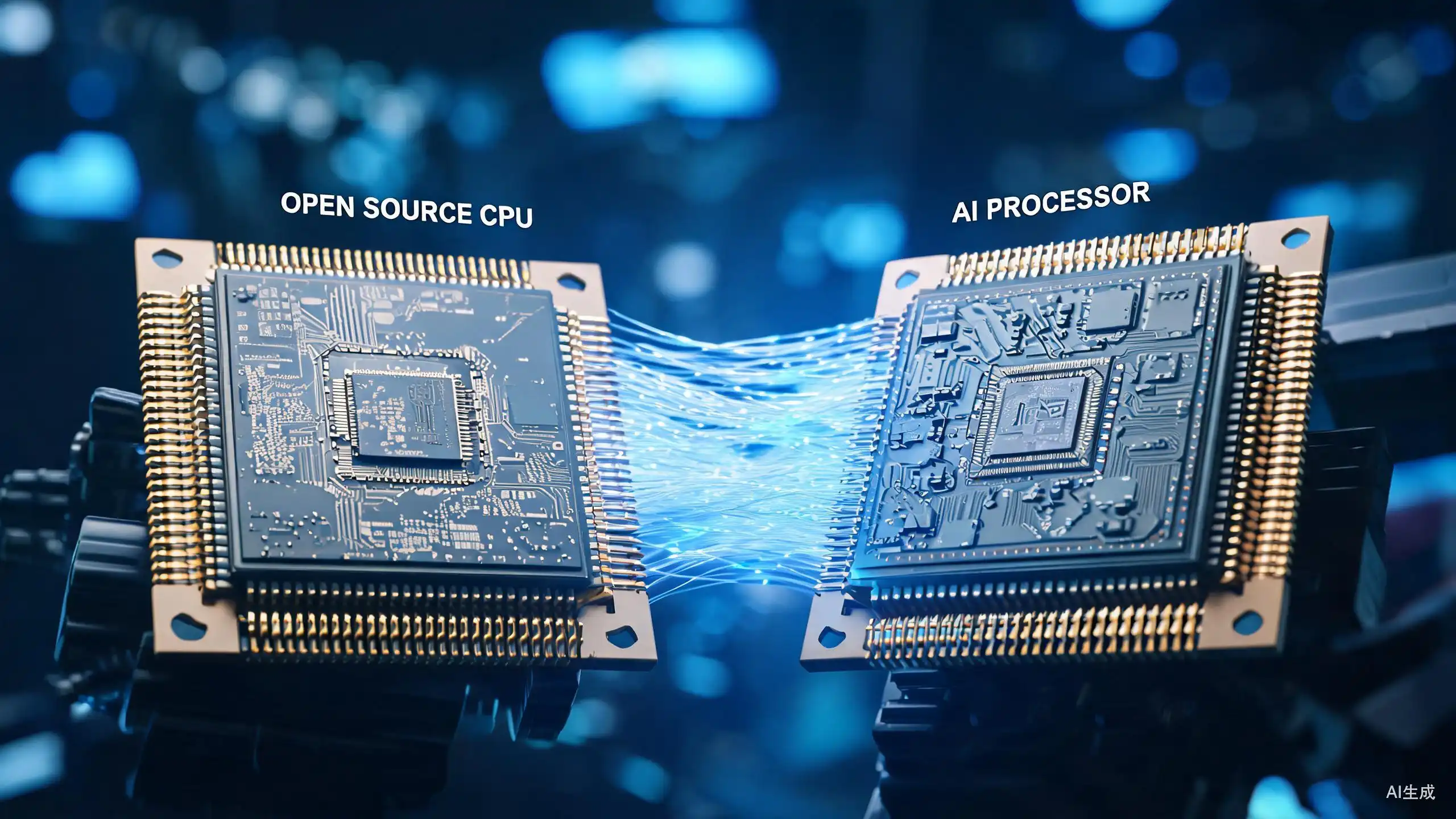
NVIDIA is set to launch its new Vera AI data center CPU in China as early as August, with high pricing. While this move offers a new option, it highlights China's continued dependence on foreign-controlled Arm architecture. In response, the Chinese semiconductor industry is increasingly turning to RISC-V as a strategic alternative for achieving high-performance computing autonomy. The article explores the concept of the "impossible triangle" in CPU development—balancing prosperity, control, and autonomy—and posits that RISC-V's open-source, modular nature offers a unique path to achieving all three. While RISC-V is already dominant in embedded systems, the focus is now shifting to data centers and AI workloads. China has become a global hotspot for RISC-V development, driven by AI-driven compute demand, supply chain concerns from export controls, cost benefits of open-source, and strong policy support. Multiple Chinese companies have reportedly crossed the key performance threshold of 15 SPECint per GHz, a benchmark for entering the high-performance CPU club. Progress extends beyond single-core benchmarks. Companies are developing complete computing subsystems, including commercial-grade coherent network-on-chip (NoC) technology and server processors with up to 40 cores that strictly adhere to the RVA23 standard to ensure software compatibility. Real-world applications are emerging in areas like video transcoding and edge AI. However, significant challenges remain. The RISC-V ecosystem faces fragmentation, immature toolchains and verification processes, and gaps in single-core performance and energy efficiency compared to mature x86 and Arm architectures. The formidable software moat, epitomized by NVIDIA's CUDA, is a long-term hurdle. In conclusion, while RISC-V cannot immediately replace offerings like NVIDIA's Vera, it represents a viable long-term path for China to develop a self-sufficient, high-performance CPU ecosystem. The journey is acknowledged to be long and arduous, requiring sustained effort to overcome technical and ecosystem challenges.

marsbit45m ago

NVIDIA CPU Advances, China's RISC-V Responds: Semiconductor Deep Dive - Part Four

marsbit45m ago

My Coding Betting Dashboard is Profiting, but Polymarket is Truly Not a Good Place for 'Arbitrage'

The author built a custom monitoring dashboard for Polymarket, a prediction market platform, and tested it with $1,600, achieving over 30% returns. However, the core argument is that Polymarket is not a good venue for traditional arbitrage. The dashboard has two main sections: a "Portfolio Dashboard" for tracking active positions with key metrics like total capital, P&L, and a risk-control module using a tier system (T1, T2, T3), and an "Opportunity Watchlist" for monitoring markets. The article details a critical structural trap in binary markets: a bet with a high perceived probability of success still carries a 100% loss risk if wrong. The author's T1/T2/T3 system is designed to manage this by limiting position sizes based on conviction and time horizon, emphasizing that high confidence should not equal high concentration. A key insight is the danger of "pseudo-diversification"—betting on different markets driven by the same underlying variable. The author concludes that Polymarket offers few true low-risk, arbitrage opportunities. It is instead a high-risk environment where wins can create a false sense of mastery, leading to large losses. The platform is better viewed as a training ground for honing judgment through disciplined, framework-driven betting rather than a reliable income source. The tools help transform intuition into structured, rule-based decisions to mitigate the risk of catastrophic errors.

marsbit3h ago

My Coding Betting Dashboard is Profiting, but Polymarket is Truly Not a Good Place for 'Arbitrage'

marsbit3h ago

WeChat AI Card Hands-On Guide: Has the AI Shopping Era Arrived?

**"WeChat AI Card" Practical Test Guide: Has the Era of AI Shopping Arrived?** WeChat has officially launched the "AI Exclusive Card," a feature integrated into its Workbuddy AI assistant. This card is designed to handle payments for AI-initiated purchases. Our hands-on test reveals it's not yet a tool for fully autonomous AI shopping, but rather a controlled payment layer for AI agents. The AI Card functions as an isolated sub-wallet within WeChat Pay. Users must bind the card and transfer funds into it from their main wallet. Crucially, every transaction requires explicit user confirmation via smartphone scan; AI cannot spend autonomously. Currently accessible through the Workbuddy agent, the card targets specific digital consumption scenarios: purchasing paid content (reports, data), calling paid APIs/tools, and subscribing to services. Its design prioritizes security and control by separating funds and mandating approval for each payment. We tested a real-world scenario: ordering bubble tea via Workbuddy using a "Meituan Life Assistant" skill. The process encountered multiple hurdles: high "skill" usage costs (exceeding daily free credits), and most importantly, while a payment was successfully initiated, the AI purchased an incorrect product (a mismatched group-buy coupon instead of the desired drink). This highlights the current limitation: the **AI Card only solves the payment step**. The broader challenge lies in the **AI agent's execution chain**—accurately understanding intent, navigating third-party platforms, selecting the right product, and ensuring proper fulfillment. The payment succeeded, but the purchase failed to meet the user's need. In conclusion, the WeChat AI Exclusive Card is a cautious, early-step experiment in AI commerce. It provides a secure, user-controlled payment method for agent interactions but is not yet capable of reliable, end-to-end complex purchases. For now, it's best used for low-value, low-risk digital services with careful user verification at each step. The vision of AI handling complete shopping tasks remains a work in progress.

marsbit6h ago

WeChat AI Card Hands-On Guide: Has the AI Shopping Era Arrived?

marsbit6h ago

Deconstructing Notion's Growth: From a Note-taking Tool to 100 Million Users—How Notion Built a Triple Growth Flywheel Through Product, Templates, and Community

Notion's growth from a niche note-taking tool to a platform with 100 million users is powered by three interconnected flywheels: Product-Led Growth (PLG), a Template Economy, and Community-Driven Growth. First, Notion's PLG strategy relies on a highly flexible, "plastic" product that users can adapt to countless personal and team workflows. Its freemium model lowers the barrier to entry, while features like page sharing and collaboration drive organic, usage-based viral growth as users naturally invite others. Second, the Template Economy solves the "blank page" problem. Templates, created by both Notion and its community, transform abstract product capabilities into concrete, copyable solutions for specific scenarios (e.g., project management, content calendars). This dramatically lowers activation costs for new users and fuels SEO-driven discovery. Third, a vibrant Community acts as a distributed growth engine. Users and official Ambassadors create tutorials, share use cases, and host local events. This community not only educates users but also fosters a sense of identity around pursuing "better ways of working," strengthening loyalty and enabling global, low-cost expansion. Together, these flywheels create a self-reinforcing ecosystem: a great product attracts users who create templates and community content, which in turn attracts more users and deepens engagement. This system allowed Notion to scale from individuals to teams and enterprises through a bottom-up adoption path. Looking ahead, AI integration promises to accelerate these flywheels further by making templates smarter and the platform a potential AI-native work operating system. Ultimately, Notion's defensible advantage is not just its features, but this deeply entrenched network of user assets, creators, and community trust.

marsbit6h ago

Deconstructing Notion's Growth: From a Note-taking Tool to 100 Million Users—How Notion Built a Triple Growth Flywheel Through Product, Templates, and Community

marsbit6h ago

$10 Billion, Qualcomm to Acquire Chip Legend Jim Keller's Company

Global mobile chip giant Qualcomm is in advanced talks to acquire AI chip startup Tenstorrent in a deal valued between $8-10 billion, according to media reports. This potential acquisition would be one of the largest in the AI chip sector in recent years. Tenstorrent, led by legendary chip architect Jim Keller, has gained prominence for its RISC-V architecture and AI accelerator designs. The move highlights Qualcomm's strategic push to diversify beyond its core smartphone chip business. As the smartphone market matures, Qualcomm is aggressively targeting growth in automotive, data center, and cloud AI. Acquiring Tenstorrent would allow Qualcomm to rapidly enter the high-end AI computing market, bypassing lengthy in-house development cycles. Tenstorrent's cost-effective system architecture, which avoids expensive HBM memory and relies on standard Ethernet for clustering, offers a potential alternative to Nvidia's costly solutions. Furthermore, Tenstorrent's high-performance RISC-V CPU technology and its focus on the automotive and edge computing segments align with Qualcomm's strategic goals, including its "Snapdragon Digital Chassis" platform. Despite the strategic rationale, the high valuation has sparked some investor caution. The successful integration of Tenstorrent's open-source culture and independent team into Qualcomm's organization, along with the commercialization of its technology, remains a key challenge.

marsbit7h ago

$10 Billion, Qualcomm to Acquire Chip Legend Jim Keller's Company

marsbit7h ago

Trading

Spot
Futures
活动图片