Jensen Huang: Vera Rubin Full Mass Production, AI Agent a Key Focus, Challenging Intel to Target the Next-Generation AI PC Gateway

marsbitPublished on 2026-06-01Last updated on 2026-06-01

Abstract

NVIDIA CEO Jensen Huang delivered the keynote speech at GTC Taipei 2026, announcing several major product launches and strategic directions. The company's Vera Rubin architecture is now in full-scale production, with OpenAI, Anthropic, and SpaceX among the first customers. NVIDIA highlighted AI Agent as a key future focus, introducing the Vera CPU designed for AI agents and the Vera BlueField-4 STX for secure, chip-level AI storage processing. A significant move involves challenging Intel in the PC market. NVIDIA, in collaboration with MediaTek, is developing the RTX SPARK PC chip (manufactured by TSMC) for Windows systems, set to launch this fall for laptops and desktops. This signals NVIDIA's push into the next-generation AI PC arena, aiming to provide a vertically integrated core computing platform for the entire Windows ecosystem, similar to Apple's approach. Other announcements include the new Nemotron 3 Ultra AI model and the NVIDIA DSX platform, described as a complete "playbook" for building AI factories, allowing performance simulation and validation before physical deployment. In automotive, the DRIVE Hyperion platform was positioned as a global robotaxi platform, with major Chinese automakers like BYD, Geely, Zeekr, Xiaomi, and Pony.ai already adopting or developing autonomous driving solutions based on it. The Alpamayo 2 super open inference model for robotaxis was also introduced. For robotics, NVIDIA unveiled the Isaac GR00T humanoid robot reference platform...

Author: Wall Street Insights

On June 1st, NVIDIA founder and CEO Jensen Huang delivered the NVIDIA GTC Taipei 2026 keynote speech in Taipei, China.

During this speech, Huang focused on releasing multiple new products and platforms including the Vera Rubin architecture, the Vera CPU for AI Agents, the AI model Nemotron 3 Ultra, and the AI factory platform DSX.

Simultaneously, NVIDIA further signaled its push into the next-generation AI PC market, targeting the entire Windows ecosystem.

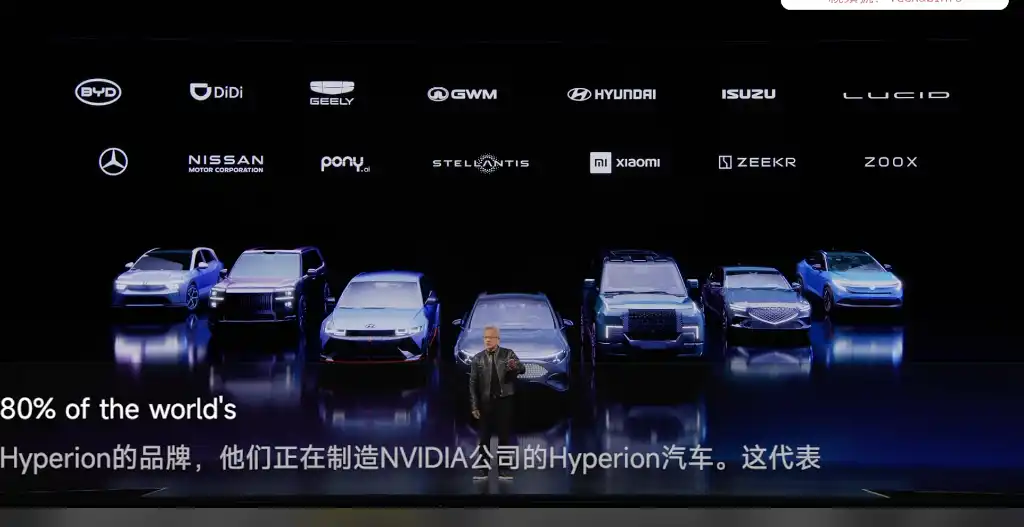
NVIDIA revealed at the event that mainstream Chinese automakers and autonomous driving companies including BYD, Geely, ZEEKR, Xiaomi, and Pony.ai have adopted or are developing autonomous driving based on the NVIDIA Hyperion platform.

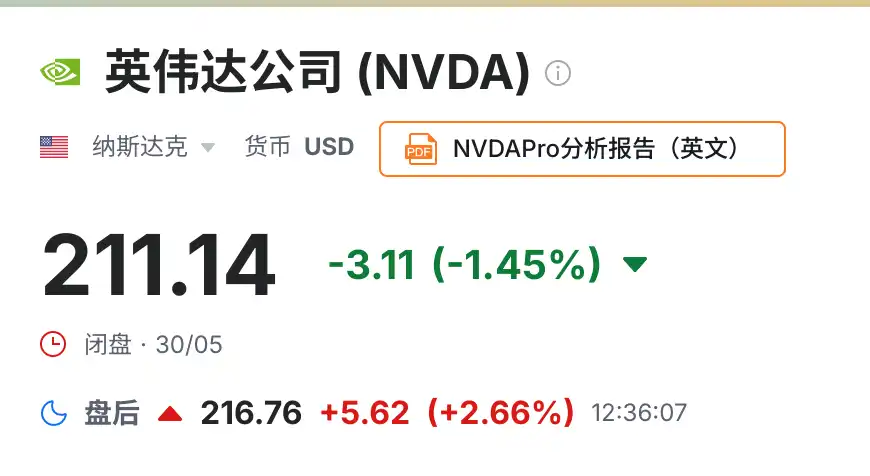
NVIDIA's U.S. stock pre-market price rose 2.7%.
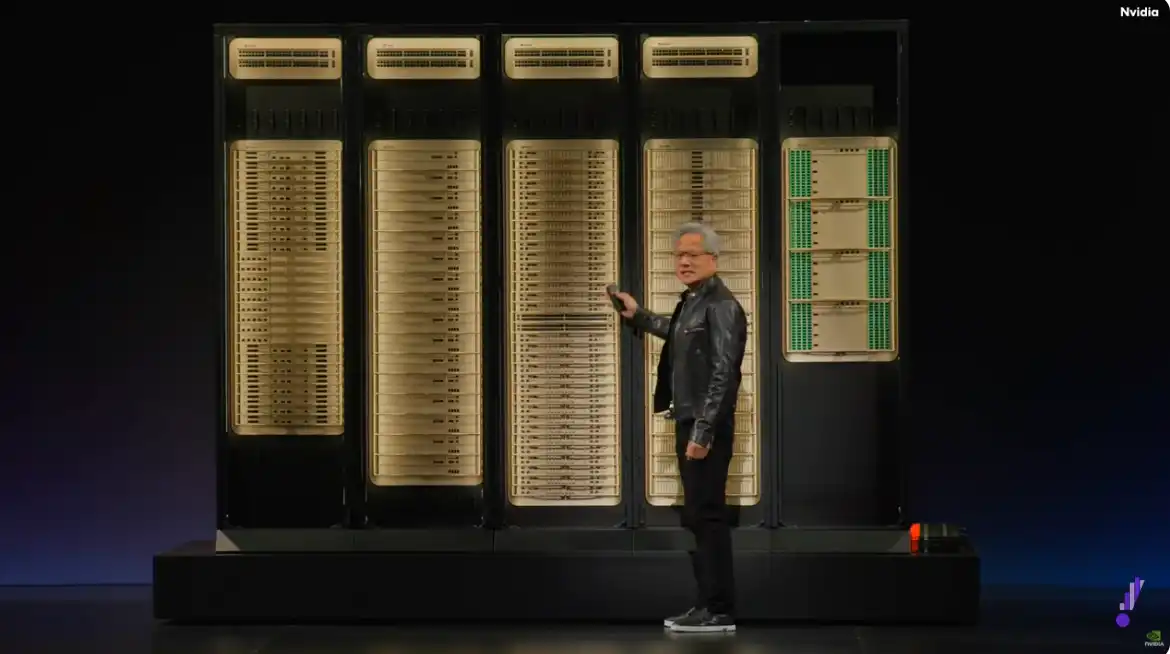
Vera Rubin Now in Full Mass Production

Jensen Huang stated that the Vera Rubin architecture has now fully entered mass production, with OpenAI, Anthropic, and SpaceX becoming the first customers for NVIDIA's Vera chips.
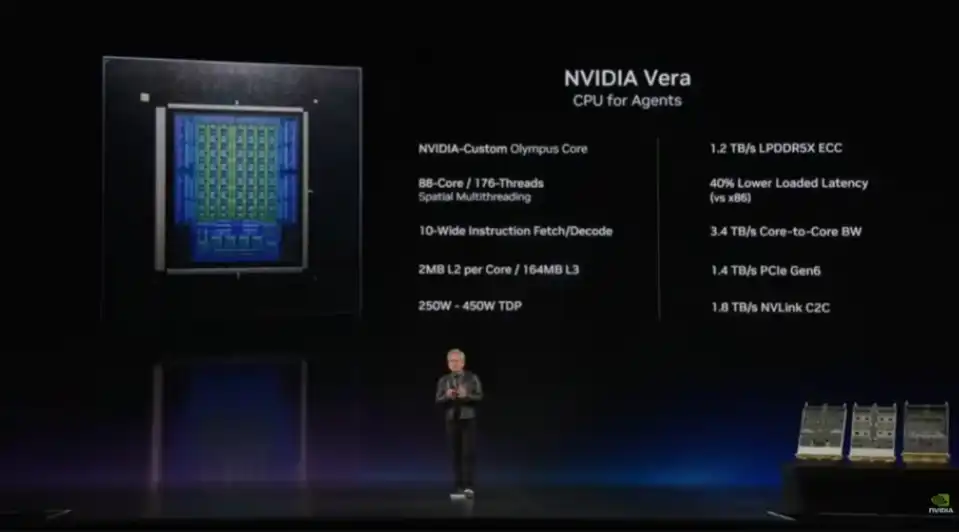
AI Agents will become a key focus for future efforts, and NVIDIA will launch the Vera CPU for AI agents.

Huang also emphasized that NVIDIA Vera BlueField-4 STX delivers chip-level secure, agentic AI storage processing capabilities.
Targeting the Next-Generation AI PC Gateway

Notably, NVIDIA unveiled a new processor for Windows-based personal computers, challenging Intel.

NVIDIA will collaborate with MediaTek to develop the RTX SPARK personal computer chip, which will be manufactured by TSMC. Huang revealed that NVIDIA's personal computer chip will launch this fall, suitable for laptops and desktops.

Jensen Huang stated that NVIDIA will launch a new generation of personal computer (PC) chips alongside each generation of its AI processors.

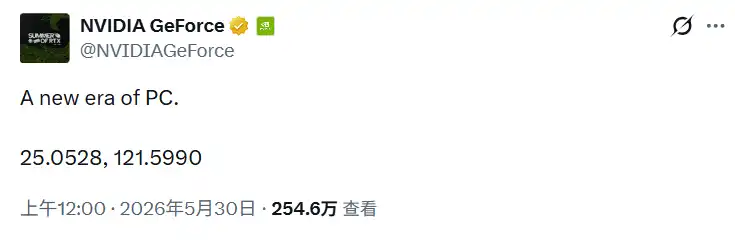
Previously, NVIDIA's official social media account issued a three-word teaser—"A new era of PC"—signaling its aim for the next-generation AI PC gateway.
Analysis suggests NVIDIA intends to integrate CPU, GPU, and AI units into a single SoC, directly supplying a complete core computing platform to OEMs like Dell and Lenovo, fundamentally altering its position in the value chain. This follows the vertical integration path of Apple Silicon, but targets the entire Windows ecosystem.

NVIDIA: Will Collaborate with Unitree Tech and Other Global Humanoid Robot Makers to Develop Robots

NVIDIA plans to collaborate not only with China's Unitree Tech but also with humanoid robot manufacturers in the United States, Europe, and South Korea on research robot projects.

Launches New AI Model + AI Factory "Action Guide"

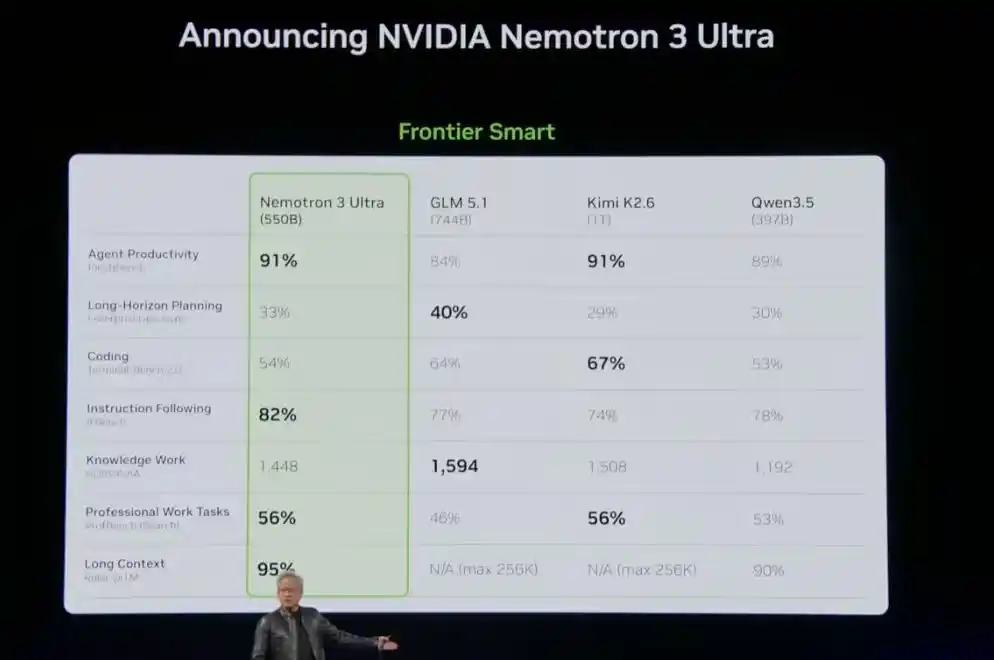
Furthermore, NVIDIA announced the launch of a new AI model, Nemotron 3 Ultra.
NVIDIA announced the launch of the NVIDIA DSX platform, providing infrastructure builders with a complete action guide for creating AI factories. Jensen Huang stated:

With the DSX platform, you can simulate the entire factory without spending a dime, validate performance before installing a single rack, and operate with the reliability required for production-grade AI.

Autonomous Driving Platform Hyperion Ecosystem Emerges

NVIDIA DRIVE Hyperion becomes the global autonomous robotaxi platform.

NVIDIA revealed at the event that mainstream Chinese automakers and autonomous driving companies including BYD, Geely, ZEEKR, Xiaomi, and Pony.ai have adopted or are developing autonomous driving based on the NVIDIA Hyperion platform.

NVIDIA also launched the Alpamayo 2 super open inference model for autonomous taxis.
Building the Development Ecosystem for the Robotics Era

In the field of humanoid robots, NVIDIA is attempting to play the role of an "infrastructure provider."

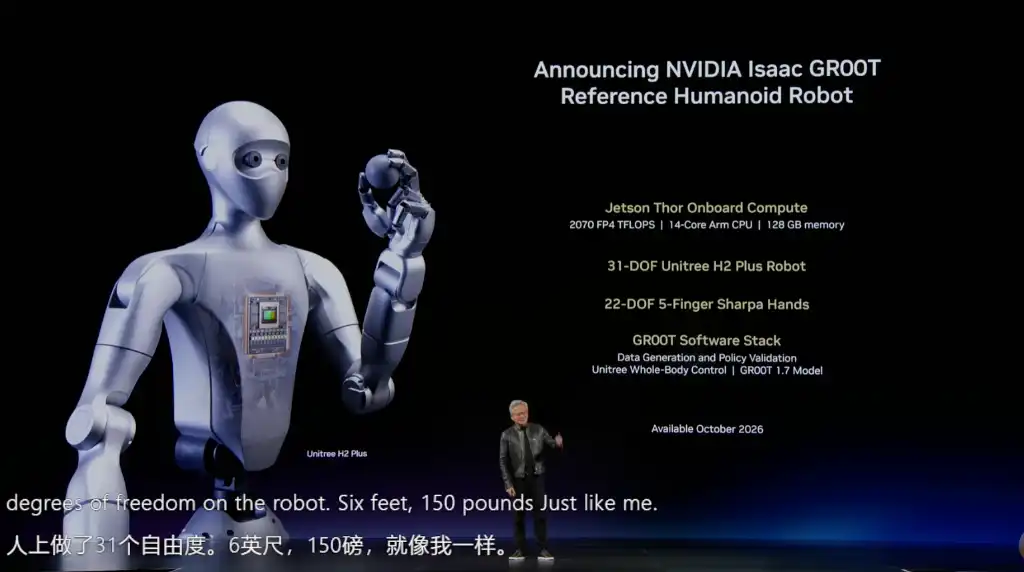
At this launch event, NVIDIA introduced the NVIDIA Isaac GR00T humanoid robot reference platform for academic research, while also releasing a large-scale open-source toolkit of agents and skills for Physical AI.

At the event, NVIDIA selected Unitree Tech's H2 Plus as the reference model, introducing the Isaac GR00T reference humanoid robot platform. This platform integrates Jetson Thor computing chips, the GR00T software stack, as well as dexterous hand and full-body control systems, providing robot manufacturers with a hardware-to-software one-stop development framework.
Related Questions

QWhat major new products or platforms did Jensen Huang announce during his GTC Taipei 2026 keynote?

AJensen Huang announced several major new products and platforms, including the Vera Rubin architecture, the Vera CPU for AI Agents, the Nemotron 3 Ultra AI model, the DSX platform for building AI factories, and new processors for Windows PCs developed in partnership with MediaTek (RTX SPARK chips).

QWhat is the significance of NVIDIA's partnership with MediaTek on the RTX SPARK PC chips?

AThe partnership with MediaTek to develop RTX SPARK PC chips signifies NVIDIA's major push into the next-generation AI PC market, directly challenging Intel. These SoC (System on Chip) designs integrate CPU, GPU, and AI units, aiming to provide a complete core computing platform to OEMs like Dell and Lenovo. This represents a fundamental shift in NVIDIA's position in the value chain.

QWhich major companies were mentioned as the first customers for the new Vera Rubin architecture chips?

AOpenAI, Anthropic, and SpaceX were named as the first customers for NVIDIA's Vera Rubin architecture chips.

QIn which key application areas besides AI PCs did NVIDIA highlight its ecosystem growth during the keynote?

ANVIDIA highlighted significant ecosystem growth in two key areas: Autonomous Driving, with companies like BYD, Geely, ZEEKR, Xiaomi, and Pony.ai adopting the NVIDIA Hyperion platform, and Robotics, with announced collaborations with global humanoid robot makers including China's Unitree Robotics.

QHow does NVIDIA's Isaac GR00T platform aim to support development in the robotics field?

ANVIDIA's Isaac GR00T is a reference humanoid robot platform designed to be a development ecosystem provider. It integrates the Jetson Thor compute chip, the GR00T software stack, and dexterous hand and whole-body control systems. It provides robot manufacturers with a comprehensive hardware-to-software development framework, with Unitree's H2 Plus robot serving as a reference model.

Related Reads

The Midlife Crisis of Crypto GPs: No PMF, No Next Check from LPs

The article "The Midlife Crisis of Crypto GPs: No PMF, No Next LP Check" analyzes the shifting crypto fundraising landscape. It argues the era of selling grand visions to LPs is over; GPs must now offer products with clear Product-Market Fit (PMF). The author categorizes crypto fundraising products into three types: Primary (VC funds), Liquid (trading strategies), and CeFi/DeFi Native Yield. This summary focuses on the Primary market. Key points include: * **Market Shift:** LPs are impatient, demand immediate returns, and are skeptical of future promises. The "easy money" narrative has faded. * **GP Value Erosion:** LP learning curves have shortened (aided by AI), reducing the value of a GP's basic "crypto knowledge." Superior judgment is now rare. * **Weakened LP Motivations:** Traditional reasons for LPs to invest in crypto VC funds (capturing industry beta, gaining access, leveraging GP judgment) have weakened due to new products like ETFs and increased LP sophistication. * **Surviving in Primary:** The primary market will likely persist for: 1) large funds in endowment mandates treating it as a lottery ticket, 2) family offices/HNWIs using proprietary capital, 3) a few funds with proven recent outperformance, and 4) funds with strong ecosystem "deal-making" capabilities. * **Conclusion:** For most GPs, rebuilding trust requires starting over in a niche, demonstrating alpha-generating ability, or providing concrete value/services to LPs.

marsbit2h ago

The Midlife Crisis of Crypto GPs: No PMF, No Next Check from LPs

marsbit2h ago

Crypto GPs' Midlife Crisis: No PMF, No LP's Next Check

The article "The Midlife Crisis of Crypto GPs: No PMF, No LP's Next Check" analyzes the shifting crypto fundraising landscape. It argues that the era of LPs funding vague "vision" is over; GPs must now offer products with clear Product-Market Fit (PMF) to secure capital. The market has matured. LPs, disillusioned by the last cycle's failures and wary of long lock-up periods, now demand tangible, near-term returns rather than speculative narratives. The proliferation of accessible crypto ETFs and other liquid products has reduced the need for VC blind pools as an entry point. The author categorizes crypto fundraising products into three types: Primary (VC funds, with blind pools or clear pipelines), Liquid (alpha/beta, directional/market-neutral strategies), and CeFi/DeFi Native Yield (crypto-specific mechanisms like staking, farming). Focusing on the Primary market, the piece details why traditional LP rationales for investing in crypto VCs have weakened: easier beta access via ETFs, diminished "access" and "judgement" premiums as LPs build internal teams, and a widespread lack of proven superior returns from GPs. Ultimately, only specific players are likely to remain at the primary VC table: large funds with access to patient endowment capital, family offices/HNWIs investing proprietary capital, the few funds with demonstrable excess returns from the last cycle, and those with clear "deal-making" or ecosystem resource advantages. For others, the path forward is to rebuild trust by proving alpha-generation capability in a niche or providing concrete, valuable services.

链捕手3h ago

Crypto GPs' Midlife Crisis: No PMF, No LP's Next Check

链捕手3h ago

Trading

Spot
Futures
活动图片