Coinbase Stock Price Plummets 30% Year-to-Date, Why Isn't Wall Street Pessimistic?

Foresight NewsPublished on 2026-07-16Last updated on 2026-07-16

Abstract

Coinbase's stock has fallen nearly 30% year-to-date, yet Wall Street analysts like William Blair maintain an 'Outperform' rating. Despite lowering revenue and EBITDA forecasts for 2026/2027, their core view is that negative factors are already priced in. Key structural differences from the 2022 cycle—such as Bitcoin ETF adoption, institutional inflows, and clearer regulation—provide a better foundation. Analysts highlight Coinbase's diversification beyond spot trading, pointing to growth from its Base layer-2 network and a retail derivatives business generating over $200 million in annualized revenue. Technically, John Bollinger notes Bitcoin is forming a potential 'W' bottom pattern on daily charts, which could signal a major trend reversal if completed. On-chain data from Glassnode shows panic selling by long-term holders may have peaked, though sustained spot market buying is still needed to confirm a true bottom. While short-term price pressures remain, the consensus is that the current cycle's lows are being established, setting the stage for a potential recovery, with Coinbase's transaction volume expected to rebound over 30% in 2027 after a projected 44% drop this year.


Written by:Jose Antonio Lanz

Compiled by:Chopper,Foresight News


Profit expectations were lowered, yet the stock price rose. Yesterday, shares of both Coinbase (COIN) and Circle (CRCL) increased by approximately 3-4%. This followed a report from Chicago-based investment bank William Blair, which lowered revenue and profit expectations for Coinbase but maintained its "Outperform" rating.


William Blair's core thesis is that all negative news has already been priced into the stock, and investors should continue to hold Coinbase.
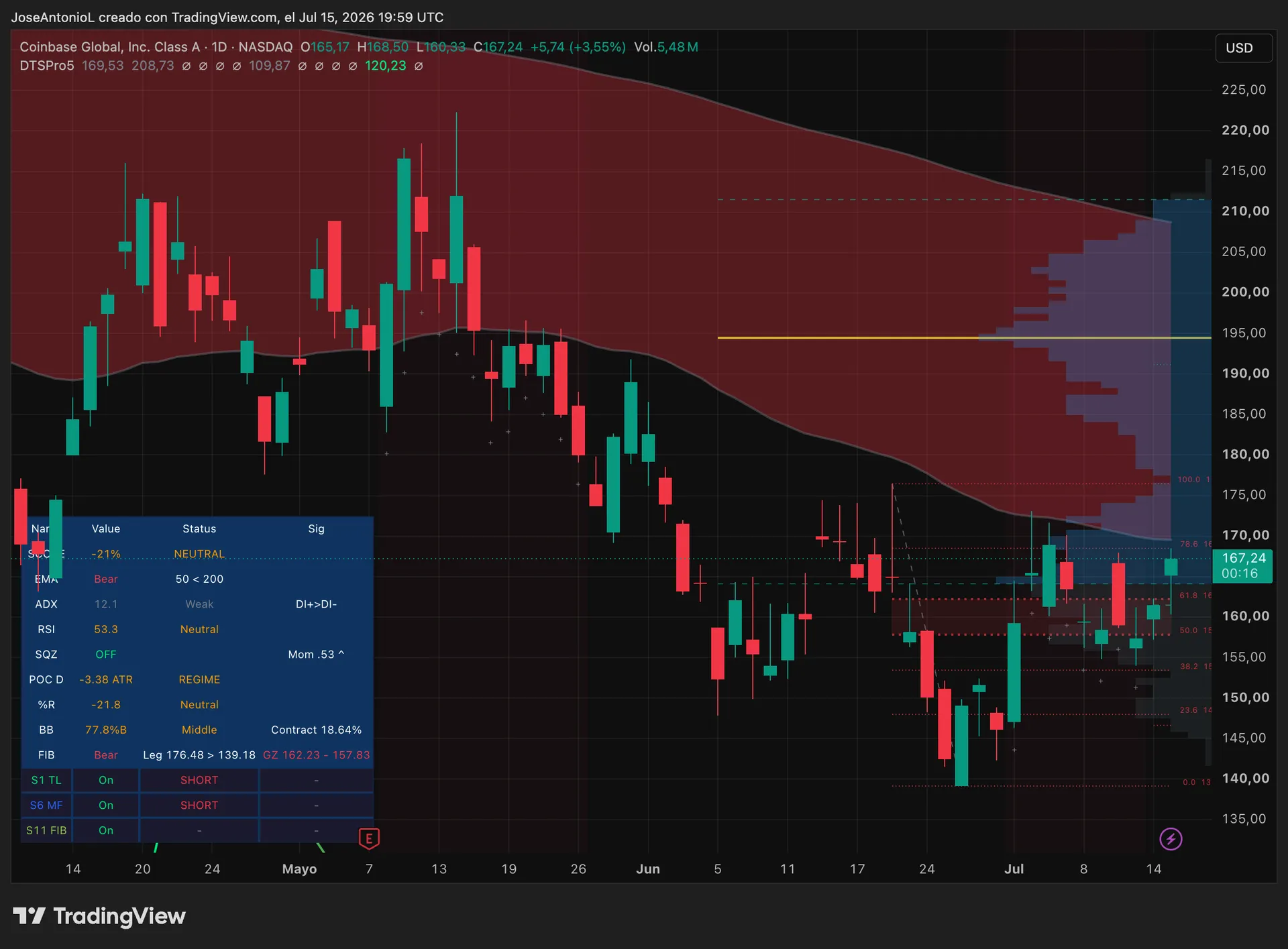


The firm lowered its revenue forecast for Coinbase by 12% for 2026 and 13% for 2027; it also substantially cut its adjusted EBITDA expectations for both years by 34%. Analysts Andrew Jeffrey and Adib Choudhury stated that the company's profits will likely bottom out in the second half of 2026 and recover in 2027. They advise investors to continue holding Coinbase as spot cryptocurrency trading volumes approach a bottom in sync with Bitcoin.


William Blair forecasts that Coinbase's total annual trading volume will drop by about 44% to $669 billion; trading volume is expected to rebound by over 32% in 2027.


The institution believes there are structural differences between this cycle and the one in 2022. Favorable conditions that did not exist four years ago are now in place, including the launch of spot Bitcoin ETFs, sustained institutional capital inflows, and a more mature regulatory framework for the industry.


The report is also bullish on Coinbase's Ethereum layer-2 network Base, seeing it as a potential core profit growth driver, with derivatives and prediction markets further broadening revenue sources, making the business less reliant solely on spot trading. The retail derivatives business alone generated over $200 million in annualized revenue in the first quarter.


Not all institutions are optimistic about COIN's short-term performance. Piper Sandler analyst Patrick Moley lowered his COIN price target from $170 to $155, maintaining a Neutral rating. He noted that the key focus for Q2 is prediction markets and perpetual contracts, with the World Cup driving a surge in prediction market scale, and cautioned that the market will closely watch the potential competitive impact from perpetual contracts in Q3.


Year-to-date, COIN's stock price has fallen nearly 30%, while Bitcoin has declined about 26%. Circle went public on the NYSE in June 2025 at a $31 IPO price, and its stock has retreated 20% since the beginning of the year.


"W" Bottom Pattern Forming: John Bollinger Predicts Bitcoin Poised for Significant Rally


Optimistic signals are also emerging on the technical front. John Bollinger, the creator of the globally used Bollinger Bands volatility indicator and a veteran technical analyst, has been consistently highlighting since early July that Bitcoin's daily chart is forming a key bottoming pattern.


On July 2nd, Bollinger posted on social platform X, pointing out that the chart is forming a "W" double bottom reversal structure: two lows form a range, with a bounce in the middle; once the price breaks above the resistance level between the two lows, an uptrend is formally established.


He described the current movement as a standard fractal structure, with a smaller W bottom nested within the larger pattern, visible even on the weekly chart. However, he also objectively noted uncertainty: this bear market has seen multiple bullish patterns that were ultimately broken by selling pressure.
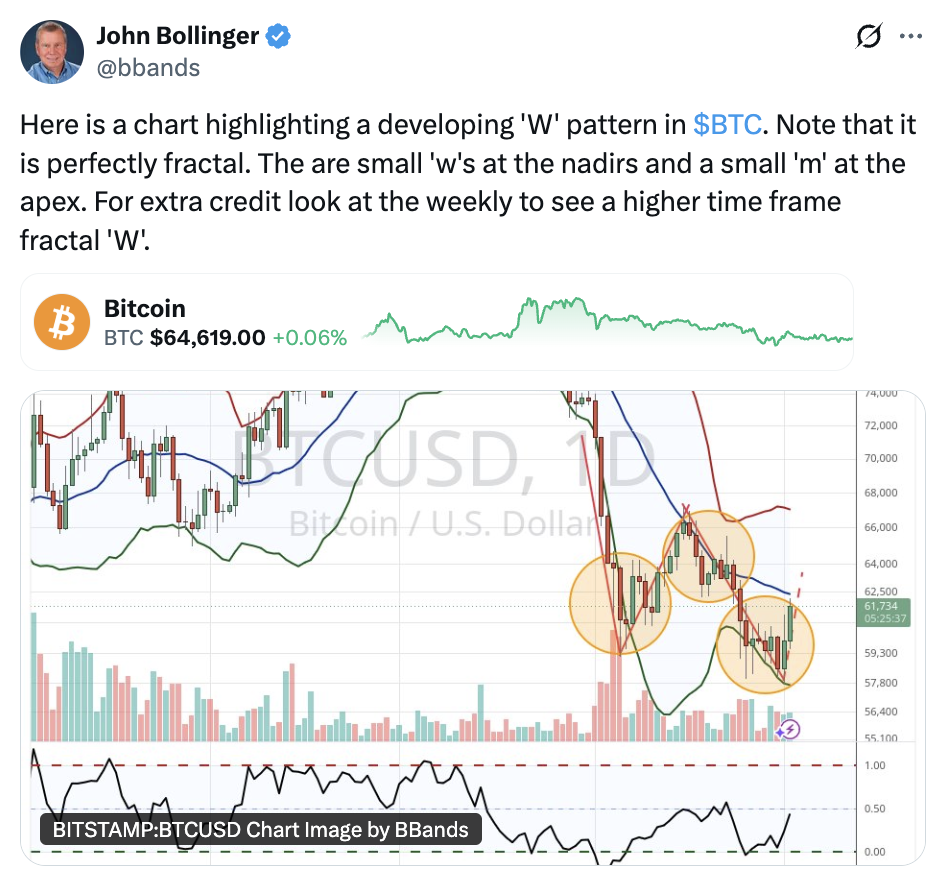


In his latest update, Bollinger stated that if this W bottom completes its formation, it will be viewed as a clear signal of trend reversal, marking his most explicit bullish signal to date, suggesting the move is more than just a short-term bounce.


Earlier this year, Bollinger disclosed that his investment vehicle holds a long Bitcoin position, aligning his view with his holdings. From a broader technical trend perspective, Bitcoin's overall bearish structure hasn't been reversed yet, but downside momentum is continually weakening.


Has Bitcoin's Bottom Already Formed?
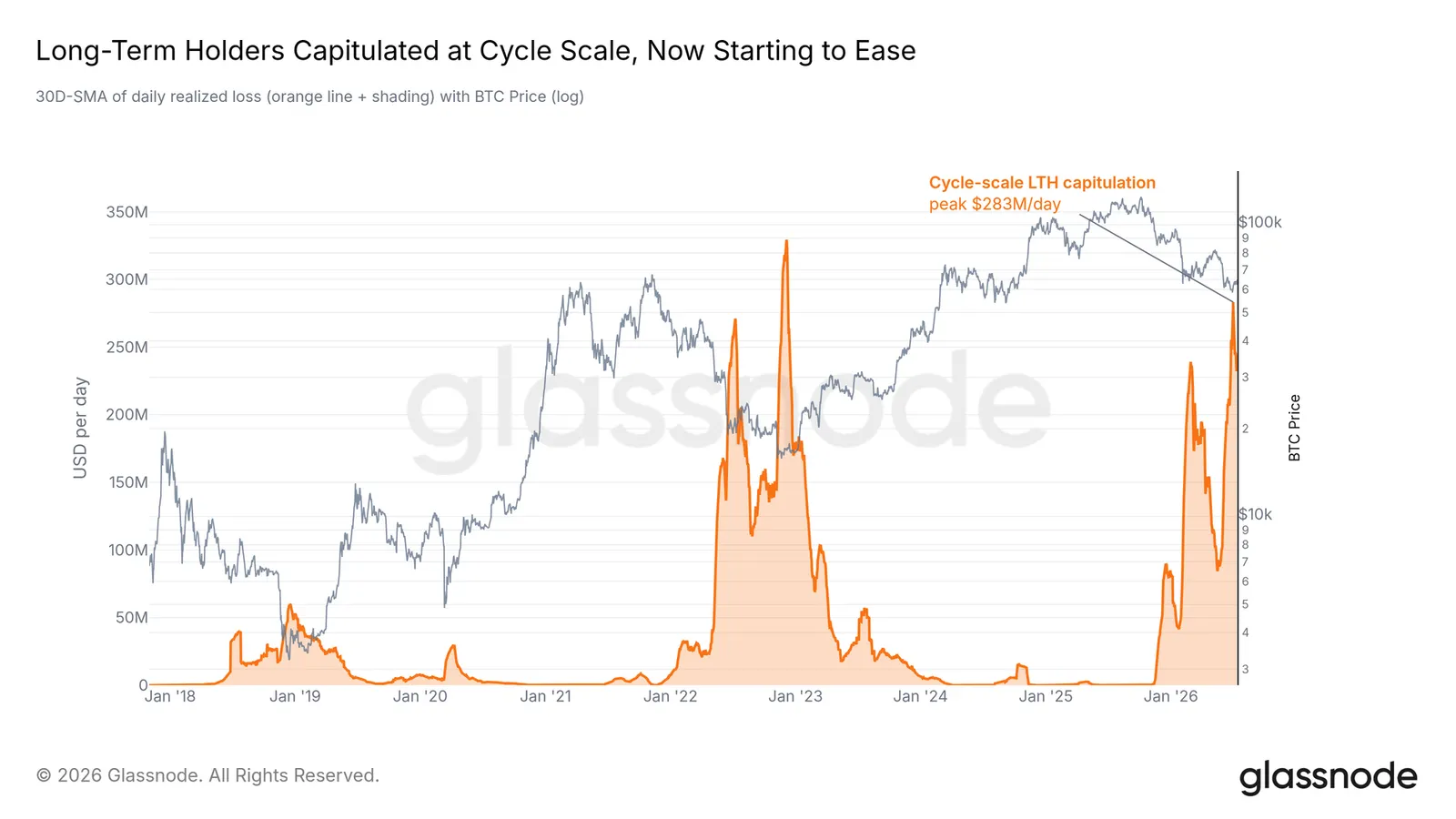


The latest weekly research report from on-chain data firm Glassnode shows that the primary source of selling pressure throughout the year — panic selling by long-term holders — peaked and began declining two weeks ago. This metric, which filters out intra-chain transfer noise to measure the actual selling volume by long-term holders, shows a downturn for the first time in this cycle.


The price low in June attracted significant buying, with Glassnode detecting collective accumulation across wallets of various sizes. Bitcoin's negative correlation with the US Dollar Index has deepened further, while its correlation with US stocks continues to weaken. The sensitivity of Bitcoin's price to positive macroeconomic news has returned: on Tuesday, after disappointing inflation data, Bitcoin's gains far outpaced those of major US stock indices.


For on-chain analysts and Wall Street institutions, a core question remains: sustained buying momentum has not yet emerged in the Bitcoin spot market, insufficient to confirm a reversal.


While derivative positions are being unwound, long-term selling pressure is gradually easing, and the panic premium in the options market is narrowing, incremental capital has not entered the market on a large scale. William Blair judges the market inflection point to be in 2027, predicting Coinbase's trading volume will rebound by 32% next year after a 44% plunge this year.


Related Questions

QDespite a 30% drop in Coinbase's stock price this year, why is Wall Street not pessimistic?

ABecause institutions like William Blair believe negative factors are already priced in and see structural improvements like spot Bitcoin ETFs, institutional adoption, and clearer regulation compared to 2022.

QWhat are the key bullish factors for Coinbase's future mentioned by William Blair?

AThe report highlights the growth potential of Base (its Ethereum L2 network), expansion into derivatives and prediction markets, and the expectation of a trading volume rebound of over 32% in 2027.

QWhat technical pattern does John Bollinger identify for Bitcoin, and what does it signal?

AJohn Bollinger identifies a 'W' bottom reversal pattern forming on Bitcoin's daily chart. If completed, it would be a clear signal for a trend reversal and a sustained move higher, not just a short-term bounce.

QAccording to Glassnode's data, what key shift has occurred in Bitcoin's selling pressure?

AGlassnode reports that panic selling by long-term holders, a major source of selling pressure throughout the year, has peaked and begun to decline for the first time this cycle.

QWhat is a major remaining concern for analysts regarding a potential Bitcoin price reversal?

AA core concern is the lack of sustained, large-scale buying activity in the Bitcoin spot market. While selling pressure is easing, significant new capital inflows have not yet materialized to confirm a trend reversal.

Related Reads

Has BlackRock Again 'Withdrawn' $140 Million Worth of Bitcoin, Signaling the Start of an Era of Institutional Accumulation?

BlackRock is suspected of moving approximately 2,152 BTC (worth ~$140 million) from Coinbase Prime to an unknown cold wallet, a transaction widely interpreted by on-chain analysts as institutional asset allocation. This event highlights a shift in market focus from trading volume to institutional fund flows, particularly withdrawals from exchanges. Such moves typically indicate assets are being moved into long-term custody, reducing immediate market supply—a phenomenon known as supply shock. The context is BlackRock's spot Bitcoin ETF, iShares Bitcoin Trust (IBIT), which continues to see significant net inflows, with assets under management surpassing $20 billion. This reflects a broader trend of institutions treating Bitcoin as a long-term allocation tool rather than merely a speculative asset. The growing use of on-chain analytics platforms allows for increased transparency in tracking these institutional movements. While this single transaction doesn't dictate price, it underscores a structural evolution in the Bitcoin market. The increasing participation of long-term institutional capital, facilitated by ETFs, is gradually changing the market's composition from being trade-driven to being more configuration- or allocation-driven. The key question emerging is whether the market is transitioning into an era defined by long-term institutional holding.

marsbit35m ago

Has BlackRock Again 'Withdrawn' $140 Million Worth of Bitcoin, Signaling the Start of an Era of Institutional Accumulation?

marsbit35m ago

Gold Rush Handbook | Rialto Teams Up with Robinhood Crypto, Targeting Order Routing Rights

**Summary** Rialto is positioning itself as an on-chain spot exchange focused on order routing and execution quality for a range of assets, including cryptocurrencies and tokenized stocks/ETFs. It operates primarily on the Robinhood Chain network. Its core mechanism revolves around **propAMMs** – on-chain market makers that use proprietary inventory and pricing logic, referencing external markets (like underlying stock exchanges for tokenized equities) rather than relying solely on automated market maker (AMM) formulas. For each user order, Rialto's aggregator solicits real-time quotes from multiple liquidity sources, including its own propAMM (Rivo Altus) and traditional DEX pools. It then selects and atomically executes the path offering the best net output after costs, potentially splitting orders across sources. Rialto's key competitive claim is turning **order routing control into a service for better execution**. Instead of users manually finding the best liquidity, the system automatically compares and routes to the optimal source(s) for each trade. It has launched a partner program for integrations and its swap API is already used by several protocols. Challenges ahead include expanding the asset base on Robinhood Chain, ensuring Rivo Altus's price competitiveness, attracting diverse external liquidity, and consistently delivering superior net execution compared to manual routing. Success in these areas would see Rialto competing for the crucial "order routing right" in the emerging on-chain market for tokenized real-world assets.

Foresight News1h ago

Gold Rush Handbook | Rialto Teams Up with Robinhood Crypto, Targeting Order Routing Rights

Foresight News1h ago

Trading

Spot
活动图片