The initiative was put forward by Republican Senator Thom Tillis and Democrat Ruben Gallego. The new amendment would allow Trump to be exempt from taxes for many years, and in some cases avoid them altogether, saving the president millions of dollars. If, after selling his assets, Trump reinvests the proceeds into new investments and holds them until the end of his life, he will not have to pay capital gains tax, according to the authors of the amendment.
For 2025, Trump reported an income of $1.4 billion from projects related to cryptocurrencies and memecoins. Without the deferral, Trump would have to immediately pay a tax of 20% on the difference between the purchase and sale price of the assets. While serving as president, Trump is not required to divest from income-generating assets.
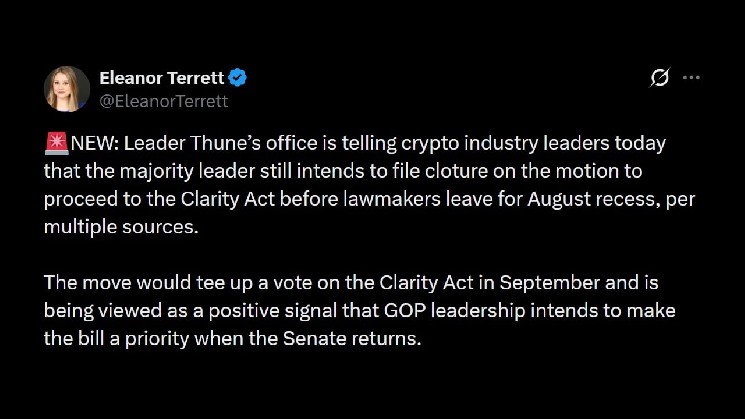
Uncertainty regarding the "ethical aspect," insisted upon by Democratic congressmen, has become one of the main reasons preventing the Senate from considering CLARITY before the recess. Senate Republican Leader John Thune did not file a motion for cloture until August 7th—a document necessary to begin voting. The senator explained this as due to prolonged negotiations with the presidential administration, during which they literally "went through every line" of the document.
According to the Senate's 2026 calendar, the recess will last until September 14th. Additionally, there will be a long period in October with practically no sessions—until the midterm elections on November 3rd.
At the end of July, Trump met with senators and, according to some sources, agreed, while according to others, did not agree to the "ethical aspect."
In early August, U.S. Senate Democratic Leader Chuck Schumer introduced a bill to create an independent anti-corruption bureau that could hold the U.S. president and high-ranking officials accountable for illegally obtained funds, including from cryptocurrencies.
end-content