Bitcoin strength now comes from Asia – Can BTC hold as U.S. and EU sell?

ambcryptoPublished on 2025-12-10Last updated on 2025-12-10

Abstract

Bitcoin's recent price strength is primarily driven by buying activity in the Asia-Pacific (APAC) region, which has provided around 2% cumulative returns. In contrast, trading sessions in the U.S. and Europe have consistently pushed prices lower, with returns of approximately -3% and -4%, respectively. This regional divergence has made APAC the key source of upward momentum, preventing deeper declines. Despite aggregate Open Interest in USD reaching new highs above $70 billion, leverage measured in Bitcoin terms has not surpassed previous cycle peaks, indicating more restrained speculative activity. For instance, Bybit’s Open Interest remained below the 60,000–62,000 BTC threshold that previously triggered cooling periods. A significant shift is the growth in corporate Bitcoin holdings, which surged 448% from 197,000 BTC in January 2023 to roughly 1.08 million BTC. This institutional accumulation, largely by publicly listed companies, has locked away a substantial portion of supply, providing structural support to the market. Combined with contained leverage and steady APAC demand, these factors are helping Bitcoin withstand selling pressure during U.S. and European trading hours.

Bitcoin’s latest upswing is being driven largely by traders in the Asia-Pacific region! Interestingly, U.S. and European sessions continue to drag prices lower.

The shift appeared during a period of contained leverage and rising institutional ownership. Corporate Bitcoin holdings climbed above one million BTC, giving long-term holders a larger influence on market behavior.

Asia keeps Bitcoin above water

There’s a clear divide in Bitcoin’s [BTC] performance between regional trading sessions.

The APAC session has delivered around 2% cumulative returns, while both the U.S. and European sessions have stayed in negative territory, dropping to roughly -3% and -4% respectively.
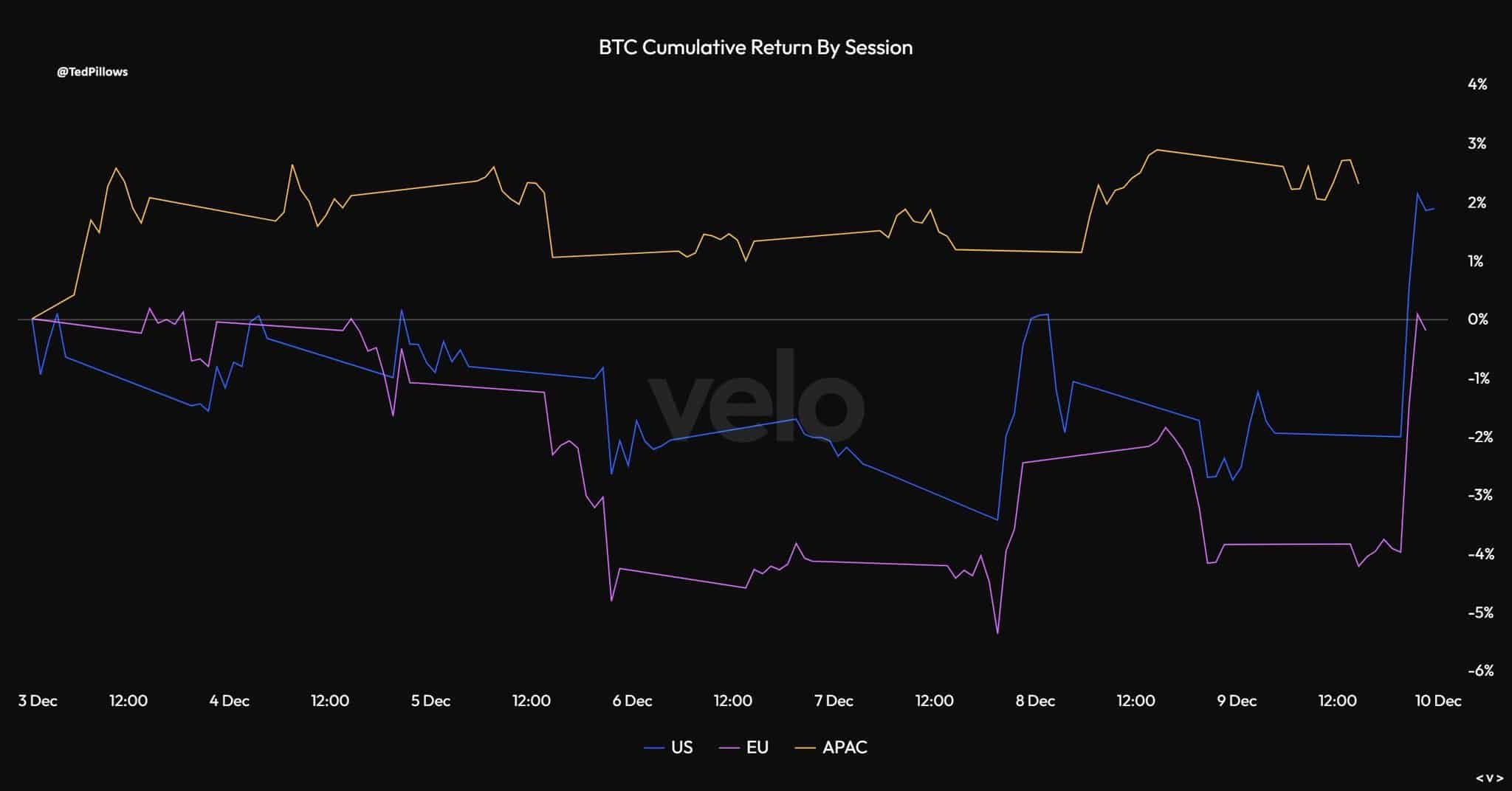
Source: X

The pattern has been consistent: Asia lifts prices each day, and Western trading hours erase those gains just as quickly.

So this has left APAC as the only region providing meaningful upward pressure, effectively keeping Bitcoin from sliding deeper.

Leverage looks high…but only in dollars
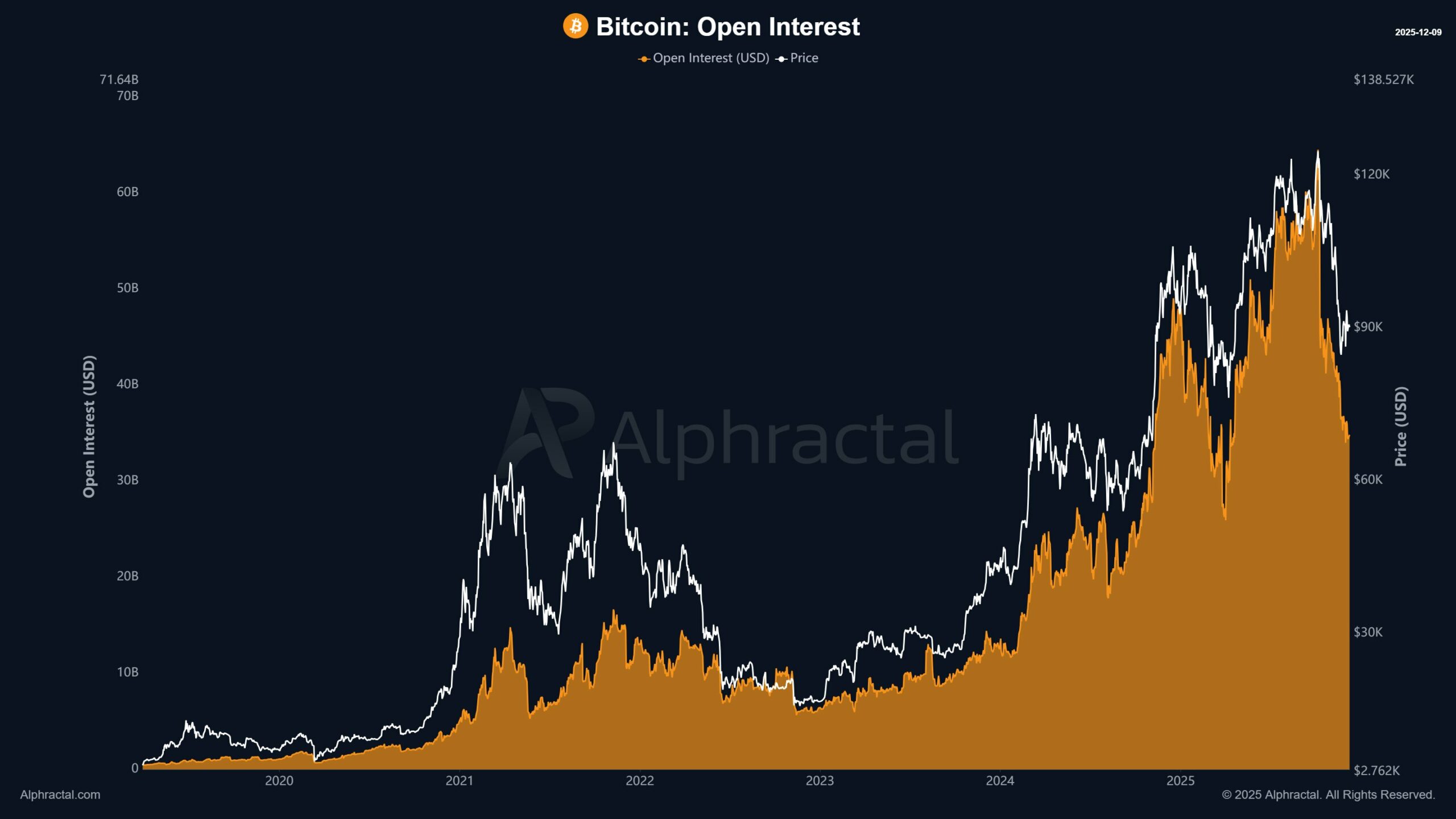
Bitcoin’s Open Interest profile varied depending on the measurement.

Source: Alphractal

According to Joao Wedson, CEO, Alphractal, Aggregate Open Interest in USD hit new peaks this cycle, climbing past $70 billion at the top.

Source: Alphractal

But COIN-denominated OI never revisited its 2022 highs of around 500,000 BTC. The market’s dollar size expanded, but traders didn’t pile into leverage the way they did in the previous run.

Source: Alphractal

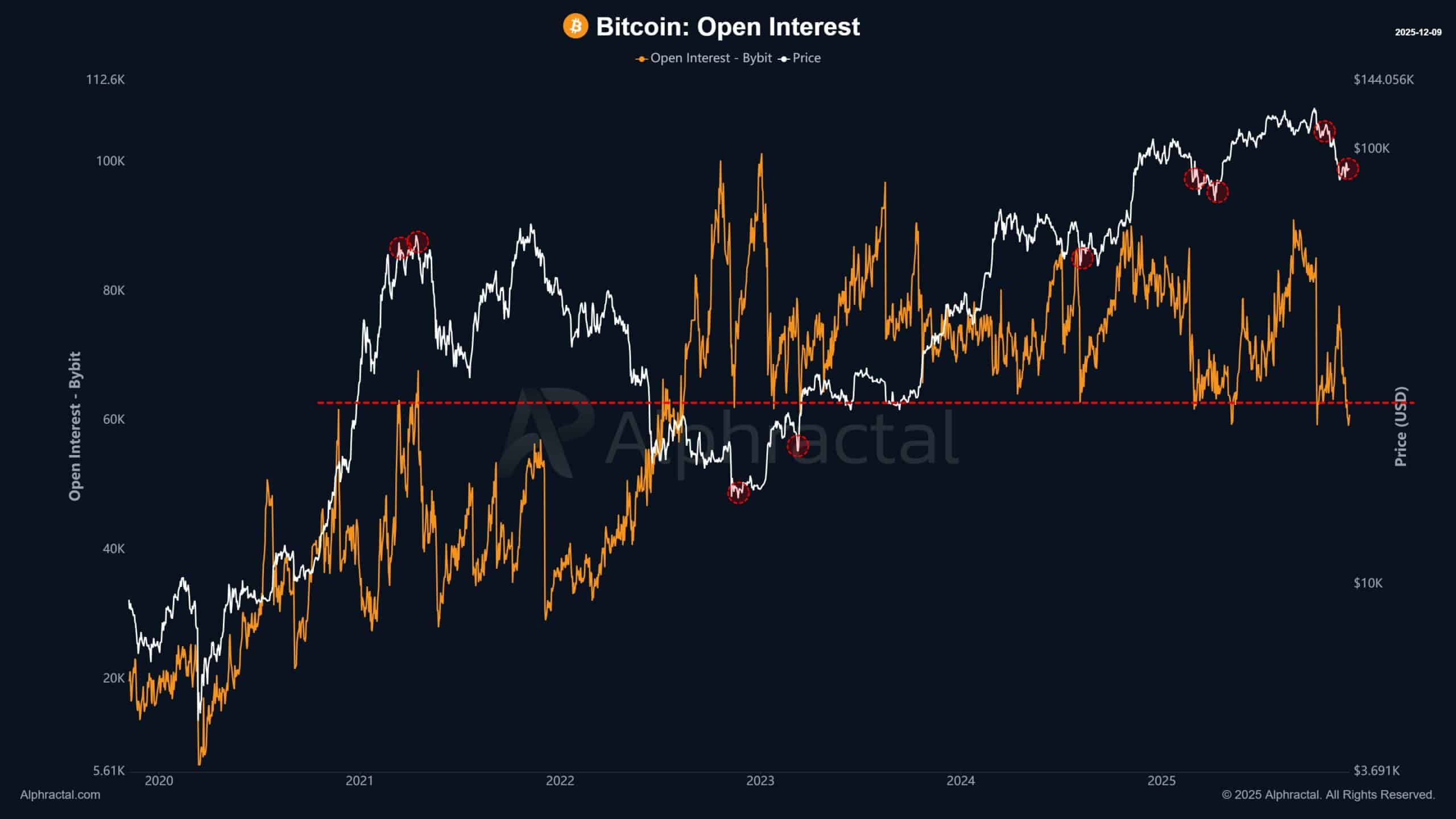
A closer look at Bybit proves this, too.

BTC typically cooled whenever Bybit’s Open Interest approached the 60,000–62,000 BTC zone. Current positioning sat below that threshold, showing subdued leverage among speculative traders.

Corporate treasuries as a backbone

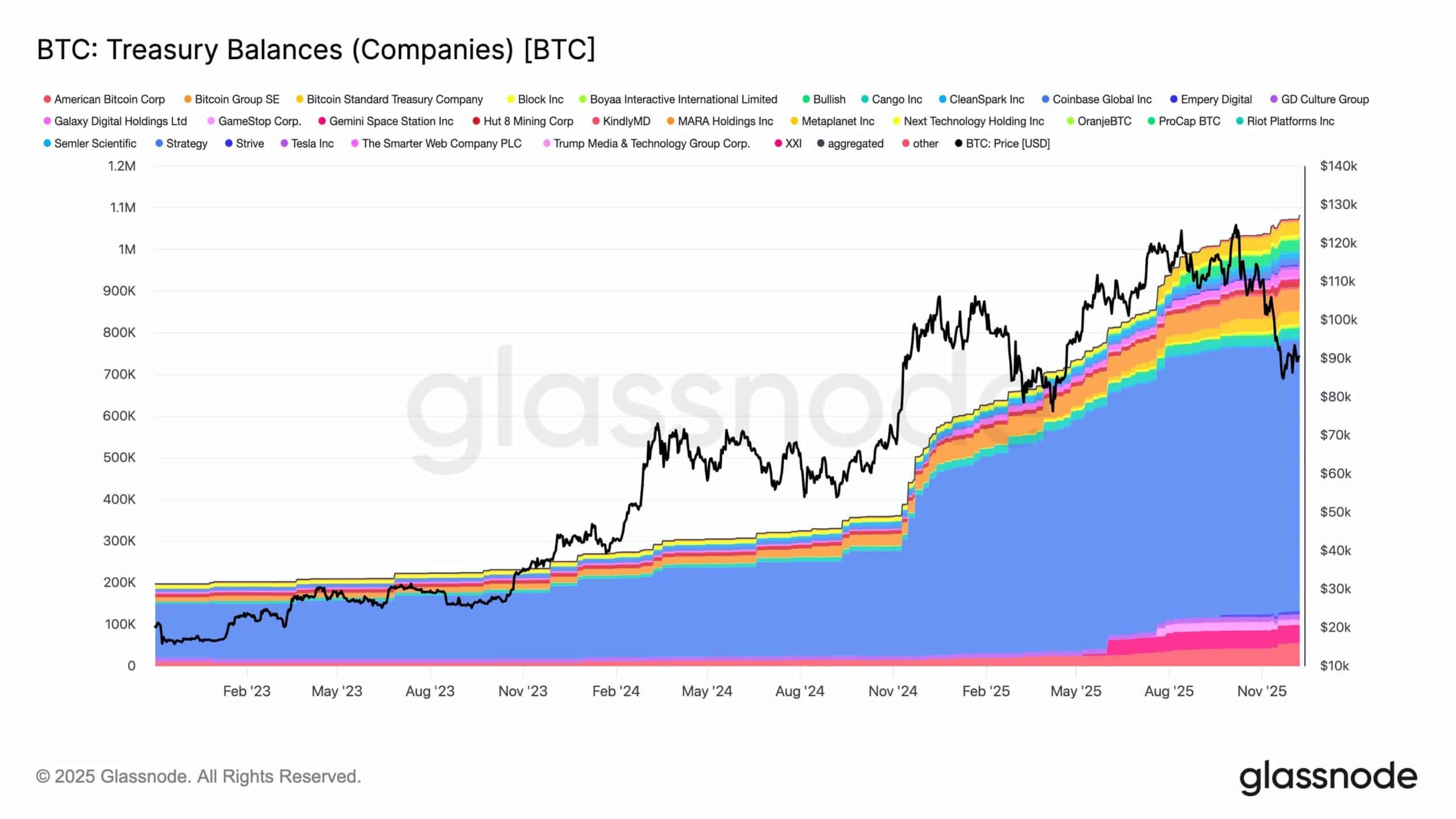
Corporate Bitcoin holdings have exploded from 197,000 BTC in January 2023 to roughly 1.08 million BTC at press time. That’s a 448% jump, and this growth went up high through late 2024 and 2025.

Most of the increase came from large, publicly listed companies steadily adding BTC to their balance sheets. This is a demand base that wasn’t present in previous cycles.

Source: Glassnode

This matters because it changes how Bitcoin reacts to weakness in Western trading hours.

With over 1 million BTC now sitting in corporate treasuries, a significant portion of the supply is effectively locked away. As a result, Asia’s buying pressure isn’t working alone.

Long-term institutional holders are now helping keep the market in check, even during volatile sessions.


Final Thoughts

  • Asia’s steady buying and rising corporate Bitcoin holdings are now the strongest forces supporting BTC.
  • With leverage contained, Bitcoin’s structure looks healthier even as U.S. and EU sessions drag prices down.

Next: Federal Reserve cuts rates by 25bps in first decisive pivot—what it means for crypto markets
Share
  • Share
  • Tweet

Related Reads

The Silver Crisis: When the Paper System Begins to Fail

Silver Crisis: When the Paper System Begins to Fail In December, silver became the standout performer in the precious metals market, surging from $40 to over $60 per ounce, hitting a historic high of $64.28 on December 12 before experiencing sharp declines. Year-to-date, silver rose nearly 110%, far outpacing gold’s 60% gain. The rally appears justified by fundamental factors: expectations of Fed rate cuts, strong industrial demand from solar, EV, and AI sectors, and declining global inventories. However, the surge lacks stability. Unlike gold, which is backed by central bank purchases, silver has almost no official reserves, making it an isolated asset with low market depth and high volatility. The real driver behind the price spike is a futures squeeze. The market structure shifted into prolonged futures premium (contango), indicating either extreme bullish sentiment or deliberate market manipulation. Physical delivery demands surged on exchanges like COMEX and LBMA, exposing the fragility of the paper silver system—where paper claims vastly exceed actual physical silver. JPMorgan, a key player historically accused of silver market manipulation, now controls nearly 43% of COMEX silver inventories and acts as the custodian for major silver ETFs. Its influence over physical supply and delivery eligibility adds to market instability. The situation reflects a broader loss of confidence in financialized assets. Investors and central banks are increasingly shifting toward physical holdings, moving away from paper claims. This trend, coupled with declining Western gold and silver inventories and rising Asian demand, signals a structural shift in monetary and commodity markets. In essence, the rules of the game are changing. When the music stops, those holding physical metal will have a chair—everyone else may be left standing.

marsbit8m ago

The Silver Crisis: When the Paper System Begins to Fail

marsbit8m ago

Trading

Spot
Futures
活动图片