Author: Curry, Deep Tide TechFlow
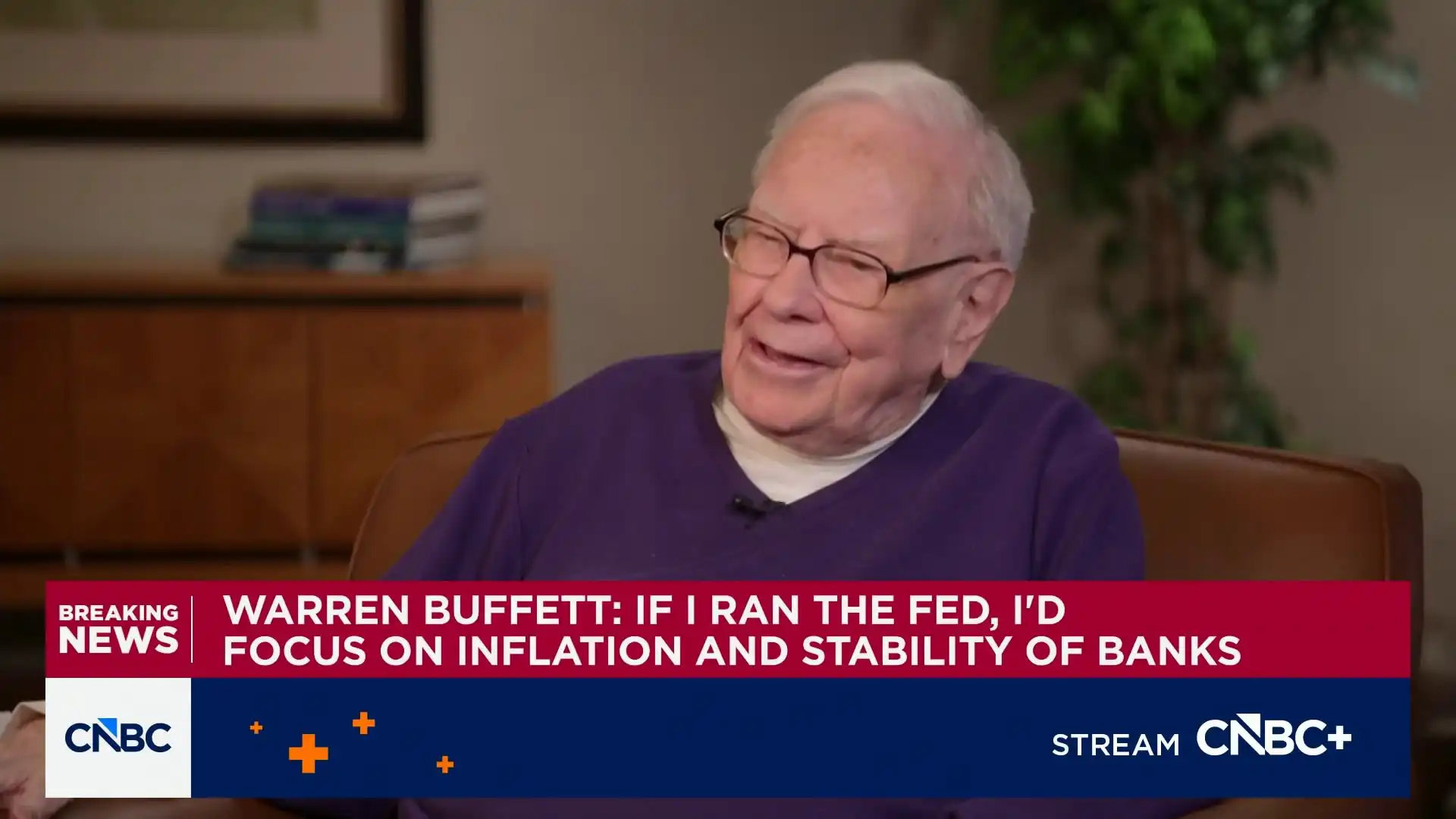
Yesterday, Buffett gave an exclusive interview to CNBC.
This is the first time he has sat down for such a long chat since stepping down as CEO of Berkshire Hathaway on January 1 this year. At 95 years old, having steered the company for sixty years and handed over the reins to Greg Abel, he could have chosen not to speak.
But he talked about Apple, the Federal Reserve, Bill Gates and Epstein, Iran's nuclear weapons, and also announced that his charity lunch, paused for four years, is coming back.
There was a lot of information; let's go through it point by point.
1. Went to Work on the First Day of Retirement
Buffett said he still goes to the office every day.
Before the market opens each day, he calls Mark Millard, Berkshire's Director of Financial Assets, to discuss market dynamics and trading. Millard's office is about six meters away from his; after the call, he goes to execute. When asked if there have been any new moves recently, Buffett said yes, a "tiny" (small) one was made, but he didn't reveal what it was.
He also drew a line: he will not make any investment that Abel disagrees with, and Abel receives a daily summary of investment activities.
This arrangement sounds like "the final decision-making power lies with the new CEO," but interpreted another way, it also means the 95-year-old predecessor is present every day, participates every day, trades every day, and the successor works six meters away from him.
Buffett praised Abel repeatedly in the interview, saying Abel does more work in a day than he did in a week at his peak, and that he would rather trust Abel with his money than any top investment advisor in the US.
Nominally, he has stepped down. But this "step down" seems more like moving from CEO to the person sitting next to him.
2. Sold Apple Too Early, But Not Buying Now Either
In this interview, Buffett admitted one thing: Berkshire reduced its Apple position too early.
His exact words were: "I sold it too soon. But, I bought it even sooner, so."
Translated, it means he sold too early, but bought even earlier, so he still made a profit. According to him, Berkshire made over $100 billion in pre-tax profit from this single Apple investment.
The timeline is roughly this: Berkshire started buying Apple around 2016, and the position grew to over $170 billion at its peak, making it the largest single holding in Berkshire's history.
Between 2023 and 2024, Berkshire cut its Apple position by about two-thirds. As of the end of last year, according to SEC filings, Berkshire held about 227.9 million Apple shares, worth approximately $62 billion, still accounting for about 22.6% of the entire investment portfolio and remaining the largest holding.
Buffett said Apple is better than any business Berkshire owns outright.
Berkshire's railroad company BNSF has a market cap higher than the Apple holding, but Apple still ranks first in the holdings list. He also praised Apple CEO Tim Cook as a "fantastic manager," saying he doesn't know how Cook manages to get along with everyone in the world.
But when asked if he would add to the position again, Buffett gave a conditional answer: it's not impossible; if Apple's price drops to a certain level, Berkshire would buy heavily. But not now, "not in this market."
Apple has fallen more than 14% from its high this year, but in Buffett's view, it hasn't reached a price he's willing to pay.
3. Three 50% Drops, What's This Little Dip?
The US stock market hasn't looked great this year. As of the interview day, the Dow was down about 5% year-to-date, the S&P 500 down about 6%, and the Nasdaq down about 9%. Apple itself has pulled back more than 14% from its yearly high.
Buffett's reaction to this: nothing to get excited about.
He said that since he took over Berkshire, the company's stock price has fallen by more than 50% at least three times. Compared to those, this current幅度 (extent) is nothing.
He also didn't show any intention of making major moves. For him, the current market is far from those historical moments that "created great opportunities."
In just a few sentences, he was both saying don't panic and don't expect me to bottom-fish now.
4. Inflation Target Should Be Zero
When asked whether the Fed is currently more worried about inflation or employment, Buffett didn't directly pick a side but made a broader statement: he wishes the Fed's inflation target were zero.
His logic is that once you say you can tolerate 2% inflation, that number becomes very significant when compounded over the long term. And for ordinary people, if you earn 2% interest on your savings and have to pay taxes on that 2%, it means your purchasing power is actually declining.
Buffett also said that compared to employment data, he is more concerned about the status of the dollar as the global reserve currency and the stability of the banking system.
He praised Fed Chair Powell for his decisive actions in March 2020 when the pandemic broke out, saying that if it had been two or three weeks later, it would have been a disaster. "Once the dominoes start to fall, they fall faster than anyone thinks." In Buffett's mind, Powell and Paul Volcker, who brutally raised interest rates to tame inflation in the 1980s, are the two most respected figures in Fed history.
However, he does have criticisms of the Fed. The 2% inflation target is a mistake in his view; you're essentially telling everyone that saving is worse than spending.
5. The Charity Lunch Is Back
What changed Buffett's mind was the death of one person.
Glide Foundation founder Cecil Williams passed away in 2024. Glide is a San Francisco charity that helps the homeless. Buffett's late wife, Susan, was a long-time volunteer there. Starting in 2000, Buffett auctioned off a lunch with himself annually, with all proceeds going to Glide. The lunch was held for 22 years; after the last one in 2022, Buffett said he would stop.
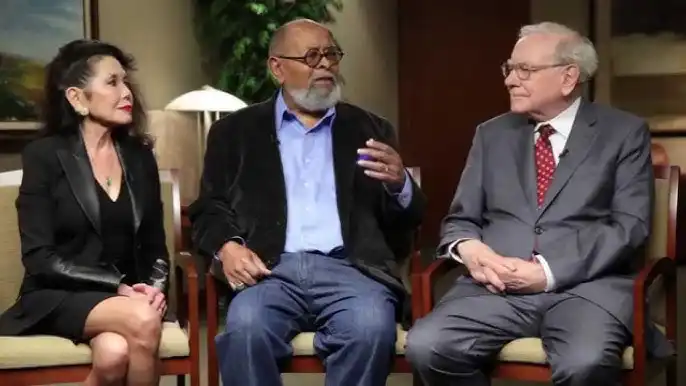
Image: The person in the middle is Cecil Williams
But Cecil's death made him change his mind. Buffett said Cecil passed away believing that Glide should not die out.
This new lunch has a changed format.
Buffett will not attend alone; his partners are four-time NBA champion Stephen Curry and his wife Ayesha Curry. The auction starts on eBay on May 7th with a starting bid of $50,000. The winner can bring up to seven guests to have lunch with the three of them in Omaha on June 24th. The auction proceeds will be split equally between Glide and the Eat. Learn. Play. Foundation founded by the Currys, a non-profit organization helping youth in Oakland.
The last auction related to the crypto circle was in 2019, when Tron founder Justin Sun spent $4.57 million. After that, Buffett donated the Bitcoin Sun gave him.
6. No Longer in Contact with Gates
This is the first time Buffett has publicly talked about Bill Gates since stepping down.
He said he hasn't spoken to Gates since the relevant files about Epstein were made public. His exact words were: "I don't want to be in a position where I know things ... to be called as a witness." He doesn't want to know too much; he doesn't want to be subpoenaed to testify.
The relationship between Buffett and Gates lasted for decades. The two co-founded "The Giving Pledge" in 2010, calling on the world's wealthiest individuals to pledge the majority of their wealth to philanthropy. Since 2006, Buffett has donated over $43 billion to the Gates Foundation.
Gates's association with Epstein began in 2011, which was three years after Epstein pleaded guilty to sex crimes in Florida in 2008. Since late last year, the US Department of Justice and Congress have陆续 (progressively) released a large number of related documents, and emails and photos between Gates and Epstein have been exposed.
According to a previous Wall Street Journal report, Gates apologized to Gates Foundation staff in February of this year, admitting to having associated with Epstein and also admitting to an extramarital affair. Gates has accepted an invitation from the US House Oversight Committee to testify on the matter, but a date has not yet been set.
When asked if he is still good friends with Gates, Buffett's tone was restrained. He mentioned their past collaboration in founding the Giving Pledge but then said:
"I don't think there's any need to say much until things are figured out."
7. Nuclear Weapons Will Eventually Be Used
At the end of the interview, the topic turned to Iran.
Buffett said there are now nine countries with nuclear weapons globally. During the Cold War, there were only two, the US and the Soviet Union, and everyone was already extremely nervous. But at least the decision-makers on both sides could be considered rational then. Now, the situation is completely different.
He specifically mentioned Iran and North Korea. He said the most dangerous situation is when the person with the nuclear button is themselves dying or facing immense disgrace. In such a predicament, no one can predict what decision a person will make.
When asked what advice he would give the US President on handling Iran's uranium enrichment issue if he were an advisor, Buffett didn't offer specific suggestions but said something that sounded like fatalism: in the next hundred years, maybe two hundred, nuclear weapons will be used. He doesn't know exactly how it will happen, but he believes it's a probability issue; the more countries that have nuclear weapons, the higher the probability.
On whether Iran should have nuclear weapons, he only said one thing: if Iran gets the bomb, things will be more difficult than if it didn't have it.
A 95-year-old man, who has seen the end of WWII, the entire Cold War, the Cuban Missile Crisis, the dissolution of the Soviet Union... left a thought-provoking judgment at the end of the interview.
The interview lasted about an hour; he talked about everything he could.
But the detail that stood out the most to this writer throughout the process was: Buffett is 95 years old, has been卸任 (stepped down) for three months, and didn't utter a single word in front of the camera about "looking back" or "summarizing his life."
Everything he said was looking forward.
Should Apple be bought again, how should the Fed's target be set, how will the situation in Iran develop, how will the new charity lunch be run... The host sitting opposite him, Becky Quick, gave him many opportunities to reminisce; he didn't take any of them.
You rarely see someone who has already handed over power still more interested in the future than the past.
The Oracle of Omaha might still be the Oracle even in old age. It's just that before, he voted with money; now, he votes with his judgment.






