APE 质押上线第一天,获利最大的是套利者

Odaily星球日报Published on 2022-12-07Last updated on 2022-12-08

Abstract

对于 BAYC 及其衍生系列 NFT 和 APE 代币的持有者来说,APE 质押是近期最值得关注的大事,对于 NFT 行业后续发展也有借鉴性意义。

隐藏 BUG 导致部分 APE 的质押用户遭受损失。

对于 BAYC 及其衍生系列 NFT 和 APE 代币的持有者来说,APE 质押是近期最值得关注的大事,对于 NFT 行业后续发展也有借鉴性意义。

今日凌晨,经过了众多测试和审核的 APE 质押智能合约正式在主网上部署,这也意味着 APE 质押功能正式上线,用户现在可以通过 ApeStake.io 开启 APE 存款,质押奖励将于 12 月 12 日开放领取。

那在 APE 开放质押的第一天数据表现如何?用户反馈怎样?都出现了哪些奇葩新闻?Odaily 星球日报带大家回顾一下。

详解 Ape 质押机制

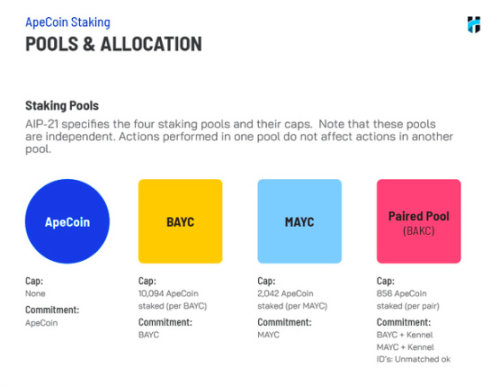
APE 质押系统有 4 个代币池,每个代币池的质押规则和奖励不同:

第一个池是「ApeCoin 池」。该矿池不要求用户持有 NFT,任何 APE 代币持有者都可以向该矿池存入尽可能多的 APE 代币。

第二个池是「BAYC 池」。该矿池要求用户持有一只 Bored Ape 才能参与其中。在 BAYC 池中,用户最多可以为他们持有的每个 Bored APE 存入 10, 094 枚 APE 代币。

第三个池是「MAYC 池」。该池要求用户持有一只 Mutant Ape 才能参与其中。在 MAYC 池中,用户最多可以为他们持有的每个 Mutant Ape 存入 2, 042 枚 APE。

第四个也是最后一个池是「BAKC + BAYC 或 MAYC」。该池不同于 BAYC 和 MAYC 池,因为用户不仅需要拥有一只 Bored Ape 或 Mutant Ape,还需要拥有一只 Bored Ape Kennel Club Dog,满足条件的用户可以为他们持有的每个 Bored Ape/Mutant Ape 和 BAKC Dog 存入最多 856 枚 APE。
APE 质押上线第一天,获利最大的是套利者在奖励分配上, 1.75 亿 APE(占总 Token 分配的 17.5% )将在 3 年内分配给四个池子,第一年为 1 亿枚 APE,第二年为 0.5 亿枚 APE,第三年为 0.25 亿枚 APE。

具体来说,对于 4 种代币池的奖励分配,将依据上一年 Q4 的 NFT 价格决定。其中,「ApeCoin 池」将固定分配当年总奖励池的 30% ,其余 3 个则随后续 NFT 价格浮动,NFT 价格越高,质押池对应的 APE 分配比率越高。

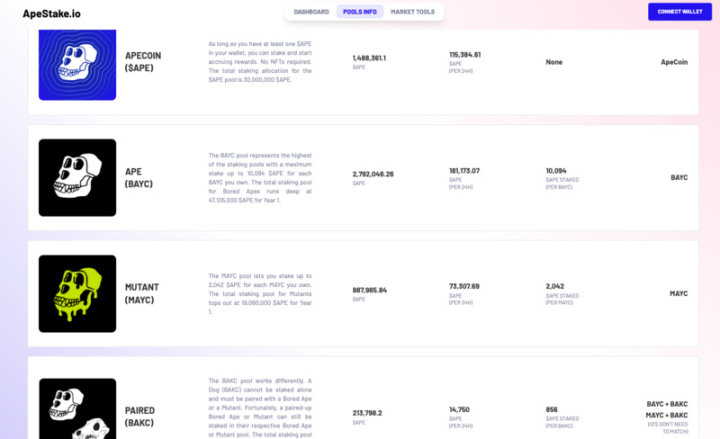
截止目前,共质押了 5, 377, 915 枚 APE,四个质押池的数据分别是:

ApeCoin 池:共质押 1, 488, 361.1 枚,占比 27.6%

BAYC 池:共质押 2, 792, 046.26 枚,占比 51.9%

MAYC 池:共质押 887, 965.84 枚,占比 16.5%

BAKC + BAYC 或 MAYC:共质押 213, 798.2 枚,占比 3.9%
隐藏 BUG 触发套利机制?

在 APE 质押功能上线前,就已经有大 V 在推特上提醒参与质押的用户需要把自己持有的 BAYC 及其衍生系列 NFT 从所有 NFT 市场上下架,否则如果有人购买了你上架的 NFT,那么你同时也会失去你质押的 APE 代币。
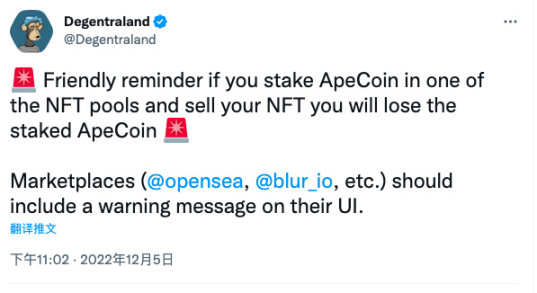
显然,这条友情提醒并没有被广泛传播,导致在 APE 质押功能上线几小时内,就触发了该套利机制。

据派盾监测,有套利者从 dYdX 以闪电贷的方式借入 82 ETH 购买 BAYC #6762 ,从而获得其质押的 64 00 枚 APE。套利者将 APE 卖出获得 20 ETH,后以 68 ETH 的价格卖出 BAYC #6762 ,净赚约 6 ETH。

很快,该套利模式就被成功复制。一套利者同样从 dYdX 平台以闪电贷的方式借出 90 枚 ETH,并购入 BAYC #1633 ,同时获得了该 NFT 下质押的 10, 000 枚 APE;套利者后又将所得 APE 分批兑换为约 9.1 枚 ETH 和 23.54 枚 ETH,共计 32.68 枚 ETH,然后将 BAYC #1633 以 65 ETH 价格出售,净赚约 7 ETH。
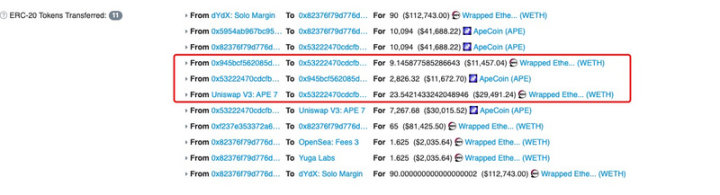
套利者发现了该漏洞赚取利润,但是 APE 的质押用户却遭受损失。ApeCoin DAO 质押计划的意义是激励生态参与者,显然机制上还是有待完善的空间。


Related Reads

Trezor Customer Data Leak: Coins Are Safe, But Phishing Is Inevitable

Trezor, a hardware cryptocurrency wallet manufacturer, reported a data breach at its logistics partner, ShipMonk, affecting around 13,689 customers. The incident, confirmed on August 13, 2026, involved unauthorized access to ShipMonk's systems, which stored order information from May 10 to August 8, 2026. Trezor's own systems and user crypto assets were not compromised. The leaked data varies: for 11,742 customers, full names, email addresses, phone numbers, and delivery addresses were exposed. For 1,947 others, only name, city, and email were leaked. The breach was limited to customers in the US, UK, Sweden, Colombia, Brazil, Italy, and Portugal. Trezor warns affected users of an increased risk of phishing attacks, where malicious actors may use the stolen contact details to impersonate Trezor, banks, or exchanges to steal wallet recovery phrases. All impacted customers have been notified via email. In response, Trezor announced a planned "Anonymous Delivery" feature for the EU (September 2026) and the US (end of 2026), aiming to anonymize logistics data. ShipMonk has not yet issued a public statement on its official website. The analysis highlights this as a recurring industry pattern where third-party logistics vendors become weak links in the supply chain, storing data longer than necessary. Similar incidents, like the 2020 Ledger breach, led to prolonged phishing campaigns. A key question remains whether hardware wallets can ever fully decouple from external logistics risks.

cryptonews.ru11m ago

Trezor Customer Data Leak: Coins Are Safe, But Phishing Is Inevitable

cryptonews.ru11m ago

Token Buyback Volumes Continue to Rise, But Price Lows Keep Falling

The volume of token buybacks continues to grow, but the minimum price level is constantly declining, according to an internal memo by Bitwise CIO Matt Hogan. He argues that most crypto tokens, except Bitcoin, are undervalued as investors are unaware of the revenue now being returned to holders. He highlights the example of Hyperliquid, which has bought back and burned $1.3 billion worth of its $HYPE token. Hogan posits that tokens are beginning to trade based on revenue, similar to stocks and bonds, marking the end of an era where scaling networks provided little token utility. He links token valuation to strengthening protocol revenue, noting that Hyperliquid has earned over $800 million in the past year and spends nearly all fees on $HYPE buybacks. Following this model, protocols like Uniswap and Aave have implemented fee mechanisms to buy back and burn their own tokens. The trend has also affected base chains like Solana and Aptos, which have proposed or enacted higher fee burns. However, the memo acknowledges that reducing token supply has not reliably boosted prices. A Cryptopolitan report found many tokens with regular buybacks still underperformed the market. Even Hyperliquid's upward trend broke, and Pump.fun conducted significant buybacks near token lows. Hogan cautions that token buybacks differ from stock buybacks due to the lack of contractual claims on profits or assets, as governance rules can always be rewritten.

cryptonews.ru1h ago

Token Buyback Volumes Continue to Rise, But Price Lows Keep Falling

cryptonews.ru1h ago

Trading

Spot
活动图片