Bitcoin will shoot over $100K in 2023 before 'largest bear market' — trader

CointelegraphPublished on 2022-10-23Last updated on 2022-10-23

Abstract

New all-time highs are closer than many might think, says Credible Crypto, but so is a brutal bear market unlike any other.

Bitcoin (BTC) will top $100,000 next year but a record-breaking bear market will follow, a popular trader believes.

""

In a Twitter discussion on Oct. 22, Credible Crypto endorsed a theory that Bitcoin’s next halving will also see macro lows of just $10,000.
""

BTC bulls need only wait a year for $100,000
""

With consensus calling for Q4 2022 to match the end of the 2018 Bitcoin bear market, few are in the mood to call a trend change.

""

While a bold prediction from LookIntoBitcoin creator Philip Swift recently gave the current bear market just months to live, most commentators continue to target new lows.

""

For Credible Crypto, however, the really interesting territory lies further ahead — but 2023 will constitute a major turning point.

""

After setting new all-time highs (ATHs) of at least $100,000, BTC/USD will come down from its “blow-off top” in a way never seen before, he believes.

""

The next bear market will bottom out even lower than this year’s $17,600, giving buyers a chance to enter the market at as low as $10,000 as late as 2025.

""

“Agreed, probably in 2025 methinks,” Credible Crypto replied to the original prediction put forward by fellow trader and analyst Mr. Parabullic.
""

“First, new ATH in 2023- blow-off top 5th wave above 100k- followed by the largest bear market we have seen yet that is worse than the current one in both time and price- taking us to the 10-14k that everyone is waiting for now.”
""

Another active social media trader, Crypto Tony, found it harder to agree, calling for a macro low early next quarter, followed by a new uptrend.
""

From $10,000 Bitcoin to $2 million Bitcoin
""

Elsewhere, others have given levels between $10,000 and $16,000 as likely floor prices in the coming months.
""
The $10,000 price tag belongs to Filbfilb, co-founder of trading suite, Decentrader, while popular analyst Il Capo of Crypto continues to insist that $14,000-$16,000 will swiftly enter after Bitcoin sees a relief bounce to around $21,000.

""

“All I see is a lot of shorts that should be squeezed,” he told followers on Oct. 21, subsequently suggesting the bounce was now beginning.
""

“Shorting support is not a good idea. Send it to 21k. Then nuke it to 14k.”
""

Longer term, meanwhile, asset manager Larry Lepard is betting on Bitcoin trading at a giant $2 million per coin within the next six years.

""

BTC/USD traded at around $19,200 at the time of writing, according to data from Cointelegraph Markets Pro and TradingView.

BTC/USD 1-hour candle chart (Bitstamp). Source: TradingView

Related Reads

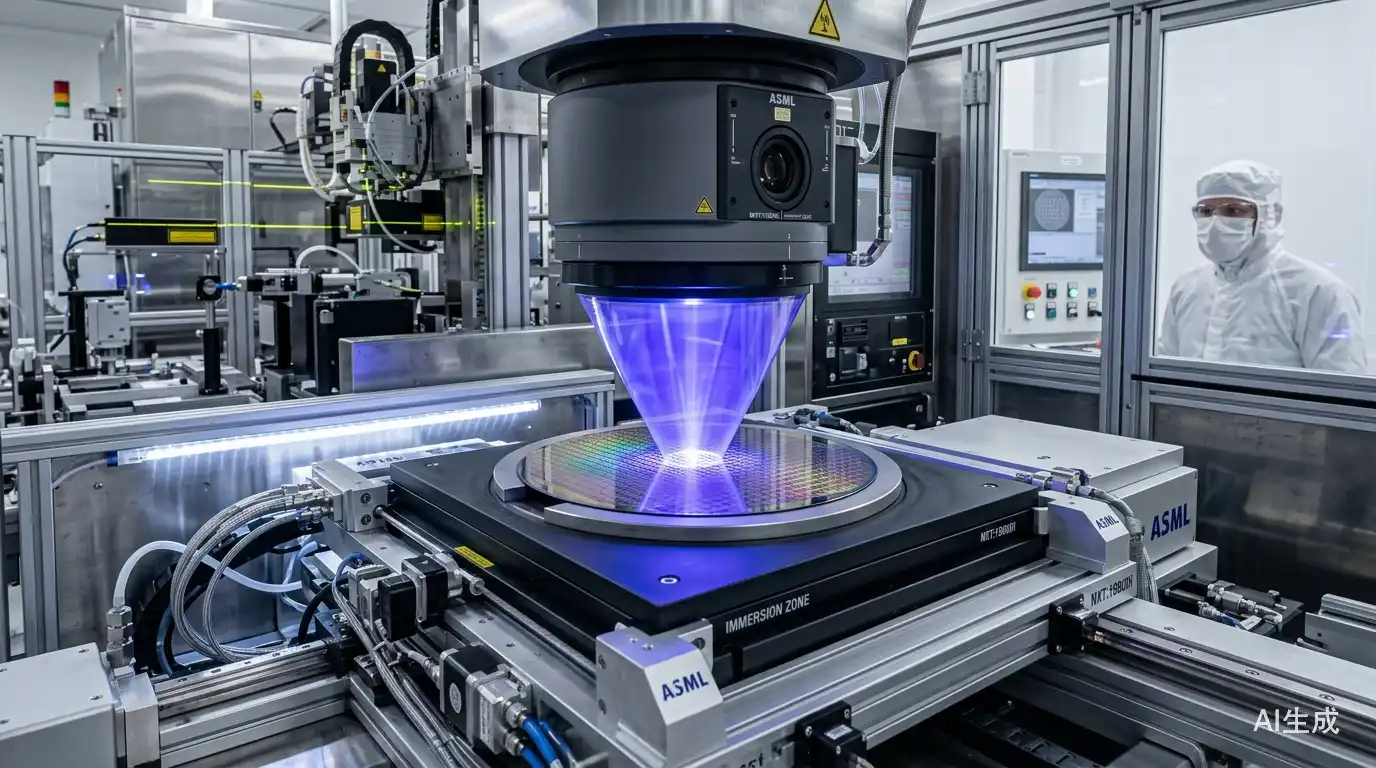
A Brief History of the Lithography Machine: How a Beam of Light Walked Sixty-Nine Years

A Brief History of Lithography: 69 Years of Light In July 2026, reports of a Chinese state-backed company producing five immersion DUV lithography machines sent shockwaves through Wall Street, wiping roughly $44 billion from ASML's market cap in a single day. This event signaled a crack in the long-held assumption of Western monopoly over advanced chipmaking equipment. The journey began in 1957 when Jay Lathrop coined the term "photolithography." Early contact aligners (1960s) gave way to PerkinElmer's revolutionary projection aligners in 1973, boosting yields dramatically. GCA's step-and-repeat system (1978) established the modern stepper blueprint. However, within a decade, Japanese firms like Nikon and Canon, supported by a strong domestic market, captured nearly 90% of the global market from American pioneers, who ultimately exited the business. ASML, founded in a leaky shed in 1984, rose to dominance through key strategic moves: the TWINSCAN dual-stage platform (2001) and the acquisition of SVG, gaining access to Intel. A pivotal moment came in the early 2000s with the industry at a 193nm wavelength impasse. While most invested in the costly 157nm path, TSMC's Burn Lin proposed immersion lithography—using water between the lens and wafer. ASML bet on this simpler idea and, with Zeiss, delivered the first commercial immersion tool in 2004, effectively ending the 157nm roadmap and leaving competitors behind. The subsequent push for Extreme Ultraviolet (EUV) lithography was an even greater marathon. Deemed the least promising option in 1997, EUV's development, led by ASML, required vacuum chambers, reflective optics, and a complex tin-droplet laser plasma source. Critical to its eventual success (first high-volume manufacturing in 2018) was the 2012 "Customer Co-Investment Program," where Intel, TSMC, and Samsung provided upfront funding and equity, sharing the immense risk and cost. Today, ASML holds a near-total monopoly in EUV and immersion DUV. The core lesson of this 69-year history is not merely one of technological invention but of sustained partnership. Successive leaders—PerkinElmer, GCA, Nikon—were not ultimately defeated by superior technology but by losing the vital connection to customers willing to tolerate years of iteration, fund long-term R&D, and integrate early, imperfect tools into their production lines. The "light" that completed the journey was always carried by those patient, invested partners.

marsbit1h ago

A Brief History of the Lithography Machine: How a Beam of Light Walked Sixty-Nine Years

marsbit1h ago

Trading

Spot
活动图片