$635M in, $405M out – How the Fed quietly shook the crypto market

ambcryptoPublished on 2026-03-25Last updated on 2026-03-25

Abstract

The crypto market slowed last week, with many attributing the decline to Middle East tensions. However, the primary driver was the U.S. Federal Reserve's cautious policy signals. According to CoinShares, digital asset investments saw $230 million in inflows—significantly lower than previous weeks. Notably, $635 million entered just before the Fed meeting, but $405 million exited shortly after, indicating investors are highly sensitive to interest rate expectations. Bitcoin led with $219 million in weekly inflows, though short-Bitcoin products also gained $6 million, reflecting mixed sentiment. Solana remained strong with $17 million inflows over seven weeks, while Ethereum saw $27.5 million in outflows. Chainlink and Hyperliquid attracted $9.1 million combined. Despite price declines—ETH and HYPE fell ~6.7%, BTC dropped ~4%, and SOL dipped only 2%—capital continued flowing in. User activity was highest for Chainlink, while Solana maintained steady social volume. The Altcoin Season Index read 47, below the 75 threshold for a confirmed altcoin season, but sustained inflows suggest a potential buildup toward a broader rally. Institutional behavior showed a "buy the dip" mindset rather than panic selling.

The crypto market slowed down last week. And, while many blamed global tensions in the Middle East, the real reason behind the same might have been the U.S. Federal Reserve.

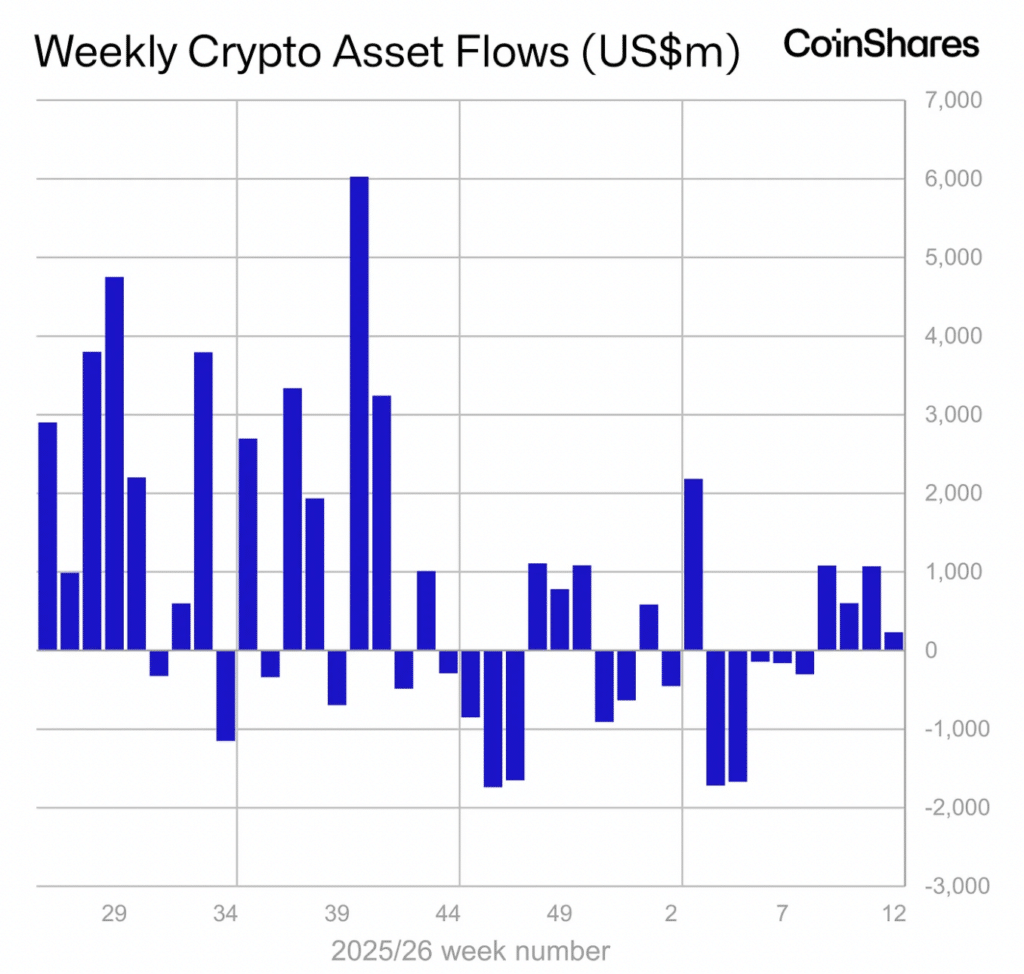
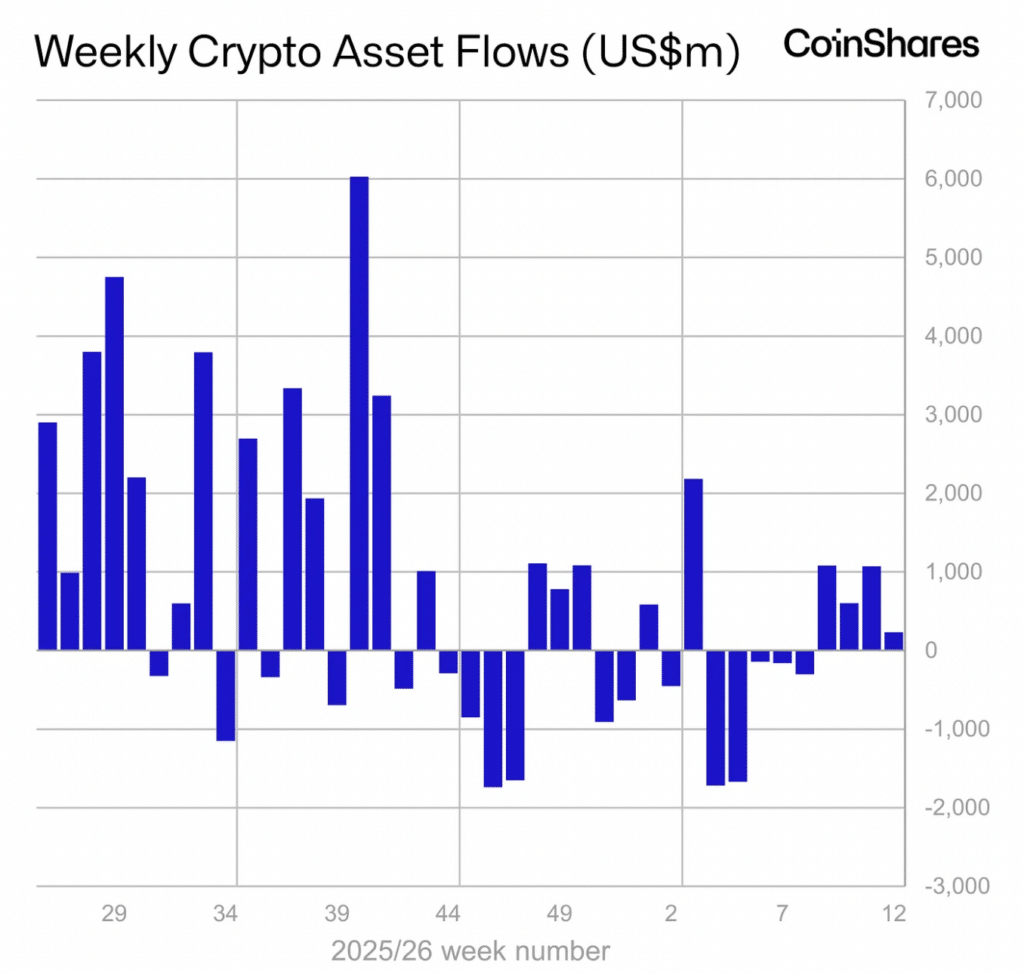
According to a report from CoinShares, digital asset investment products saw $230 million in inflows. However, this figure was much lower than the ones seen in previous weeks.
Source: CoinShares

Looking closer, most of the money came in before the Fed’s meeting, with $635 million added in just two days. After the Fed signaled a more cautious approach, about $405 million quickly left the market.

This suggested that investors may be reacting more to interest rate expectations than global conflicts, adjusting their positions based on future monetary policy.

While total inflows of $230 million hinted at a recovering market, the data showed that investor sentiment is still mixed.

Analysis of different coins and their performance over the past week

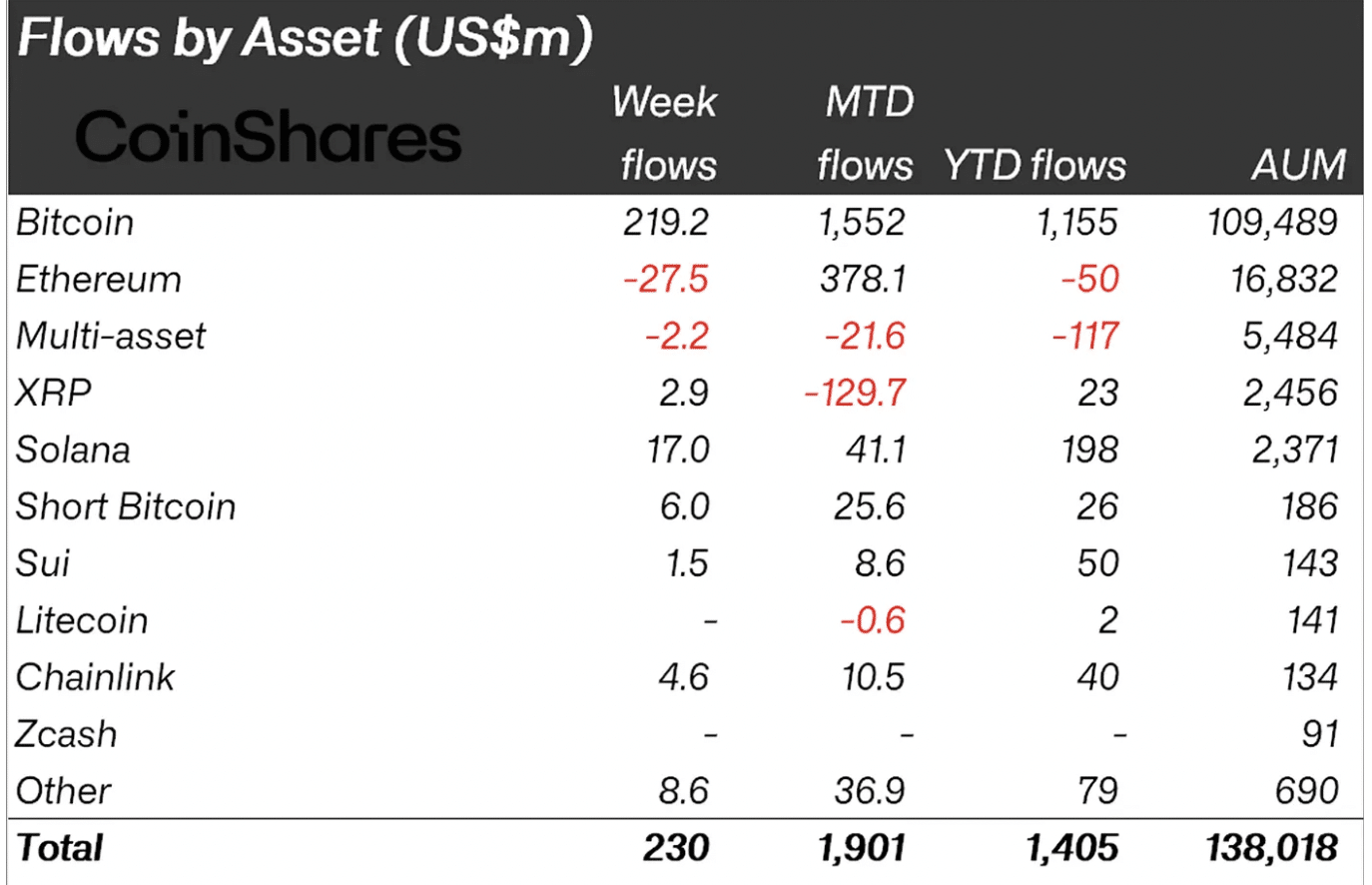
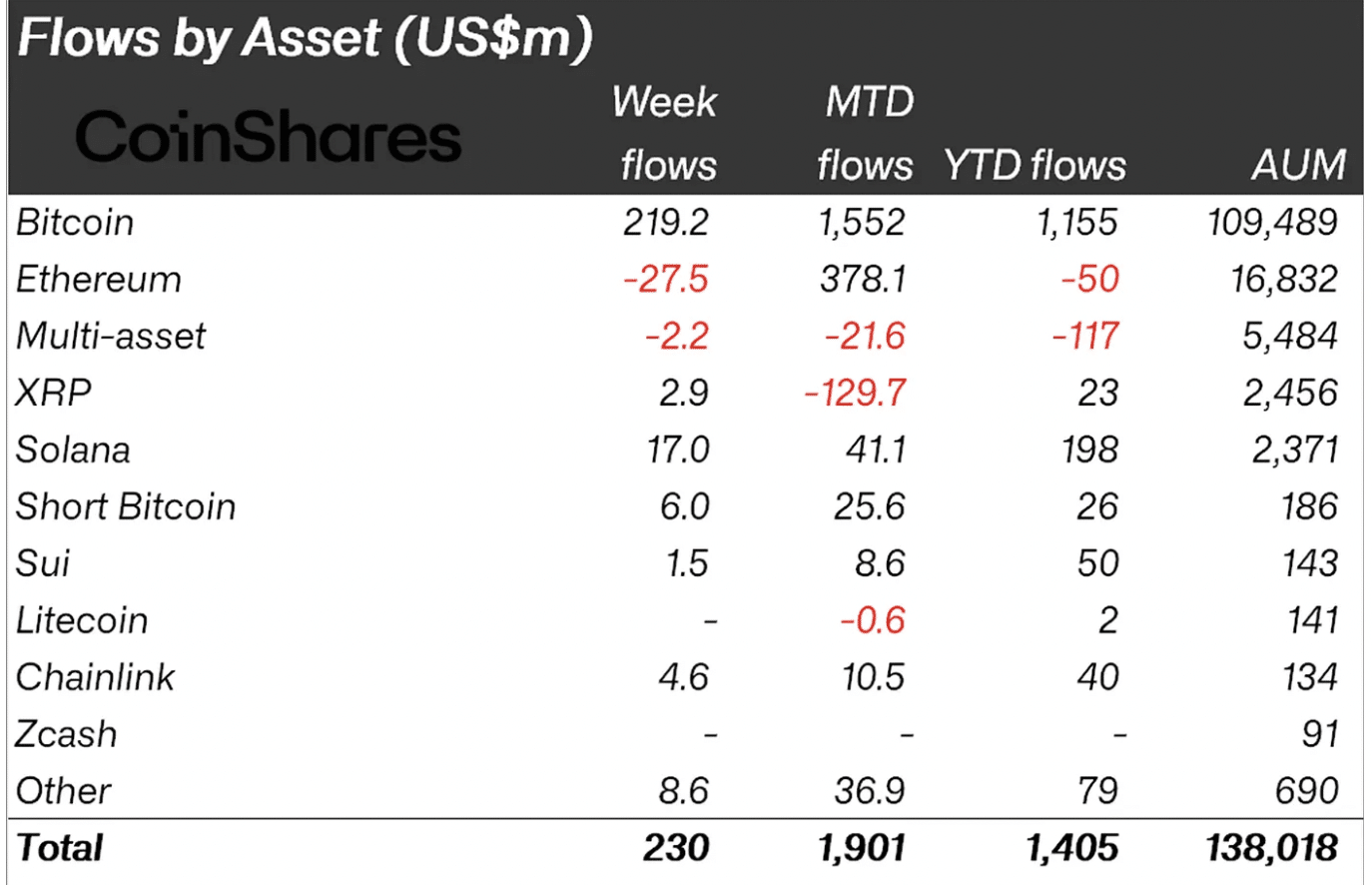
Bitcoin [BTC] is still leading the market, bringing in about $219 million in weekly inflows. However, the overall picture revealed that investors are unsure about what comes next.

Interestingly, short-Bitcoin products also saw $6 million in inflows, which means some investors are betting on a price drop while others are buying the dip.

At the same time, Chainlink [LINK] and Hyperliquid [HYPE] have been gaining attention, bringing in a combined $9.1 million.

Notably, Solana [SOL] has been strong, bringing in $17 million and extending its inflow streak to seven weeks. Ethereum [ETH], however, saw $27.5 million in outflows.
Source: CoinShares

Overall, this suggsted that the investors are being cautious after the recent signals from the FOMC.

Price action and more

These figures come on the back of most cryptocurrencies falling on the charts over the past week. ETH and HYPE were hit the hardest, both falling by around 6.69%.

LINK also dropped by about 5.21% over the past week. BTC performed a bit better, with a smaller decline of 3.97%. Meanwhile, SOL exhibited the most strength, slipping only 2.03% over the same period.

However, even though prices were falling, money was still flowing into the market.

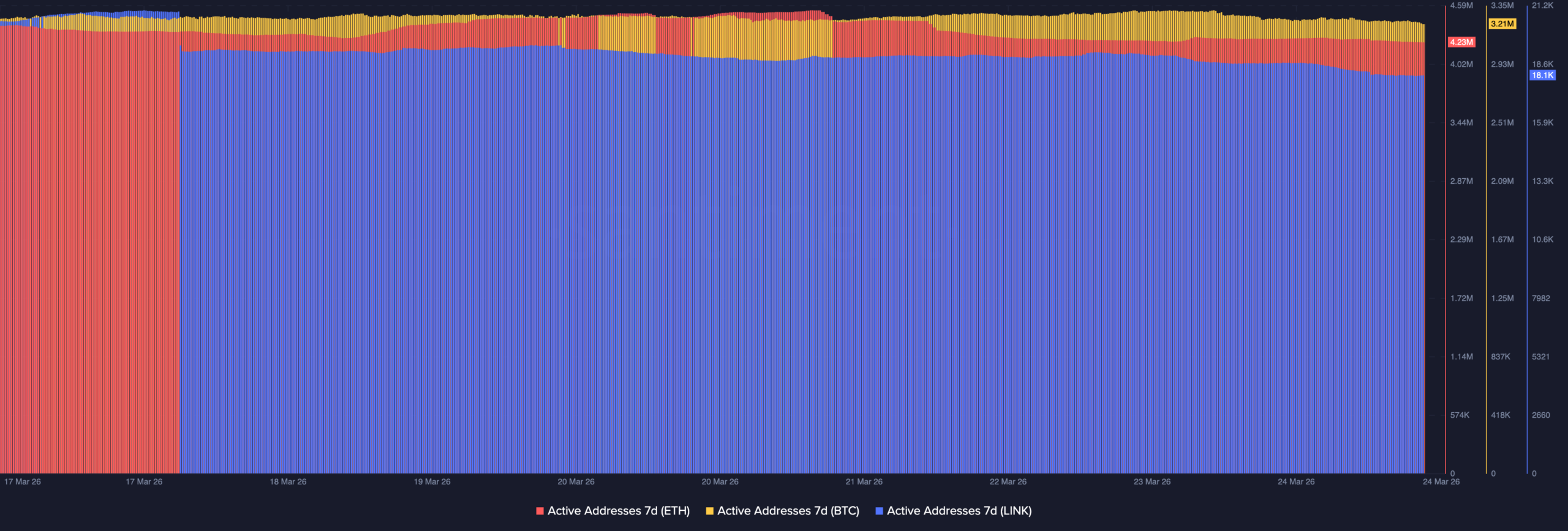
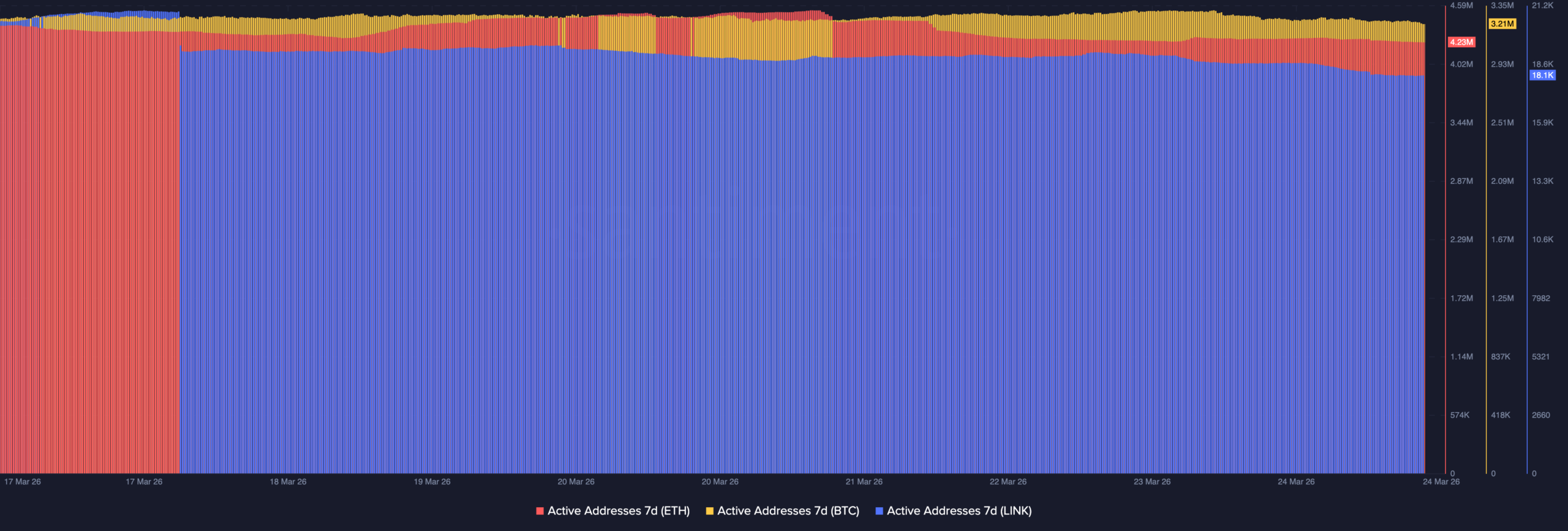
In fact, Santiment’s 7-day active addresses suggested that Chainlink was leading in terms of user activity. All while Ethereum and Bitcoin showed more moderate and stable usage patterns.
Source: Santiment

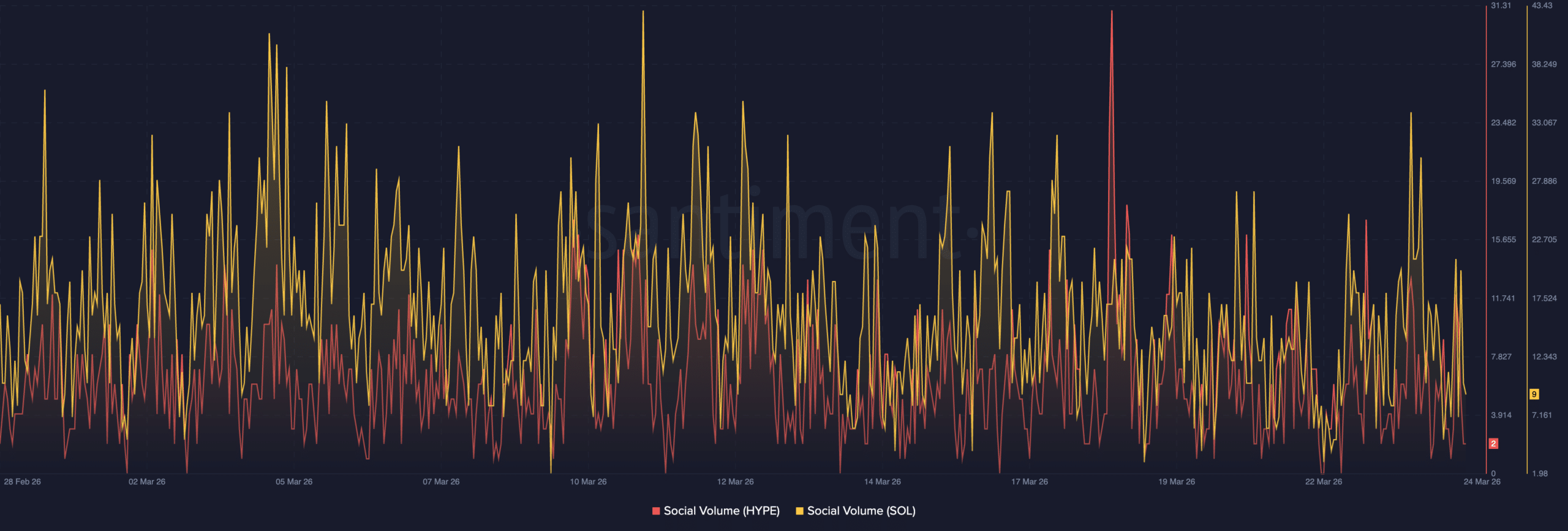
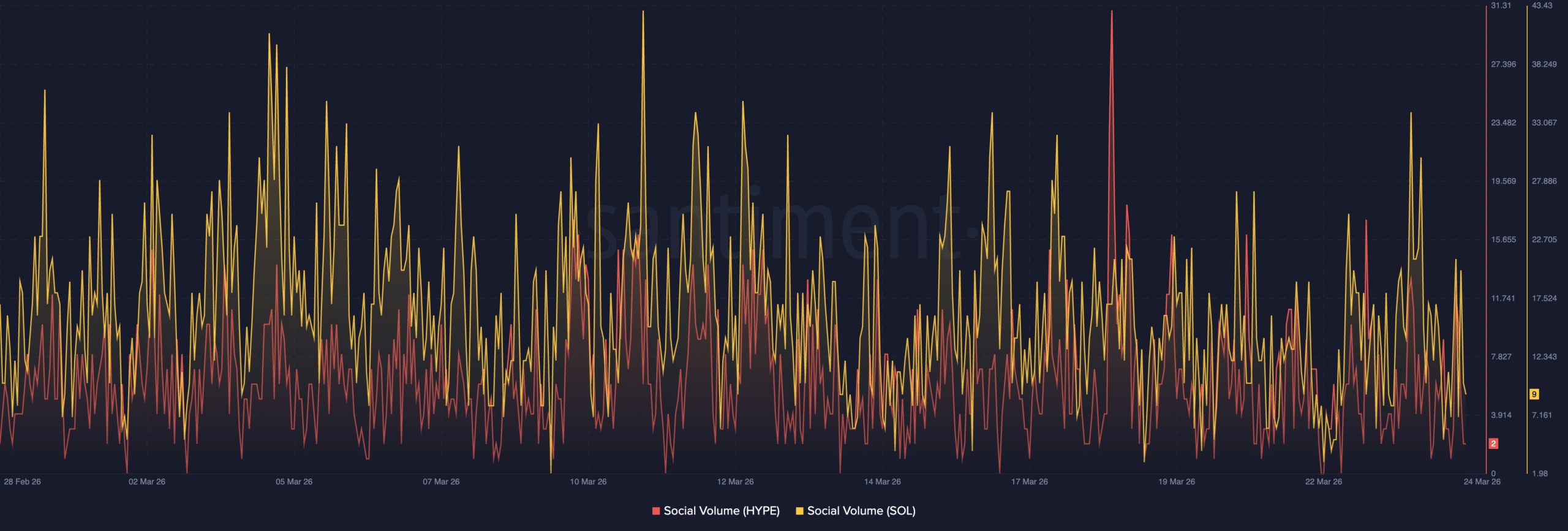
Additionally, the social volume data suggested that Solana has maintained a steady and strong presence in discussions over time.

On the contrary, while Hyperliquid has seen short bursts of attention, it has struggled to sustain any consistent momentum.
Source: Santiment

Is altcoin season around the corner?

All this has also pushed analysts to think that the altcoin season is imminent.

For its part though, the Altcoin Season Index, with a press time reading of 47, needs to reach 75 to confirm a full altcoin season.
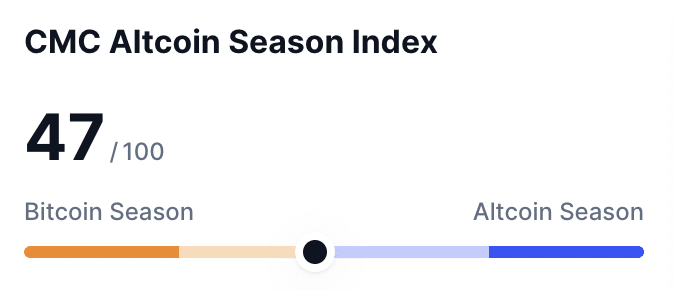
Source: CoinMarketCap

Hence, if inflows from regions like the U.S and Europe continue, this phase could be the final buildup before a broader altcoin rally begins.


Final Summary

  • Institutional behavior hinted at a “buy the dip” mindset, rather than panic selling.
  • Gap between price action and capital inflows alluded to hidden strength beneath short-term market weakness.


Related Questions

QWhat was the main reason behind the crypto market slowdown last week, according to the article?

AThe main reason was the U.S. Federal Reserve's cautious approach, as investors reacted more to interest rate expectations than global conflicts.

QHow much money flowed into digital asset investment products before the Fed's meeting, and how much left after?

A$635 million flowed in before the Fed's meeting, and about $405 million left after the Fed signaled a more cautious approach.

QWhich cryptocurrency saw the largest weekly inflows, and how much was it?

ABitcoin [BTC) saw the largest weekly inflows, bringing in about $219 million.

QWhat does the Altcoin Season Index need to reach to confirm a full altcoin season?

AThe Altcoin Season Index needs to reach 75 to confirm a full altcoin season.

QWhat was the overall net inflow for digital asset investment products last week?

AThe overall net inflow for digital asset investment products last week was $230 million.

Related Reads

The Essence of AI Layoffs: Why More AI Adoption Leads to More Corporate Anxiety?

The author, awaiting potential inclusion on an 8000-person layoff list, analyzes the true nature of recent "AI-driven" layoffs. They argue that while AI use, particularly tools like Claude for code generation, has skyrocketed and boosted developer output (e.g., 2-5x more code commits), this has not translated into proportional business growth or revenue. The core issue is a misalignment between increased "Input" (code) and tangible "Outcomes" (user value, revenue). AI acts as a costly B2B SaaS, inflating operational expenses without guaranteed returns. Two key problems emerge: 1) The friction that once filtered out bad ideas is gone, as AI allows cheap pursuit of even weak concepts. 2) Organizational "alignment tax"—the difficulty of coordinating across teams—becomes crippling when development velocity outpaces consensus-building. Thus, layoffs serve two immediate purposes: 1) To offset ballooning AI costs (Token consumption) and maintain cash flow, as rising input costs without outcome growth destroys unit economics. 2) To reduce organizational bloat and alignment friction by simply removing teams, thereby speeding up execution in the short term. Therefore, these layoffs are fundamentally caused by AI, even if AI doesn't directly replace roles. They represent a painful correction until companies learn to convert AI-driven productivity into real business outcomes and streamline organizational coordination to match the new pace of work. The cycle will continue until this learning curve is mastered.

marsbit1h ago

The Essence of AI Layoffs: Why More AI Adoption Leads to More Corporate Anxiety?

marsbit1h ago

Can the Solana Foundation and Google's Collaboration on Pay.sh Bridge the Payment Link Between Web2 and Web3 in the Agent Economy?

Solana Foundation, in collaboration with Google Cloud, has launched Pay.sh, a payment gateway designed to bridge the gap between AI agents and enterprise-grade service infrastructure. The initiative aims to solve a key bottleneck in the "agent economy": existing payment systems are ill-suited for autonomous AI agents. Traditional methods like credit cards require human verification, while newer on-chain protocols like x402 and MPP create a separate, Web3-native system that raises barriers for service providers. Pay.sh functions as a universal payment layer. It allows users to fund a Solana wallet via credit card or stablecoin, which then acts as an identity and payment proxy for AI agents. When an agent needs to access a paid API service (e.g., Google Cloud, Alibaba Cloud), Pay.sh handles the transaction seamlessly. It leverages the HTTP 402 status code ("Payment Required") to initiate payments, intelligently choosing between one-time transfers (x402-style) or session-based authorizations (MPC-style) based on the service's billing model. This spares agents from manual account registration and API key management. A key feature for service providers is low integration effort. They can adopt Pay.sh by providing a declarative configuration file, enabling features like tiered pricing, free tiers, and automatic revenue splitting to multiple addresses (e.g., for royalties, cloud costs). Providers can also list their APIs in a central Pay Skill Registry for agent discovery. The collaboration with Google Cloud provides crucial infrastructure for API proxying, traffic routing, and compliance logging, aiming to keep agent activities within regulated boundaries. By connecting Web2 services with Web3 payment rails, Pay.sh positions the Solana wallet as a foundational identity and payment tool for AI agents, potentially driving more transaction volume to the Solana ecosystem. However, the report notes challenges. The service registry currently lacks robust vetting, risking exposure to unauthorized or malicious third-party APIs. Pay.sh also inherits security and compatibility risks from its underlying payment protocols (x402, MPC). Furthermore, adoption may be hindered by varying regional data privacy and payment compliance regulations among API providers. Despite these hurdles, Pay.sh represents a significant step towards integrating Web2 and Web3 for autonomous agent commerce.

marsbit1h ago

Can the Solana Foundation and Google's Collaboration on Pay.sh Bridge the Payment Link Between Web2 and Web3 in the Agent Economy?

marsbit1h ago

Trading

Spot
Futures
活动图片




