$635M in, $405M out – How the Fed quietly shook the crypto market

ambcryptoPublished on 2026-03-25Last updated on 2026-03-25

Abstract

The crypto market slowed last week, with many attributing the decline to Middle East tensions. However, the primary driver was the U.S. Federal Reserve's cautious policy signals. According to CoinShares, digital asset investments saw $230 million in inflows—significantly lower than previous weeks. Notably, $635 million entered just before the Fed meeting, but $405 million exited shortly after, indicating investors are highly sensitive to interest rate expectations. Bitcoin led with $219 million in weekly inflows, though short-Bitcoin products also gained $6 million, reflecting mixed sentiment. Solana remained strong with $17 million inflows over seven weeks, while Ethereum saw $27.5 million in outflows. Chainlink and Hyperliquid attracted $9.1 million combined. Despite price declines—ETH and HYPE fell ~6.7%, BTC dropped ~4%, and SOL dipped only 2%—capital continued flowing in. User activity was highest for Chainlink, while Solana maintained steady social volume. The Altcoin Season Index read 47, below the 75 threshold for a confirmed altcoin season, but sustained inflows suggest a potential buildup toward a broader rally. Institutional behavior showed a "buy the dip" mindset rather than panic selling.

The crypto market slowed down last week. And, while many blamed global tensions in the Middle East, the real reason behind the same might have been the U.S. Federal Reserve.

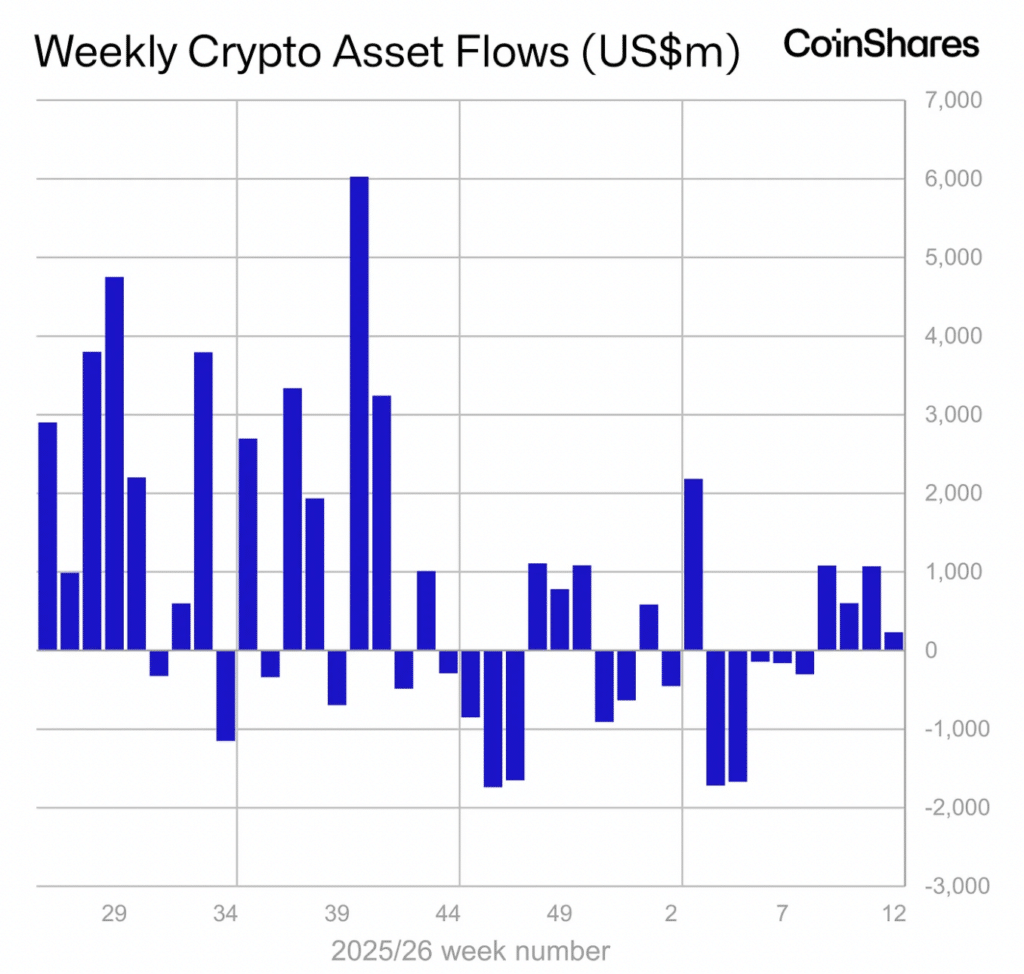
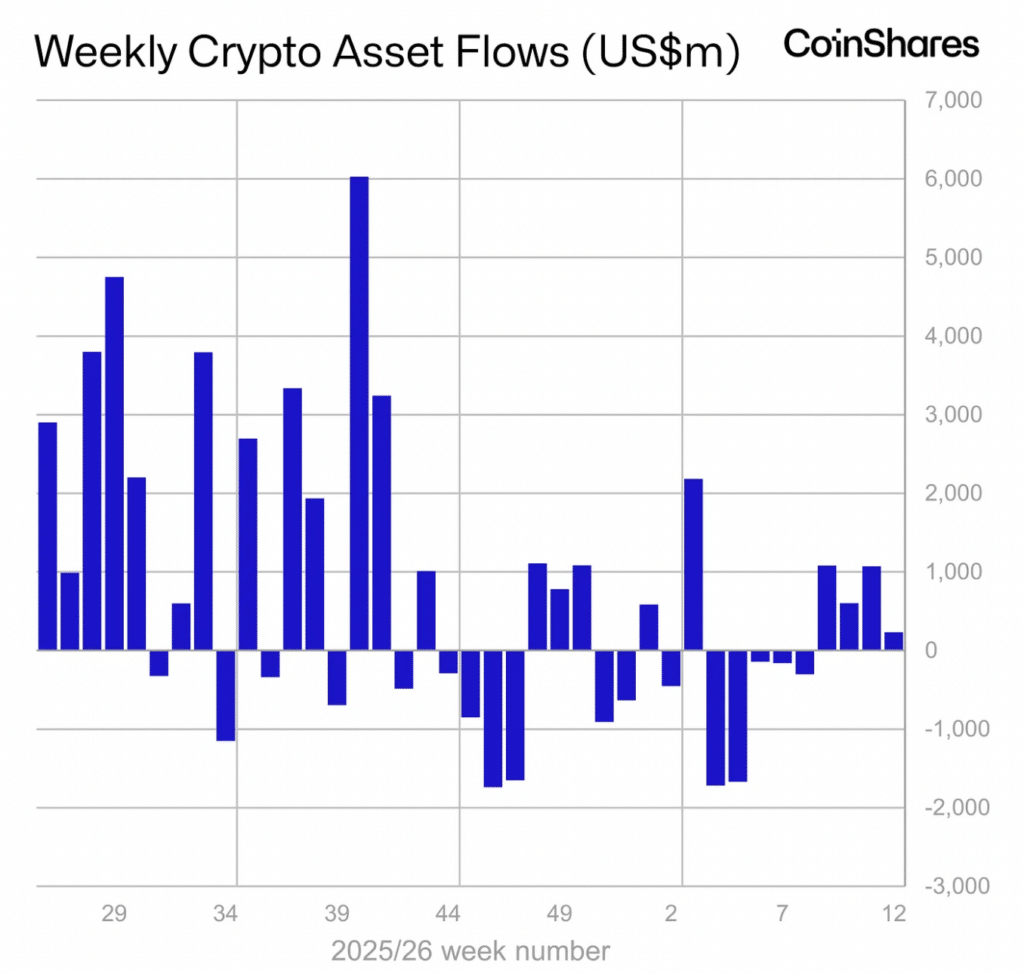
According to a report from CoinShares, digital asset investment products saw $230 million in inflows. However, this figure was much lower than the ones seen in previous weeks.
Source: CoinShares

Looking closer, most of the money came in before the Fed’s meeting, with $635 million added in just two days. After the Fed signaled a more cautious approach, about $405 million quickly left the market.

This suggested that investors may be reacting more to interest rate expectations than global conflicts, adjusting their positions based on future monetary policy.

While total inflows of $230 million hinted at a recovering market, the data showed that investor sentiment is still mixed.

Analysis of different coins and their performance over the past week

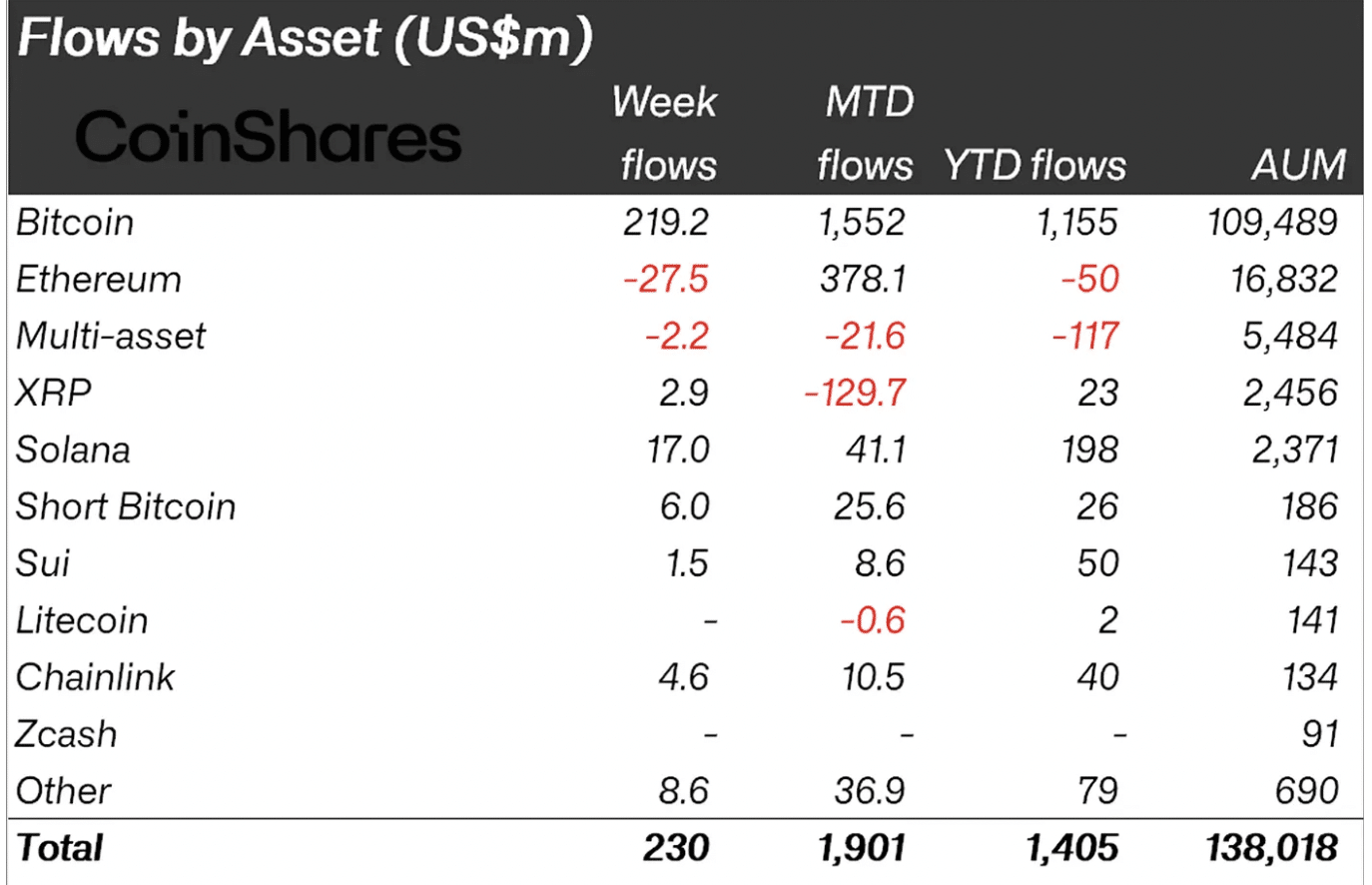
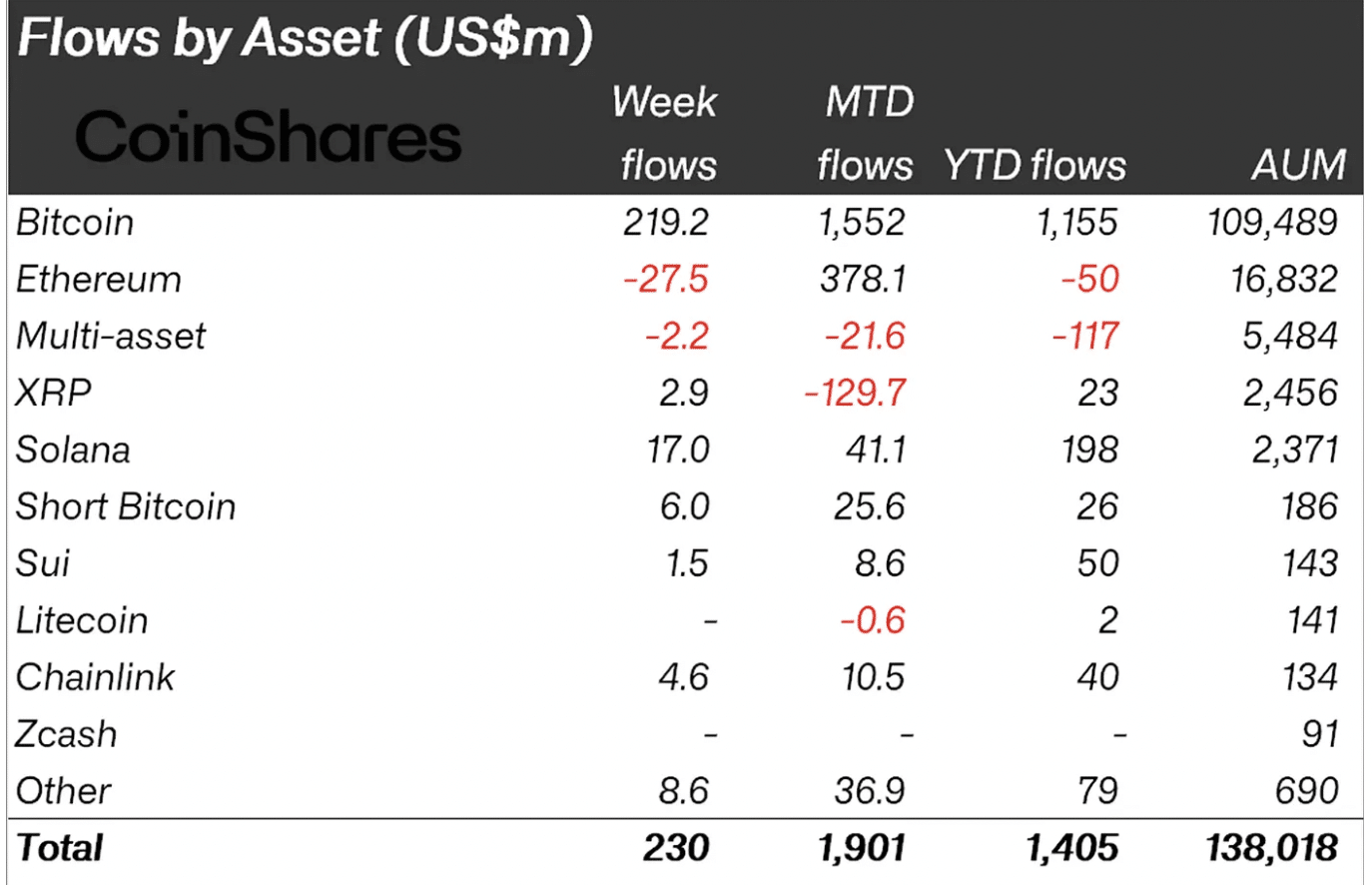
Bitcoin [BTC] is still leading the market, bringing in about $219 million in weekly inflows. However, the overall picture revealed that investors are unsure about what comes next.

Interestingly, short-Bitcoin products also saw $6 million in inflows, which means some investors are betting on a price drop while others are buying the dip.

At the same time, Chainlink [LINK] and Hyperliquid [HYPE] have been gaining attention, bringing in a combined $9.1 million.

Notably, Solana [SOL] has been strong, bringing in $17 million and extending its inflow streak to seven weeks. Ethereum [ETH], however, saw $27.5 million in outflows.
Source: CoinShares

Overall, this suggsted that the investors are being cautious after the recent signals from the FOMC.

Price action and more

These figures come on the back of most cryptocurrencies falling on the charts over the past week. ETH and HYPE were hit the hardest, both falling by around 6.69%.

LINK also dropped by about 5.21% over the past week. BTC performed a bit better, with a smaller decline of 3.97%. Meanwhile, SOL exhibited the most strength, slipping only 2.03% over the same period.

However, even though prices were falling, money was still flowing into the market.

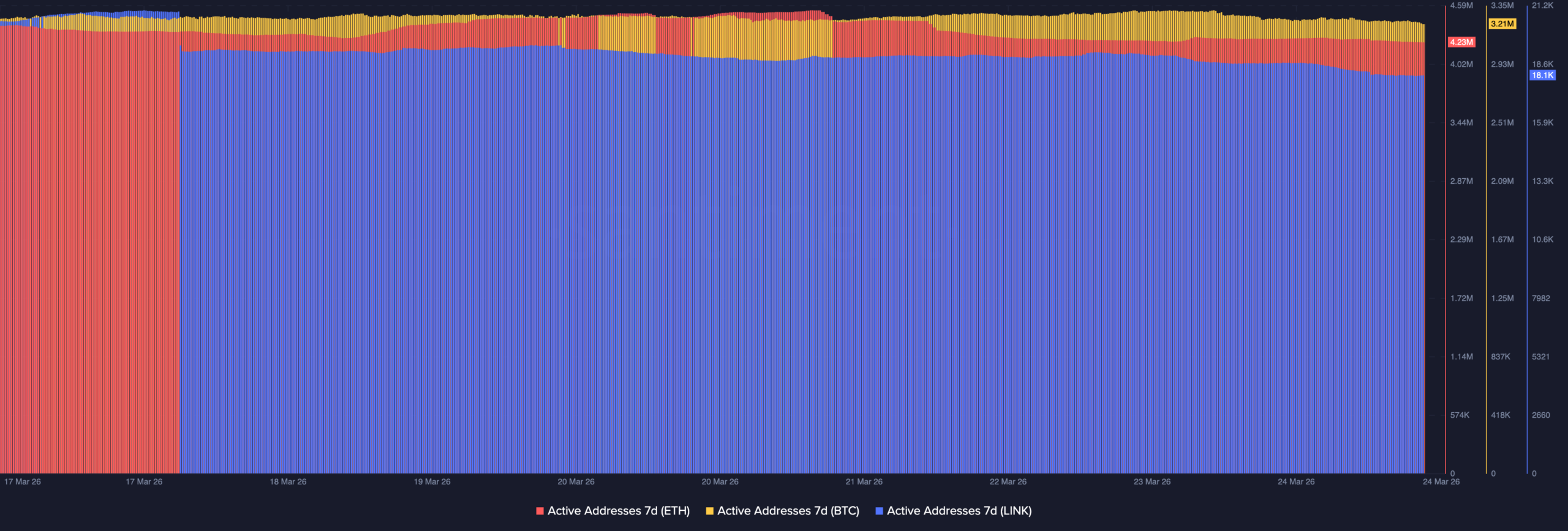
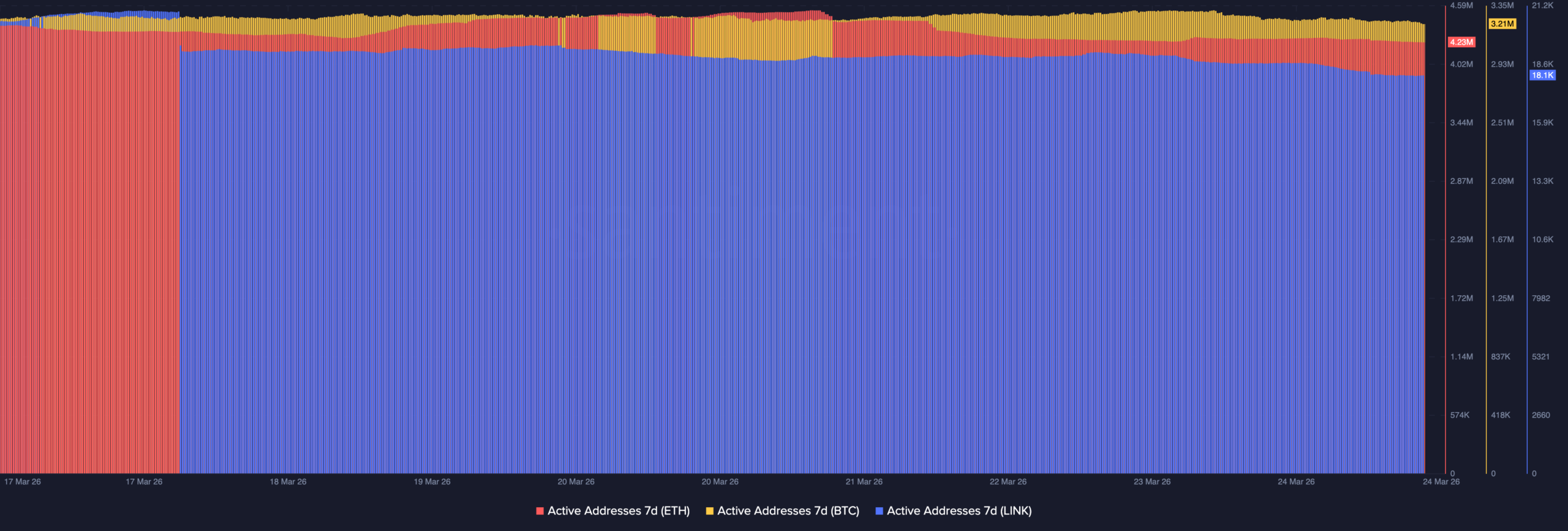
In fact, Santiment’s 7-day active addresses suggested that Chainlink was leading in terms of user activity. All while Ethereum and Bitcoin showed more moderate and stable usage patterns.
Source: Santiment

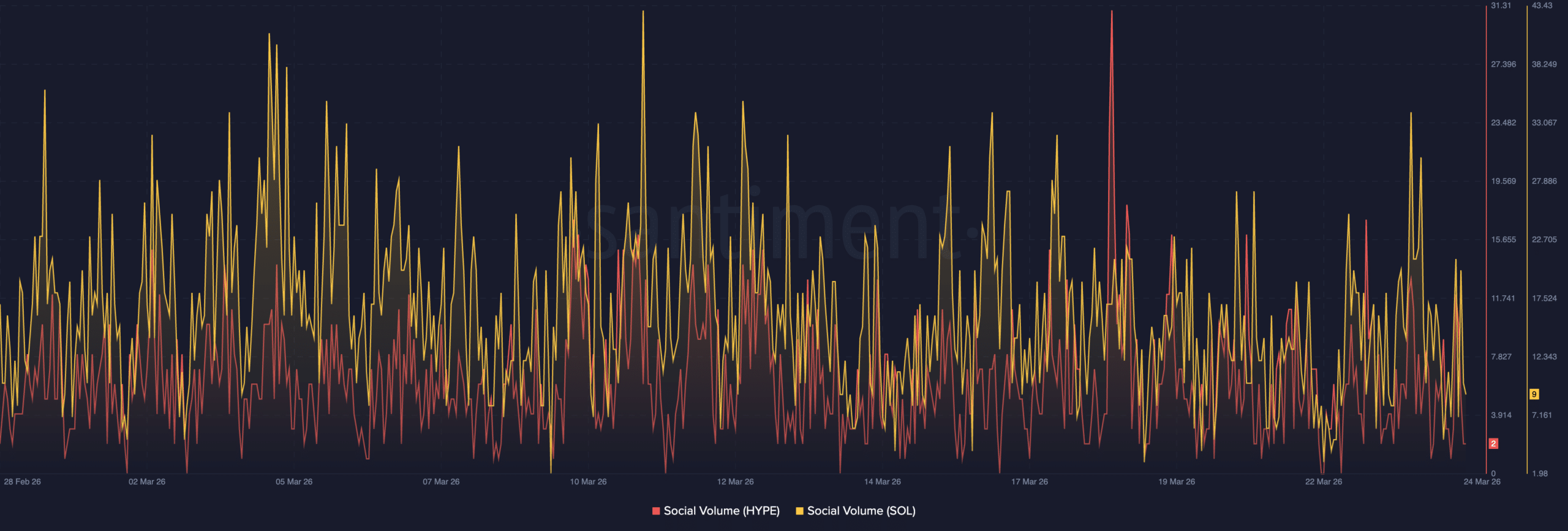
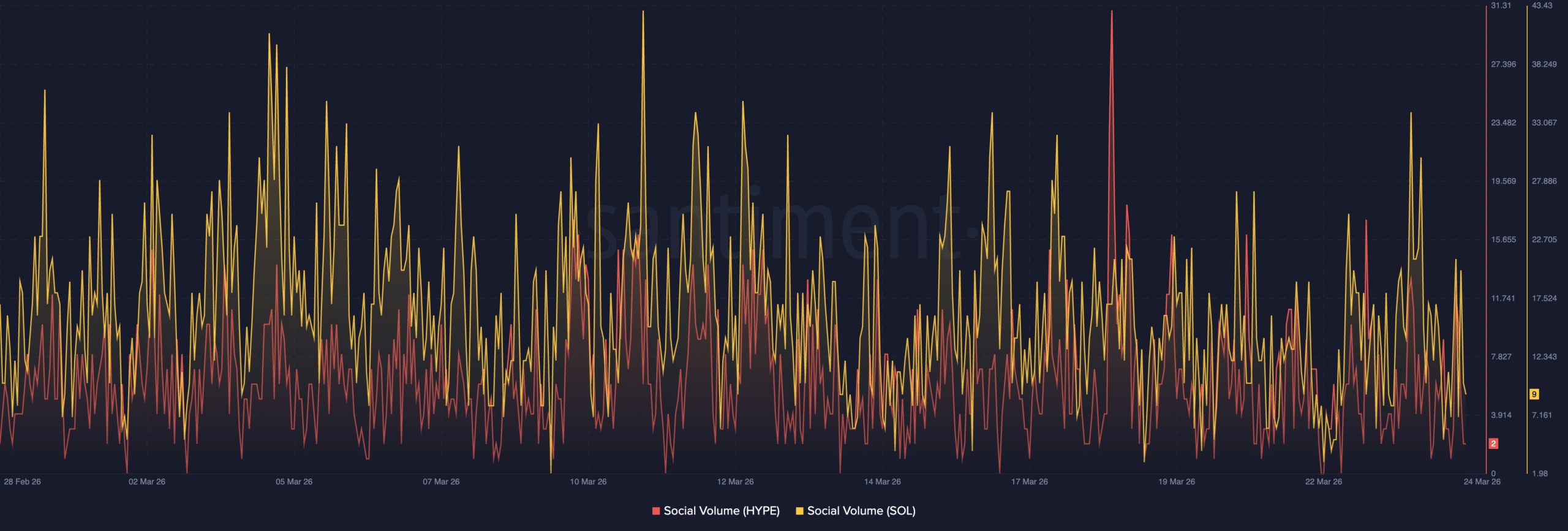
Additionally, the social volume data suggested that Solana has maintained a steady and strong presence in discussions over time.

On the contrary, while Hyperliquid has seen short bursts of attention, it has struggled to sustain any consistent momentum.
Source: Santiment

Is altcoin season around the corner?

All this has also pushed analysts to think that the altcoin season is imminent.

For its part though, the Altcoin Season Index, with a press time reading of 47, needs to reach 75 to confirm a full altcoin season.
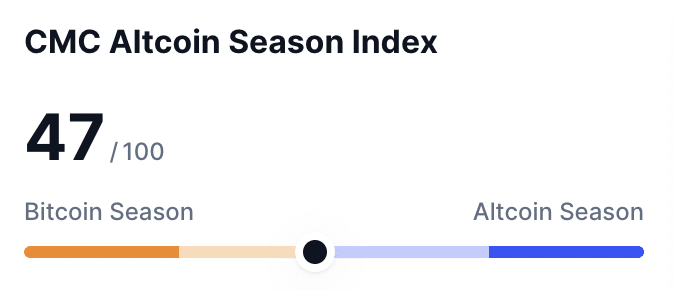
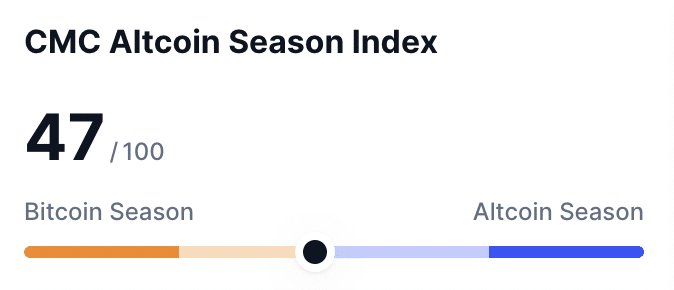
Source: CoinMarketCap

Hence, if inflows from regions like the U.S and Europe continue, this phase could be the final buildup before a broader altcoin rally begins.


Final Summary

  • Institutional behavior hinted at a “buy the dip” mindset, rather than panic selling.
  • Gap between price action and capital inflows alluded to hidden strength beneath short-term market weakness.


Related Questions

QWhat was the main reason behind the crypto market slowdown last week, according to the article?

AThe main reason was the U.S. Federal Reserve's cautious approach, as investors reacted more to interest rate expectations than global conflicts.

QHow much money flowed into digital asset investment products before the Fed's meeting, and how much left after?

A$635 million flowed in before the Fed's meeting, and about $405 million left after the Fed signaled a more cautious approach.

QWhich cryptocurrency saw the largest weekly inflows, and how much was it?

ABitcoin [BTC) saw the largest weekly inflows, bringing in about $219 million.

QWhat does the Altcoin Season Index need to reach to confirm a full altcoin season?

AThe Altcoin Season Index needs to reach 75 to confirm a full altcoin season.

QWhat was the overall net inflow for digital asset investment products last week?

AThe overall net inflow for digital asset investment products last week was $230 million.

Related Reads

Bitcoin Withdrawals Continue: 8 Years of Storage in a Coldcard Cold Wallet Ended in Zero

Coldcard Hardware Wallet Hacked: Losses Mount Due to Vulnerable Seed Generation A critical vulnerability in Coldcard hardware wallets has led to a continued wave of fund thefts. According to Galaxy Research, the total stolen has reached 1,367.05 BTC (approx. $88.6 million) from 4,585 addresses, a significant increase from the initial 594.5 BTC reported on July 30, 2026. Most of the stolen funds remain on the attackers' addresses. The issue is not with the current firmware, which Coinkite has updated, but with seed phrases generated on vulnerable devices between March 2021 and the release of fixed firmware versions. Due to a programmer error, devices switched from using a hardware random number generator to the software-based Yasmarang generator, which was initialized with publicly accessible data like the chip's serial number. This made the seed phrases predictable through offline brute-force attacks, meaning wallets remain at risk until funds are moved to a new wallet generated with the patched firmware. Affected devices include Mk2/Mk3 with firmware 4.0.1–4.1.9 (and up to 5.0.3), Mk4/Mk5 up to version 5.6.0, and Q models up to 1.5.0Q. The only exceptions are seeds created with a high-entropy method like at least 50 independent dice rolls or a strong unique BIP-39 passphrase. All other owners must generate a new seed on the fixed firmware and transfer their assets. A case highlighting the human impact involves a 39-year-old long-term investor who lost 2 BTC (approx. $130,000) in minutes. He had accumulated the Bitcoin over eight years through physical labor, viewing it as a financial lifeline and a retirement plan in a country suffering from hyperinflation. His story underscores that even conservative "buy and hold in cold storage" strategies can be compromised by such underlying technical flaws. From a technical perspective, this incident echoes historical failures where weak random number generators undermined cryptographic security, challenging the assumption that offline storage is automatically foolproof.

cryptonews.ru3h ago

Bitcoin Withdrawals Continue: 8 Years of Storage in a Coldcard Cold Wallet Ended in Zero

cryptonews.ru3h ago

Trading

Spot
活动图片




