巨鲸离场,蓝筹 NFT 还会继续跌吗?

FPublished on 2022-09-07Last updated on 2022-09-08

Abstract

本周 NFT 总交易量较上周再次下降 6%,没有强势反弹的迹象。

本周 NFT 总交易量较上周再次下降 6%,没有强势反弹的迹象。

本周市场趋势
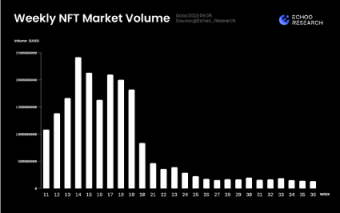
Weekly NFT Market Volume (Source: echoo.substack.com)
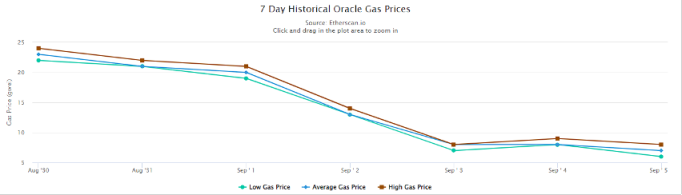
Oracle Gas Prices,(Source: etherscan.io)

本周 NFT 总交易量较上周再次下降 6%,虽然 Gas Prices 已经到达今年最低区间,但也没有引起人们买卖的欲望。目前现状:NFT 市场的交易量依然萎靡,并没有强势反弹的迹象。

(自今年 5 月以来,NFT 交易量走低的趋势已经持续了 16 周,我们仍然在持续关注翻转信号出现)
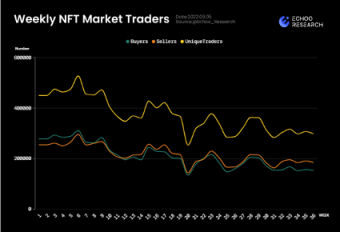
Weekly NFT Market Traders (Source: echoo.substack.com)

本周参与交易的人数较上周下降 3%,人数波动越来越小,市场上参与交易的人正在变少,大多数交易者处于「观望」态度。同时买卖人数的差值为今年最大(卖出者远远多于买入者),这证明目前市场上大多数人更倾向于「卖出」。
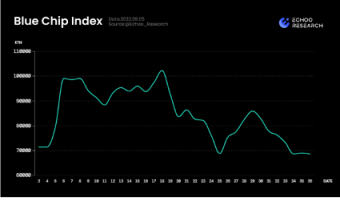
Blue Chip Index (Source: echoo.substack.com)

蓝筹 NFT 指数连续 5 周下跌后,在今年的最低值附近得到暂时的「支撑」,与此同时,我们上周所提到的「反弹力度小,有走平的趋势」在本周得到了验证。

整个蓝筹 NFT 集合已经处在了历史价格的低点,但并没有迎来强有力的反弹,再加上整体市场的不景气,这是非常危险的信号。
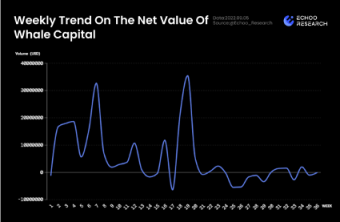
Weekly Trend On The Net Value Of Whale Capital (Source: echoo.substack.com)

在本周,巨鲸在 NFT 市场上流出了 $105,685 的资金,从趋势上看已经是今年最接近零的一周,这代表本周的大部分的巨鲸已经「离场」。这也像我们多次强调的:当前 NFT 市场大多是散户在进行交易,受到巨鲸的影响很微弱。

指数信号

1.巨鲸上周抄底的 NFT

下表为巨鲸的买入前 20 名 NFT,详细的购入数量及平均成本如下:

(受个别极端交易的影响,部分数值会有影响,仅供投资参考。)
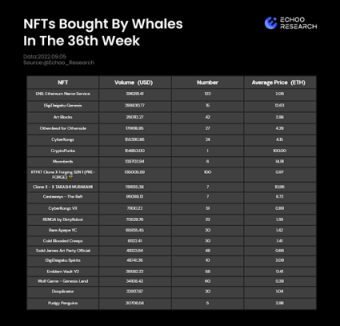
NFTs Bought By Whales In The 36th Week

2.蓝筹的 NFT 买卖信号

本期 Echoo Research 为大家提供的指标是蓝筹的 NFT 买卖信号,对于买卖行为具有一定的参考性。

最近价格波动开始减小,导致绝大部分蓝筹 NFT 的信号显示了「待定」策略,但仍有一些短线操作的机会。
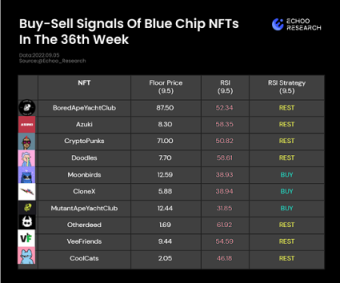
Buy-Sell Signals Of Blue Chip NFTs In The 36th Week

指标说明

RSI Strategy:根据 RSI 的买卖相对强弱的特性而设计的买卖信号。

简单使用方法:在波动区间下方为买入信号,在波动区间上方为卖出信号,偏离度越大信号越强烈。

3.蓝筹集合的 SMA 趋势

反弹力度不大造成了短、中、长期趋势线的纠缠,形式并不明朗,保持持续观察。
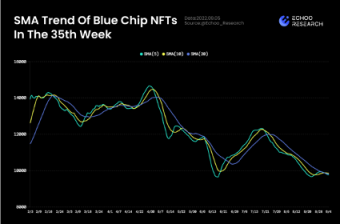
SMA Trend Of Blue Chip NFTs In The 36th Week

指标说明

该指标综合了蓝筹 NFT 的市值,运用均线进行计算,用来反映 NFT 大盘的趋势。

SMA:反映短周期于长周期的趋势。

简单使用方法:短周期线从下方穿过长周期线时为买入信号,短周期线从上方穿过长周期线时为卖出信号。

Related Reads

How Blockchain Fills the Identity, Payment, and Trust Gaps for AI Agents?

AI Agents are rapidly evolving into autonomous economic participants, but they face critical gaps in identity, payment, and trust infrastructure. They currently lack standardized ways to prove who they are, what they are authorized to do, and how they should be compensated across different environments. Blockchain technology is emerging as a solution to these challenges by providing a neutral coordination layer. Public ledgers offer auditable credentials, wallets enable portable identities, and stablecoins serve as a programmable settlement layer. A key bottleneck is the absence of a universal identity standard for non-human entities—akin to "Know Your Agent" (KYA)—which would allow Agents to operate with verifiable, cryptographically signed credentials. Without this, Agents remain fragmented and face barriers to interoperability. Additionally, as AI systems take on governance roles, there is a risk that centralized control over models could undermine decentralized governance in practice. Cryptographic guarantees on training data, prompts, and behavior logs are essential to ensure Agents act in users' interests. Stablecoins and crypto-native payment rails are becoming the default for Agent-to-Agent commerce, enabling seamless, low-cost transactions for AI-native services. These systems support permissionless, programmable payments without traditional merchant onboarding. Finally, as AI scales, human oversight becomes impractical. Trust must be built into system architecture through verifiable provenance, on-chain attestations, and decentralized identity systems. The future of Agent economies depends on cryptographically enforced accountability, allowing users to delegate tasks with clearly defined constraints and transparent operation logs.

marsbit18m ago

How Blockchain Fills the Identity, Payment, and Trust Gaps for AI Agents?

marsbit18m ago

Six Years Since DeFi Summer, How Will the Decentralized Financial Revolution Continue?

In 2026, the DeFi sector faces a severe trust crisis following a series of high-profile security breaches, including a $292 million theft from KelpDAO’s rsETH, a $2.85 million exploit at Drift Protocol due to permission vulnerabilities, and a $14.9 million lending failure at Venus Protocol. These incidents triggered a withdrawal of approximately $10 billion from DeFi over a single weekend, highlighting systemic risks beyond smart contract flaws—such as governance, cross-chain complexity, and operational weaknesses. Despite these challenges, on-chain finance continues to grow, with capital shifting toward safer, regulated products. Stablecoins like USDT ($185B) and USDC ($78B) have reached a combined market cap of $263 billion, while tokenized U.S. Treasuries surged to $10.93 billion. Visa’s growing USDC settlement volume, now annualized at $3.5 billion, signals increasing institutional adoption of compliant blockchain-based financial infrastructure. The competition for the future of on-chain finance is intensifying. While native DeFi struggles with trust and capital outflows, regulated products—stablecoins, tokenized assets, and ETFs—are gaining dominance by offering programmable, 24/7 settlement without high DeFi risks. Over 80 crypto projects shut down in Q1 2026, reflecting dwindling patience for speculative ventures. The core challenge for open DeFi is to rebuild trust and demonstrate irreplaceable value—or risk ceding its role as the primary entry point to on-chain finance.

marsbit28m ago

Six Years Since DeFi Summer, How Will the Decentralized Financial Revolution Continue?

marsbit28m ago

Trading

Spot
Futures
活动图片