OpenAI高管:Codex这样的Harness,也就再火俩月

marsbitPublished on 2026-08-09Last updated on 2026-08-09

Abstract

OpenAI产品兼平台总经理Thibault Sottiaux近期表示,以Codex为代表的“Harness”(大模型配套管理工具)生命周期可能仅剩2-3个月,将很快变成“原始工具”。 当前,Harness框架帮助用户通过本地电脑(如笔记本)运行AI智能体(Agent),实现任务自动化。但Sottiaux指出,这种方式在面临下一代强大模型时将遇到根本瓶颈:本地算力与内存不足、长时任务要求设备永不关机、难以处理大规模并发任务与复杂上下文管理。 因此,AI智能体的运行范式正在从“本地单机工具”向“云原生基础设施”演进。趋势包括: 1. **云端异步执行**:如Codex已支持将任务发送到云端容器运行,设备仅作为指挥终端。 2. **云原生微沙箱兴起**:出现专门为AI Agent设计的云端沙箱环境,可动态创建大量独立容器并行处理任务。 3. **研发重心转移**:顶尖AI团队正从优化提示词转向构建“系统级Harness”,专注于打造环境、测试闭环与反馈基础设施。例如Anthropic曾用16个Claude实例在2000个云端会话中协同编写了一个C语言编译器。 未来智能体工作流将呈现“本地轻指挥,云端重执行”的标配模式。开发界面将成为操控板,计算密集型任务全部在云端集群中并行完成。竞争焦点也将从“模型推理能力”转向“模型潜力释放程度”,仅依赖本地简单调用的Agent框架即将触顶。

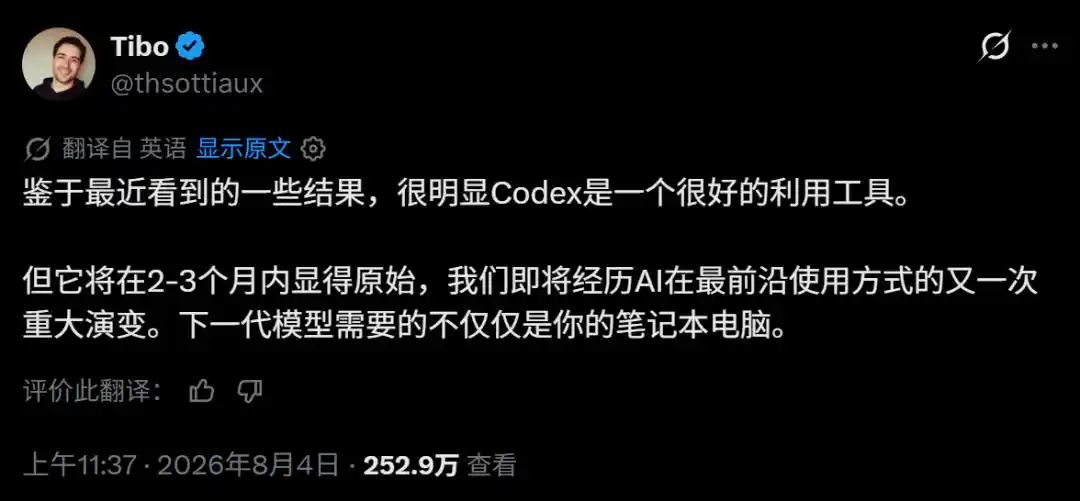
「再过 2-3 个月,Codex 就是个原始工具了。」

这话不是竞争对手说的,是现任 OpenAI 产品兼平台总经理,负责 ChatGPT、Codex 的 Thibault Sottiaux 自己跑出来说的。
最近,Harness 框架已经逐渐破圈。从开发者到白领,人们纷纷用上了这种 Agent 工具,享受到了 AI 带来的自动化红利。在这其中,OpenAI 的 Codex 更是佼佼者。

然而在这个节点上,OpenAI 的高管已经看到了更远处。AI 智能体(Agent)的下一步,或许还有一个从单机小工具向「云原生基础设施」演进的范式进化。

Thibault Sottiaux 所说的「笔记本不够用了」意思很明确:我们正在用单机 Harness 去驱动有长时推理和高度自主能力的下一代模型,这种「小脚穿大鞋」的模式已经快玩不下去了。

我们知道,所谓 Harness 是指围绕大模型构建的上下文管理、工具调用、状态持久化、环境隔离和异常恢复等套件。目前很多开发者都是以在笔记本电脑上运行 Agent(如通过 CLI、Cursor、Claude Code 或轻量 Agent 逻辑)的方式来完成任务的。

当然越来越多的开发者也倾向于多工具、多模型一起用:比如用 Claude Code 上的 Fable 5 来写项目文档,再去 Codex 上用其他模型来执行。

但这在面对下一代前沿模型时会碰到三大物理瓶颈:

算力、内存局限:当智能体需要并发执行 20 个子任务(如一边跑测试、一边爬数据、一边编译大项目),本地笔记本的内存、CPU 以及并发沙箱(Docker/VM)资源会瞬间爆满。

长任务无法关机:复杂的 Agent 任务可能需要运行几小时甚至几天,要求用户的笔记本不能关机、不能断网、不能合盖,这在工程上非常反人性。

上下文与工具链的并行爆炸:下一代模型肯定将支持极长上下文和高度并发推理。本地轻量级 Harness 将会很难处理大规模并发 Agent 之间的上下文压缩、状态同步与集中式日志追踪。

面对这些挑战,Agent 工具向重型基础设施和系统设计转型的迹象,其实已经在过去几个月里逐渐出现。

比如 OpenAI 的 Codex 目前已经提供云端异步运行支持。用户在终端下达指令后,任务被丢进云端隔离的容器(Sandbox Container)里自治运行,手机或笔记本只起一个指挥控制的作用。

与此同时,云原生微沙箱正在兴起:像 E2B、Daytona、Fly.io、Modal 等专为 AI Agent 设计的云端极速沙箱基础设施,可以让 Agent 在执行任务时动态弹起数百个独立容器环境去平行跑代码和验证结果。

在包括 OpenAI、Anthropic、Cognition 等顶尖 AI 团队中间,工程师们正在开始将研发的重点从优化 Prompt 转移到「编写系统级的 Harness」。

今年 2 月,Anthropic 团队展示过用 16 个 Claude 并行运行在 2000 个云端 Session 中写出一个 C 语言编译器的案例。这是生成式 AI 在软件工程领域走向多 Agent 协同的一个里程碑。其中,不同的 Claude 实例扮演了不同角色:1 个架构师 Agent 负责设计抽象语法树(AST),4 个编码 Agent 负责不同模块,两个测试 Agent 专门写单元测试,1 个审计 Agent 负责 Review 代码流和安全性。

主导研究员 Nicholas Carlini 指出:「大部分精力都花在了为模型打造环境、测试闭环与反馈基础设施上。」

未来两到三个月,这样的智能体工作流可能会成为我们的日常。

结合 Thibault Sottiaux 的判断,「本地轻指挥,云端重执行」将会成为标配,开发者界面(如 IDE、Terminal、Web UI)将彻底变为操控板。真正的代码重构、测试跑通、浏览器自动化模拟等计算密集任务,全部会在云端动态集群中并行消化,再将最终差异(Diff)和日志流式推回本地。

而模型与 Harness 的深度结合,或许会把竞争从「比谁的模型推理能力更强」,转变成「比谁的模型潜力释放得更彻底」。那些只靠在本地电脑跑 Python 脚本和简单 API 调用的 Agent 框架,即将全面触顶。

本文来自微信公众号 “机器之心”(ID:almosthuman2014),作者:泽南

Related Questions

Q根据OpenAI高管Thibault Sottiaux的观点,为什么他认为Codex等Harness工具的现有形式即将过时?

A他认为再过2-3个月,像Codex这样的Harness工具就将成为‘原始工具’。原因在于,当前主要在本地(如笔记本电脑上)运行的Harness框架在处理下一代需要长时推理和高度自主能力的AI模型时,将遇到算力与内存局限、长任务无法关机以及并行处理能力不足三大物理瓶颈,这种‘小脚穿大鞋’的模式已难以持续。

Q文章中提到AI Agent(智能体)的未来发展趋势是什么?

AAI Agent的未来发展趋势是从‘单机小工具’向‘云原生基础设施’演进。未来的模式将是‘本地轻指挥,云端重执行’,复杂的计算密集任务(如代码重构、测试、自动化模拟)会在云端的动态集群中并行执行,本地设备(如IDE、终端)则主要作为操控板来下达指令和接收结果。

Q为了解决当前Harness框架的瓶颈,业界出现了哪些相关的技术或基础设施?

A为了解决瓶颈,业界出现了以下几种技术或基础设施:1. 云端异步运行支持(如OpenAI Codex已提供的功能),任务在云端隔离容器中运行;2. 云原生微沙箱,例如E2B、Daytona、Fly.io、Modal等专为AI Agent设计的云端极速沙箱基础设施,可以动态弹起大量独立容器并行执行任务;3. 系统级的Harness设计,工程师的工作重点从优化提示词转向构建能管理多Agent协同、状态持久化等复杂工作流的基础设施。

Q文章中以Anthropic团队的案例说明了什么?

A文章中以Anthropic团队展示的案例说明了生成式AI在软件工程领域正走向成熟的多Agent协同。他们用16个Claude实例并行运行在2000个云端会话中,协作编写了一个C语言编译器。这个案例是一个里程碑,它展示了不同AI Agent可以扮演架构师、编码员、测试员、审计员等不同角色进行分工合作,并且研发重点在于为模型打造环境、测试闭环与反馈基础设施,而不仅仅是模型本身。

Q随着AI智能体的演进,未来的竞争焦点可能发生什么变化?

A未来的竞争焦点可能会从单纯比较‘谁的模型推理能力更强’,转变为比较‘谁的模型潜力释放得更彻底’。这意味着,能够更有效地通过先进的云原生基础设施和系统级Harness来管理和驱动AI模型,使其充分发挥长上下文、高度并发和自主协同能力的公司或产品,将获得竞争优势。而那些仅依赖于本地简单API调用的Agent框架将很快触及能力天花板。

Related Reads

$2 Trillion: Countdown to AI's Largest IPO in History

The countdown for the largest IPO in AI history, a potential $2 trillion listing for Anthropic, is underway for October. The staggering valuation, reportedly projected by several investors, contrasts with the company's own internal restraint on setting a public target. Founded five years ago by former OpenAI core members, Anthropic's growth has been meteoric. Annual recurring revenue (ARR) surged from ~$9B in late 2025 to $47B by May 2026, with Q2 2026 revenue of $11.5B marking a 14x year-over-year increase. Bank valuations are even based on internal 2028 revenue forecasts of $190-200B. A key growth driver is Claude Code, its AI coding assistant. Its ARR quintupled in five months to $2.5B by February 2026, now constituting nearly 20% of total revenue. Surveys indicate Anthropic commands roughly 40% of enterprise LLM spending, doubling OpenAI's share in programming-specific use. However, alongside this explosive growth, reports detail significant internal cultural strife. Critics describe a divisive "priesthood" of PhD executives, led by CEO Dario Amodei, who promote a "save humanity" narrative that some employees find cult-like and alienating. This has reportedly created a demoralized workforce and a covert "underground network" of dissent among engineers torn between lucrative pre-IPO equity and a toxic work environment. Anthropic now faces a pivotal paradox: pursuing its mission of "safe" AI requires immense capital for compute, yet that capital demands relentless commercial growth. As it approaches its historic IPO, the company must navigate intense regulatory scrutiny, soaring operational costs, and internal tensions—any of which could destabilize its post-listing trajectory, much like SpaceX's significant post-IPO stock drop. The stage is set for a defining moment in tech history.

marsbit2h ago

$2 Trillion: Countdown to AI's Largest IPO in History

marsbit2h ago

AI Boosting Efficiency and Cutting Costs Makes VC Increasingly Expensive

"AI for Cost Reduction Makes VC Funding More Expensive" Despite the "cost-reduction and efficiency" narrative of AI, venture capital (VC) investment in the AI sector is becoming increasingly costly. While AI tools lower the initial costs for many startups—with team sizes shrinking across funding stages—the market is polarizing. For top-tier AI teams, especially those from leading companies like Google and OpenAI, funding rounds are now larger and valuations are higher than ever at the seed and early stages. For example, new ventures by prominent researchers are securing billions in funding with valuations reaching tens of billions before having a mature product. This creates a "barbell" market: lightweight startups need less capital, while elite AI firms attract massive investments early on. This dynamic raises the cost for VCs to acquire and maintain meaningful ownership stakes. As valuations soar early, securing the same equity percentage requires significantly larger capital commitments. VCs must now invest more upfront and reserve substantial funds for follow-on rounds to avoid dilution, prompting large firms like Accel and a16z to raise massive new funds. Consequently, capital is concentrating intensely in a few perceived winners like OpenAI and Anthropic, widening the gap between large and small VC funds. While high valuations bake in future growth expectations, they also compress potential returns, demanding that portfolio companies achieve unprecedented scale. For major VCs, the core strategy is clear: secure early positions in potential winners and maintain the capital to keep investing as valuations rapidly escalate.

marsbit2h ago

AI Boosting Efficiency and Cutting Costs Makes VC Increasingly Expensive

marsbit2h ago

Trading

Spot
活动图片