半导体指数跌入熊市,高盛悄然转向三大替代投资主题

华尔街见闻Published on 2026-07-21Last updated on 2026-07-21

Abstract

美股芯片板块跌入熊市后,高盛建议投资者跳出AI交易,重点关注三大替代方向:消费体验股、复利增长型企业和并购潜在标的,以分散AI波动风险,把握新的市场投资机会。

半导体板块深陷熊市泥潭,令AI交易的吸引力大打折扣。高盛分析师团队随即推出三大替代投资主题,为寻求规避AI波动风险的投资者提供新的布局方向。

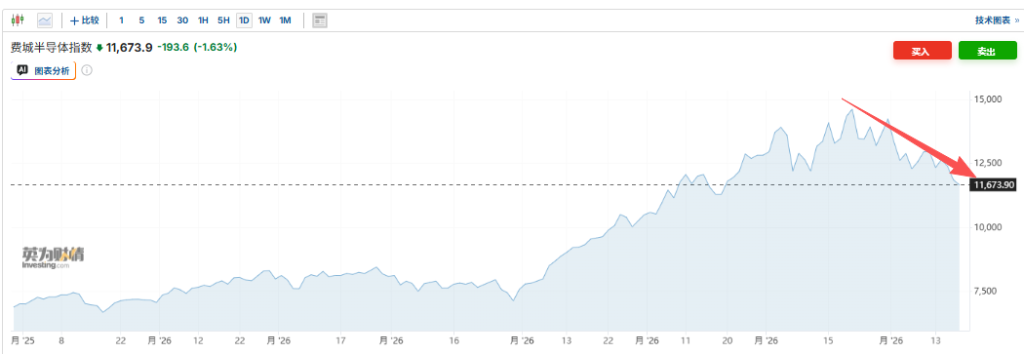
以英伟达、美光科技等AI芯片股为核心成分的费城半导体指数(SOX),已较约一个月前触及的盘中高点下跌逾20%,正式步入熊市区间。据MarketWatch报道,高盛分析师团队在上周五发布的研报中指出,AI基础设施股票的"痛苦波动"已促使投资者将目光转向AI主题以外的领域。
高盛由Ben Snider领衔的分析师团队由此提出三大替代方向:消费体验股、复利增长型企业(Compounders),以及并购潜在标的。这三类资产在估值、增长逻辑及风险特征上各有侧重,共同构成高盛在当前市场环境下的非AI投资框架。

消费体验股:抗AI扰动,估值具吸引力

高盛推荐的第一个主题是消费体验股。

高盛认为,这类股票"能够以合理估值获取消费者体验支出强劲长期增长的敞口,且受AI颠覆的风险有限"。

从数据来看,体验类消费支出增速已显著提速——涵盖运动中心、公园、剧院、博物馆及博彩等领域的体验消费增速,从2025年第一季度的1%(同期广义服务消费增速为2%)跃升至2026年第一季度的6%(同期广义服务消费增速仍为2%)。

高盛指出,这类消费在收入分布上偏向高端群体,且体验的实体属性使其相较于其他服务类别更能抵御AI的冲击。高盛在市值20亿美元以上的公司中筛选出36只候选标的。该主题的主要风险在于消费者健康状况恶化,包括油价上涨或劳动力市场走软。

复利增长型企业:质量溢价处于十年低位

第二个主题聚焦于高盛所称的"复利增长型企业"——即那些能够持续实现盈利增长、维持较高资本回报率并具备强劲自由现金流转化能力的公司。

高盛在罗素1000指数中,按历史及预期每股盈利增速、自由现金流转化率、投入资本回报率等多项成长与质量指标进行综合筛选,最终构建出包含15只个股的篮子,并明确剔除了"与AI最直接相关的股票,包括基础设施支出受益者及被认为面临颠覆风险的公司"。

估值方面,该篮子中位股的市盈率为22倍,高于标普500等权指数的16倍,但高盛测算,这一相对估值已接近十年低位。高盛认为,宏观环境与盈利增长前景均将对该类股票的估值形成支撑,但美联储转向鸽派或经济增长前景全面改善,将构成该主题的主要风险。

并购潜在标的:交易浪潮提供套利机会

第三个主题着眼于并购潜在标的。

高盛数据显示,今年并购活动大幅升温,已公告交易规模达1.2万亿美元,较2025年同期增长32%;已公告交易数量亦增加12%,其中40%集中于计算机与电子及医疗健康领域,但整体活动已扩散至多个行业。

高盛认为,宽松的金融条件、稳健的经济增长、较高的CEO信心以及友好的监管环境,共同构成并购活动持续推进的宏观支撑。该篮子包含71家公司,高盛分析师评估其被收购概率均超过15%。该主题的主要风险在于市场情绪转弱,进而威胁当前的并购周期。

AI交易降温,资金寻求再平衡

上述三大主题的推出,折射出当前市场的结构性变化。

费城半导体指数的熊市信号,标志着过去两年主导市场的AI叙事正面临阶段性考验,部分资金开始主动寻求分散配置。

从更广泛的市场表现来看,标普500指数年内仍上涨约8.94%,纳斯达克综合指数年内涨幅约9.80%,但过去一个月分别下跌0.57%和3.76%,显示科技板块承压明显。高盛此时推出非AI替代框架,时机上与市场情绪的微妙转变高度吻合,也为投资者在AI交易波动加剧背景下提供了一套可操作的再平衡思路。


Related Reads

Global Stock Market's Storm Center: South Korea's Stock Market De-leveraging Is Largely Complete

Storm's Eye: South Korean Market De-leveraging Nears Completion The recent sharp correction in South Korean equities, with the KOSPI index dropping 32% from its June high, has been a key trigger for global tech stock volatility. The core driver was not a fundamental shift but a forced de-leveraging process within the market's unique structure, which is now largely complete. Two main leverage channels amplified the sell-off: 1. **Leveraged ETFs:** Their size, proportionally four times larger than in the U.S., peaked near $50 billion. Their mandatory daily rebalancing mechanism created a vicious cycle of "price drop → forced selling → further drop." Approximately 75% of this excess has been unwound, shrinking to $26 billion, with regulatory curbs now blocking new inflows. 2. **Hedge Fund Leverage:** Using swaps to magnify exposure, hedge funds saw their net long positioning fall by over 50% from peak levels. The most intense phase of this institutional de-leveraging is over. In contrast, **retail margin debt** poses minimal systemic risk. At 0.5% of market cap, it is far lower than in the U.S. or China, lacks automatic triggers, and is concentrated in smaller stocks. The conclusion: the high-leverage structures most prone to "chain-reaction selling" have been substantially cleared. The market is transitioning from a liquidity-driven crash to one priced more on fundamentals. The article argues that the AI trend—centered on Korean memory chips—remains intact. This episode represents a painful but necessary clearing of crowded trades, not the end of the AI revolution. For investors, the key question is conviction in the long-term AI direction; if the trend is real, current volatility is a cost of entry, not a terminal risk.

链捕手19m ago

Global Stock Market's Storm Center: South Korea's Stock Market De-leveraging Is Largely Complete

链捕手19m ago

The Eternal Fragments of Money: Third-Party Payment Has No First Principle

"The Enduring Fragments of Money: Third-Party Payments Lack a First Principle" Stripe is reportedly attempting to acquire PayPal, marking a significant shift reminiscent of PayPal's merger with the original X.com 30 years ago. The article analyzes Stripe's strategic challenges and the broader payments industry landscape. Despite its initial success with a developer-friendly API model, Stripe missed its optimal IPO window during the pandemic and has since seen its valuation decline. Its attempts to expand through acquisitions and new ventures, particularly in stablecoins (like its OUSD project) and Agent-focused payments (ACP/MPP protocols), have faced headwinds. The author argues that the payment industry remains highly fragmented and is ultimately an adjunct to the traditional banking system. This structure limits the potential for any single player, including Stripe, to achieve complete dominance. While stablecoins and the future rise of autonomous Agent economies present potential growth avenues, they are not yet mainstream and still require integration with the existing financial system. For now, Agent-based transactions are largely used for speculative "volume boosting" rather than substantive business applications. Stripe's current move to acquire PayPal is seen as an attempt to bolster its weak consumer-facing (C-side) business after its stablecoin-focused strategies faltered. Meanwhile, PayPal is described as structurally outdated, unable to revive itself through new products like Venmo or PYUSD. The future of payments may lie not in payments themselves but in value-added services like more efficient settlement networks. The author suggests that companies like Stripe and Circle, which are building their own blockchains (Tempo, Arc) and stablecoins, are positioning themselves to eventually profit from high-efficiency settlement systems. These new networks could potentially bypass some traditional banking layers. In conclusion, the article posits that third-party payment is a perpetually fragmented battlefield where scale alone cannot ensure victory. Players must find new models, focusing on efficiency to compete with the entrenched banking system. Stripe's acquisition of PayPal represents a bet on this uncertain future.

链捕手42m ago

The Eternal Fragments of Money: Third-Party Payment Has No First Principle

链捕手42m ago

Trading

Spot
活动图片