Singapore MAS examines crypto firms ahead of new regulations: Report

CointelegraphPublished on 2022-08-26Last updated on 2022-08-26

Abstract

The Monetary Authority of Singapore (MAS) has started taking measures to prepare for new cryptocurrency regulations addressing the ongoing liquidity crisis and withdrawal issues.

The Monetary Authority of Singapore (MAS) has started taking measures to prepare for new cryptocurrency regulations addressing the ongoing liquidity crisis and withdrawal issues.
Singapore’s central bank has sent detailed questionnaires to some applicants and holders of the MAS’ Digital Payment Token licenses, Bloomberg reported on Friday.
Sent over the last month, the questionnaires were reportedly seeking “highly granular information” about business activity and holdings by examined crypto firms.
The checks were focused on firms’ financial stability and interconnection, with questions including top tokens owned, top lending and borrowing counterparties, the amount loaned and top tokens staked via decentralized finance protocols.
Citing people familiar with the matter, the report notes that firms were expected to respond promptly. The MAS has issued 10 licenses to crypto firms in Singapore so far, including exchanges like Crypto.com and DBS Bank’s brokerage arm DBS Vickers. That is quite a small fraction out of nearly 200 reported firms that have applied for the license.
The latest regulatory action in Singapore apparently aims to intensify the scrutiny on crypto firms amid upcoming new regulations for the industry. In mid-July, MAS managing director Ravi Menon disclosed that the financial watchdog was working on a regulatory framework to address “consumer protection, market conduct, and reserve backing for stablecoins” in the next few months.
The MAS specifically pointed at blind spots in the existing crypto regulations in Singapore, noting that digital payment token service providers are not subject to risk-based capital or liquidity requirements. They also are not currently required to safeguard customer funds or digital tokens from insolvency risks. Instead, regulations mostly focus on money laundering and terrorism financing fisks as well as technology risks.
The MAS did not immediately respond to Cointelegraph’s request for comment. This article will be updated pending new information.
Singapore’s upcoming new regulatory framework for crypto comes in response to the ongoing liquidity crisis and the associated withdrawal issues amid a bear market. Three Arrows Capital (3AC), the troubled Singapore-based crypto hedge fund, went bankrupt during this crypto winter, failing to meet margin calls in mid-June.
In an affidavit in mid-August, 3AC co-founder Su Zhu said that the company shifted its registration to the British Virgin Islands in September 2021 after having previously operated out of Singapore. He also reportedly accused the liquidators of misleading authorities about 3AC’s structure.

Related Reads

More and More People Are Using Xiaohongshu as an AI Incubator

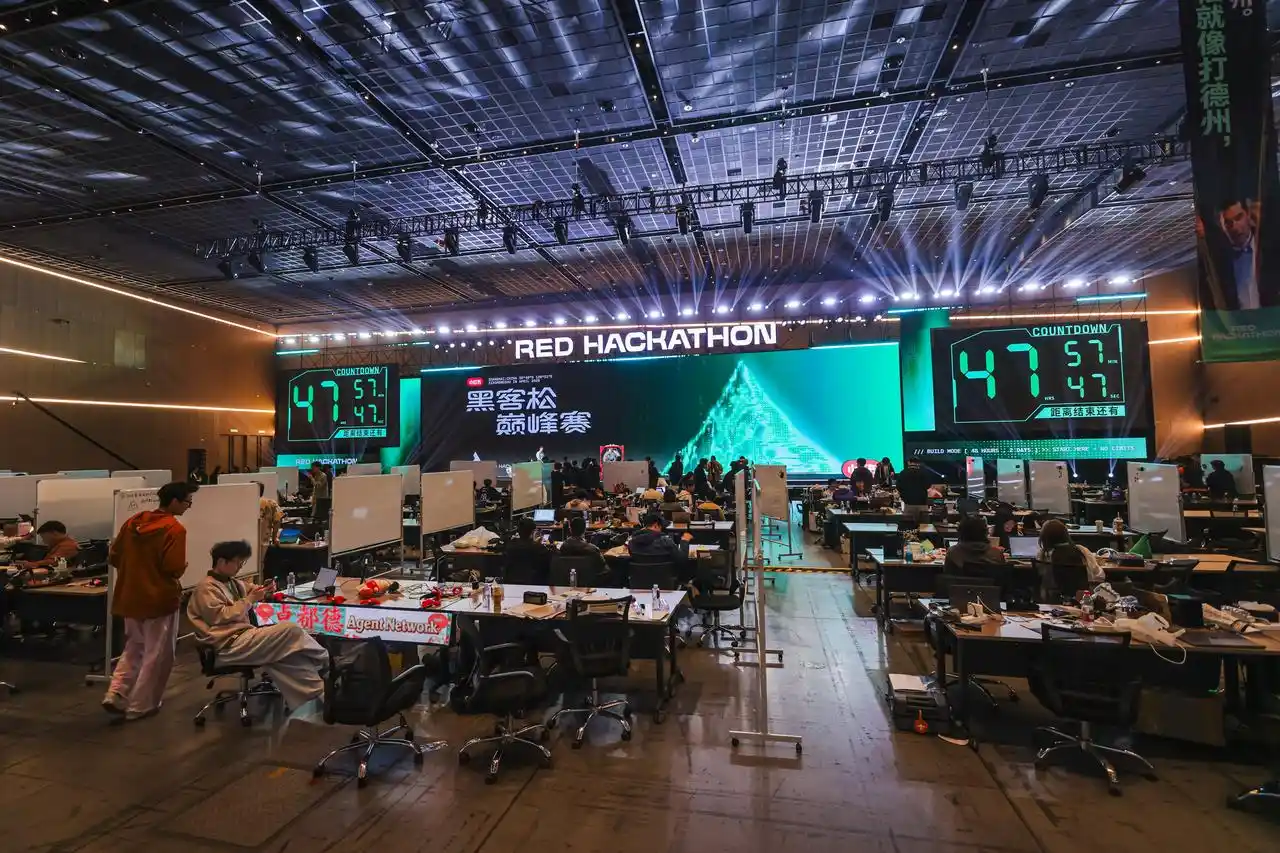
"More and more people are turning Xiaohongshu into an AI incubator," observes an article exploring a shift in China’s tech innovation landscape. The AI wave is no longer dominated by experienced tech experts; instead, young people—often with humanities backgrounds, and increasingly Gen Z or even younger—are driving creativity. This reflects a broader trend: AI is transforming entrepreneurship from a capital-heavy, top-down model into a lightweight, accessible process. The rise of "AI Native" creators was highlighted at a recent Xiaohongshu hackathon, where diverse teams showcased projects targeting highly specific, everyday problems—from AI-generated PPT improvements to brain-controlled wheelchairs and apps that simplify communication with hairstylists. The winning project, "Pocket Guitar," offers a portable, user-friendly music tool that mimics real guitar playing. These innovators embrace a "Build in Public" approach: they share ideas, progress, and failures openly on Xiaohongshu, turning development into a collaborative, community-driven process. This method helps validate demand, recruit team members, and grow user bases organically. For instance, one 23-year-old founder assembled a distributed team through technical discussions on the platform, while a 13-year-old award winner used AI to learn coding and solve real-world problems. Two key factors enable this movement: AI democratization (lowering technical barriers) and the power of social communities (enabling open collaboration and instant feedback). Xiaohongshu, originally a lifestyle and shopping guide platform, has thus evolved into a vital innovation infrastructure. It connects creators with real user needs, facilitates low-cost prototyping, and fosters a culture of co-creation. This shift signals a new era of innovation—defined not by grand narratives and scale, but by granular insights, individual creativity, and trust-based community support. Xiaohongshu’s role is expanding from answering "what to buy" to "what to create," positioning it as a potential "App Store for the AI era."

marsbit18m ago

More and More People Are Using Xiaohongshu as an AI Incubator

marsbit18m ago

Institutional Adoption of Prediction Markets Stuck at the Third Stage

Prediction markets are transitioning from niche platforms focused on elections and sports to mainstream financial tools, as highlighted at Kalshi Research's inaugural conference. While sports still dominate trading volume (around 80%), non-sports categories like macroeconomics, politics, and entertainment are growing faster, signaling a shift from entertainment-based trading to information and risk management tools. Institutions, including Wall Street firms, are increasingly using prediction markets for data reference (Stage 1 adoption), with some progressing to system integration (Stage 2). However, full-scale trading (Stage 3) is limited due to the lack of margin trading, requiring full collateral for positions—a barrier for leverage-dependent entities. Kalshi is working with regulators to introduce margin mechanisms. Key insights from participants like Goldman Sachs and CNBC emphasize the value of real-time pricing for events (e.g., Fed decisions, tariffs), providing benchmarks previously unavailable. The path to maturity mirrors historical financial instruments like options, with expectations that prediction markets will become institutional staples within five years. Political leaders, including Trump and Schumer, now cite Kalshi odds, underscoring its growing influence. The platform rewards domain expertise over traditional finance backgrounds, attracting diverse participants from fields like music and poker. Ultimately, prediction markets are evolving into critical infrastructure for pricing uncertainty.

marsbit57m ago

Institutional Adoption of Prediction Markets Stuck at the Third Stage

marsbit57m ago

Trading

Spot
Futures
活动图片