Суперквалы могут потерять монополию на рынке криптоинвестиций РФ

cryptonews.ruPublished on 2025-11-25Last updated on 2025-11-25

Российская криптоиндустрия переживает переломный момент. После запуска на биржах первых индексов и деривативов на цифровые активы власти начали перестраивать свой подход. Минфин и Банк России теперь допускают отказ от идеи «суперквалифицированных» инвесторов — той самой категории, которая должна была стать единственным мостом между российскими площадками и криптопродуктами.

Параллельно государство ужесточает борьбу с «теневым» оборотом крипты. Вектор очевиден: рынок будут выстраивать по новым правилам.

Что произошло

Замминистра финансов Иван Чебесков заявил, что концепция «суперквалов» постепенно уходит на второй план. Изначально этот подход рассматривался как отправная точка, но сейчас регуляторы допускают отказ от него. Возможна новая, более гибкая градация, однако детали пока находятся в обсуждении.

Чебесков отметил, что Минфин и ЦБ согласовали позиции по большинству ключевых вопросов и намерены двигаться вперед быстро.

Изначально статус «особо квалифицированного» предполагался для инвесторов:

  • чьи активы превышают 100 млн рублей;
  • или чьи доходы за предыдущий год превышают 50 млн рублей.

Теперь этот фильтр могут смягчить. Глава ЦБ Эльвира Набиуллина ранее говорила, что допуск могут получить квалифицированные инвесторы, но после тестирования на знание рисков. Первый зампред ЦБ Владимир Чистюхин ожидает, что закон о криптовложениях появится в 2026 году.

К чему идет рынок официальных криптоинструментов

Российская модель строится вокруг биржевой инфраструктуры. Прямой оборот криптовалют по-прежнему закрыт, однако с ними можно работать через регулируемые индексы и деривативы.

«Мосбиржа» уже запустила индекс биткоина и готовит новые индексы на другие цифровые активы. «СПБ Биржа» открыла торговлю фьючерсами на криптовалютные индикаторы.

Инфраструктура готова, интерес со стороны инвесторов есть. Если требования к допуску смягчатся, рынок сможет расширяться быстрее.

Октябрьская инициатива: усиление контроля над «тенью»

Параллельно власти готовят ужесточение ответственности за нелегальные операции с цифровыми валютами. Инициатива включает:

  • механизм изъятия криптоактивов;
  • наказание за нелегальные криптосервисы;
  • контроль за сомнительными транзакциями;
  • борьбу с нелегальными обменниками.

По оценкам экспертов, полностью перекрыть «серый» сегмент невозможно, но давление на подпольные схемы будет расти. Государство делает ставку на:

  • данные Росфинмониторинга;
  • проверки и выемки;
  • мониторинг объявлений в мессенджерах.

Пользователям рекомендуют соблюдать ПОД/ФТ-требования и оформлять сделки легальными методами.

Итоги

Регулирование развивается в двух направлениях:

  • расширение легального биржевого сегмента;
  • ужесточение контроля над нелегальными операциями.

Отказ от идеи «суперквалов» делает будущий рынок криптоинструментов более доступным для квалифицированных инвесторов. Также новые меры формируют правовую базу для борьбы с «теневыми» схемами. Окончательный вид регулирования станет понятнее в 2026 году.

Related Reads

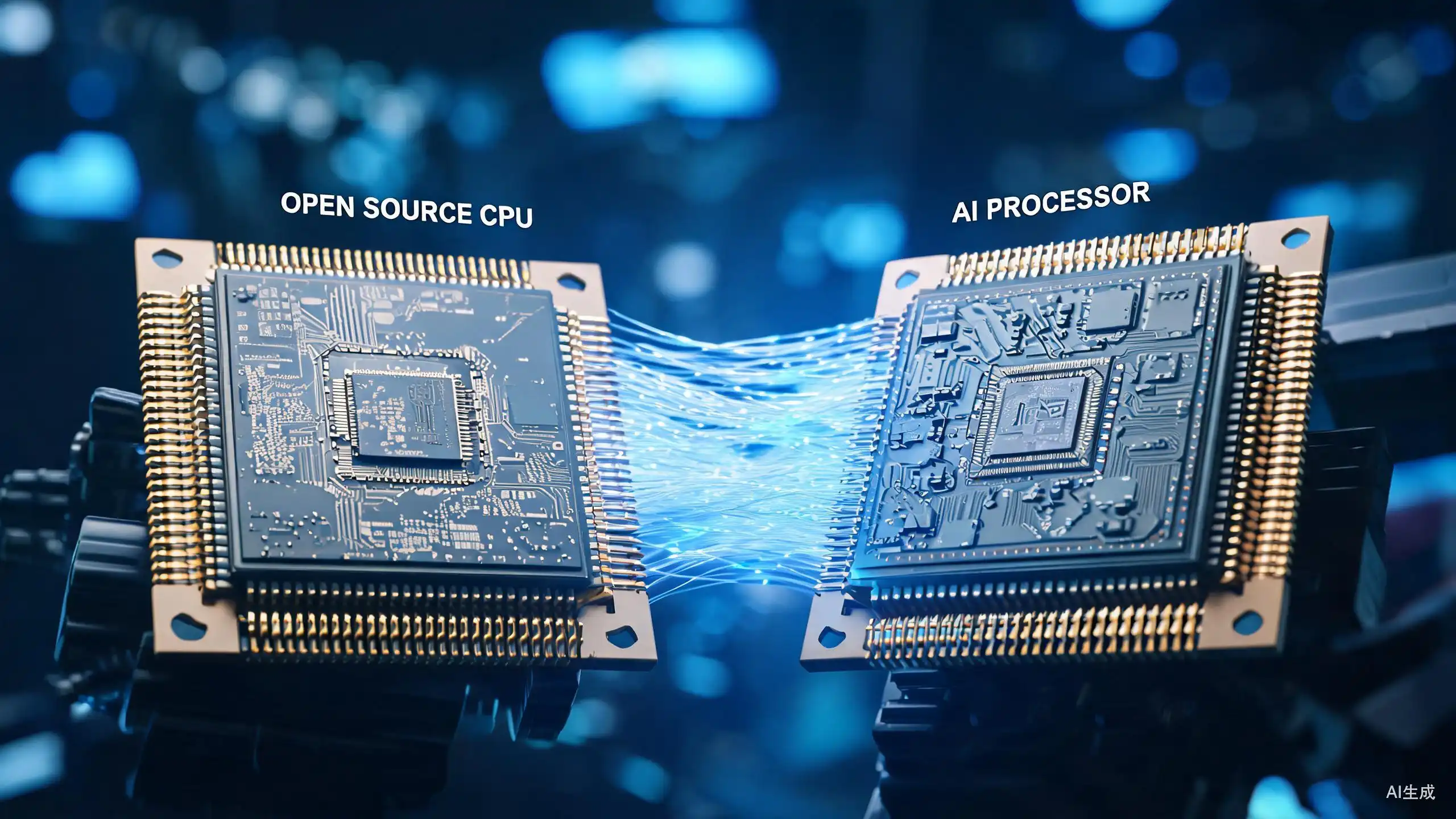
NVIDIA CPU Advances, China's RISC-V Responds: Semiconductor Deep Dive - Part Four

NVIDIA is set to launch its new Vera AI data center CPU in China as early as August, with high pricing. While this move offers a new option, it highlights China's continued dependence on foreign-controlled Arm architecture. In response, the Chinese semiconductor industry is increasingly turning to RISC-V as a strategic alternative for achieving high-performance computing autonomy. The article explores the concept of the "impossible triangle" in CPU development—balancing prosperity, control, and autonomy—and posits that RISC-V's open-source, modular nature offers a unique path to achieving all three. While RISC-V is already dominant in embedded systems, the focus is now shifting to data centers and AI workloads. China has become a global hotspot for RISC-V development, driven by AI-driven compute demand, supply chain concerns from export controls, cost benefits of open-source, and strong policy support. Multiple Chinese companies have reportedly crossed the key performance threshold of 15 SPECint per GHz, a benchmark for entering the high-performance CPU club. Progress extends beyond single-core benchmarks. Companies are developing complete computing subsystems, including commercial-grade coherent network-on-chip (NoC) technology and server processors with up to 40 cores that strictly adhere to the RVA23 standard to ensure software compatibility. Real-world applications are emerging in areas like video transcoding and edge AI. However, significant challenges remain. The RISC-V ecosystem faces fragmentation, immature toolchains and verification processes, and gaps in single-core performance and energy efficiency compared to mature x86 and Arm architectures. The formidable software moat, epitomized by NVIDIA's CUDA, is a long-term hurdle. In conclusion, while RISC-V cannot immediately replace offerings like NVIDIA's Vera, it represents a viable long-term path for China to develop a self-sufficient, high-performance CPU ecosystem. The journey is acknowledged to be long and arduous, requiring sustained effort to overcome technical and ecosystem challenges.

marsbit2h ago

NVIDIA CPU Advances, China's RISC-V Responds: Semiconductor Deep Dive - Part Four

marsbit2h ago

My Coding Betting Dashboard is Profiting, but Polymarket is Truly Not a Good Place for 'Arbitrage'

The author built a custom monitoring dashboard for Polymarket, a prediction market platform, and tested it with $1,600, achieving over 30% returns. However, the core argument is that Polymarket is not a good venue for traditional arbitrage. The dashboard has two main sections: a "Portfolio Dashboard" for tracking active positions with key metrics like total capital, P&L, and a risk-control module using a tier system (T1, T2, T3), and an "Opportunity Watchlist" for monitoring markets. The article details a critical structural trap in binary markets: a bet with a high perceived probability of success still carries a 100% loss risk if wrong. The author's T1/T2/T3 system is designed to manage this by limiting position sizes based on conviction and time horizon, emphasizing that high confidence should not equal high concentration. A key insight is the danger of "pseudo-diversification"—betting on different markets driven by the same underlying variable. The author concludes that Polymarket offers few true low-risk, arbitrage opportunities. It is instead a high-risk environment where wins can create a false sense of mastery, leading to large losses. The platform is better viewed as a training ground for honing judgment through disciplined, framework-driven betting rather than a reliable income source. The tools help transform intuition into structured, rule-based decisions to mitigate the risk of catastrophic errors.

marsbit5h ago

My Coding Betting Dashboard is Profiting, but Polymarket is Truly Not a Good Place for 'Arbitrage'

marsbit5h ago

WeChat AI Card Hands-On Guide: Has the AI Shopping Era Arrived?

**"WeChat AI Card" Practical Test Guide: Has the Era of AI Shopping Arrived?** WeChat has officially launched the "AI Exclusive Card," a feature integrated into its Workbuddy AI assistant. This card is designed to handle payments for AI-initiated purchases. Our hands-on test reveals it's not yet a tool for fully autonomous AI shopping, but rather a controlled payment layer for AI agents. The AI Card functions as an isolated sub-wallet within WeChat Pay. Users must bind the card and transfer funds into it from their main wallet. Crucially, every transaction requires explicit user confirmation via smartphone scan; AI cannot spend autonomously. Currently accessible through the Workbuddy agent, the card targets specific digital consumption scenarios: purchasing paid content (reports, data), calling paid APIs/tools, and subscribing to services. Its design prioritizes security and control by separating funds and mandating approval for each payment. We tested a real-world scenario: ordering bubble tea via Workbuddy using a "Meituan Life Assistant" skill. The process encountered multiple hurdles: high "skill" usage costs (exceeding daily free credits), and most importantly, while a payment was successfully initiated, the AI purchased an incorrect product (a mismatched group-buy coupon instead of the desired drink). This highlights the current limitation: the **AI Card only solves the payment step**. The broader challenge lies in the **AI agent's execution chain**—accurately understanding intent, navigating third-party platforms, selecting the right product, and ensuring proper fulfillment. The payment succeeded, but the purchase failed to meet the user's need. In conclusion, the WeChat AI Exclusive Card is a cautious, early-step experiment in AI commerce. It provides a secure, user-controlled payment method for agent interactions but is not yet capable of reliable, end-to-end complex purchases. For now, it's best used for low-value, low-risk digital services with careful user verification at each step. The vision of AI handling complete shopping tasks remains a work in progress.

marsbit8h ago

WeChat AI Card Hands-On Guide: Has the AI Shopping Era Arrived?

marsbit8h ago

Trading

Spot
Futures
活动图片