Коэффициент Шарпа для биткоина упал почти до нуля — редкий сигнал о соотношении риска и доходности

cryptonews.ruPublished on 2025-04-24Last updated on 2025-11-25

Коэффициент Шарпа для биткоина упал почти до нуля, достигнув уровней, которые наблюдались в периоды дна рынка в 2019, 2020 и 2022 годах. При этом за неделю было перемещено 8% всех биткоинов. И все это на фоне исторической волатильности.

Технический индикатор биткоина, известный как коэффициент Шарпа, опустился почти до нулевой отметки. Он достиг уровней, характерных для периодов, предшествующих формированию дна рынка.

Аналитик CryptoQuant И. Морено в понедельник отметил, что коэффициент Шарпа для биткоина находится на уровне, который в прошлом соответствовал периодам максимальной неопределённости и начальным стадиям переоценки рисков.

Эксперт обратил внимание: сейчас биткоин входит в ту же зону, которую наблюдали в 2019, 2020 и 2022 годах. Тогда коэффициент длительное время оставался на пониженных уровнях — до появления новых многомесячных трендов.

«Это не гарантирует формирование дна, но указывает, что качество будущей доходности начинает улучшаться — при условии стабилизации рынка и нормализации волатильности», — пояснил он.

Коэффициент Шарпа как сигнал для «умных денег»

Коэффициент Шарпа отражает соотношение доходности и риска. Когда он близок к нулю, это означает, что биткоин демонстрирует низкую доходность относительно своей волатильности. Такая ситуация создаёт более привлекательные условия для инвестиций.

Исторически периоды низкого коэффициента Шарпа часто предшествовали новым долгосрочным восходящим трендам — именно тогда на рынок заходят «умные деньги», поскольку баланс риска и доходности улучшается. Это противоположно покупке на пике эйфории, когда коэффициент Шарпа находится на высоком уровне.

В начале 2024 года коэффициент резко вырос до 50 — на фоне роста рынков, когда биткоин впервые превысил отметку в 73 000 долларов.

При этом аналитик предупредил: восстановление тренда пока не оформилось.

«Биткоин ещё не сигнализирует о восстановлении тренда, но указывает, что картина, скорректированная с учётом риска, становится более привлекательной для будущей доходности», — подчеркнул он.
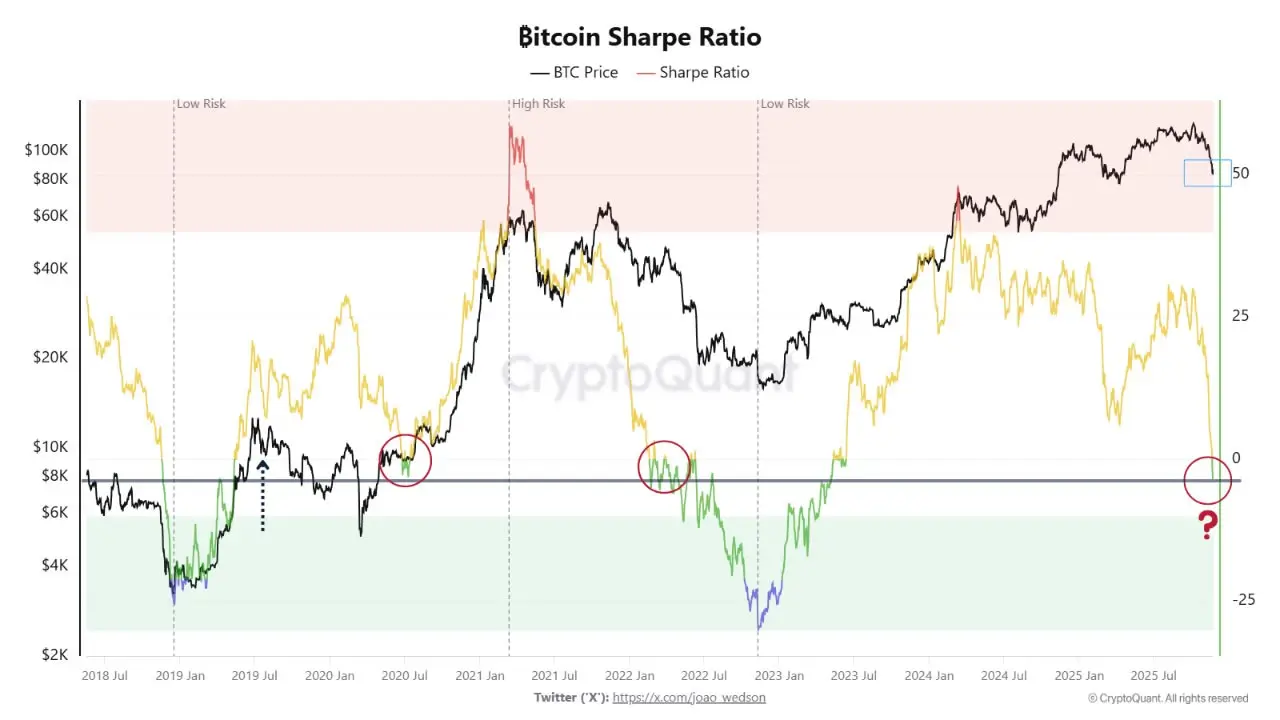

Коэффициент Шарпа для биткоина упал до нуля. Источник: CryptoQuant.

Необычайно крупные переводы биткоинов: историческая неделя в блокчейне

За последнюю неделю переместили более 8% всех биткоинов — такие данные приводит аналитическая компания Glassnode.

За последние семь лет подобное происходило лишь дважды: во время медвежьих рынков в декабре 2018 года и марте 2020 года.

«Это делает последнее снижение одним из самых значимых событий в блокчейне за всю историю биткоина», — прокомментировал Джо Бернетт, директор по стратегии биткоина в Semler Scientific.

Всего за 10 дней курс биткоина рухнул на внушительные 23%, или более чем на $24 000, достигнув минимума около $82 000 в пятницу. Впоследствии цена немного восстановилась — к концу торгов в понедельник она поднялась до $89 000.
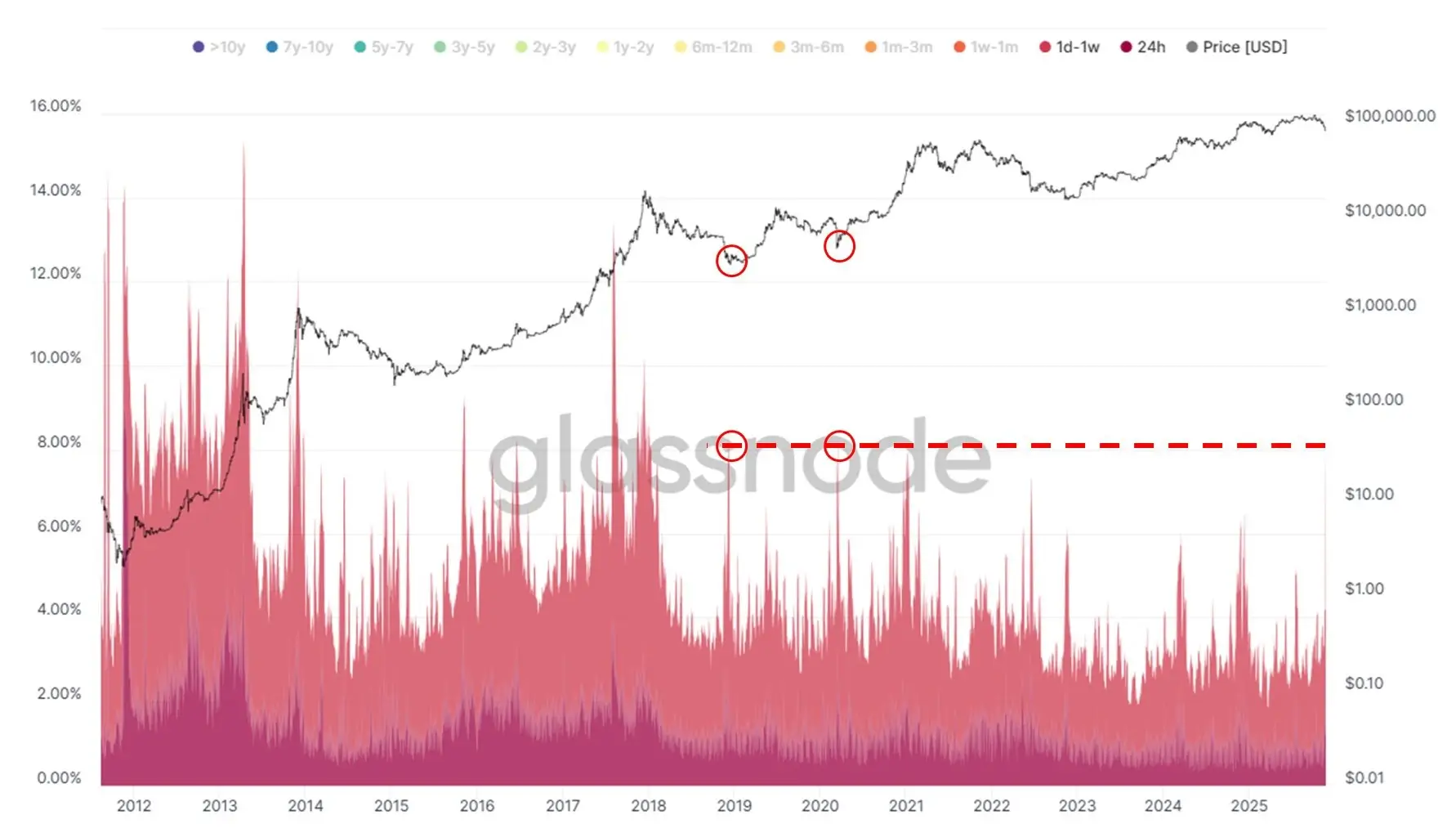

Значительный объём биткоинов перемещался лишь дважды за последние семь лет. Источник: Glassnode.

Related Reads

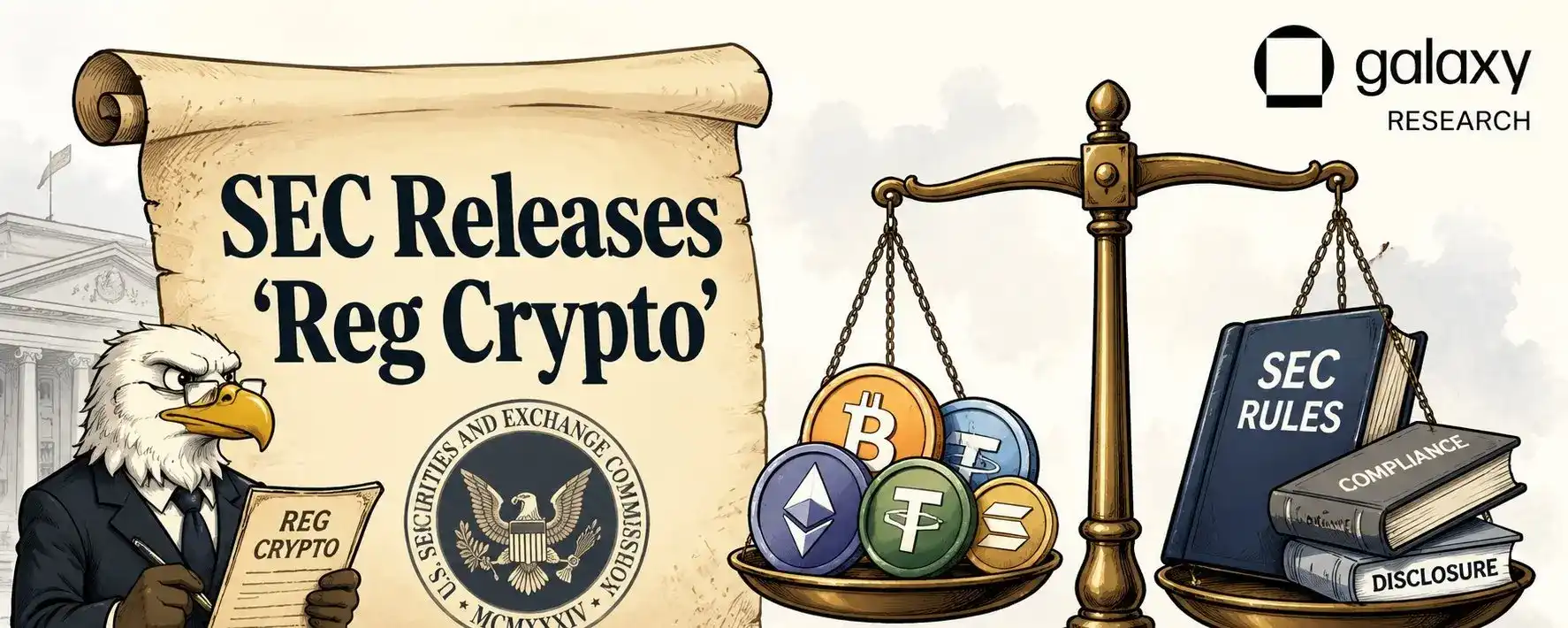
Galaxy Research: Can SEC's New Regulations Usher in a New Era for Token Financing?

**SEC Proposes New Framework for Token Offerings, Potentially Unlocking Legal Paths for U.S. Crypto Fundraising** On August 18, the U.S. Securities and Exchange Commission (SEC) proposed new rules, dubbed "Reg Crypto," specifically tailored for crypto asset offerings. This framework marks a departure from applying traditional securities rules designed for stocks to tokens. It creates a potential legal pathway for token sales to the U.S. public, including non-accredited investors, without full registration. The proposed rules apply to crypto assets that are not themselves securities but were sold as part of an investment contract where the issuer promised to build a product, network, or ecosystem. It establishes a four-phase lifecycle: Raise, Disclose, Build, and Exit. The "Raise" phase includes two new fundraising exemptions: a startup exemption allowing up to $5 million over four years and a larger, Regulation A-based exemption for up to $20 million or $75 million over 12 months. The "Disclose" phase requires specific token-related disclosures like supply schedules, governance, and development progress. After the issuer completes its promised development work and files a transition report, the "Exit" phase allows the associated investment contract to terminate, even if the token continues to trade. The analysis highlights that the framework's most immediate impact may be providing a formal "exit" path for existing tokens with unclear legal status, rather than immediately sparking a new wave of U.S.-based token offerings. It offers advantages over traditional private placements by allowing public sales and immediate token transferability but imposes ongoing disclosure and reporting obligations. A key hurdle is that the larger exemption requires a substantial U.S. operational presence, which may deter projects with offshore structures. Overall, the proposal is seen as a constructive step toward regulatory clarity, acknowledging that token offerings differ from equity offerings and require tailored investor disclosures. However, it remains a proposal subject to a 60-day public comment period, and its long-term stability may ultimately depend on congressional action.

marsbit2h ago

Galaxy Research: Can SEC's New Regulations Usher in a New Era for Token Financing?

marsbit2h ago

Bitcoin and Ethereum Soar Together! Eight Altcoins Worth Watching in the Later Market

Bitcoin and Ethereum Surge, Fueling Altcoin Speculation. Bitcoin Eyes $77,000, Ethereum Gains 20% in a Single Day. Market anticipates capital rotation from major cryptos to high-beta altcoins, but a selective rise is expected, favoring projects with genuine users, protocol revenue, and healthy tokenomics. Analysts highlight eight altcoins across key sectors: **High-Performance Blockchains:** * **SOL (Solana):** Market cap ~$51.88B. A dominant player with a strong ecosystem. Considered a relatively safe bet for potential catch-up growth. * **SUI (Sui):** Market cap ~$3.03B. High volatility potential but faces risks from its low circulating supply and future token unlocks. **DeFi Lending:** * **UNI (Uniswap):** Market cap ~$2.38B. Transitioning to a revenue-capturing asset post-fee switch implementation. * **AAVE (Aave):** Market cap ~$1.53B. Features balanced tokenomics and revenue but has seen significant recent gains. * **MORPHO:** Market cap ~$1.50B. Rapid protocol growth but weaker token value capture and opaque supply data. **Perpetual DEX:** * **HYPE (Hyperliquid):** Market cap ~$16.41B. The clear sector leader with strong revenue but high valuation and a large portion of tokens still locked, warranting caution. **RWA & On-Chain Finance Infrastructure:** * **LINK (Chainlink):** Market cap ~$8.09B. A key oracle provider positioned to benefit from multiple trends like RWA and institutional adoption, offering strong fundamentals. * **ONDO (Ondo Finance):** Market cap ~$1.77B. Shows strong business growth but carries high risks due to concentrated token holdings and a massive unlock scheduled for 2027. **Conclusion:** The altcoin rally is expected to be selective. Recommendations include a medium position in SOL, small allocations to SUI and UNI/AAVE for DeFi exposure, and caution with HYPE and ONDO due to their specific risks. LINK is suggested as a core holding for the RWA thematic.

marsbit4h ago

Bitcoin and Ethereum Soar Together! Eight Altcoins Worth Watching in the Later Market

marsbit4h ago

Shanghai's $10 Billion Unicorn Is About to Go Public

Shanghai-based automotive-grade millimeter-wave radar chip unicorn Calterah Microelectronics Technology (Shanghai) Co., Ltd. has filed for an IPO on Shanghai's STAR Market, aiming to raise 3.49 billion yuan. Founded in 2014 by Chen Jiashu, a UC Berkeley PhD graduate, and his professor Ali Niknejad, Calterah pioneered CMOS technology for 77GHz radar chips, breaking the decades-long monopoly of international giants like Texas Instruments. Its low-cost, highly integrated solutions enabled millimeter-wave radar to move from luxury to mass-market vehicles. By 2025, Calterah captured a 31.1% share in China's automotive millimeter-wave radar chip market (second domestically, fourth globally), with cumulative shipments exceeding 30 million units. Its client list includes BYD, Geely, Nio, and Volvo. The company has undergone 11 funding rounds, attracting high-profile investors such as the National Integrated Circuit Industry Investment Fund Phase II, China Capital Management, and GD Capital. Its valuation has reached tens of billions of yuan, with a projected post-IPO valuation of approximately 14 billion yuan. Despite rapid revenue growth—increasing from 206 million yuan in 2023 to 632 million yuan in 2025 with a 75.28% CAGR—Calterah remains unprofitable. It reported net losses of 323 million yuan, 334 million yuan, and 193 million yuan from 2023 to 2025, accumulating over 900 million yuan in losses over three and a half years. These losses are primarily attributed to heavy R&D investment, which totaled over 1.039 billion yuan in the reporting period, often exceeding annual revenue. The company faces significant risks, including high customer concentration (its top five customers accounted for over 99% of revenue from 2023-2025, with BYD alone representing over 50% in 2025) and supply chain concentration. Revenue pressure from key customers and dependencies on overseas suppliers for EDA tools and IP pose challenges to sustainable growth. The IPO is seen as crucial for securing capital to expand production, diversify its customer base, and reduce supply chain dependencies.

marsbit5h ago

Shanghai's $10 Billion Unicorn Is About to Go Public

marsbit5h ago

Trading

Spot
活动图片