熊市中的做市奇迹:防御性DLMM策略如何收获1000%年化回报

比推Published on 2025-11-20Last updated on 2025-11-20

作者:Tuuxx

编译:Odaily 星球日报、Azuma

原标题:地狱行情下,如何使用DLMM实现1000%年化收益?


编者按:加密货币世界向来不缺高手,即便是在过去一个月的地狱行情期间,仍有人能够通过“非常规”的策略实现可观的收益。

11 月 19 日晚间,聚焦 DeFi 市场的海外 KOL Tuuxx 披露了自己近一个在 Meteora DLMM 上的做市策略及实操细节,Tuuxx 透露这期间自己盈利了 675 SOL,胜率 100%,对应年化收益率接近 1000%。

以下为 Tuuxx 全文内容,由 Odaily 星球日报编译。

近几周市场环境发生了巨大变化,因此我也相应调整了我的 Meteora DLMM 策略。

我只会在真实环境中测试过后才分享策略,以下是执行了近整整一个月时间(具体为 27 天)后的战绩成果:

  • 100% 胜率;

  • 盈利 675 枚 SOL;

  • 期间回报率 19.35%;

  • 若保持此节奏,理论年化收益率接近 1000%;

先叠个甲,这仍是我基于真实结果的个人分享 —— 不构成财务建议 —— 但希望能助你完善自己的策略。

底层资产选择

我的核心观点不变,我坚定看好 Solana 生态,目标是长期积累尽可能多的 SOL。因此我只向 SOL 交易对提供流动性,而非稳定币。

如果你需更多理由的话:

  • 大多数代币都会与 SOL 组建交易对,而非稳定币,使用 SOL交易对能够自然增加手续费机会;

  • 在市场急跌时,SOL 交易对通常比稳定币交易对风险更低 —— 若市场崩盘,各种代币与 SOL 可能同步下跌,从而降低完全跌破流动性区间的概率 —— 而与稳定币配对则可能让你暴露于更剧烈的不对称波动中;

  • 以当前的收益率来看,即便在熊市期间,我的 DLMM 做市头寸的美元价值也会持续增长 —— 如果 SOL 重回历史高点,这种增值潜力将更加显著。

流动性曲线

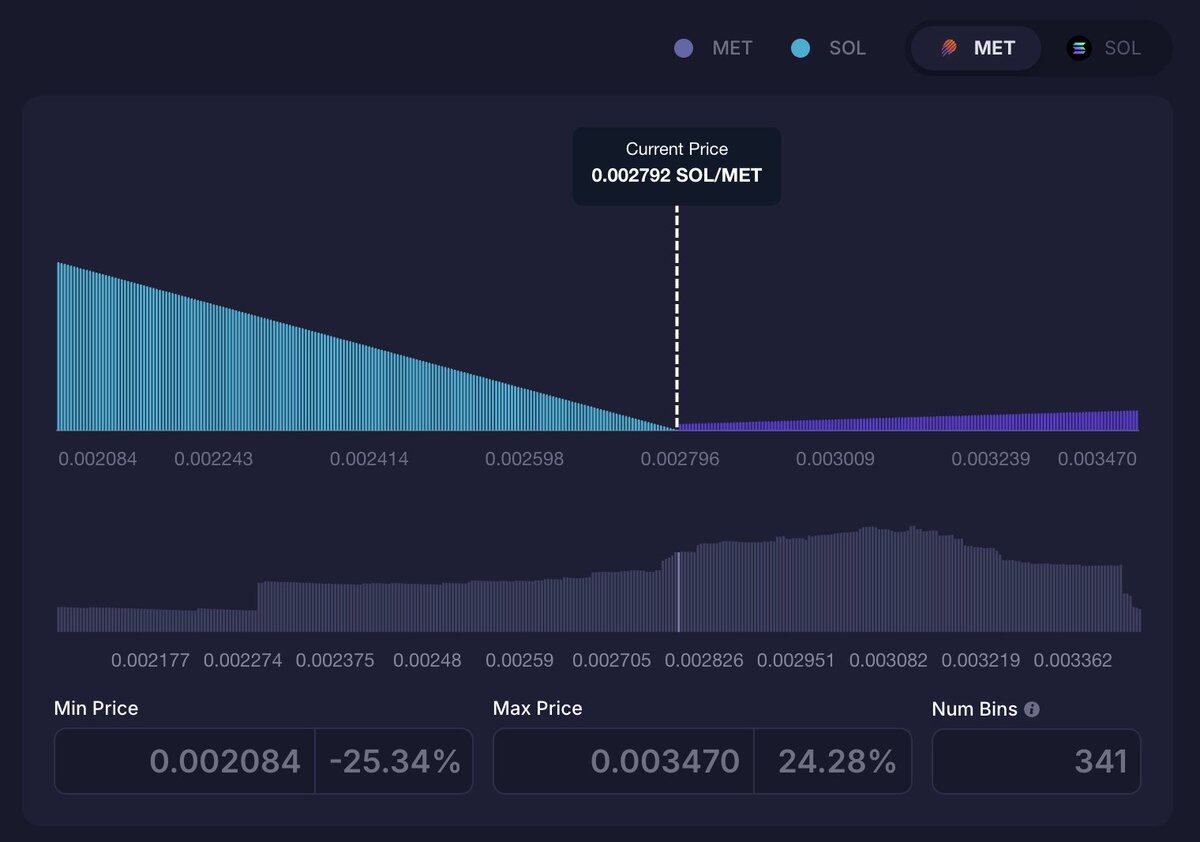
我会选择相对较宽范围的买卖区间,而非窄区间或类似现货持仓式的布局。这样的方式能带来:

  • 更强的资本保护;

  • 更少的无常损失;

  • 在波动中保持长期韧性;

这看起来可能不刺激,但我更喜欢稳定累积,而不是把流动性策略当成赌博。

做市代币选择

鉴于当前的市场环境,我的筛选标准已变得更为严苛,当前仅聚焦符合以下全部条件的代币:

能产生收入的协议(非炒作型的 Meme 代币);

  • 强大活跃的社区;

  • 市值高于5000万美元;

  • 强劲的日交易量(超 500 万美元);

  • 足够吸引人的“费用/TVL”比例;

你可使用 Jupiter 与 Tokeo 追踪以上指标:https://jup.ag/pro?tab=toptraded
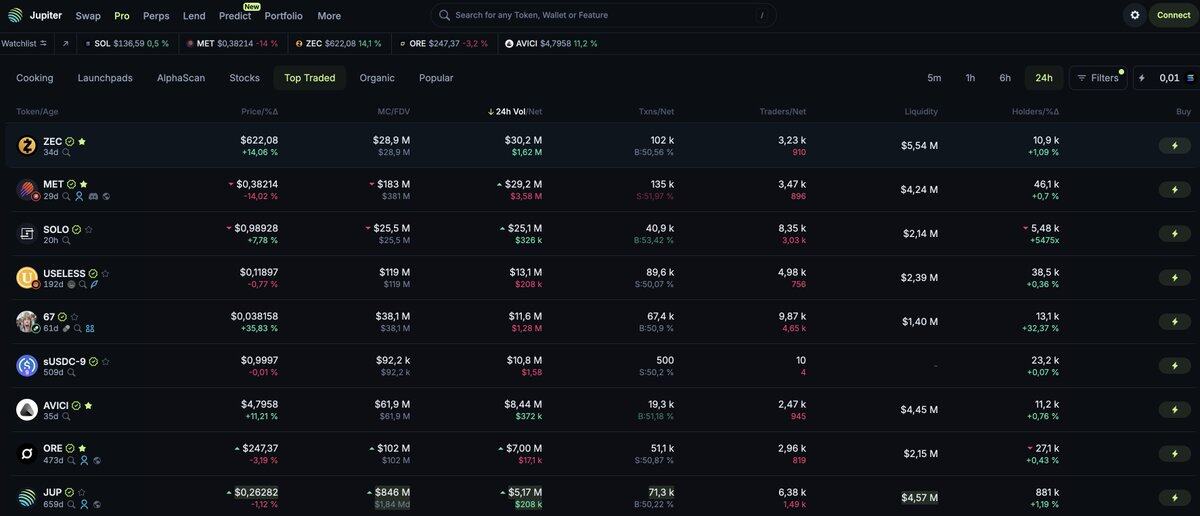
符合所有要求的代币极少,这反而有助于避免频繁调仓。过去数周我专注于以下四组交易对:MET/SOL、ZEC/SOL、ORE/SOL 与 AVICI/SOL。

资金池选择

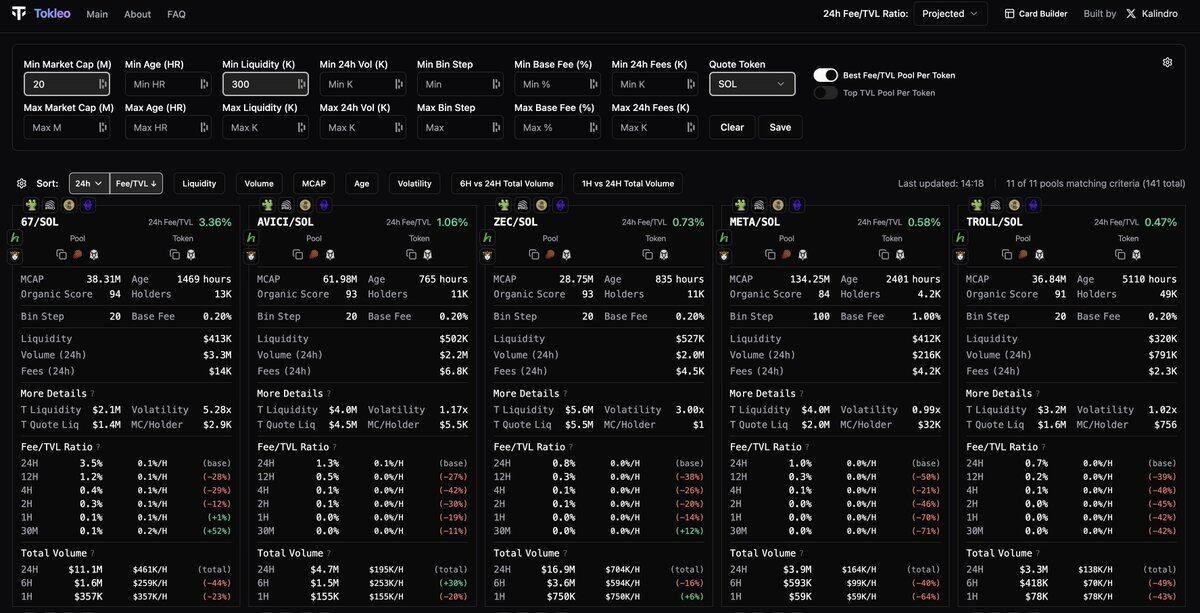
我会使用 Tokeo(https://tokleo.com/)来发掘表现最佳的资金池,通常会选择 Bin Step(用于定义每个价格区间的宽度)为 20,Base Fee(即基础手续费率)为 0.2% 的池子。
资金分配

我不会严格遵循某种公式,仅会按投资信念来分配资金比例 —— 且偏爱取整数。当前的分配状况如下:

  • MET/SOL:36%;

  • ZEC/SOL:24%;

  • ORE/SOL:24%;

  • AVICI/SOL:16%;

做市价格区间

我的目标是保护本金,我不是来追逐短期炒作的,耐心是本策略生效关键。

因此我会设定较宽的价格区间,且会通过 K 线走势的支撑区间来辅助判断,接受区间内最多70% 的下跌空间。

当前我在各交易对中使用的价格区间如下(以现价为准):

  • MET/SOL:下限约 –25%;

  • ZEC/SOL:下限约 –63%;

  • ORE/SOL:下限约 –69%;

  • AVICI/SOL:下限约 –70%;

宽区间或许需更长的时间才能产生可观收益,但却能提供稳定性保障,是承受重大市场冲击时唯一可靠的无压力方式。

仓位管理

这是变动最大的部分。

在做市代币与 SOL 之间发生明显价格波动后,我会:

  • 提取所有流动性(SOL + 做市代币),但不会关闭做市仓位

  • 在相同区间重新部署:

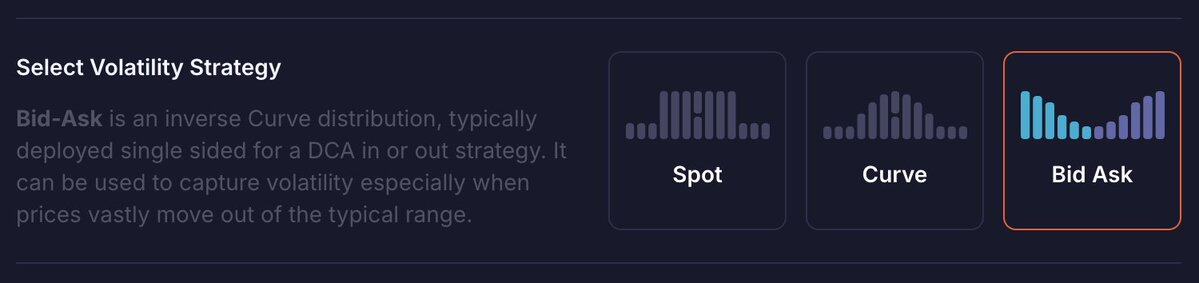
  • 100% 的 SOL 放回买卖(Bid-Ask)区间;

  • 50% 的做市代币放回(Bid-Ask)买卖区间;

  • 剩余 50% 代币放回现货(Spot)流动性曲线;

经过一段时间,你的仓位会出现类似这样的情况:

  • 高位卖出、低位买入;

  • 通过波动赚更多手续费;

  • 逐步积累越来越多的 SOL;

这套复利机制是长期增值的关键,即便起始时采用宽区间也亦然。我通常会在收益达到 10–20% 左右时关闭一个做市头寸。

实践反馈

在实测该策略的 27 天中:

• 我从未因亏损平仓;

• 也从未看到跌传价格区间的情况发生;

我每日仅会查看资金池 2–3 次,仅在显著价格波动(涨或跌)后重新平衡 —— 不会过度交易,没什么压力。

无论你是操作 10 枚 SOL 还是 10000 枚SOL,持续性与复利效应远比起始规模重要。

再次声明,这并非财务建议,只是分享一个契合我增值目标与风险偏好的方法。

关于策略复制及地址追踪

目前此策略无法实现自动化及复制 —— 我得提前告诉你,以免你浪费时间或资金。

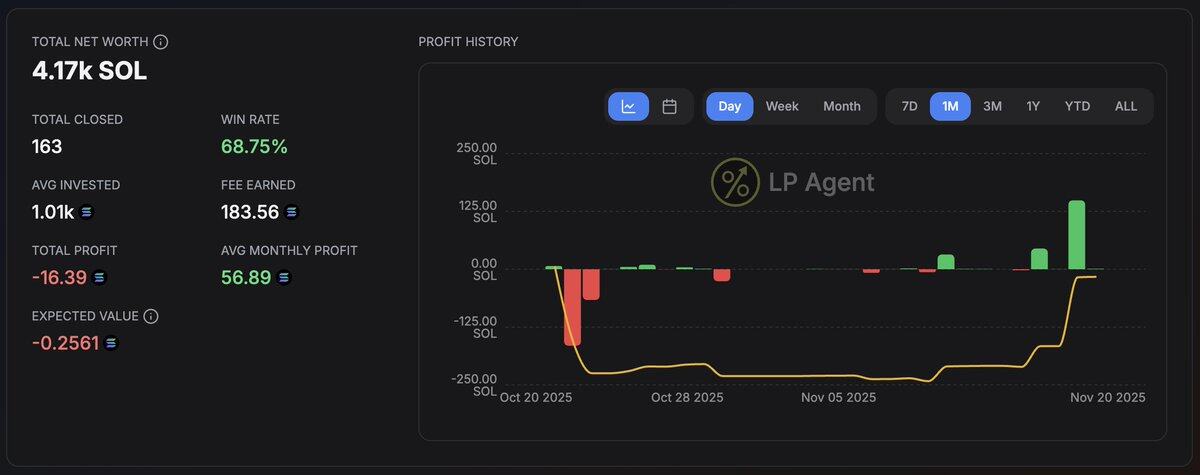
甚至投资组合追踪工具也无法准确读取仓位变化情况。例如,LP Agent 会显示我某些天出现了亏损 —— 但那只是因为当前的工具无法识别此类再平衡操作。
策略指导

我很乐于在评论区(原帖:https://x.com/Tuuxxdotsol/status/1991158752452489477)直接回应反馈与解答问题。分享此类策略最有价值之处在于,与同在真实市场中测试、优化与学习的同行交流。

此外,因近期多位成员咨询如何以定制化方式部署大型 DLMM 组合——我将通过 LP Army(@met_lparmy:https://www.lparmy.com/coaching)提供一对一指导。

此服务面向那些希望以专业的方式构建策略的人士 —— 并非提供信号或捷径,而是基于真实执行的清晰框架。

希望你的收益愈发稳健,晚安。


Twitter:https://twitter.com/BitpushNewsCN

比推 TG 交流群:https://t.me/BitPushCommunity

比推 TG 订阅: https://t.me/bitpush
说明: 比推所有文章只代表作者观点,不构成投资建议

Related Reads

Pantera Capital: As Perpetual Contracts Move Towards the Financial Center, Hyperliquid Aims to Be All-Encompassing

Perpetual futures ("perps"), once a crypto-native phenomenon, are becoming a dominant global financial instrument, evolving into a fundamental market structure shift that traditional finance can no longer ignore. This article outlines the advantages of perpetual contracts over traditional futures, highlighting their simplicity (no expiry/rollover), easier risk management, and native 24/7 operation. While the concept is not new, digital assets provided the ideal environment for its explosive growth. Initially dominated by centralized exchanges (CEX), perps have recently migrated significantly to decentralized exchanges (DEX), with Hyperliquid emerging as the leading DEX for perps, capturing ~40% of the on-chain volume. Hyperliquid, built on its own purpose-built L1 blockchain, has successfully expanded beyond crypto into traditional assets like stocks, commodities, and indices, driven by its permissionless listing framework (HIP-3) and 24/7 availability. It has become a crucial price discovery venue during off-hours and for pre-IPO companies, attracting attention from traditional hedge funds and major exchanges like ICE, which now views it as serious competition. The investment thesis for Hyperliquid's token, HYPE, rests on its large and growing total addressable market (TAM) across all finance, strong execution, superior user experience, and direct value accrual via aggressive token buybacks using 99% of protocol revenue. Key risks remain, primarily regulatory uncertainty in the U.S., though recent CFTC actions approving certain regulated crypto perp contracts signal a potential shift toward broader acceptance. The core question is no longer if perpetuals matter beyond crypto, but whether blockchain-based infrastructure like Hyperliquid can become the primary venue for pricing, trading, and discovering risk across all financial domains.

marsbit1h ago

Pantera Capital: As Perpetual Contracts Move Towards the Financial Center, Hyperliquid Aims to Be All-Encompassing

marsbit1h ago

Tiger Research: Zuckerberg Begins Betting on Prediction Markets, While Asian Nations Still View Them as Gambling

This article examines the rise of prediction markets, contrasting their growing institutional acceptance in the West with their restrictive regulation in Asia. It details how prediction markets, which originated from informal political betting and academic experiments like the Iowa Electronic Market, aggregate crowd wisdom into probabilistic prices through binary contracts. Their growth accelerated around 2020, reaching over $14 billion in monthly volume. A key driver is the "skin in the game" principle, where users risk their own capital, leading to high accuracy in predicting events like Fed rate decisions and elections, as demonstrated by platforms like Polymarket. Meta's entry, with Mark Zuckerberg reportedly leading the development of the Arena app, signals the market's maturation. In the U.S., court rulings have distinguished prediction markets from gambling, facilitating entry by traditional financial institutions. However, most Asian jurisdictions still classify them as gambling, focusing on social control rather than financial innovation. The article argues this stance creates three problems for Asia: 1) regulatory arbitrage pushes users to riskier offshore platforms, 2) loss of sovereign information infrastructure as valuable social sentiment data accumulates abroad, and 3) abandonment of user protection. It concludes that Asia needs a policy shift from prohibition to constructive regulation, integrating these markets into the formal system to harness their data as a national asset, as initiatives like Limitless Research are beginning to do.

marsbit3h ago

Tiger Research: Zuckerberg Begins Betting on Prediction Markets, While Asian Nations Still View Them as Gambling

marsbit3h ago

Trading

Spot
活动图片