Инвестор Уолл-Стрит Майкл Бьюрри закрыл хедж-фонд Scion

cryptonews.ruPublished on 2025-11-19Last updated on 2025-11-13

Инвестор Майкл Бьюрри, известный по фильму “Игра на понижение”, ликвидировал хедж-фонд Scion Asset Management. Это произошло во второй раз в его карьере. В результате он сослался на искаженные рынки и пузырь искусственного интеллекта. Таким образом, его уход усиливает нарратив о криптовалюте как о контрциклическом хедже.

Фонд базировался в Калифорнии. Он работал шесть лет. Scion прославился прибылью от кризиса субстандартных ипотек в 2008 году. Кроме того, фонд повлиял на шорт-сквиз GameStop.

Бьюрри уходит: «Пузырь ИИ» и искаженные рынки

В письме инвесторам от 27 октября 2025 года Бьюрри заявил: «Моя оценка стоимости ценных бумаг не совпадает и уже давно не совпадает с рынками».

Письмо Майкла Берри инвесторам

Это уже второй случай, когда Бьюрри добровольно закрывает фонд, занимая глубоко контрарианную позицию. Впервые это произошло после его прибыли от краха субстандартного кредитования. В этот раз уход связан с тем, что он называет «динамикой пузыря ИИ».

Для инвесторов, наблюдающих за растянутыми оценками акций и растущим крипто-оптимизмом, его выход может сигнализировать о поворотном моменте.

В своих недавних постах в X (Twitter) Бьюрри обвинил крупные технологические фирмы в «фальсификации графиков амортизации» для завышения доходов, связанных с ИИ. Он сравнил этот ажиотаж с всплеском пузыря доткомов конца 1990-х годов.

Understating depreciation by extending useful life of assets artificially boosts earnings -one of the more common frauds of the modern era.

Massively ramping capex through purchase of Nvidia chips/servers on a 2-3 yr product cycle should not result in the extension of useful… pic.twitter.com/h0QkktMeUB

— Cassandra Unchained (@michaeljburry) November 10, 2025

Его последний отчет 13F, поданный необычно рано, демонстрирует десятки тысяч длинных опционов пут (long-dated put options), действующих до 2026 и 2027 годов. Эти опционы представляют собой агрессивные медвежьи ставки против таких акций, как Palantir ($PLTR).

Такое раскрытие информации позиционирует Бьюрри как инвестора, ожидающего потенциальную многолетнюю коррекцию. Эта коррекция, по его мнению, будет вызвана чрезмерной ликвидностью и эйфорией инвесторов вокруг искусственного интеллекта.

Если тезис Берри окажется верным, то он будет повторять макроэкономические условия, которые предшествовали финансовому кризису 2008 года и раннему росту биткоина как альтернативного, некоррелированного актива”.

Переход к семейному офису

Ликвидация Scion переводит Бьюрри в модель семейного офиса. Это освобождает от квартальных отчетов и давления инвесторов. Аналитики видят в этом философию самоуправления, аналогичную криптовалюте.

Аналитики отмечают, что этот шаг воплощает ту же философию самодостаточности, которая лежит в основе принятия криптовалют:

  • независимость от институциональных воротил;
  • долгосрочная уверенность, а не краткосрочные результаты.

Почему это важно для криптоинвесторов

Ликвидация происходит на фоне консолидации биткоина в диапазоне $103 000 и роста интереса институциональных инвесторов к криптовалютным ETF. Наблюдатели рынка предполагают, что если прогноз Берри о развороте рынка акций оправдается, то капитал может перетечь в “твердые” цифровые активы, которые рассматриваются как хеджирование ликвидности.

Исторически периоды ужесточения монетарной политики с последующим стимулированием предшествовали ралли биткоина. Это видно в 2008 и 2020 годах.
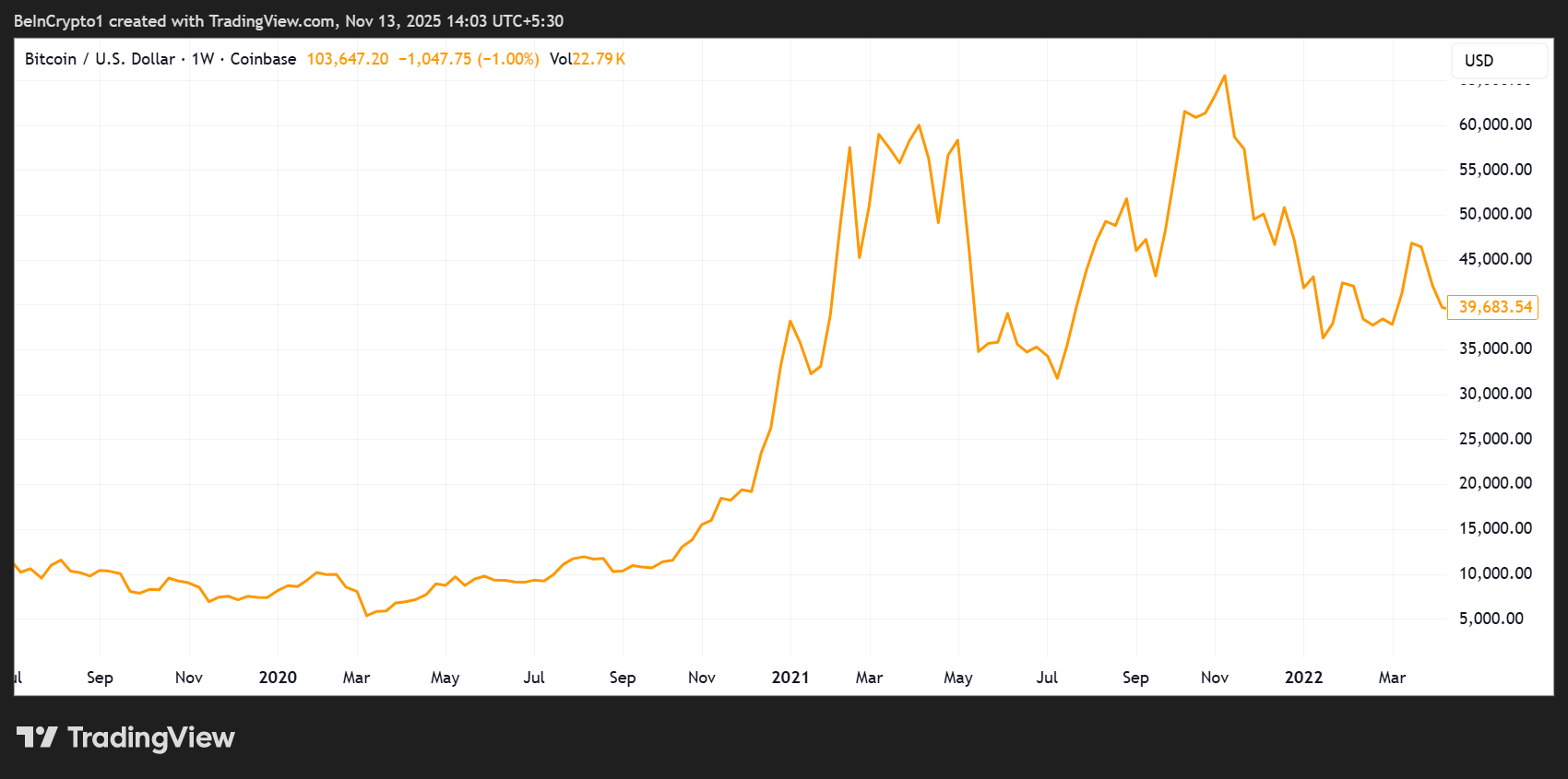
Динамика цен на биткойн (2020 год)
Динамика цены биткойна (2020 год). Источник: TradingView

Бьюрри не раскрыл позиции в криптовалюте. Однако его уход от традиционных рынков перекликается с аргументами сторонников биткоина. Они включают недоверие к завышенным оценкам, ликвидности центробанков и корпоративному левериджу.

Инвестор намекнул на новый фокус 25 ноября. Он написал: “Переходим к гораздо лучшим вещам, 25 ноября”. Это может означать альтернативные активы или частные проекты.

Когда традиционные рынки отрываются от реальности, самоуправление и твердые активы становятся контрарным выбором.

The post Инвестор Уолл-Стрит Майкл Бьюрри закрыл хедж-фонд Scion appeared first on BeInCrypto.

Related Reads

1996 or 1999? Walsh's First Test is 'How to View AI'

"1996 or 1999? Wall's First Big Test Is 'How to View AI'" Federal Reserve Chairman Wall's initial challenge is not whether to raise or cut rates, but a more fundamental judgment: what kind of boom is the current AI boom? This will determine the Fed's policy path and define his legacy. Economics is split between two opposing views, according to reporter Nick Timiraos. One sees imminent productivity gains that will increase supply and cool inflation, allowing the Fed to hold steady. The other argues that while productivity benefits are distant, demand shocks are here now, and waiting for data confirmation risks missing the intervention window, forcing sharper rate hikes later. Wall has signaled a leaning toward the first view, echoing 1996-era Alan Greenspan, who embraced strong, productivity-driven growth without fear of inflation. However, Wall faces a different macro environment than Greenspan did, with tariff pressures, expanding fiscal deficits, and diminishing globalization benefits, which could force more significant inflation pressures even if AI benefits materialize. Wall's logic, expressed before taking office, is that AI-driven productivity gains won't show in official data for years. If the Fed waits for confirmation, it might mistakenly tighten policy and choke off the very growth that could suppress inflation. This argues for using forward-looking narratives over lagging data. Chicago Fed President Austan Goolsbee presents a key counter-argument. He distinguishes between expected and unexpected productivity booms. A widely anticipated boom, like the current AI wave, can cause people to spend future wealth gains in advance, overheating the economy before productivity actually rises, thus requiring preemptive rate hikes. He cites rising costs for AI data centers as evidence of such overheating. Fed Governor Christopher Waller offers a rebuttal to Goolsbee, noting the "expected spending" mechanism only works if people can borrow against future income, which many households cannot do due to borrowing constraints. Wall also faces a paradox related to his desire to reduce the Fed's use of "forward guidance" (pre-announcing policy moves). This practice was established in 1999 when Greenspan began signaling hikes to avoid market shocks. If the economy follows a less optimistic path, Wall may be forced to choose between using the guidance he wants to abolish or risking market volatility by staying silent. The ultimate question defining Wall's first major test remains: Is this 1996 or 1999?

marsbit25m ago

1996 or 1999? Walsh's First Test is 'How to View AI'

marsbit25m ago

Ethereum Q1 2026 Report: Fees Decline, Users and Transaction Volume Hit New Highs

Ethereum Q1 2026 Report: Fees Down, Users & Transactions Hit New Highs Token Terminal's Q1 2026 report on Ethereum presents a pivotal development: the network achieved record highs in monthly active users (13.2M, +85.9% YoY), total transactions (200.4M, +81.5% YoY), and throughput (25.78 TPS), while transaction fees on the mainnet plummeted by 47.9% quarter-over-quarter. This shift is attributed to the network's strategic move into a "low fees for scale" phase, exemplified by the Fusaka upgrade which increased data capacity and lowered block space costs, releasing pent-up demand (a manifestation of Jevons's Paradox). The report highlights a core narrative shift for Ethereum: from a DeFi-centric blockchain to a global financial settlement layer. It maintains a dominant position in tokenized assets, holding majority market shares among top chains in stablecoins (61.8%), tokenized funds (73.0%), and tokenized commodities (84.0%). Growth in tokenized funds (+73.1% YoY) and commodities (+325.9% YoY) was particularly strong, driven by institutions like BlackRock and JPMorgan entering the space. Contrasting these usage gains, several USD-denominated value metrics declined in Q1: fully diluted market cap fell 30.3% QoQ, total value locked (TVL) dropped 11.0%, and ecosystem transaction volume decreased 24.0%. The report interprets this as Ethereum prioritizing long-term network expansion and cementing its role as the default settlement layer for finance over short-term fee capture. The commentary from Etherealize argues that, much like the early internet, Ethereum's open, permissionless model is poised to win over closed alternatives as institutional tokenization accelerates.

marsbit2h ago

Ethereum Q1 2026 Report: Fees Decline, Users and Transaction Volume Hit New Highs

marsbit2h ago

He Just Raised 2.7 Billion, and Li Fei-Fei Also Invested

Pete Florence, a former senior research scientist at Google DeepMind and a key contributor to the Vision-Language-Action (VLA) model architecture, is deliberately distancing his startup, Generalist AI, from the trendy "world model" label. He argues that the industry should prioritize concrete goals over buzzwords. His goal is to create robots that can perform a vast range of unseen tasks with high speed and success rates, without needing task-specific training data. Recently, his company raised $400 million (¥2.7 billion) at a $2 billion valuation. Notable investors include NVIDIA's NVentures, Bezos Expeditions, NFDG, as well as Xiaomi co-founder Lin Bin, Zoom founder Eric Yuan, and renowned AI scientist Fei-Fei Li. Florence's approach stems from his academic background at MIT under Professor Russ Tedrake, focusing on understanding the physical world. After joining DeepMind, he developed models like Transporter Network and co-created the VLA framework. He left in 2025 to found Generalist AI. The company has launched two models: GEN-0, which demonstrated that scaling laws apply to physical motion, and GEN-1. GEN-1 was trained on over 500,000 hours of physical interaction data collected via a specialized wearable device. It achieves a 99% success rate on precise mechanical tasks like folding boxes and maintains performance three times faster than its predecessor. Florence believes GEN-1 is reaching a commercial utility threshold similar to the GPT-3 inflection point. The substantial funding round, following GEN-1's release, signifies strong investor confidence in Generalist AI's practical, goal-driven path to creating versatile, useful robots, regardless of the "world model" terminology.

marsbit2h ago

He Just Raised 2.7 Billion, and Li Fei-Fei Also Invested

marsbit2h ago

Two Legends Lost in Three Days: Is Google's AI Talent Dam Cracking?

In three days, Google lost two AI legends. On June 18, Noam Shazeer, co-author of the seminal "Attention is All You Need" paper and Gemini co-lead, left for OpenAI. Just 48 hours later, John Jumper, 2024 Nobel laureate and AlphaFold lead, departed DeepMind for Anthropic. This follows Andrej Karpathy joining Anthropic in May. These moves highlight a structural trend: top AI talent is concentrating at mission-driven, pre-IPO firms like OpenAI and Anthropic, while Google becomes a primary source. The exodus stems from a core mission mismatch. Google's ad-centric model often subordinates AI research to product and revenue goals, creating friction for pioneers like Shazeer, who returned in 2024 only to leave again. In contrast, OpenAI and Anthropic offer singular focus on pushing AI boundaries, whether towards AGI or safety-aligned models, which deeply appeals to top researchers like Jumper. Financial incentives amplify the pull. With both OpenAI and Anthropic nearing IPO, employees stand to gain immensely from equity, an upside Google's mature stock cannot match. Furthermore, the 2023 merger of Google Brain and DeepMind, intended to consolidate strength, has instead created cultural tension and slowed the path from research to product, as evidenced by Gemini's pace. This talent redistribution is reshaping the AI landscape. While Google retains vast data and compute resources, its true crisis is the quiet, continuous loss of the people who define the field's future. The real moat in AI is not infrastructure, but the concentration of brilliant minds—a battle Google is currently losing.

marsbit4h ago

Two Legends Lost in Three Days: Is Google's AI Talent Dam Cracking?

marsbit4h ago

Trading

Spot
Futures
活动图片