Ripple Makes Another Major Acquisition As Battle Against SWIFT Rages On

bitcoinistPublished on 2025-11-06Last updated on 2025-11-06

Abstract

Ripple has made yet another move in its long-running campaign to reshape global payments, this time acquiring Palisade, a digital...

Trusted Editorial content, reviewed by leading industry experts and seasoned editors. Ad Disclosure

Ripple has made yet another move in its long-running campaign to reshape global payments, this time acquiring Palisade, a digital asset custody infrastructure company. The deal marks the company’s fourth acquisition in recent months and is a clear escalation in what many describe as the company’s competition with SWIFT, the dominant global payments messaging network.

Ripple Makes Another Major Acquisition

Palisade announced the acquisition on X, noting that its wallet-as-a-service technology will now form part of Ripple’s next-generation payments and custody infrastructure. The startup noted that its platform will help power the firm’s next-gen custody and payments infrastructure in order to bring its technology to businesses worldwide. 

Ripple also confirmed the news with a corresponding statement, describing the acquisition as a major step in advancing institutional-grade digital asset custody.

Ripple said Palisade’s scalable wallet solution is ideal for on-and off-ramps and corporate payments, adding that the integration accelerates value transfer across Ripple Payments and Custody. 

The company’s post ended with a bold statement that noted the importance of secure custody to the on-chain economy, linking the acquisition to its broader goal of building what it calls the Internet of Value. 

XRP analysts and crypto market commentators have described the acquisition news as bullish for XRP. XRP, on the other hand, is witnessing an ongoing price crash alongside the rest of the crypto market. 

The Battle Against SWIFT Rages On

The Palisade purchase is only the latest in a string of aggressive acquisitions by Ripple in 2025. In April, Ripple announced its acquisition of the prime brokerage firm Hidden Road for $1.25 billion and rebranding to Ripple Prime, a deal that significantly expanded its reach in institutional liquidity and trading services. 

Just months later, it finalized the acquisition of stablecoin platform Rail for $200 million. This was followed by its $1 billion acquisition of GTreasury, a treasury management firm, in October.

Altogether, the payment firm says it has deployed approximately $4 billion into the crypto ecosystem through a mix of mergers, acquisitions, and strategic investments. Each of these moves strengthens its infrastructure to handle every aspect of value transfer from custody and liquidity to stablecoin issuance and institutional settlements, forming the backbone of its long-term plan to challenge SWIFT’s global dominance in cross-border transactions.

As the firm continues to scale its infrastructure with acquisitions like Palisade, analysts view these moves as part of a broader strategy to build a vertically integrated financial ecosystem that can rival SWIFT’s legacy dominance.

Meanwhile, Ripple’s highly anticipated SWELL 2025 event is already underway after kicking off yesterday, bringing together key partners, regulators, and financial executives from around the world to discuss the company’s vision for the next era of blockchain-based finance. For the first time ever, the event is going to include a representative from the White House.

XRP
XRP trading at $2.22 on the 1D chart | Source: XRPUSDT on Tradingview.com
Featured image from iStock, chart from Tradingview.com
Editorial Process for bitcoinist is centered on delivering thoroughly researched, accurate, and unbiased content. We uphold strict sourcing standards, and each page undergoes diligent review by our team of top technology experts and seasoned editors. This process ensures the integrity, relevance, and value of our content for our readers.

Scott Matherson is a leading crypto writer at Bitcoinist, who possesses a sharp analytical mind and a deep understanding of the digital currency landscape. Scott has earned a reputation for delivering thought-provoking and well-researched articles that resonate with both newcomers and seasoned crypto enthusiasts. Outside of his writing, Scott is passionate about promoting crypto literacy and often works to educate the public on the potential of blockchain.

Related Reads

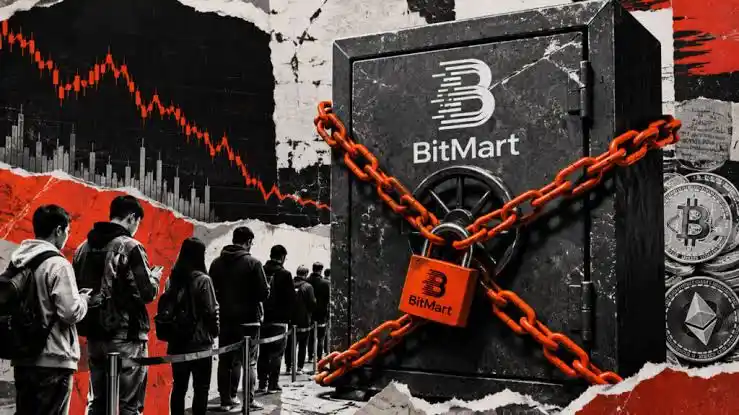
BitMart's Final 9 Days: A True Exchange Crisis Is Never About Shutting Down

BitMart's Final 9 Days: A True Exchange Crisis Is Not About Shutting Down On August 17, 2026, with just 9 days until BitMart's scheduled cessation of trading, the focus shifted from the platform's orderly closure to serious questions about user withdrawals, platform solvency, employee payments, and reserve transparency. Stakeholders, claiming to represent users and staff, publicly demanded asset/liability disclosures, explanations for withdrawal delays, a user repayment plan, and an independent audit, setting an August 19 deadline. While BitMart CEO Sheldon Lee denied allegations of insolvency or wrongdoing, the controversy highlighted a core vulnerability of centralized exchanges (CEXs). When an exchange announces its shutdown, normal user behavior changes dramatically, triggering a mass withdrawal event—the ultimate stress test for its liquidity and custodial integrity. The key question becomes not whether the platform has assets, but whether it holds sufficient *liquid* assets to cover all user liabilities on demand. The article argues that the trust placed in CEXs is based on the convenience they provide, abstracting users from direct control of their private keys. This trust is rarely questioned during normal operations but becomes critically exposed during a wind-down. The situation underscores the limitations of simple Proof of Reserves, which shows "what we have" but not the crucial "what we owe." True financial credibility requires transparent, auditable data on assets, liabilities, and segregated user funds. BitMart's situation reflects a broader, often overlooked issue in the crypto industry: while there is extensive focus on growth mechanisms for exchanges, there is little discussion or established protocol for a safe and transparent "exit mechanism." The final measure of an exchange's integrity, the article concludes, is not its user count or trading volume during a bull market, but its ability to ensure every last user can successfully withdraw their assets when the doors are closing. The outcome will be determined not by statements, but by whether the final user's funds securely leave the platform.

marsbit18m ago

BitMart's Final 9 Days: A True Exchange Crisis Is Never About Shutting Down

marsbit18m ago

Don't Speculate on 100x Coins, Just Bet on 'Cash Cows': Which Projects Are Worth Dollar-Cost Averaging in the Bear Market?

In a bearish crypto market, finding sustainable investments is more prudent than chasing speculative meme coins. This article analyzes projects generating consistent revenue, highlighting them as potential "cash cows" for long-term dollar-cost averaging (DCA). The top performers are "picks-and-shovels" plays. **Pump.fun**, a Solana-based meme coin launchpad, leads with $415.3M in monthly revenue, profiting from a 1.25% fee on token transactions. Despite market volatility, it has averaged tens of millions in monthly income in 2024. Perpetual DEX **Hyperliquid** stands out as a "bear market star," accumulating ~$352M in revenue over seven months. Its model funnels ~99% of fees into buying back and permanently burning its HYPE token. Established giants are also adapting. **Uniswap**, after enabling its fee switch, now earns protocol revenue (e.g., $5.6M recently), which is used to buy back and burn UNI, giving the token direct value accrual. Similarly, oracle provider **Chainlink** generates stable monthly revenue (~$4.57M recently) from its essential data, cross-chain, and automation services. Its new Payment Abstraction feature automatically converts service fees into LINK, accruing value in its treasury. The core thesis is clear: in a downturn, focus on projects with proven, resilient business models—those acting as essential infrastructure or capturing consistent transaction fees—rather than speculative narratives.

marsbit33m ago

Don't Speculate on 100x Coins, Just Bet on 'Cash Cows': Which Projects Are Worth Dollar-Cost Averaging in the Bear Market?

marsbit33m ago

Trends in U.S. Stocks (August 18): U.S.-Iran Deal Prospects Dim, Major Indices See Two Consecutive Down Days, Chip Stocks Defy Market Decline

**Market Overview:** On August 18th, U.S. stock indices declined for a second consecutive day. The S&P 500 fell 0.52%, the Dow dropped 0.51% to a two-week low, and the Nasdaq slipped 0.32%. The decline was driven by heightened geopolitical risk as U.S.-Iran negotiations reached a key deadline without an extension, dimming the prospect of a long-term agreement. **Key Drivers:** * **Geopolitics & Oil:** The failure to extend the U.S.-Iran memorandum led to a surge in oil prices, with Brent crude closing above $90/barrel for the first time in three weeks. * **Treasury Yields:** The 30-year U.S. Treasury yield hit a high not seen since 2007, driven by heavy corporate issuance (notably for AI investments) and ongoing fiscal deficits. * **Sector Performance:** While the "Magnificent Seven" tech giants all closed lower, semiconductor stocks bucked the trend. The Philadelphia Semiconductor Index rose 1.6%, led by memory chipmakers (e.g., SanDisk, Micron) and optical communication companies, as investors focused on the strong demand outlook for AI-related hardware. * **Currency & Safe Havens:** The U.S. Dollar Index fell for a third day, while the offshore Chinese Yuan hit a three-year high. Gold prices rose to a two-month peak, supported by safe-haven demand outweighing pressure from rising yields. Bitcoin also gained. **Outlook:** Market focus remains on potential escalation in the Middle East and its impact on oil, alongside continued scrutiny of AI-related earnings and demand signals.

marsbit39m ago

Trends in U.S. Stocks (August 18): U.S.-Iran Deal Prospects Dim, Major Indices See Two Consecutive Down Days, Chip Stocks Defy Market Decline

marsbit39m ago

Trading

Spot
活动图片