Настроения крипторынка остаются в зоне «страха» после сделки Трампа с Китаем

cryptonews.ruPublished on 2025-11-17Last updated on 2025-11-17

Широко используемый индикатор настроений на крипторынке остается в зоне неопределенности, несмотря на прояснение торговых отношений между США и Китаем. Это происходит на фоне заключения торговой сделки между президентом США Дональдом Трампом и Китаем на этой неделе.

Однако некоторые криптоаналитики предполагают, что это объявление вскоре может оказать положительное влияние на крипторынок.

Индекс страха и жадности, измеряющий общие настроения на крипторынке, показал значение 37 в воскресенье, что на 4 пункта выше субботнего показателя 33. Незначительный рост произошел после публикации Белым домом развернутого заявления с изложением достигнутого торгового соглашения между Трампом и председателем Китая Си Цзиньпином.

Развитие торговых отношений между США и Китаем пристально отслеживается индустрией

«Крупная победа, которая защищает экономическую мощь и национальную безопасность США, ставя на первое место американских рабочих, фермеров и семьи», — заявил Белый дом в заявлении в субботу.
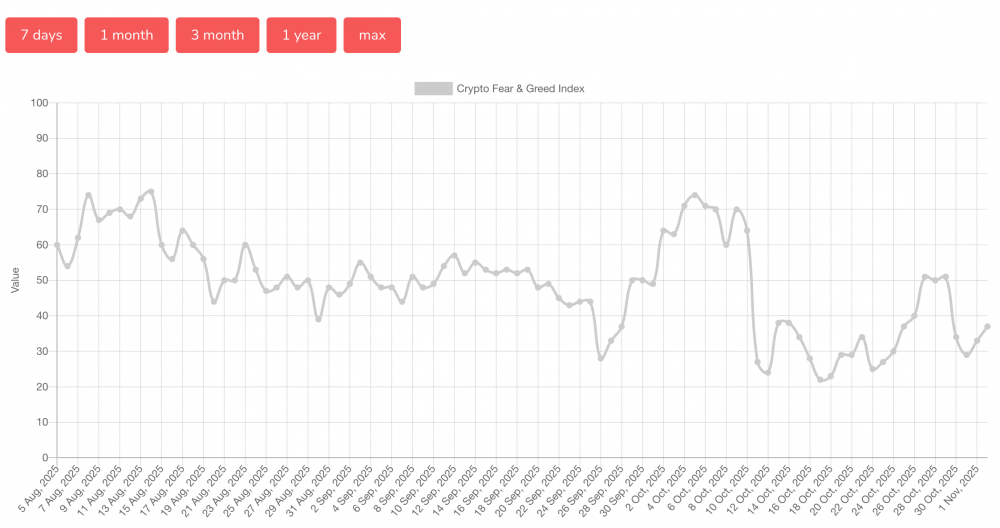

Индекс страха и жадности демонстрировал волатильность в течение последних трех месяцев. Источник: Alternative.me

Развитие торговых отношений между США и Китаем пристально отслеживается многими представителями криптоиндустрии, поскольку объявления о пошлинах с начала администрации Трампа в январе часто связывали со значительными движениями на крипторынке.

После объявления Трампа о 90-дневном моратории на взаимные пошлины 9 апреля показатель индекса страха и жадности резко вырос в течение следующих 24 часов, поднявшись с отметки 18 до значения 39 на следующий день.

Совсем недавно угроза Трампа ввести 100% пошлины против Китая была названа причиной октябрьского обвала на крипторынке, в результате которого 11 октября за 24 часа было ликвидировано $19 млрд.

С тех пор крипторынок испытывает трудности с восстановлением. В публикации на платформе X в субботу Майкл ван де Поппе, основатель MN Trading Capital, заявил, что этот день впоследствии будут вспоминать как один из «дней формирования дна».

Аналитик заявил, что рынок все еще находится на «ранней стадии» бычьего ралли

«Вот почему мы все еще находимся на ранней стадии бычьего цикла в отношении альткоинов и Биткоина», — отметил Ван де Поппе.

Белый дом сообщил, что США сохранят мораторий на «повышенные взаимные пошлины на китайский импорт» до 10 ноября 2026 года.

Криптотрейдер Ash Crypto заявил: «Эта определенность бычья для рынков». Схожие настроения выразил криптотрейдер 0xNobler, назвав это «гига-бычьей новостью».

Недавняя торговая сделка пока не оказала заметного влияния на крипторынок. Согласно данным CoinMarketCap, Биткоин торгуется на уровне $110 354, а Эфир — на отметке $3 895, показав рост на 0,26% и 0,84% соответственно за последние 24 часа.


Related Reads

Has Bitcoin Bottomed? Unpacking 12 Key Data Indicators

Author: BitalkNews **Title: Has Bitcoin Bottomed? Analyzing 12 Key Data Indicators** The current Bitcoin price is around $59,600, representing a maximum drawdown of approximately 53% from the 2025 high. The market is in a deep correction phase. Multiple indicators suggest valuations are nearing historical lows, but a confirmed bottom requires more time. **Summary of Key Indicators:** 1. **Fear & Greed Index:** At 16, indicating "Extreme Fear," similar to levels seen during the 2022 FTX collapse. 2. **Rainbow Chart:** BTC has fallen into the "Bitcoin is dead" zone, only the second such occurrence historically. 3. **MVRV Ratio:** Currently around 1.13, near the lower historical band, pointing to a bottoming valuation area (approx. $53,200-$53,400). 4. **Realized Price:** The aggregate cost basis is ~$53,400; the current price is only about 12% above it but hasn't broken below yet. 5. **UTXO Profit/Loss Ratio:** Has dropped to its lowest level this cycle, signaling a potential "capitulation" event often seen near cycle bottoms. 6. **Long-Term Holder SOPR:** For holders >155 days, it's at 0.662, now negative, indicating seasoned investors are selling at a loss. 7. & 8. **Miner Health:** ~20% of miners are unprofitable, and actual miner revenue is below theoretical levels, indicating ongoing miner stress. 9. **ETF Flows:** U.S. spot BTC ETFs have seen sustained net outflows, including a 13-day streak with over $1.7B in weekly outflows. 10. **Strategy Risk:** Strategy's stock premium has significantly contracted, pressuring the traditional "borrow-to-buy" model. 11. **Bear Duration & Drawdown:** The correction has lasted >265 days with a ~52.5% drawdown, shorter in depth but lengthy in duration. 12. **Market Expectations (Polymarket):** Betting markets suggest an ~80% probability of BTC falling below $55,000 and a notable chance below $50,000. **Conclusion:** Bitcoin is in a deep correction with potential bottom formation. Valuation metrics are in historically low ranges, and on-chain capitulation signals are accumulating. However, a complete shakeout isn't finished—the realized price hasn't been breached, and ETF demand hasn't reversed. The area below $60,000 holds long-term appeal, but patience is advised. Key signals to watch for include a return to ETF inflows, a recovery in the Long-Term Holder SOPR, and easing miner pressure.

marsbit2m ago

Has Bitcoin Bottomed? Unpacking 12 Key Data Indicators

marsbit2m ago

Valuation Inversion Emerges, Bitcoin Treasury Companies Face Trust Crisis

"Valuation Inversion Emerges, Sparking Trust Crisis for Bitcoin Treasury Firms" The investment thesis for corporate Bitcoin treasury stocks has fundamentally shifted. Investors are no longer rewarding companies simply for accumulating more Bitcoin. Instead, the focus is now on net Bitcoin per share, with intense scrutiny on whether new financings truly benefit existing shareholders or merely dilute their stake. Key indicators highlight the new reality. Metaplanet's market capitalization has fallen below the total value of its Bitcoin holdings, indicating a valuation discount. While MicroStrategy maintains a premium, its core metric—Bitcoin per diluted share for common shareholders—has been declining due to dilution from financing activities, primarily through its STRAT permanent preferred shares. This marks a transition from a pure "asset accumulation" phase to an "equity attribution" phase. Investors now deduct costs like preferred dividends and debt to calculate the actual Bitcoin claim for common equity. The widespread adoption of spot Bitcoin ETFs has removed the scarcity value these stocks once held, forcing them to justify their structure with superior leverage, dividends, or capital efficiency. European entrants like France's Capital B and Sweden's BTC AB are testing this new environment with ambitious funding plans backed by relatively small Bitcoin holdings. They are asking investors to bear complex capital structures, betting future Bitcoin purchases will cover all dilution and dividend costs. The sector's core risk is a broken financing loop. Once a company's stock trades below its Bitcoin net asset value, it loses the ability to issue equity for accretive purchases. It is then left with unpalatable choices: dilutive financing at a discount, venturing into new businesses like Bitcoin lending, or selling assets. The winners in this next phase will be those that demonstrably increase Bitcoin per share for common shareholders with every financing move.

Foresight News34m ago

Valuation Inversion Emerges, Bitcoin Treasury Companies Face Trust Crisis

Foresight News34m ago

Trading

Spot
活动图片