MegaETH公售今晚开启:获利良机还是浪费时间?

marsbitPublished on 2025-10-26Last updated on 2025-10-27

MegaETH 将于今日(10 月 27 日)21:00(UTC+8)在 Echo 旗下的 Sonar 平台上启动公开售卖。MegaETH 的总供应量为 100 亿枚,本次公开售卖 5 亿枚,支付方式为 USDT。

此次公售,用户可通过英式拍卖竞投,最高出价可达 186,282 美元,最低为 2650 美元。起拍价为 0.0001 美元(FDV 为 100 万美元),最高上限价格 0.0999 美元(FDV 为 9.99 亿美元)。

近期(尤其是今日),加密推特上关于以太坊扩容方案 MegaETH 的公开发售讨论日渐增多,公众纷纷摩拳擦掌,真正推动此次热潮的原因是什么?此次公售真的值得参与吗?加密交易员 cyclop 在 X 平台发文对此次公售进行解析,以下为内容详情。

近来散户唯一能盈利的领域大概就是首次代币发行(ICO):

  • $PUMP:任何规模的交易都能获得 1.5 倍收益
  • $XPL:任何规模的交易都能获得 2 倍以上收益
  • $YB:在上限规模内交易可获得 4 倍收益

Memes 已近乎消亡,山寨币市值屡创新低,而 10 月 11 日的暴跌更更是让散户资金进一步枯竭。从市场上随意持有代币是个糟糕的主意。

但只是持有稳定币然后参与 ICO 呢?您只需 2-3 个月的时间就可以使您的整个投资组合的收益翻 2 到 3 倍。

市场情绪发生了变化。如今正式进入 ICO 时代——就像以往的每一个周期一样。

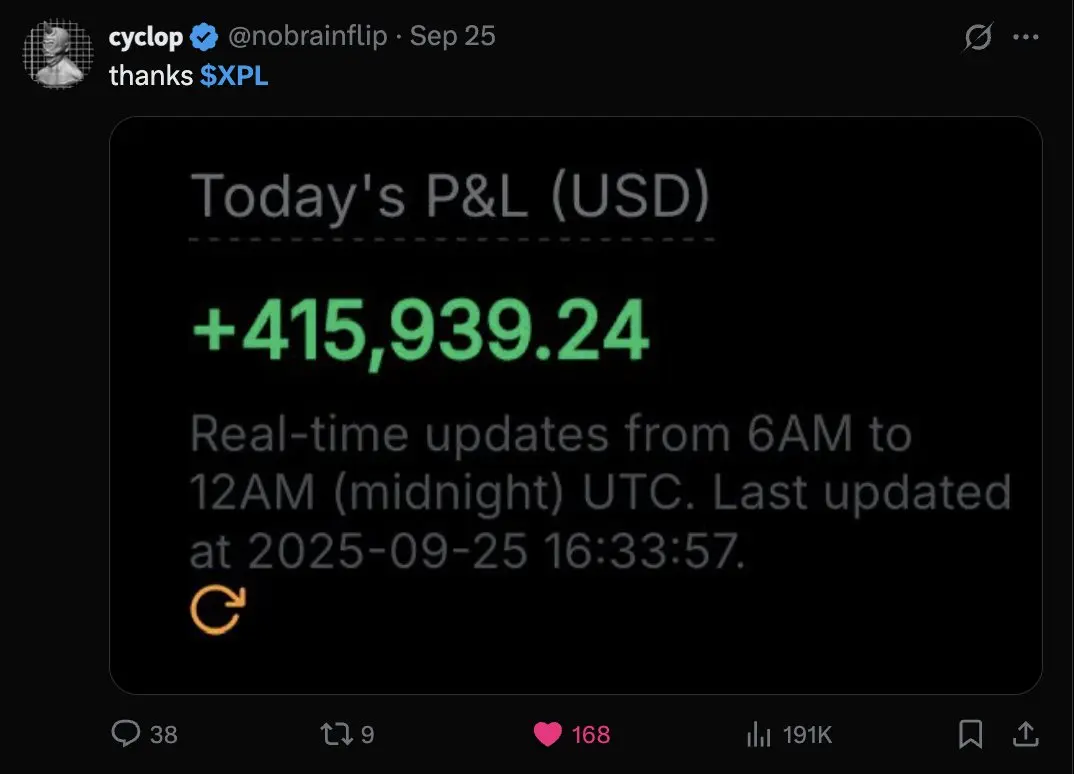
而 Echo 本身现在也正处于疯狂的炒作之中。为什么?因为上次的销售:$XPL(Plasma)。

在 $XPL 的公售中,每存入 1 美元,就能获得 1.5 美元的利润,没有上限。该项目最终上涨 30 倍,仅超额认购了 20 倍。这意味着,每存入 1000 美元,你就能以 5 亿美元的估值购买 $XPL,而在上市后,其市值达到了 150 亿美元:市值上涨了 30 倍。
MegaETH

$XPL 公售最棒的部分在于:任何人都能参与。无论你是否有链上交易历史、影响力,或者与生态系统的联系。只要通过 Echo 的 KYC 并存入资金(先到先得,但在第二阶段有 30 分钟的时间窗口)。

那么,为什么 $XPL 公售如此有利可图,而 $MEGA 会是同样的情况吗?这一次所有人都能盈利吗?

简而言之:不会。原因如下:

$XPL 能盈利是因为当时围绕 Echo 或者 ICO 还没有太多炒作。他们筹集了 10 亿美元,相当于超额认购 20 倍。没有倍数分配,资金均等分配。

而对于 $MEGA,Polymarket 的估值在 25 亿美元以上,实际上更接近 30 到 40 亿美元。这相当于 60 到 80 倍的超额认购。上市前估值仅为 4.5 倍左右。
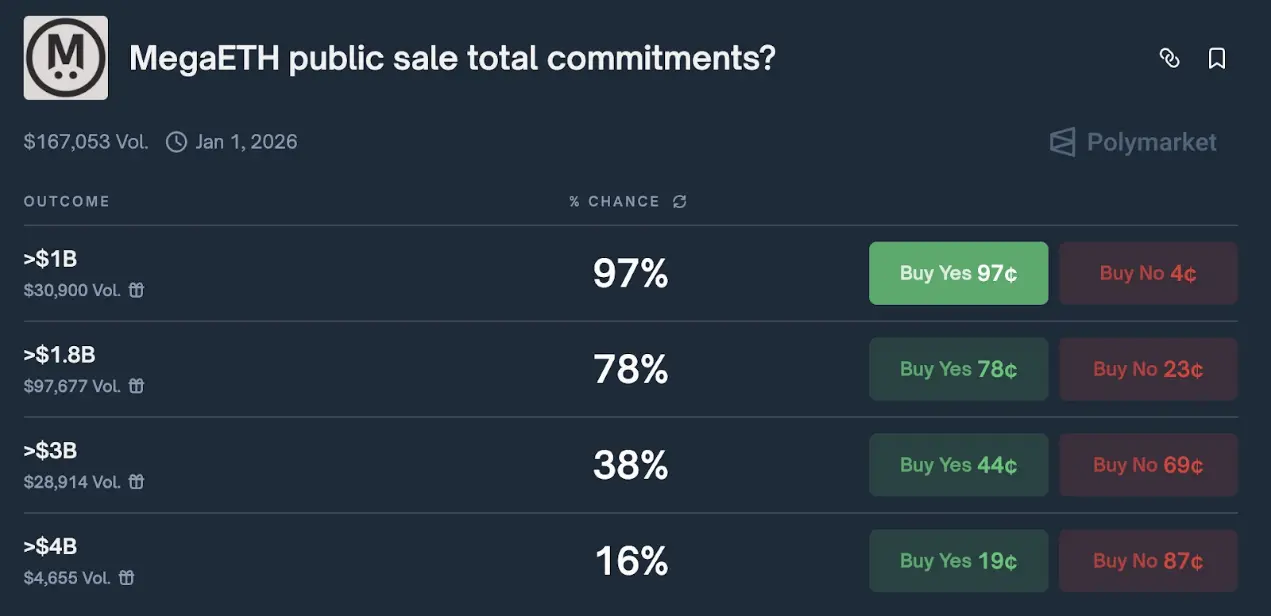
MegaETH

这意味着:如果资金均等分配,每存入 1 美元将获得约 0.04 美元的回报。

现在将其与 $XPL 每存入 1 美元将获得 1.5 美元的回报相比,利润约相差 37.5 倍。

所以团队表示,分配金额最低为每人 2650 美元,即至少能赚 1 万美元。

但计算一下:

  • 如果每个人都拿到最低分配金额 2650 美元,那就有 18867 名符合条件的参与者。
  • 如果平均分配金额为 5000 美元,那就有 1 万名获奖者。
  • 与此同时,一天内就有 10 万人注册,预计总申请人数将达到 40 万至 50 万。

MegaETH

这意味着只有约 1/50 的人能获得分配。

换言之,你不能只是投入稳定币然后祈祷。就算你投入 18 万美元,如果没被选中,你也什么都得不到。

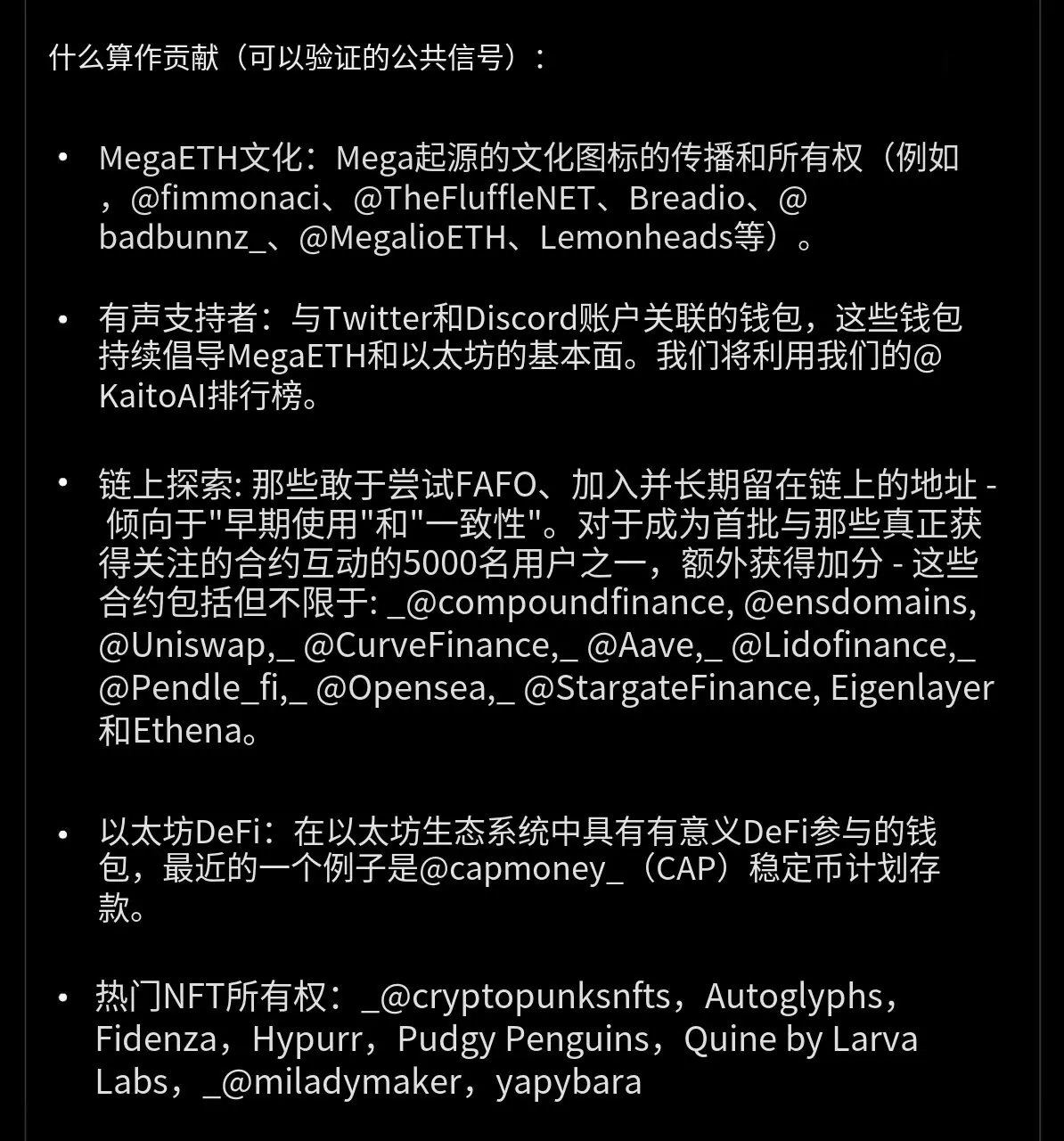
个人认为团队会优先考虑特定的用户群体,并给予他们适当的奖励,而不是简单地给每个人分配其存款的 4%。

那么,到底谁能获得分配?

  • 如果你符合他们的优先标准(媒体曝光度高、链上交易历史长),那么你一天内轻松赚取 1 万至 3 万美元。
  • 如果你是真正的 MegaETH 老用户,那显然值得参与。
  • 如果你只是随便想用稳定币碰碰运气,那别指望能赚到钱。

MegaETH

标准

所以,正如加密行业一贯的做法:如果你不是早期参与者,你就只能退出流动性市场。

全力投入 ICO 热潮的最佳时机是 $XPL。如果你现在才醒悟过来——那就太晚了。

归根结底,$MEGA 的公售活动并非彩票,而是一个筛选器。其设计初衷是淘汰大众,将真正的收益机会留给特定群体。

别把炒作和机会混为一谈,这可不是第二个 $XPL,而是大众的 FOMO 罢了:95%的人会一无所获,5%的人能赚到中等偏上的钱。

而残酷的事实是——自己属于哪一类群体你应该知晓。
Related Reads

AI Can 'Have Moods Too'! New Research from USTC: Confusion and Anxiety Make AI Work Better

The article discusses research from the University of Science and Technology of China and Oxford, revealing that allowing AI to recognize and act upon simulated "internal emotions" can significantly improve its performance. The study demonstrates a coherent pairing between specific emotional states in AI agents and their subsequent skill choices. For instance, an agent feeling curious and desirous will search for products, while one feeling confused and tense will rephrase queries. This mirrors human decision-making influenced by emotions. Statistical validation showed a 76.5% semantic consistency in these pairings. Crucially, the research challenges the traditional view of AI errors as flaws to be eliminated. It found that "bad" emotions like confusion, tension, or frustration serve as useful metacognitive signals, indicating a mismatch between the current strategy and the environment. By responding to these signals, AI can proactively adjust before a failure occurs. This is particularly effective in complex tasks prone to failure. For example, in tasks like "heating an item" and "picking up two items," success rates surged from 9.6% to 56.9% and 4.4% to 31.3%, respectively, when using the emotion-driven skill selection method (EMOTION2SKILL). The AI's "nervous" state about a closed microwave, for instance, prompted it to check and open it first, preventing failure. The article also mentions related work from Tianjin University, which embeds emotional prediction into world models (Large Emotional World Model, LEWM), significantly improving prediction accuracy in human-centric environments. Removing emotional data was found to degrade performance even in unrelated logical reasoning tasks. These studies build on earlier findings, like those from Anthropic, that identifiable emotional representations exist within large language models (LLMs). The focus is shifting from philosophical debate about AI emotion to practically harnessing these internal states as functional signals to enhance AI robustness and capability.

marsbit36m ago

AI Can 'Have Moods Too'! New Research from USTC: Confusion and Anxiety Make AI Work Better

marsbit36m ago

Trading

Spot
活动图片