The crypto market cap added over $50 billion in a day as bitcoin spiked above $20,000 and ETH is up 9%.
After several days of trading sideways, bitcoin finally initiated a leg up and spiked above $20,000. Most altcoins are also well in the green today, led by Ethereum’s impressive 9% surge.
Bitcoin Looks to Reclaim $20K
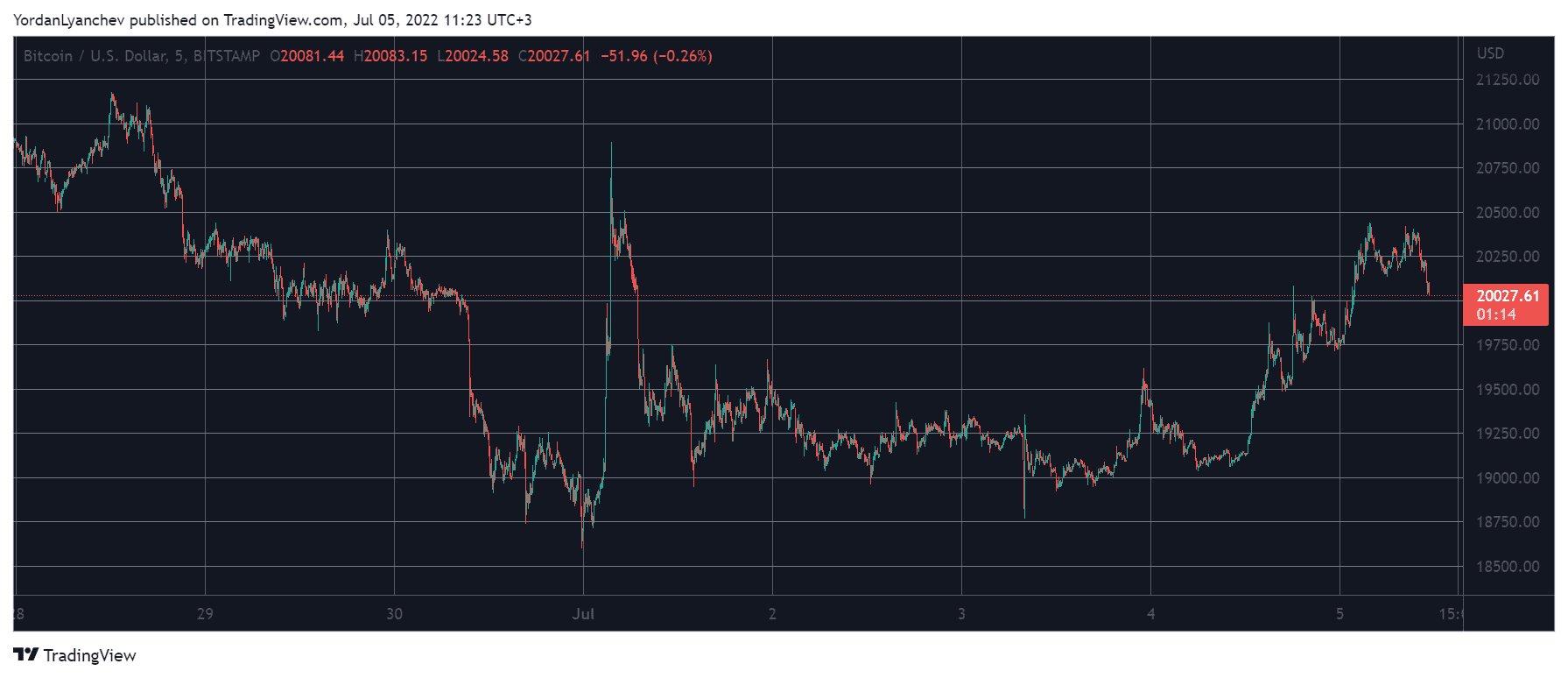
Following the end of June, which turned out to be bitcoin’s worst trading month in over a decade, the cryptocurrency experienced enhanced volatility by surging with over $2,000 in minutes to a multi-day high of just under $21,000.
However, this uptick didn’t last long, and the asset returned below $20,000 shortly after. Then came the weekend, which was untypically calm, and BTC settled at approximately $19,000.
Aside from one brief spike to just over $19,500, the asset spent most of the next three days at the aforementioned level. It was just when July 4 was coming to its end when the cryptocurrency started to gain traction and jumped to an intraday high of $20,400 (on Bitstamp).
As of now, BTC has lost a few hundred dollars and sits around $20,000. Its market cap is up to $385 billion, and its dominance over the altcoins is at 42.3%.
Notable Bitcoin News
The analytics platform Glassnode suggested that the asset could be near its bottom as market speculators have been purged.
Celsius Network has repaid $120 million of its debt, thus reducing the BTC liquidation price to below $5,000.
Altcoins See Green
The alternative coins were quite calm as well in the past several days, but most have turned green now.
Ethereum leads the way with a substantial 9% increase. Consequently, the second-largest crypto has added around $100 in a day and stands at $1,150.
BNB has increased by about 7% since yesterday and has jumped to above $230 after struggling below $220 in the past few days. Solana’s daily surge is similar, and SOL is now at $35.
More modest gains come from Ripple, Cardano, Dogecoin, Polkadot, Tron, and Shiba Inu, while MATIC has soared by 14% to well above $0.5.
With several lower- and mid-cap alts in similar positions, the overall crypto market cap has added $50 billion in a day and stands above $900 billion now.
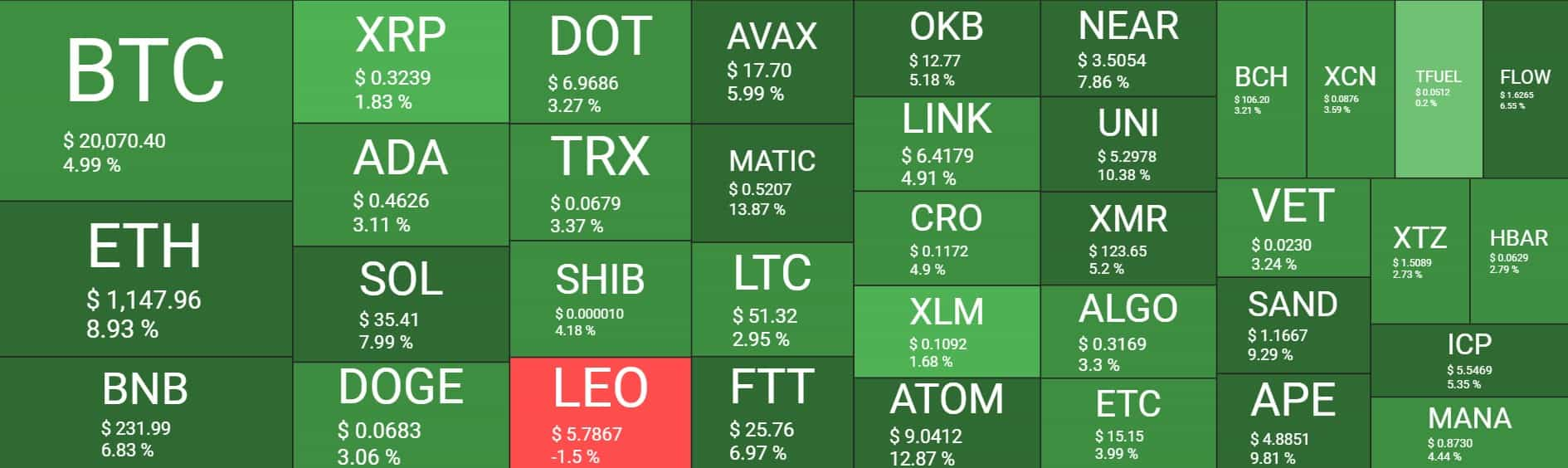
Cryptocurrency Market Overview. Source: Quantify Crypto
Industry News
The CEO of Circle refuted the recent rumors about company issues, saying the firm had no actual exposure to troubled entities.
Following the sudden resignation of the local economy minister, Argentines turned to stablecoins, resulting in a substantial premium.
The team behind Crema Finance explained how they became the latest DeFi hack victim.