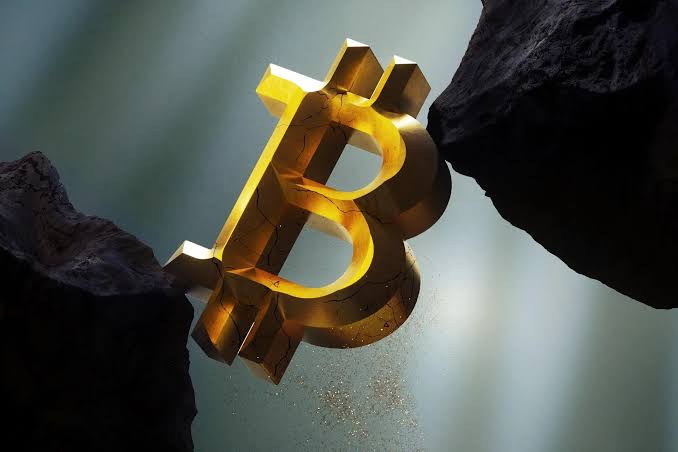
Криптовалютные рынки растут после подтверждения Дональдом Трампом встречи с Си Цзиньпином

cryptonews.ruPublished on 2025-01-19Last updated on 2025-10-20

В воскресенье президент США Дональд Трамп подтвердил, что встретится с председателем КНР Си Цзиньпином на саммите Азиатско-Тихоокеанского экономического сотрудничества (АТЭС) в Сеуле, Южная Корея, который должен начаться 31 октября.

«Мы встретимся через две недели в Южной Корее с председателем Цзиньпином и другими, - сказал Трамп Марии Бартиромо из Fox News после деэскалации торговой напряженности между Китаем и США. - Си Цзиньпин - удивительный человек и очень сильный лидер. Посмотрите, чего он добился, на каком этапе своей жизни он находится. Это потрясающая история. Это сюжет для отличного фильма. Я думаю, у нас с Китаем все будет в порядке, но нам нужно заключить сделку. Она будет честной».

Рисунок 1. Дональд Трамп беседует с Марией Бартиромо о предстоящей встрече с Си Цзиньпином и урегулировании торговых споров между двумя странами. Источник: Fox News.

Ранее Трамп заявлял, что «нет причин» встречаться с Си Цзиньпином на саммите АТЭС в Южной Корее, после чего было объявлено о введении дополнительных торговых пошлин для Китая, что обрушило криптовалютные рынки и привело к потере 99% стоимости некоторых альткоинов.

Посты Трампа в социальных сетях спровоцировали каскадную ликвидацию почти на 20 000 000 000 долларов на рынке криптовалютных деривативов - крупнейшую в истории ликвидацию криптовалютных активов, - которая усугубилась целым рядом факторов: высоким кредитным плечом, низкой ликвидностью и чрезмерным риском.

Криптовалютный рынок реагирует на снижение торговой напряженности

В воскресенье цена биткоина выросла примерно на 2% после заявлений Трампа, и BTC был не единственным, кто продемонстрировал скромный рост.

Криптовалюты продемонстрировали рост по всем направлениям: Ethereum и BNB зафиксировали рост примерно на 3,5%, а Solana (SOL) на момент написания статьи вырос почти на 4%, согласно данным TradingView.
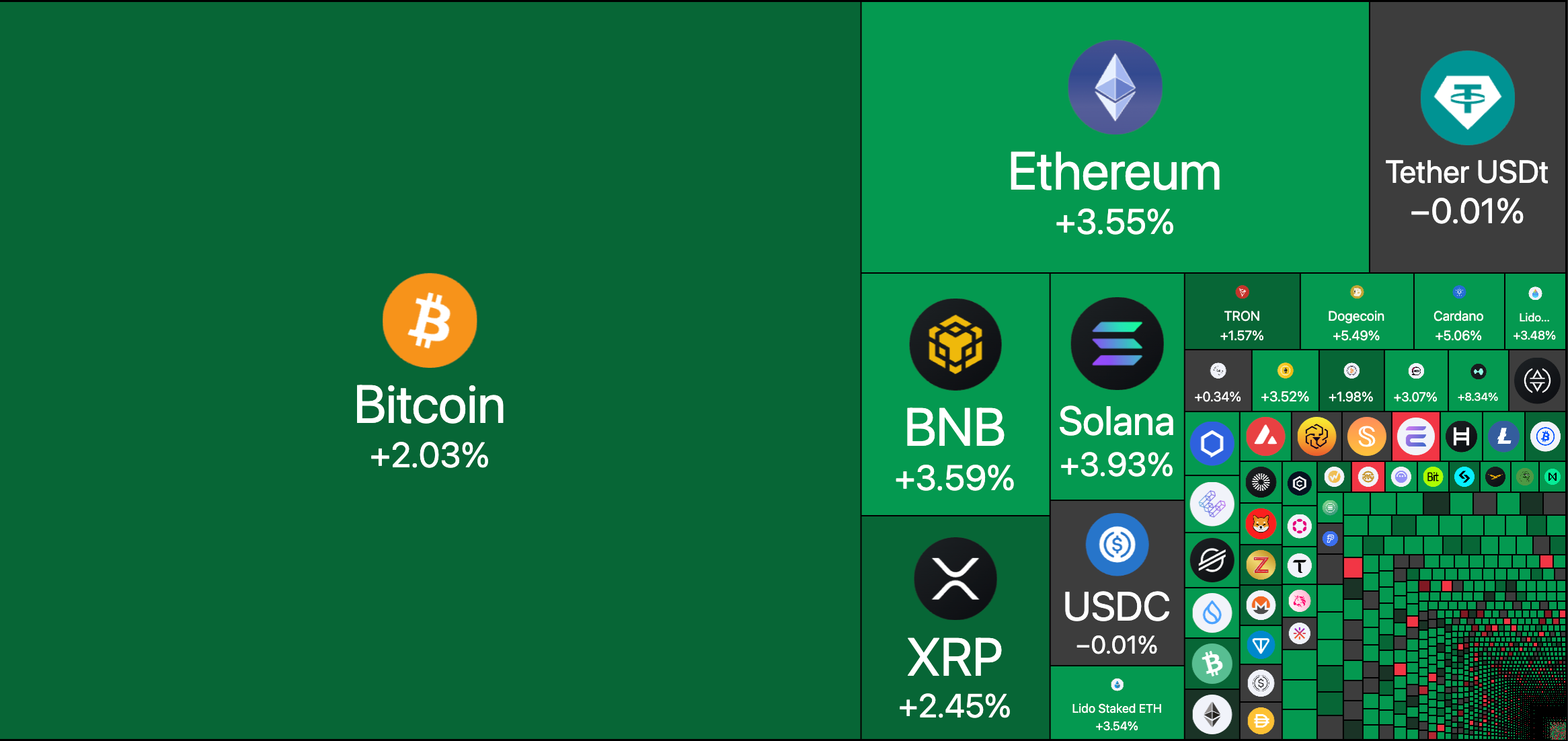
Рисунок 2. В воскресенье наблюдался рост всех криптовалют. Источник: TradingView.

Настроения участников рынка достигли шестимесячного минимума на фоне исторического обвала рынка криптовалют и опасений инвесторов по поводу затяжной торговой войны между США и Китаем.

В пятницу индикатор страха и жадности криптовалют упал до минимума 22, что сигнализирует о «крайнем страхе» и осторожности инвесторов в отношении рынка криптовалют.

Однако аналитики Kobeissi Letter прогнозируют кратковременное падение рынка из-за технических факторов и отмечают сохранение долгосрочного бычьего тренда.

Related Reads

Karpathy's Genius Strikes Again, Challenging RAG, Turning Your Notes into a Second Brain

Andrej Karpathy has proposed a revolutionary concept for managing personal knowledge: treating notes as immutable "source code" and using LLMs as "compilers" to build a structured, interlinked wiki. This approach fundamentally shifts the cognitive workflow away from the limitations of RAG (Retrieval-Augmented Generation), which merely retrieves and pieces together fragments, leading to contradictions and "digital mummies"—unused, decaying notes. The LLM-Wiki framework introduces a three-layer architecture: the **Raw Layer** for original, immutable notes; the **Schema Layer** defining rules for structuring knowledge; and the **Wiki Layer**, where the LLM continuously compiles and maintains a coherent, cross-referenced knowledge base. Key operations are **Ingest** (adding new material, which triggers updates across related pages), **Query** (asking the compiled wiki, with answers that can become new pages), and **Lint** (periodic AI audits to find contradictions, outdated claims, or gaps). This system automates the tedious maintenance—updating links, resolving conflicts, keeping summaries fresh—that has historically made large-scale personal knowledge management unsustainable. It realizes Vannevar Bush's 1945 "Memex" vision by finally solving the maintenance problem. Karpathy's proposal represents a third piece in human-AI collaboration, following "Vibe Coding" and "Agentic Engineering." It liberates human attention from organizational drudgery, refocusing it on what matters: deciding what to read and deriving meaning.

marsbit3m ago

Karpathy's Genius Strikes Again, Challenging RAG, Turning Your Notes into a Second Brain

marsbit3m ago

Claude Science Completes Two Years' Work in a Few Weeks, Is 10x Research Acceleration Really Here?

Claude Science, a new AI workbench from Anthropic, is being tested by scientists, reportedly accelerating specific research workflows by up to 10x. A neuro-scientist at the Allen Institute completed a lengthy literature review in weeks instead of nearly two years using the tool, which automates tasks like citation verification. The platform is an integrated environment for macOS and Linux, connecting to local or remote computing resources. It streamlines the fragmented research process—literature analysis, computation, visualization, and drafting—into a single, auditable workflow. A key feature is its emphasis on reproducibility: every chart generated includes the exact code, environment, and history used to create it. Claude Science uses a multi-agent system. A coordinator manages over 60 pre-configured skills for life sciences (genomics, proteomics, etc.) and can spawn specialized agents. A dedicated reviewer agent checks citations and calculations for accuracy, creating a form of internal AI peer review. The system operates with a human-in-the-loop, requiring user approval for major steps. Initial applications are in life sciences. Examples include target identification for biotech company Manifold Bio and germline variant analysis for glioma research at UCSF, completing analyses in roughly one-tenth the previous time. The approach contrasts with competitors: Google focuses on proprietary models like AlphaFold, while OpenAI is advancing models' scientific reasoning with benchmarks like GeneBench-Pro. Claude Science differentiates by automating and integrating the practical research pipeline, not just the model's intelligence, aiming to make AI-aided science more reproducible and integrated into daily lab work.

marsbit6m ago

Claude Science Completes Two Years' Work in a Few Weeks, Is 10x Research Acceleration Really Here?

marsbit6m ago

The Invisible Force in Bitcoin's Bear Market: Accelerating On-Chain Payments and Institutional Adoption

Amidst ongoing Bitcoin price volatility, the quiet acceleration of on-chain payments and tokenized trading holds significant importance for investors and policymakers, especially with legislation like the CLARITY Act on the horizon. Major traditional financial institutions adopting these technologies are driving crucial discussions on compliance, security, and transparency, which are vital for broader market adoption. Key developments are shaping this evolution. First, blockchain traceability is moving beyond a simple "public vs. private" debate. New frameworks aim to standardize how financial data from immutable ledgers is analyzed and interpreted, making it as crucial as standardized financial reporting for building institutional trust. Second, while traditional finance supports clear digital asset regulation, they emphasize that an asset's economic function should dictate its regulatory treatment, advocating for robust consumer protections over broad exemptions. Furthermore, the growth of on-chain deposits at regulated institutions signals a shift. Major banks are leveraging blockchain not to replace but to upgrade existing services—like deposits and cross-border settlements—with benefits like 24/7 operations and programmable treasury management. This trend focuses more on modernizing financial infrastructure than creating speculative assets. Despite market turbulence, these underlying advancements in on-chain infrastructure point toward a more robust foundation for the industry's future.

Foresight News54m ago

The Invisible Force in Bitcoin's Bear Market: Accelerating On-Chain Payments and Institutional Adoption

Foresight News54m ago

Trading

Spot
活动图片