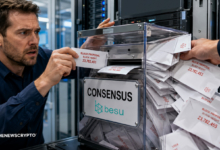
Пока Дональд Трамп воюет с Китаем, его сын сотрудничает с врагами

cryptonews.ruPublished on 2025-05-15Last updated on 2025-10-16

Сын американского президента Дональда Трампа Эрик втихую сотрудничает со злейшим экономическим врагом США Китаем.

После угроз ввести запретительные таможенные пошлины на импортные товары из КНР Дональд заявил, что США ведёт торговую войну с восточным государством. Однако из документов, поданных в Комиссию по ценным бумагам и биржам США, следует, что грозная риторика папы не мешает Эрику поддерживать партнёрские отношения с китайцами.

Выяснилось, что фирме American Bitcoin Corporation, которая на 7,5% принадлежит отпрыску Трампа, удалось совершить невероятно выгодную сделку с руководством компании Bitmain из КНР, согласившемуся продать американцам за $314 млн 16,299 ASIC-майнеров для добычи биткоинов и использовать BTC, а не фиатную валюту в качестве залоговых активов, гарантирующих оплату товара. При этом китайцы смогут забрать цифровые активы лишь через два года, а не шесть месяцев, как обычно, если американцы нарушат обязательства.
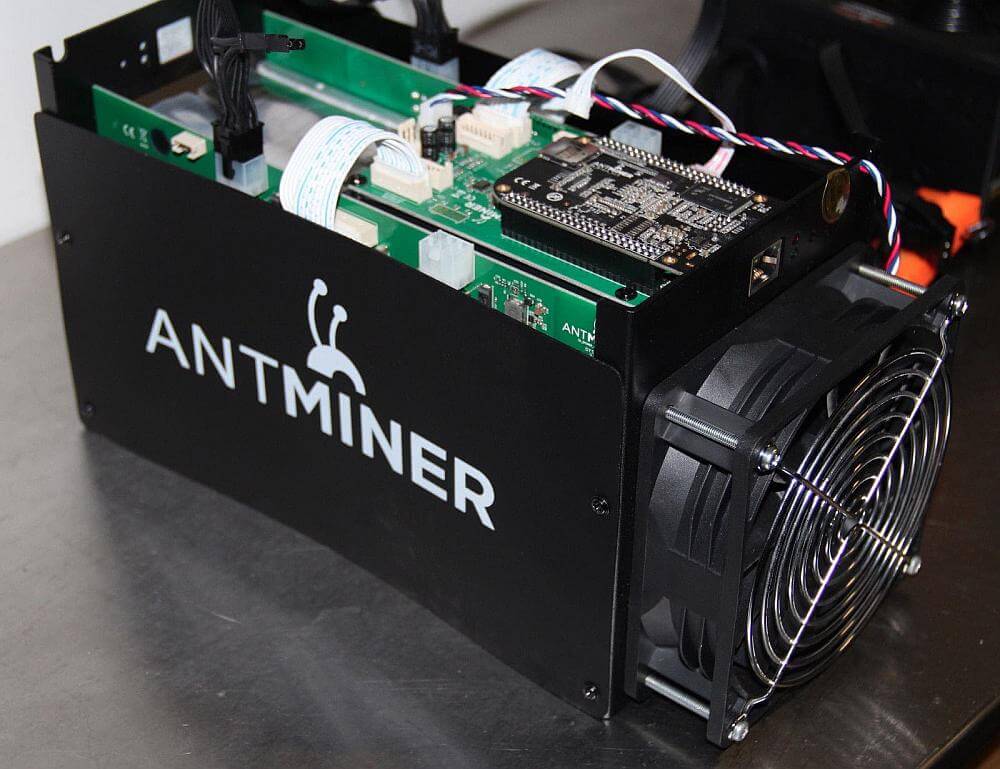
ASIC mining

ASIC-майнер от Bitmain

Эксперты называют подобные условия соглашения уникальными и подозрительно выигрышными для American Bitcoin Corporation. Бытует мнение, что китайцы пошли навстречу работникам предприятия Эрика, стремясь повлиять на его отца таким образом, чтобы он лоббировал благоприятные для криптоиндустрии меры регулирования оборота цифровых активов и энергетики. Эта гипотеза подтверждается тем фактом, что Bitmain планирует открыть в США до конца 2025 года завод по производству ASIC-майнеров.
Related Reads

NVIDIA CPU Advances, China's RISC-V Responds: Semiconductor Deep Dive - Part Four

NVIDIA is set to launch its new Vera AI data center CPU in China as early as August, with high pricing. While this move offers a new option, it highlights China's continued dependence on foreign-controlled Arm architecture. In response, the Chinese semiconductor industry is increasingly turning to RISC-V as a strategic alternative for achieving high-performance computing autonomy. The article explores the concept of the "impossible triangle" in CPU development—balancing prosperity, control, and autonomy—and posits that RISC-V's open-source, modular nature offers a unique path to achieving all three. While RISC-V is already dominant in embedded systems, the focus is now shifting to data centers and AI workloads. China has become a global hotspot for RISC-V development, driven by AI-driven compute demand, supply chain concerns from export controls, cost benefits of open-source, and strong policy support. Multiple Chinese companies have reportedly crossed the key performance threshold of 15 SPECint per GHz, a benchmark for entering the high-performance CPU club. Progress extends beyond single-core benchmarks. Companies are developing complete computing subsystems, including commercial-grade coherent network-on-chip (NoC) technology and server processors with up to 40 cores that strictly adhere to the RVA23 standard to ensure software compatibility. Real-world applications are emerging in areas like video transcoding and edge AI. However, significant challenges remain. The RISC-V ecosystem faces fragmentation, immature toolchains and verification processes, and gaps in single-core performance and energy efficiency compared to mature x86 and Arm architectures. The formidable software moat, epitomized by NVIDIA's CUDA, is a long-term hurdle. In conclusion, while RISC-V cannot immediately replace offerings like NVIDIA's Vera, it represents a viable long-term path for China to develop a self-sufficient, high-performance CPU ecosystem. The journey is acknowledged to be long and arduous, requiring sustained effort to overcome technical and ecosystem challenges.

marsbit6h ago

NVIDIA CPU Advances, China's RISC-V Responds: Semiconductor Deep Dive - Part Four

marsbit6h ago

Trading

Spot
Futures
活动图片