当交易所触发自动减仓,意味着你已触及盈利天花板

比推Published on 2025-10-14Last updated on 2025-10-14

撰文:Eric,Foresight News

原标题:当你遇到 ADL,说明你已经挣走了市场里所有的钱


HyperLiquid 联合创始人 Jeff Yan 在昨日凌晨针对 HyperLiquid 在周末市场崩盘中的表现发表了一些看法,其提到「这是 Hyperliquid 运营两年多以来首次启用跨保证金自动减仓(ADL)」。

自动减仓或者说自动降杠杆(Auto-deleveraging,ADL)是很多 CEX 唯恐避之不及的,也是很多用户经常在 X 上吐槽的话题。当然,我们完全可以理解大家为什么而吐槽:自动减仓就是交易所强制平掉用户的仓位,让用户「少赚钱了」。我们时不时就可以看见 X 上针对交易所因为触发 ADL,导致投资者在流动性不佳的山寨币合约上无法获得纸面看到的收益率。
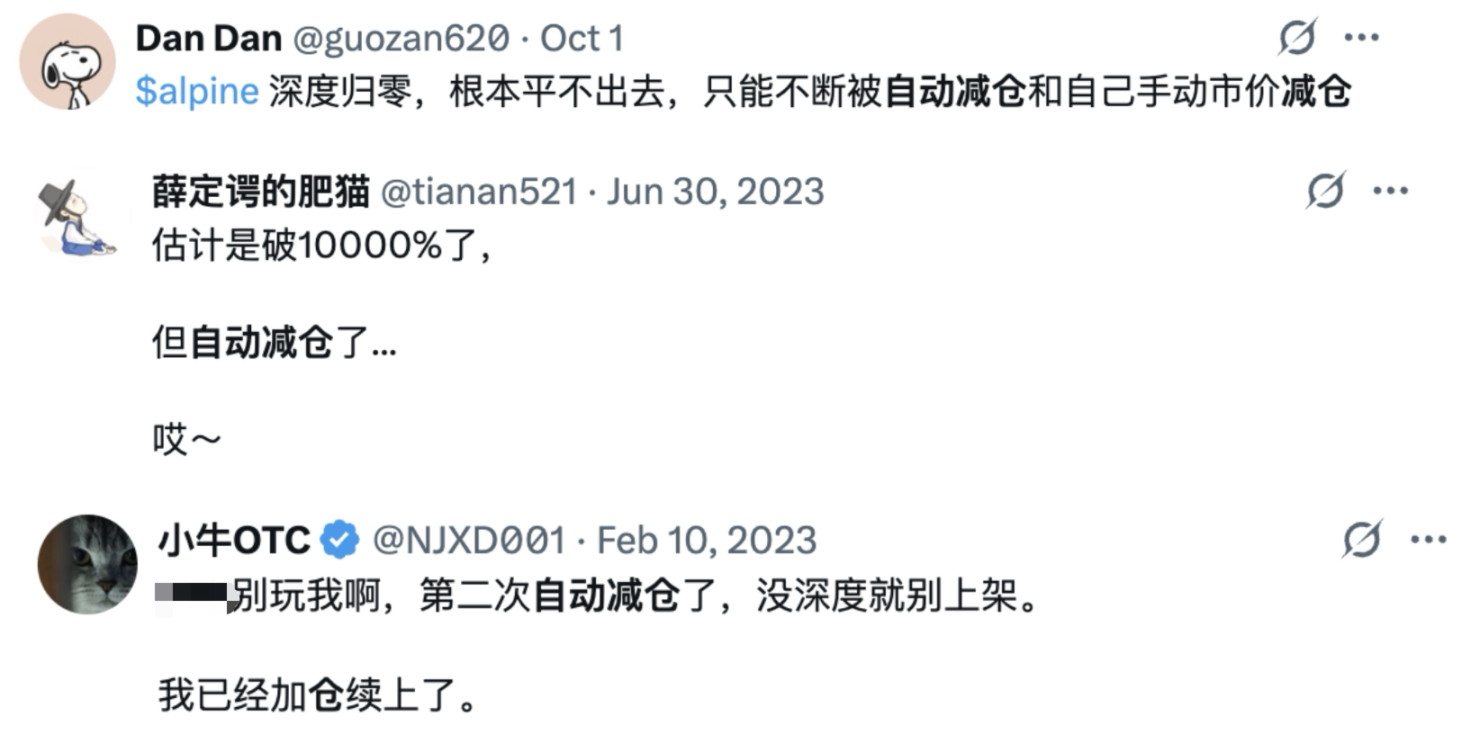
极端的行情总是能引发一些新的思考,这次 HyperLiquid 在暴跌之下无论交易提现都没有出现问题,而有一些 perp DEX 却被迫暂停提现让很多人也开始重新思考 ADL 存在的真实价值所在。

保险基金与 ADL

从 GMX 开始,允许外部存款的协议金库几乎成为了 perp DEX 的标配,而这其实就是某种程度上的链上版本的「保险基金」,但协议金库并不能直接等同于保险基金,GMX 中协议金库充当了用户的对手盘,而 HyperLiquid 中,金库在做市上的占比很小,更多的还是用于接管爆仓仓位。

例如上周的极端下跌行情中,大量的杠杆多头爆仓,但同时市场缺乏足够的买盘来承接(主动做多与主动平空带来的买盘并不足以接住因爆仓带来的市价卖盘)。此时如果任由事态发展,就一定会出现某些多头仓位的保证金已经没有办法覆盖其造成的亏损。

此时保险基金就发挥了作用,通过在某些仓位的爆仓价接住因爆仓而带来的市价买卖单来维持市场的平衡。在此之后,当价格稳定且有新的投资者入场时,这些先前接住的仓位可以慢慢平仓从而释放锁定在仓位中的资金。HyperLiquid 的保险基金就是 HLP,Jeff 表示为了优化风险管理,HLP 被分割成大量的子库,每次清算只会由一个子库接管。

保险基金被触发本质上说明市场情况已经在向某个极端发展了,而且另一方向订单的缺乏也意味着趋势非常明显以至于即使最疯狂的赌徒也在犹豫要不要与趋势对着干。如果当保险基金也眼看着接不住持续被清算的仓位时,就需要祭出没有人愿意看到但不得不使用的 ADL 了。

据笔者调研,市场中主流的 ADL 方式有两种。一种是在保险基金可动用资金下降到某一比例时提前开始自动减仓来最大程度降低整体系统的风险,另一种则是 HyperLiquid 采用的机制,当市场出现极端行情,HLP 来不及接管仓位或者资金不足以继续接管仓位导致穿仓出现时,直接将盈利的对手方仓位以穿仓仓位的爆仓价平仓。
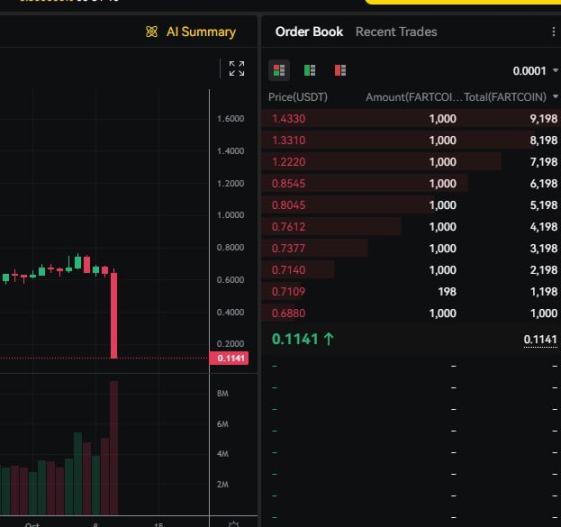
部分 CEX 采用的是第一种机制,虽然对于某些小交易所可能存在恶意降低获利者利润的行为,但更多的是,CEX 中各类循环抵押、循环借贷的情况比较复杂,一旦出现极端行情,清算的强度可能会比仅仅在合约市场体现的更大,故需要留出一定的容错空间。

在 ADL 发生时,谁先被迫出局也有一定的规则设计,通常情况下会综合考虑盈利、杠杆和仓位规模。也就是说规模最大、盈利最高或者杠杆最高的巨鲸会优先被请出市场。Scroll 上 DEX Ambient Finance 创始人 Doug Colkitt 在 X 上对 ADL 发表的评论中称:「合约市场的美妙之处在于它们都是零和博弈,因此整个系统永远不会破产。甚至没有比特币会真正贬值,只是一堆无聊的现金,就像热力学一样,在整个系统中,价值永远不会被创造或毁灭。」

零和博弈是这场游戏的大前提,当你清楚认识到了这点,或许会对你身在其中的资金游戏有更深的认识。

该如何接受「赚的钱变少了」?

之前提到,每当谈论到 ADL,用户几乎都是抱怨的声音。在多数用户看来,每次爆仓或者亏损都是结结实实的吃下,但盈利却会因为流动性不足而被系统自动平仓出局,这是一件极其不公平的事情。用户们觉得,既然亏损的钱被其他用户、做市商甚至交易所赚走了,那么当自己盈利时,你们也得乖乖把钱吐出来。

所以你需要了解「零和博弈」这四个字的真正含义。永续合约市场中,忽略手续费,亏损的钱永远和盈利的钱数目对等。你的对手,是其他散户,是机构,是做市商,是交易所的交易团队。当出现连交易所单纯为了用户体验而不是出于盈利目的「往外送钱」的保险基金都几乎兜不住的时候,说明其他参与者已经没有任何意愿来当你的对手盘了。

此时,当你希望一个以盈利为目的的公司用自己无法预计是否能收回的亏损换取你确定性的收益时,可能性几乎为零。在某些情况下,例如无根据的 FUD 导致某些代币短时下跌,即使触发了 ADL 的标准,交易所也可能出于对项目未来的信心来接下你的盈利仓位(不排除使用限制提现或变现的方式暂时冻结盈利资金)。

如果你仅仅是知道永续合约有逐仓和全仓模式,知道有资金费率,知道怎么计算杠杆和爆仓价,那么你还没有做好参与这场游戏的准备。「零和博弈」意味着当你的盈利超过系统的承载能力时,你没有办法从系统之外(也就是交易所本身)拿走一分钱。换句话说,你的盈利始终存在隐性的天花板,但如果你从比特币 1 美元就开始做空,只要比特币长期看保持上升趋势,那你的亏损就永远没有上限。

当然,我们也可以从乐观的角度解读这件事:当你遇到 ADL,说明这个市场中已经没有足够的对手方能够对冲你的仓位,意味着你在这波趋势开始之前就选对了方向并且坚持到了所有人都一致认为这个方向是对的时候;同时也意味着,交易所的保险基金已经没有办法或者不愿意接手更多的爆仓订单。

如果交易所没有恶意降低你的盈利,那么恭喜你,你已经赚到了这个游戏在规则允许范围内以及一家以盈利为目的的公司容忍范围内最多的利润,也是这场游戏最后的赢家。


Twitter:https://twitter.com/BitpushNewsCN

比推 TG 交流群:https://t.me/BitPushCommunity

比推 TG 订阅: https://t.me/bitpush
说明: 比推所有文章只代表作者观点,不构成投资建议

Related Reads

After Developer Numbers Halved: Crypto Isn't Dead, It's Just Giving Up Talent to AI

The title "After a 50% Drop in Developer Count: Crypto Isn't Dead, It's Just Ceding Talent to AI" suggests a shift, not an end. The article analyzes GitHub data showing a significant drop in overall Crypto developer activity from a peak of 45K monthly active developers in 2022 to about 23K in 2026. However, this masks a deeper trend of "talent deleveraging." The exodus consists mainly of newcomers who entered during the bull market for hype-driven roles (e.g., NFT contracts, forked DeFi protocols), with over 50% of developers with less than one year of experience leaving. In contrast, established developers (2+ years of experience) have hit record highs, contributing roughly 70% of the code. They are consolidating in ecosystems with real users and revenue, like Bitcoin and Solana. These experienced builders possess unique skills forged in Crypto's "code is law" environment: the ability to build trust and functional systems from scratch in the absence of external authority or rules, with zero tolerance for error. The article argues that AI's scaling faces structurally similar trust, coordination, and verification problems—particularly regarding compute aggregation, multi-agent incentive alignment, and autonomous payments. Crypto builders are already applying these skills in AI. Examples include CoreWeave (mining to AI compute), OpenRouter (NFT marketplace routing to AI model routing), and projects like Hyperbolic (using crypto-native mechanisms for decentralized compute verification) and EigenLayer (applying restaking logic to AI agent governance). Stablecoin infrastructure is becoming critical for AI agent micro-payments (e.g., x402 protocol). The role of these builders is evolving from writing smart contracts to "designing trusted mechanisms for autonomous AI systems." This shift is reflected in new hiring trends at major exchanges and significant venture capital flowing into the crypto-AI convergence (e.g., funds from Paradigm, Haun Ventures). The article concludes that while developer numbers have halved, the core density of talent has increased, and their uniquely cultivated skills are finding a new, larger stage in the AI era.

marsbit6m ago

After Developer Numbers Halved: Crypto Isn't Dead, It's Just Giving Up Talent to AI

marsbit6m ago

After the Developer Count Halved: Crypto Is Not Dead, It's Just Ceding Talent to AI

Following a significant decline in the total number of open-source crypto developers, from a peak of 45K in 2022 to approximately 23K by 2026, this article argues the industry is undergoing a "talent deleveraging" rather than a collapse. The exodus primarily consists of newcomers who entered during the bull market, while the core of experienced developers (2+ years) has grown to a record high, contributing around 70% of code. These established builders are concentrating in ecosystems with real users and revenue, like Bitcoin and Solana. The article posits that crypto has cultivated a unique skill set in building trustless, autonomous systems with near-zero tolerance for error—a capability now finding high demand in the AI era. As AI scales, it faces structural gaps in decentralized compute aggregation, multi-agent coordination/incentive alignment, and autonomous payment infrastructure. Crypto builders are transitioning their expertise to address these exact problems. Examples include CoreWeave (mining to AI compute), Hyperbolic (decentralized compute verification), EigenLayer (extending restaking mechanisms to AI agent governance), and the x402 protocol (enabling AI agent micro-payments via stablecoins). The role of the crypto builder is evolving from writing smart contracts to designing the rule-based, trust-minimized frameworks necessary for AI-native systems. Venture capital is increasingly funding this convergence, viewing it as a structural opportunity rather than a narrative shift. The core talent and systemic design principles from crypto are not disappearing but being re-priced and applied to the foundational challenges of scalable AI.

链捕手10m ago

After the Developer Count Halved: Crypto Is Not Dead, It's Just Ceding Talent to AI

链捕手10m ago

A Quick Look at the Latest Moves of the 24-Year-Old 'AI Stock God': Sixty Percent of the Portfolio Hedging Against Semiconductor Downturn

24-year-old AI investing prodigy Leopold Aschenbrenner's fund, Situational Awareness LP, has disclosed its Q1 2026 13F holdings. The fund's total portfolio nominal value surged 148% to $13.7 billion, driven by both investment gains and significant new capital inflows. The most striking move was the establishment of massive short-term hedges against potential volatility in the AI semiconductor sector. Over 60% of the fund's nominal exposure is now in put options (bets on declines) targeting major AI hardware stocks like NVIDIA (NVDA), VanEck Semiconductor ETF (SMH), Broadcom (AVGO), and AMD. Notably, the fund also holds call options (bets on rises) on some names like Micron (MU) and TSMC, indicating it expects extreme price swings in these stocks. Alongside these hedges, the fund remains a long-term bull on AI infrastructure. It significantly increased its equity stakes in companies like GPU cloud provider CoreWeave (CRWV) and added to positions in power/energy infrastructure firms like Bloom Energy (BE), albeit after taking substantial profits on the latter. The fund also exited positions in optical communication hardware (LITE, COHR) and reduced leverage by clearing out large call option positions on Intel and CoreWeave. In essence, the portfolio reflects a dual strategy: cautious on near-term semiconductor valuations and potential over-extension, while maintaining a conviction that the true long-term bottlenecks and value will be in the underlying infrastructure powering the AI revolution—such as energy, data centers, and compute availability.

marsbit16m ago

A Quick Look at the Latest Moves of the 24-Year-Old 'AI Stock God': Sixty Percent of the Portfolio Hedging Against Semiconductor Downturn

marsbit16m ago

A Quick Look at the Latest Portfolio of the 24-Year-Old 'AI Stock God': 60% Allocation Hedges Against Semiconductor Downturn

Summary: The article analyzes the latest 13F filing from "AI stock prodigy" Leopold Aschenbrenner's fund, Situational Awareness LP, for Q1 2026. The fund's holdings surged to $13.7 billion, with a significant 32.5% net inflow. Key portfolio adjustments reveal a dual strategy: * **Hedging Semiconductor Downturn:** Over 60% of the fund's *notional value* is allocated to massive put options on major AI semiconductor and hardware stocks (e.g., NVDA, AVGO, AMD, SMH ETF). This acts as a high-leverage hedge against potential short-term volatility or correction in the chip sector. * **Long-term Bullishness on AI Infrastructure:** Alongside the hedges, the fund maintains and increases core long positions in companies providing critical AI infrastructure. This includes substantial equity stakes in CoreWeave (GPU cloud services), Bloom Energy (on-site power), and various power/electrical/data center firms (KEEL, IREN, etc.). Other notable moves include switching Intel exposure from high-leverage calls to minimal stock, exiting optical networking stocks (LITE, COHR), and taking profits in some positions like Bloom Energy and CoreWeave calls. The analysis concludes that Aschenbrenner is not simply turning bearish on AI. Instead, the strategy reflects a nuanced view: extreme caution toward near-term "chip maker" valuations deemed potentially frothy, coupled with strong conviction in the long-term scarcity and value of the underlying *infrastructure* (power, data centers, cloud capacity) required to sustain the AI boom. The fund is preparing for industry volatility while betting on the next potential bottlenecks in the AI supply chain.

Odaily星球日报17m ago

A Quick Look at the Latest Portfolio of the 24-Year-Old 'AI Stock God': 60% Allocation Hedges Against Semiconductor Downturn

Odaily星球日报17m ago

Trading

Spot
Futures
活动图片