“Uptober”变“屠宰场”:比特币闪崩7万刀,百万散户遭血洗

比推Published on 2025-10-10Last updated on 2025-10-10

"Uptober"的狂欢预期,在十月的第二周遭遇当头棒喝。

市场对“Uptober”的集体憧憬,被特朗普新一轮的关税威胁按下了暂停键。当地时间周五,特朗普表示,将在已生效的30%关税基础上,对来自中国的商品额外征收100%的关税,该关税将于11月1日或更早生效。
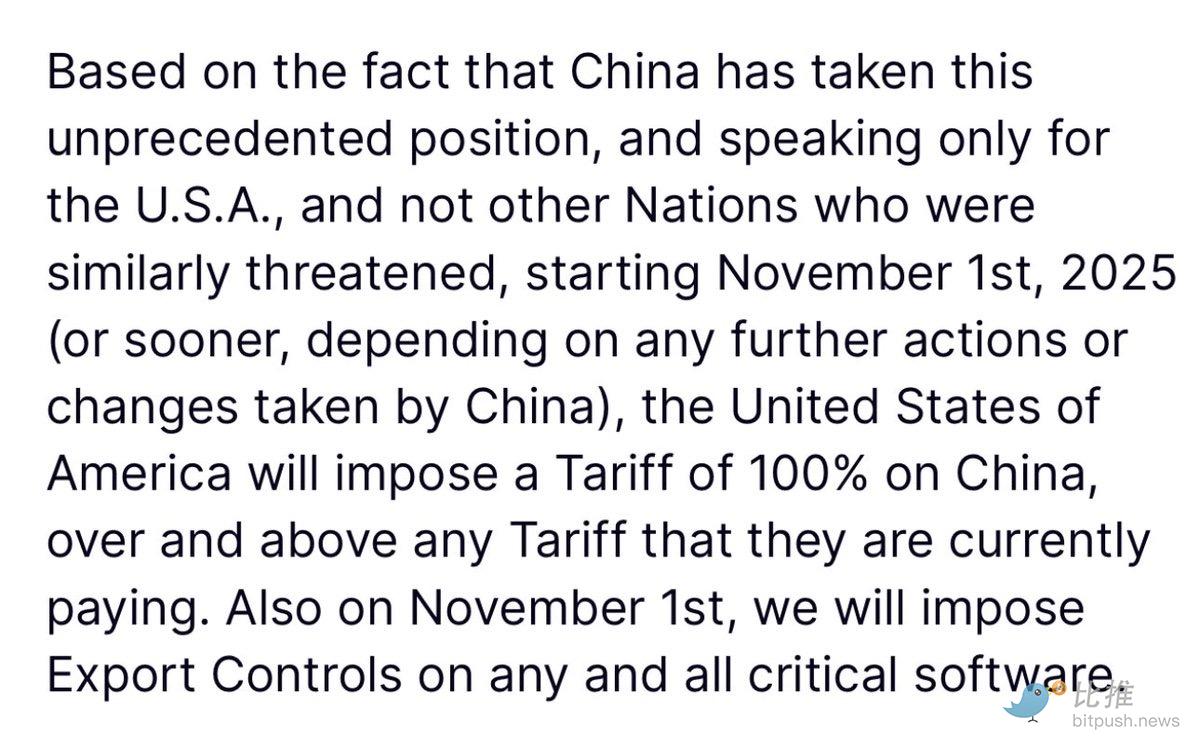
image.png

美股遭遇数月来最大单日暴跌,加密货币市场更是瞬间沦为血色屠场。

比特币从周五早晨的超过122,000美元高位,迅速暴跌至约104,582.41美元,单日跌幅达到7%。这一跌幅几乎抹平了所有十月以来的涨幅,价格回到了10月1日的水平。

以太坊跌幅更为剧烈,价格下跌了近8%,跌至约3,975美元。创下了十月以来的新低。Solana(SOL)紧随其后,单日跌幅超过7%,价格跌至205美元。与以太坊一样,Solana 也触及了其十月以来的最低点。

与特朗普家族平台相关的WLFI(World Liberty Financial 的原生代币)也未能幸免。在特朗普宣布对中国的关税消息后,WLFI 立即暴跌超过17%。
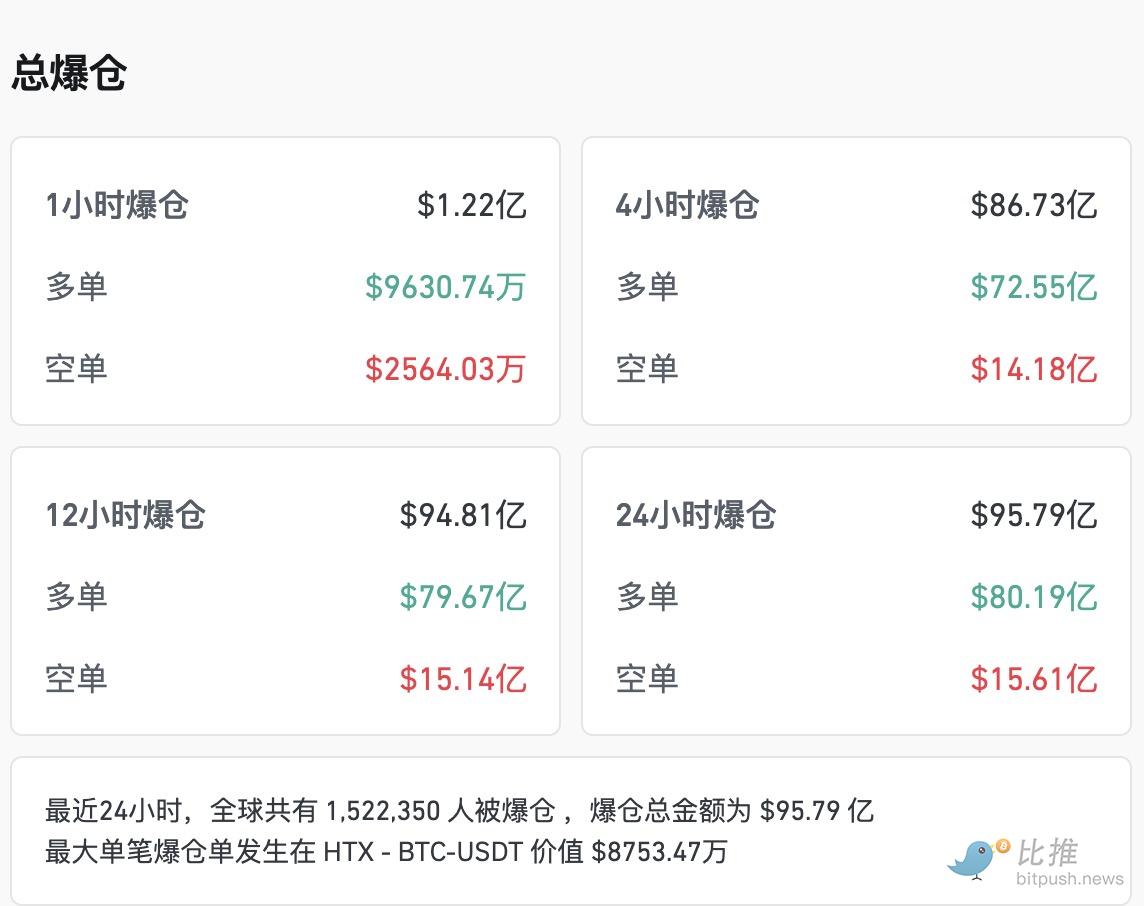
image.png

根据 CoinGlass 的数据,过去 24 小时内爆仓额近100亿美元,超152万人被爆仓。

美股创下了自四月以来最糟糕的单日表现:纳斯达克综合指数(Nasdaq Composite):跌幅最深,收盘下跌3.56%。标准普尔500指数(S&P 500):收盘下跌2.71%,创下自4月10日以来的最大单日百分比跌幅。道琼斯工业平均指数(Dow Jones Industrial Average):收盘下跌1.90%。

华尔街收盘后,市场恐慌情绪并未消退。英伟达(Nvidia)、特斯拉(Tesla)、亚马逊(Amazon.com)和 Advanced Micro Devices(AMD)等科技股在盘后交易中均下跌超过2%。

宏观风险重击市场脆弱性

分析师普遍认为,市场对中美两大经济体“针锋相对”的贸易摩擦可能演变为一场全面贸易战,从而扼杀全球经济增长的担忧,是导致股票和加密货币同步暴跌的关键。

“残酷的一天,”投资公司Lumida Wealth创始人Ram Ahluwalia评论称,特朗普的关税行动引发了全面的“去风险”(De-risking)行为。投资者从股市、科技股和加密货币等波动性高、与经济增长前景紧密相关的资产中撤离,寻求避险。他表示:“特朗普的消息加上‘超买’的情况,导致了市场大幅下跌。”

加密对冲基金Split Capital创始人兼首席投资官Zaheer Ebtikar表示:山寨币市场彻底崩溃了,山寨币市场已经达到了一年多以来的最高水平。杠杆率全面重置,市场一片混乱。”

本次抛售,尤其是美股创下数月最大跌幅,重新引发了对市场是否会迎来重大下行调整的担忧。摩根大通首席执行官杰米·戴蒙(Jamie Dimon)此前就曾警告,未来六个月到两年内,华尔街出现重大回调的风险有所增加。

在此次大跌之前,美股市场正处于一轮破纪录的涨势中,S&P 500 和纳斯达克在周四刚刚创下历史新高。今年以来,纳斯达克累计上涨约15%,S&P 500 上涨约11%。这轮涨势主要由围绕人工智能(AI)行业的狂热情绪所驱动。

然而,一些投资者认为,当前的贸易紧张局势不太可能彻底改变市场轨迹。例如,Ocean Park Asset Management 首席投资官James St. Aubin认为,虽然这是一个“重大问题”,并可能引发回调,但他“不一定认为这会破坏一直在推动市场的 AI 主题。”

对于加密货币市场而言,“Uptober”的失败,意味着市场情绪已从月初的狂热和历史高位预期,迅速转变为对宏观风险的敏感和谨慎。除非贸易局势迅速缓和,或者有新的强劲利好消息出现,否则加密市场将面临挑战,可能需要一段时间来消化这次突如其来的“红色十月惊魂”。


Twitter:https://twitter.com/BitpushNewsCN

比推 TG 交流群:https://t.me/BitPushCommunity

比推 TG 订阅: https://t.me/bitpush

说明: 比推所有文章只代表作者观点,不构成投资建议

Related Reads

When Nasdaq Starts 'Putting Stocks on the Chain', What Are We Really Welcoming?

Nasdaq is advancing a proposal to move U.S. stock settlement onto the blockchain, which could fundamentally reshape the infrastructure of American capital markets. This shift aims to replace the current slow, manual, and multi-layered clearing system with real-time, automated on-chain settlement. While many discussions focus on surface-level changes like 24/7 trading, the core transformation is structural: moving from outdated T+2 (or even T+1) settlement to instantaneous, programmable, and transparent ledger-based clearing. This isn’t about making stocks “more Web3” but modernizing a financial system that still relies on processes from the 1970s. The existing system—with its custodians, sub-custodians, and clearing intermediaries—creates operational friction, risk, and cost, as seen during events like the GameStop trading halts and the FTX collapse. On-chain settlement could reduce the need for traditional custodial roles, compress arbitrage opportunities built on settlement delays, and turn static securities into dynamic, composable financial instruments. The move faces significant resistance from entrenched intermediaries who profit from the current structure, but the direction of change appears inevitable. As demonstrated by Hong Kong’s recent issuance of a green bond settled in one second (versus five days), tokenization of traditional assets is becoming an operational reality—not a conceptual experiment. When stocks migrate on-chain, other assets like bonds and derivatives may follow, leading to a quiet but profound shift in how global markets function. This isn’t just a change in technology; it’s a change in the nature of finance itself.

cointelegraph_中文Just now

When Nasdaq Starts 'Putting Stocks on the Chain', What Are We Really Welcoming?

cointelegraph_中文Just now

Solana's Two Leading Lending Protocols Clash, Foundation Steps In to Mediate

Summary: Over the weekend, a public dispute erupted between Solana's two leading lending protocols, Jupiter Lend and Kamino, centered on the definition of "risk isolation." The conflict began when Kamino's co-founder, Marius Ciubotariu, accused Jupiter Lend of misleading users. He argued that Jupiter's early marketing claimed its lending pools were "risk-isolated," preventing cross-contamination between assets. However, Kamino contends that Jupiter Lend's design, which allows for the rehypothecation (re-use) of collateral across pools, creates a risk of contagion, contradicting its marketing. In response, Jupiter's COO, Kash Dhanda, admitted the initial "zero contagion risk" social media posts were inaccurate and apologized. The debate highlights a core disagreement on the definition of "risk isolation." Jupiter and its supporters argue the term has design flexibility, noting that while pools share a liquidity layer, each has independent parameters. Kamino and its allies insist that any rehypothecation negates true risk isolation. The dispute escalated when Tushar Jain, a partner at Kamino investor Multicoin Capital, strongly criticized Jupiter, accusing the team of being either incompetent or deliberately misleading. In contrast, Solana Foundation President Lily Liu urged for cooperation, emphasizing that the Solana lending market is much smaller than Ethereum's and that internal conflict only helps competitors. The clash is seen as an inevitable result of intense competition. Kamino was long the Solana lending leader, but Jupiter Lend has rapidly gained significant market share. In a tighter market with reduced liquidity and heightened safety concerns, the competition between the two protocols has become increasingly fierce.

marsbit10m ago

Solana's Two Leading Lending Protocols Clash, Foundation Steps In to Mediate

marsbit10m ago

Trading

Spot
Futures
活动图片