Morgan Stanley Endorses Bitcoin as “Digital Gold,” Tells Advisors to Allocate Up to 4% to Crypto

bitcoinistPublished on 2025-10-07Last updated on 2025-10-07

Abstract

Morgan Stanley’s Global Investment Committee (GIC) has issued an unexpected recommendation: treat Bitcoin as “digital gold” and allocate up to...

Trusted Editorial content, reviewed by leading industry experts and seasoned editors. Ad Disclosure

Morgan Stanley’s Global Investment Committee (GIC) has issued an unexpected recommendation: treat Bitcoin as “digital gold” and allocate up to 4% of suitable portfolios to cryptocurrency exposure.

The action marks one of Wall Street’s most public institutional nods to digital assets yet, emphasizing how crypto is migrating from fringe speculative bets toward mainstream portfolio construction.
bitcoin btc btcusd

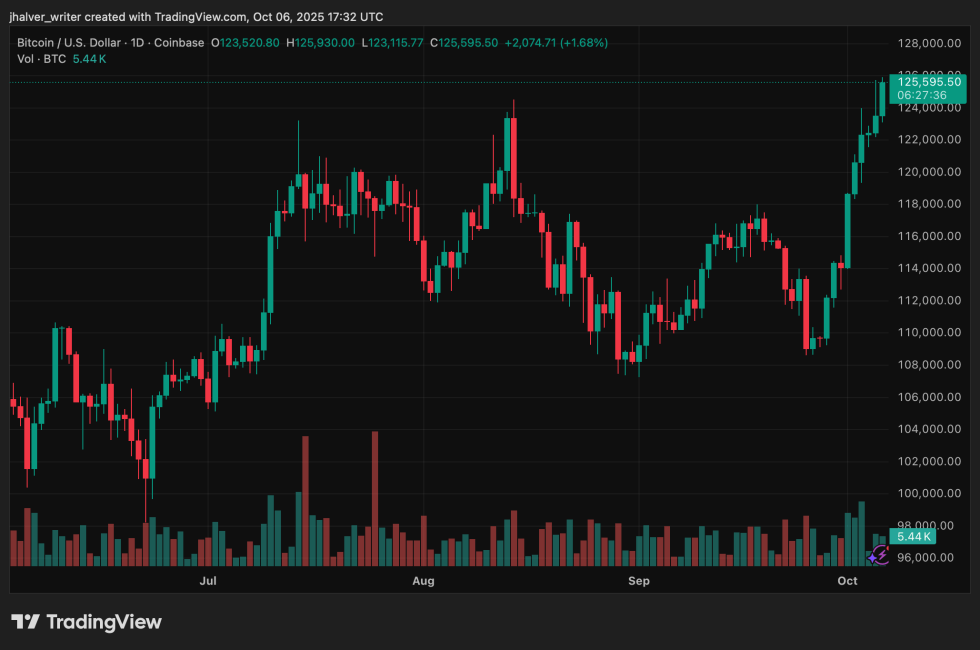
BTC's price trends to the upside on the daily chart. Source: BTCUSD on Tradingview

Institutional Validation & Allocation Framework

In its October advisory memo, Morgan Stanley explicitly likened Bitcoin to a scarce wealth store, “digital gold”, and signaled that the crypto market has matured enough to warrant modest allocations within diversified portfolios.

The GIC’s guidance is structured by risk profile:

  • Balanced Growth portfolios are recommended allocations around 2%
  • Opportunistic Growth models may go as high as 4%
  • Portfolios focused on Wealth Conservation or Income are advised 0% crypto exposure, given the volatility risks

Morgan Stanley also emphasizes that exposure should generally happen through regulated vehicles such as crypto ETFs rather than direct holdings.

This endorsement could sway a large swath of the financial advisory landscape, as the GIC influences over 16,000 advisors managing around $2 trillion in client capital.

Why Now? Macro Drivers & Structural Signals

Several tailwinds give gravity to Morgan Stanley’s shift. Bitcoin recently ripped past $125,000, while exchange balances have dipped to 6–7 year lows, pointing to less supply readily available for sale.

Macro conditions also support the thesis. The U.S. government shutdown, rising concerns over inflation, and softer dollar dynamics have driven investors toward nontraditional hedges. In that context, Bitcoin’s appeal as a scarce, digital store of value becomes more credible.

Meanwhile, Morgan Stanley is moving beyond mere commentary: the firm is preparing to offer crypto trading to retail clients via its E*Trade partnership with Zerohash, expected to start in 2026.

Risks, Constraints & What to Watch

Morgan Stanley is also candid about crypto’s limitations. It warns of higher volatility, correlations under stress, and the importance of disciplined rebalancing. The company advises advisors to keep exposure in check and prevent crypto holdings from becoming dominant during sharp rallies.

Here are some of the key catalysts to monitor:

  1. Regulation clarity in the U.S. and globally
  2. Sustained ETF inflows or institutional capital
  3. Further supply contraction from exchanges
  4. Execution of Morgan Stanley’s retail crypto offering via E*Trade

Morgan Stanley’s public embrace of crypto, anchoring Bitcoin as “digital gold,” is a watershed moment. With allocations of 2-4% now part of the playbook for growth clients, the institutional gate to digital assets just cracked wider. But for those allocations to matter, execution and macro alignment must follow.

Cover image from ChatGPT, BTCUSD chart from Tradingview

Editorial Process for bitcoinist is centered on delivering thoroughly researched, accurate, and unbiased content. We uphold strict sourcing standards, and each page undergoes diligent review by our team of top technology experts and seasoned editors. This process ensures the integrity, relevance, and value of our content for our readers.

Related Reads

Bitwise: Crypto Becomes a Contrarian Investment, Three Logics to Understand the Current Market

**Summary** Matt Hougan, Bitwise's CIO, analyzes the current crypto market through three key lenses, arguing it has shifted from a momentum-driven to a contrarian investment. **1) Crypto Becomes a Contrarian Play:** The market is weak, with major assets like Bitcoin and Ethereum down significantly. Capital has moved to hot sectors like AI, leaving crypto as an "unloved" asset class. This transforms crypto investing from trend-following to a test of patience and fundamental analysis. Investors now favor projects with solid fundamentals (e.g., Hyperliquid) over speculative ones. **2) Regulatory Overhang:** The uncertain fate of the U.S. CLARITY Act, a major crypto regulatory framework, is a key headwind. With its passage in 2024 seen as far from guaranteed (estimates range from 30-55%), institutional capital remains on the sidelines, choosing less risky alternatives like AI stocks. The market needs clarity—whether the bill passes or fails—more than any specific outcome to move decisively. **3) Capital Rotates to New Fundamentals:** This cycle differs from past bear markets where money fled to Bitcoin. Now, capital seeks smaller assets with strong use cases. While major cryptos fell in May 2024, tokens like Hyperliquid (+72%), Zcash (+50%), and XLM (+44%) rallied on their specific fundamentals. This rotation confirms the new contrarian, fundamentals-driven logic and signals the bear market may be in its later stages. **Conclusion:** Short-term pressure persists due to regulatory uncertainty and competition from AI narratives. Investing in crypto now requires a contrarian mindset—acting against the crowd and focusing on fundamental value. Patience and targeting high-quality projects based on their merits are essential for capturing long-term gains.

marsbit9m ago

Bitwise: Crypto Becomes a Contrarian Investment, Three Logics to Understand the Current Market

marsbit9m ago

ChatGPT Might Be Disappearing Soon

OpenAI announced at its "Intelligence at Work" event that its coding assistant, Codex, will be fully integrated into the ChatGPT app within weeks. This move marks a strategic shift from a conversational AI (Chat) towards a unified "agentic" platform capable of execution. Codex, originally launched to compete with Anthropic's Claude Code, has grown rapidly to 5 million weekly active users, with 20% being non-developers like analysts and designers. Its enterprise revenue now constitutes 40% of OpenAI's total. The integration is the first step in creating a super-app combining ChatGPT (interface), Codex (execution engine), and the Atlas browser (web access). OpenAI also unveiled new Codex features: specialized Agent plugins for six professional roles, an "Annotations" tool for direct document editing, and a "Sites" function to turn work into shareable web apps. Internally, this reflects a power shift; the Codex team now leads core product strategy. While the ChatGPT brand remains for its vast user base, the platform's future is focused on autonomous agents that perform tasks, not just chat. The article notes that competition with Claude Code pushed OpenAI's development, with Codex competing on cost-effectiveness and accessibility rather than raw coding quality. It concludes that the essence of "ChatGPT" is evolving from a chatbot into an AI agent platform, with the name potentially becoming a legacy symbol of its original function.

marsbit20m ago

ChatGPT Might Be Disappearing Soon

marsbit20m ago

WWDC26 Ultimate Preview: The All-New Siri is the Main Course, iOS 27 is Another Year of Refinements

Apple has confirmed WWDC26 will begin on June 8, with the keynote at 10 AM PT (1 AM Beijing Time, June 9). This year's focus is expected to shift significantly from routine OS updates to Apple's progress in AI, particularly a major overhaul of Siri. Reports indicate the highlight will be a new Siri, reportedly powered by Google's Gemini technology. This upgraded assistant is expected to appear as a lightweight bubble from the Dynamic Island and be accessible via a unified "Search or Ask" system-wide entry point. It aims to deeply integrate with iOS 27, iPadOS 27, and macOS 27, accessing personal data like messages, photos, and documents, with a potential standalone Siri app also in development. For iOS 27, leaks suggest incremental improvements rather than major redesigns. Key updates may include a redesigned, more customizable Camera app, enhanced photo editing tools within the Photos app, and potential early system optimizations for a future foldable iPhone. The update is also rumored to prioritize bug fixes, stability, and performance optimization. iPadOS 27 is anticipated to focus on improving productivity features like window management, file systems, and external display support to better utilize the iPad's hardware. macOS 27 is seen as a core platform for Apple Intelligence, likely receiving an optimized Siri, new AI features, and continued refinement of the "Liquid Glass" design language. Notably, macOS 27 may finally drop support for Intel-based Macs. The overarching theme for WWDC26 is whether Apple can effectively integrate AI across its ecosystem. The success of the new Siri and Apple Intelligence will be judged on their ability to move beyond standalone features and become a cohesive, context-aware system layer that understands user workflows across iPhone, iPad, Mac, and other devices, while maintaining Apple's emphasis on privacy and stability. The conference represents Apple's critical attempt to catch up and redefine the AI assistant experience after a perceived slow start in the generative AI era.

marsbit45m ago

WWDC26 Ultimate Preview: The All-New Siri is the Main Course, iOS 27 is Another Year of Refinements

marsbit45m ago

Trading

Spot
Futures
活动图片





