The Future of Spending Crypto Starts With This Underrated Altcoin, Presale Ongoing

bitcoinistPublished on 2025-10-05Last updated on 2025-10-06

Abstract

Picture walking into any store and paying with Bitcoin just like you would with Apple Pay. This dream has been...

Trusted Editorial content, reviewed by leading industry experts and seasoned editors. Ad Disclosure

Picture walking into any store and paying with Bitcoin just like you would with Apple Pay.

This dream has been around for years, but most crypto projects have failed to deliver on the promise. Sure, we can trade digital coins all day long, but try buying groceries with them? Good luck. Most store owners take one look at crypto payments and run the other way – too much hassle, too expensive, and way too unpredictable. SpacePay wants to change that story. 

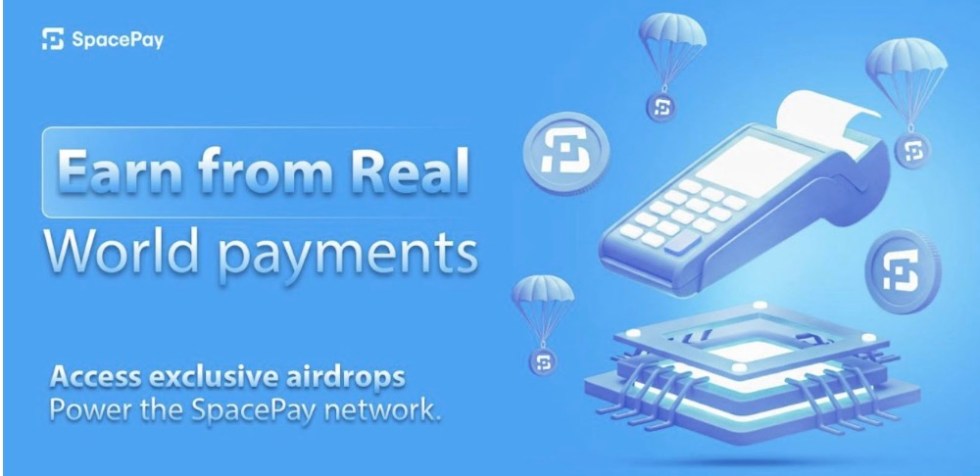
The London startup lets businesses accept crypto through their existing card machines, supports hundreds of different wallets, and converts payments to regular money instantly so merchants don’t worry about price swings.

The Problem Nobody Talks About With Crypto Payments

Here’s the thing most crypto enthusiasts don’t want to admit: paying with digital currencies is still a mess. You find a store that accepts crypto, pull out your phone, scan a QR code, wait for confirmations, and hope the transaction doesn’t fail. Meanwhile, everyone behind you in line is getting annoyed.

Then there’s the merchant side of things. Business owners hear “crypto payments” and immediately think about buying expensive new equipment, training staff, and dealing with wild price fluctuations. Most just say no thanks and stick with credit cards.

SpacePay actually listened to these complaints. Instead of forcing merchants to change everything, they built a solution that works with existing Android payment terminals. Store owners just need a software update. That’s it. No new hardware, no complicated setup, no confused employees.

The platform handles over 325 different crypto wallets, so customers can use whatever they already have installed. When someone pays with Ethereum or any other supported coin, the merchant gets dollars (or euros, or whatever their local currency is) immediately. The crypto conversion happens behind the scenes.

https://x.com/SpacePayLtd/status/1970525148475465794 

Why This Underrated Altcoin Actually Makes Sense

Most people have never heard of the $SPY token, and that might be exactly why it’s worth paying attention to. Instead of making wild promises about going to the moon, SpacePay built something that actually works.

The token does more than just sit in your wallet hoping for price increases. Holders get voting rights on platform decisions. They receive monthly loyalty rewards. They get early access to new features. The best part is that token holders actually get a cut of the money SpacePay makes from those transaction fees.

Here’s how it works: someone buys a coffee using SpacePay, and $SPY holders pocket a small slice of that transaction fee. The more successful the platform becomes, the more money flows back to $SPY holders. It’s a pretty straightforward business model compared to tokens that exist purely for speculation.

They capped the total supply at 34 billion tokens. A fifth goes to this public sale, and the rest gets split between development, partnerships, marketing, and user rewards. At least the team planned beyond their initial cash grab.

Visit SpacePay Presale

The Presale Reality Check

SpacePay has pulled in over $1.3M so far during their token sale. That’s real money from real investors, not just hype on social media. The current price sits at $0.003181 per token, and it goes up with each new stage of the presale.

What sets this apart from other crypto projects is that SpacePay already has a working product. You can actually download it and test it out. The team focuses on following regulations and getting proper licenses, which explains why payment industry professionals are taking them seriously.

The funding goes toward practical things like integrating with more businesses, improving security, and getting more merchants signed up. It’s refreshing to see a crypto project that talks about boring stuff like compliance and business development instead of just posting rocket emojis.
The Presale Reality Check

Real Benefits That Actually Matter

For business owners, SpacePay opens up access to millions of crypto users who have money to spend but nowhere to spend it. These customers tend to be younger and more tech-savvy, exactly the demographic many businesses want to attract.

The 0.5% transaction fee beats what most credit card processors charge. Plus merchants get their money instantly instead of waiting days for payments to clear. Cash flow problems? Not anymore.

Customers finally have a way to spend their crypto without jumping through hoops. No more searching for crypto-friendly merchants or dealing with clunky payment processes. If a store has SpacePay, you can pay with your crypto just like using a credit card.

The security features use modern encryption and monitor transactions in real-time. Both merchants and customers get protection from fraud, which is always a concern with digital payments.

How To Join The SPY Token Presale

Getting into the SpacePay presale is pretty simple. Head to their website and connect your crypto wallet like MetaMask or WalletConnect. Don’t have crypto? They accept regular debit and credit cards, too.

Right now, $SPY tokens cost $0.003181 each, giving early buyers a head start before exchange listings. The process takes minutes: connect your wallet, choose your payment method, enter your amount, and confirm. The website does all the math for you.

JOIN THE SPACEPAY ($SPY) PRESALE NOW

Website    |    (X) Twitter    |  Telegram

Editorial Process for bitcoinist is centered on delivering thoroughly researched, accurate, and unbiased content. We uphold strict sourcing standards, and each page undergoes diligent review by our team of top technology experts and seasoned editors. This process ensures the integrity, relevance, and value of our content for our readers.

Related Reads

Bitcoin and Ethereum Soar Together! Eight Altcoins Worth Watching in the Later Market

Bitcoin and Ethereum Surge, Fueling Altcoin Speculation. Bitcoin Eyes $77,000, Ethereum Gains 20% in a Single Day. Market anticipates capital rotation from major cryptos to high-beta altcoins, but a selective rise is expected, favoring projects with genuine users, protocol revenue, and healthy tokenomics. Analysts highlight eight altcoins across key sectors: **High-Performance Blockchains:** * **SOL (Solana):** Market cap ~$51.88B. A dominant player with a strong ecosystem. Considered a relatively safe bet for potential catch-up growth. * **SUI (Sui):** Market cap ~$3.03B. High volatility potential but faces risks from its low circulating supply and future token unlocks. **DeFi Lending:** * **UNI (Uniswap):** Market cap ~$2.38B. Transitioning to a revenue-capturing asset post-fee switch implementation. * **AAVE (Aave):** Market cap ~$1.53B. Features balanced tokenomics and revenue but has seen significant recent gains. * **MORPHO:** Market cap ~$1.50B. Rapid protocol growth but weaker token value capture and opaque supply data. **Perpetual DEX:** * **HYPE (Hyperliquid):** Market cap ~$16.41B. The clear sector leader with strong revenue but high valuation and a large portion of tokens still locked, warranting caution. **RWA & On-Chain Finance Infrastructure:** * **LINK (Chainlink):** Market cap ~$8.09B. A key oracle provider positioned to benefit from multiple trends like RWA and institutional adoption, offering strong fundamentals. * **ONDO (Ondo Finance):** Market cap ~$1.77B. Shows strong business growth but carries high risks due to concentrated token holdings and a massive unlock scheduled for 2027. **Conclusion:** The altcoin rally is expected to be selective. Recommendations include a medium position in SOL, small allocations to SUI and UNI/AAVE for DeFi exposure, and caution with HYPE and ONDO due to their specific risks. LINK is suggested as a core holding for the RWA thematic.

marsbit1h ago

Bitcoin and Ethereum Soar Together! Eight Altcoins Worth Watching in the Later Market

marsbit1h ago

Shanghai's $10 Billion Unicorn Is About to Go Public

Shanghai-based automotive-grade millimeter-wave radar chip unicorn Calterah Microelectronics Technology (Shanghai) Co., Ltd. has filed for an IPO on Shanghai's STAR Market, aiming to raise 3.49 billion yuan. Founded in 2014 by Chen Jiashu, a UC Berkeley PhD graduate, and his professor Ali Niknejad, Calterah pioneered CMOS technology for 77GHz radar chips, breaking the decades-long monopoly of international giants like Texas Instruments. Its low-cost, highly integrated solutions enabled millimeter-wave radar to move from luxury to mass-market vehicles. By 2025, Calterah captured a 31.1% share in China's automotive millimeter-wave radar chip market (second domestically, fourth globally), with cumulative shipments exceeding 30 million units. Its client list includes BYD, Geely, Nio, and Volvo. The company has undergone 11 funding rounds, attracting high-profile investors such as the National Integrated Circuit Industry Investment Fund Phase II, China Capital Management, and GD Capital. Its valuation has reached tens of billions of yuan, with a projected post-IPO valuation of approximately 14 billion yuan. Despite rapid revenue growth—increasing from 206 million yuan in 2023 to 632 million yuan in 2025 with a 75.28% CAGR—Calterah remains unprofitable. It reported net losses of 323 million yuan, 334 million yuan, and 193 million yuan from 2023 to 2025, accumulating over 900 million yuan in losses over three and a half years. These losses are primarily attributed to heavy R&D investment, which totaled over 1.039 billion yuan in the reporting period, often exceeding annual revenue. The company faces significant risks, including high customer concentration (its top five customers accounted for over 99% of revenue from 2023-2025, with BYD alone representing over 50% in 2025) and supply chain concentration. Revenue pressure from key customers and dependencies on overseas suppliers for EDA tools and IP pose challenges to sustainable growth. The IPO is seen as crucial for securing capital to expand production, diversify its customer base, and reduce supply chain dependencies.

marsbit1h ago

Shanghai's $10 Billion Unicorn Is About to Go Public

marsbit1h ago

Ray Dalio's Latest Macro Analysis Full Text: Buy More Gold, Add Some Bitcoin

In his latest macro analysis, Ray Dalio applies his framework from "How Countries Go Broke: The Big Cycle" to the current global debt environment. He highlights recent events like Japan selling U.S. Treasuries and rising U.S. long-term yields as signs of an unsustainable debt dynamic. Dalio explains that excessive government debt leads to either unacceptably high interest rates, severe economic downturns, or significant currency debasement through central bank money printing. He summarizes the U.S. fiscal situation: with $5.5 trillion in revenue, $7.5 trillion in spending, a $2 trillion deficit, and total debt at six times annual revenue, debt servicing costs are immense. Without correction, U.S. debt could reach $55-$60 trillion in a decade. Dalio proposes a "3% Three-Way" solution: reducing the budget deficit to 3% of GDP through balanced spending cuts, tax increases, and interest rate reductions to avoid a traumatic adjustment. In response to FAQs, he argues that the risk of a U.S. debt crisis is high and could materialize within a few years if the current path continues. He dismisses the notion that the dollar's reserve status makes the U.S. immune, citing historical precedents of reserve currency declines. He is also unconvinced by Japan's high-debt stability, noting poor returns for yen-denominated assets. For investors, Dalio recommends diversifying globally, underweighting bonds, and overweighting assets like gold and a small allocation to Bitcoin (around 10-15% to gold) to hedge against currency debasement and poor debt returns.

marsbit2h ago

Ray Dalio's Latest Macro Analysis Full Text: Buy More Gold, Add Some Bitcoin

marsbit2h ago

Stripe’s 16-Year Chronicle: From 7 Lines of Code to a $100 Billion Valuation

Stripe's 16-year journey began with a simple promise: "7 lines of code to accept payments." Founded by Patrick and John Collison, the company started by hiding the complexity of bank integrations and merchant accounts behind a clean API, initially targeting developers at startups. This early focus on user experience and technical simplicity fueled rapid adoption. A key early milestone was establishing vital bank partnerships, a challenge overcome by hiring Billy Alvarado, who brought crucial institutional relationship skills. From this foundation, Stripe systematically expanded its product boundaries. It launched Connect for platform payments, Atlas for company formation, Radar for fraud prevention, and Billing for subscriptions. This transformed Stripe from a payment processor into a broader financial infrastructure suite for internet businesses. The COVID-19 pandemic accelerated growth but also led to over-hiring. A 14% layoff in 2022 marked a period of organizational correction. Subsequently, Stripe shifted its growth strategy towards strategic acquisitions to enter new domains quickly. It acquired Bridge (stablecoin infrastructure), Privy (wallet infrastructure), Metronome (usage-based billing), and agreed to buy OpenRouter (AI model routing). These moves signal Stripe's ambition to build a "programmable money system" for the emerging AI and agent-based economy, managing not just currency flows but also the measurement and pricing of computational resources like AI tokens. Internally, Stripe leverages AI agents (like "Minions") to boost engineering productivity. Despite scaling to nearly 8,000 employees and processing $1.9 trillion in payment volume annually, the company remains private. A recent employee tender offer valued it at $159 billion. The core question for Stripe's future is whether it can successfully integrate its expanding product matrix—spanning payments, crypto, and AI infrastructure—into a cohesive platform, positioning itself as the foundational economic layer for autonomous software agents.

marsbit3h ago

Stripe’s 16-Year Chronicle: From 7 Lines of Code to a $100 Billion Valuation

marsbit3h ago

Trading

Spot
活动图片