Как слабый доллар может запустить новое ралли биткоина

cryptonews.ruPublished on 2025-04-30Last updated on 2025-10-01

Американский доллар переживает худший год с 1973-го. По данным The Kobeissi Letter, индекс доллара (DXY) в первой половине 2025-го упал на 10,8%. Это рекордное снижение со времен краха Бреттон-Вудской системы и отказа США от золотого стандарта

Аналитики The Kobeissi Letter изучили особенности положения рынка и рассказали, как в такой ситуации может повести себя биткоин.

Доллар под давлением

Основными факторами падения стали замедление экономики США; высокая инфляция; рост глобальной неопределенности; политика Федеральной резервной системы, которая фактически снижает ставки на фоне стагфляции. Покупательная способность доллара сокращается, а мировые инвесторы ищут защиту в альтернативных активах.
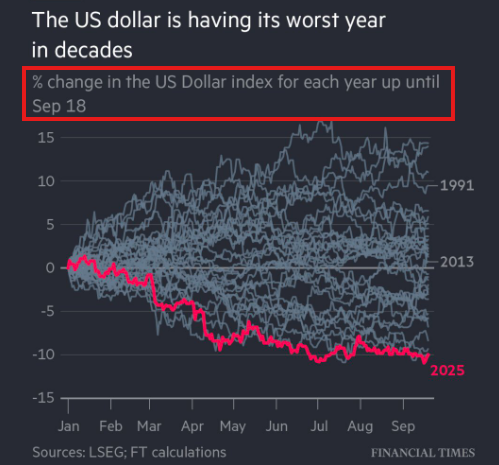
Индекс доллара

Золото и цифровая гавань

Исторически слабый доллар открывает дорогу росту защитных инструментов. На этом фоне наблюдается заметное подорожание активов:

  • золото с января 2023 года подорожало более чем на 110%;
  • биткоин за тот же период прибавил около 568%.
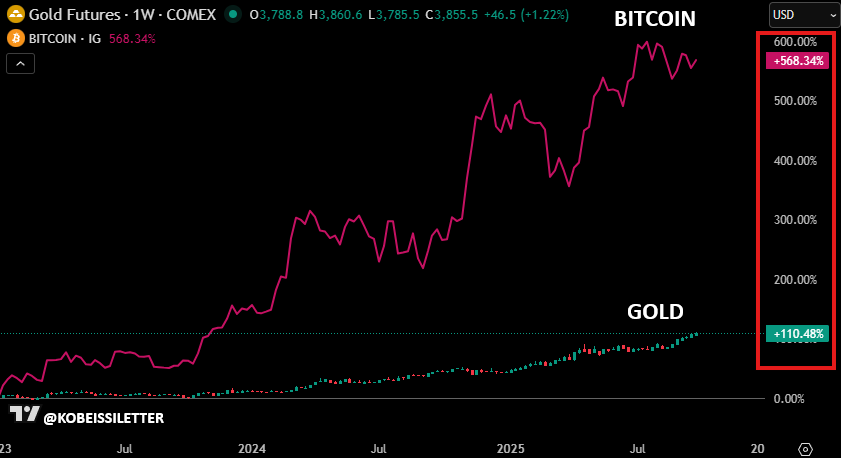
динамика биткоина и золота
Сравнение динамики биткоина и золота

Аналитики отмечают, что начинается новая эра монетарной политики. В условиях снижения ставок и ускоряющейся инфляции активы с ограниченной эмиссией становятся особенно привлекательными.

Влияние на биткоин

Для криптовалюты складывается уникальная комбинация факторов. Слабый доллар делает биткоин альтернативной валютой и средством сохранения стоимости. Риски стагфляции подталкивают инвесторов искать инструменты, независимые от традиционной денежной политики. Снижение же ставок ФРС повышает ликвидность на рынках, что исторически стимулирует рост высокорисковых активов, включая биткоин.

По мнению аналитиков, дальнейшее ослабление доллара способно придать биткоину дополнительный импульс к увеличению стоимости.

Решение ФРС и будущее рынков

Политика «поворота» ФРС, то есть переход от жесткой борьбы с инфляцией к смягчению монетарных условий, может ускорить ослабление доллара. Для регулятора это палка о двух концах: снижение ставки стимулирует экономику, но одновременно усиливает инфляционное давление и падение доверия к доллару.

В такой обстановке выигрывают те, кто владеет реальными активами: золотом; недвижимостью; криптовалютами. Те, кто остается в кэше, рискуют потерять часть покупательной способности.

Итог

2025 год может стать переломным для глобальной финансовой системы. Ослабление доллара и мягкая политика ФРС формируют условия, при которых биткоин укрепляет свой статус цифрового золота. Для инвесторов криптовалюта становится одновременно инструментом защиты от инфляции и способом сохранить капитал в условиях снижения покупательной способности доллара.

Дополнительным драйвером вероятного роста BTC выступает рост ликвидности, вызванный снижением ставок. Изменения увеличивают интерес к рисковым активам, но именно биткоин выделяется на фоне других благодаря ограниченной эмиссии и независимости от традиционной финансовой системы.

Если текущие тенденции сохранятся, биткоин способен не только закрепить завоеванные позиции, но и стать ключевым бенефициаром новой эпохи монетарной политики.


Related Reads

Treasury Secretary's Move to Suppress Treasury Yields Ignites 'Currency Debasement Trade'! Gold Hits Three-Month High, Bitcoin Surges Over 25% in a Single Week

US Treasury Secretary Besant's efforts to lower long-term Treasury yields by announcing expanded buybacks had only a brief market impact. However, this move fueled a "currency devaluation trade," weakening the US dollar while boosting both gold (to a three-month high) and Bitcoin (up over 25% for the week). Analysts attribute this reaction to deepening market concerns over the massive US fiscal deficit and structural pressures keeping long-term rates elevated, including fierce competition for capital from global government borrowing and massive AI sector financing. Despite the Treasury's actions, fundamental forces like growth, inflation, and capital demand are seen as limiting its ability to sustainably suppress yields. Bitcoin's strong positive correlation with gold has reinforced its narrative as a hedge against devaluation. While equity markets have shown resilience, some strategists warn that Treasury yields nearing 5% increase pressure on the dollar and high-leverage assets. Figures like Ray Dalio have advised reducing bond exposure in favor of gold and some Bitcoin, citing US debt risks. Market opinions are divided on the sustainability of the devaluation trade, with some noting the lack of a near-term catalyst for its next leg higher. The underlying tension between the Treasury's desire for lower borrowing costs and the Federal Reserve's focus on inflation and reducing market intervention remains a key theme. Upcoming events like Nvidia's earnings and the Jackson Hole symposium will test whether AI profits can continue supporting stocks and if the Fed aligns more with Washington's preference for easier financial conditions.

华尔街日报2h ago

Treasury Secretary's Move to Suppress Treasury Yields Ignites 'Currency Debasement Trade'! Gold Hits Three-Month High, Bitcoin Surges Over 25% in a Single Week

华尔街日报2h ago

Alexander Shokhin: Business Needs an Interest Rate Below 10% and the Dollar at 90-95 Rubles

Alexander Shokhin, head of the Russian Union of Industrialists and Entrepreneurs (RSPP), has advocated for potentially using "non-market" tools to keep the ruble within a target exchange rate corridor. This, he argues on August 21, would help avoid excessive volatility, though he called the topic a separate discussion. Shokhin had previously raised the idea of a currency corridor in late May, noting the ruble's current exchange rate is not fully market-driven due to a limited currency segment and reduced foreign currency demand. He stated that many business community colleagues propose fixing a corridor, even through non-market methods, to ensure predictability. The business community's key targets, as outlined by Shokhin in late December 2025, are a Central Bank key rate of 12%, inflation of 4–5%, and a US dollar exchange rate of 90–95 rubles by the end of 2026. A turning point for investment, he said, would be lowering the rate to 12% with 6% inflation, though truly comfortable business conditions would require a rate below 10%. He stressed the critical importance of currency predictability for corporate investment decisions. From a data analysis perspective, the idea of a ruble corridor is not new. A similar mechanism was used in Russia from 1995 to 1998, where the central bank held the dollar within fixed boundaries through regular interventions. This regime lasted three years before ending abruptly during the 1998 default, illustrating the fragility of rigid targets under external shocks. The macro-economic link is clear: stricter corridors require more reserves to defend against currency pressure. The key unresolved technical aspect is the specific sources and volume of such interventions given the current market's limited liquidity. Whether this discussion remains theoretical or leads to concrete corridor parameters will be seen in the coming months.

cryptonews.ru3h ago

Alexander Shokhin: Business Needs an Interest Rate Below 10% and the Dollar at 90-95 Rubles

cryptonews.ru3h ago

Trading

Spot
活动图片



