Sony, Samsung Bet on ‘Branded’ Stablecoins with Bastion Funding

TheCryptoTimesPublished on 2025-09-24Last updated on 2025-09-24

Bastion, a New York-based provider of stablecoin infrastructure, announced on September 24 that it raised $14.6 million in a strategic financing round. 

The new funding brings its total capital raised to more than $40 million. Participants included Coinbase Ventures, Sony Innovation Fund, Samsung Next, a16z crypto, and Hashed.

Bastion operates a “Stablecoin-as-a-Service” model, enabling companies to issue their own digital dollars while complying with regulatory standards. The firm is licensed as a company under the New York Department of Financial Services (NYDFS), a designation that provides compliance assurances for enterprises exploring digital asset tools.

Nassim Eddequiouaq, Co-Founder and CEO of Bastion said, “The evolution of our financial system will continue to accelerate as digital assets and stablecoin adoption proliferates, and Bastion is positioned to help businesses build world-changing financial products.”

The participation of Sony and Samsung differs from usual traditional players of the sector, such as Coinbase Ventures and a16z crypto. While these firms have long backed blockchain infrastructure, the involvement of consumer electronics and entertainment companies highlights how stablecoins may be used in mainstream commerce and loyalty programs..

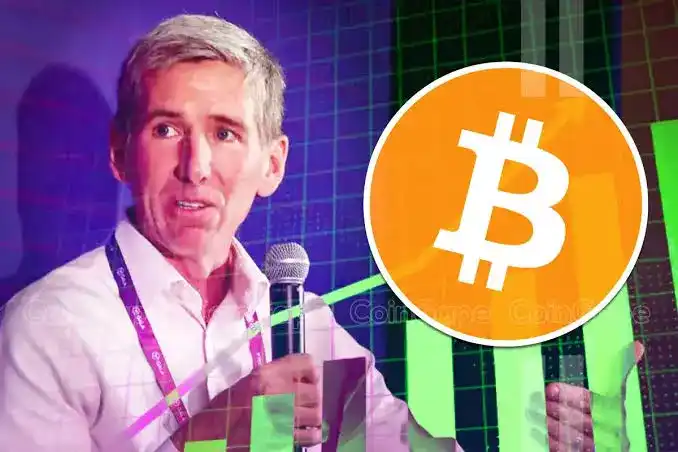
Matt Higginson, analyst at McKinsey, note that branded stablecoins could support use cases such as frictionless payments in gaming ecosystems or tailored rewards programs. For example, a company-specific token could streamline digital purchases or integrate into cross-border services. The global stablecoin market has already expanded in recent years, creating room for experiments by non-crypto brands.

While the funding round itself was modest compared to larger crypto raises, the range of investors points to stablecoins evolving from trading instruments into consumer-facing payment and loyalty solutions. As corporations test branded digital dollars, the competition may shift from crypto protocols to multinational brands vying for customer engagement.

Also read: PayPal Expands PYUSD Stablecoin to More Blockchains via LayerZero


Mobile Only Image

Related Reads

Semiconductor Stock Rebound: Is the Technical Correction Over or a Trend Reversal?

The core of recent semiconductor stock volatility is not about daily price swings, but rather the market questioning whether AI-driven semiconductor pricing has entered a new phase. Following a sharp sell-off in Korean stocks on June 23rd, led by Samsung and SK Hynix, a subsequent rebound is seen more as a technical positioning adjustment rather than a confirmed trend reversal. The key variable is HBM (High Bandwidth Memory), essential for AI chips. Its supply-demand imbalance granted memory makers significant pricing power. The current market focus is on whether this dynamic remains strong enough to justify elevated valuations. All eyes are on Micron's upcoming earnings report. The critical factor is not whether results meet already high expectations, but whether the company's guidance confirms that AI memory pricing power, order visibility, and future margins are still expanding. Micron's outlook will serve as a crucial test for the broader AI semiconductor chain, including Samsung, SK Hynix, and other infrastructure players. The recent bounce appears to be a pre-earnings positioning repair. For it to evolve into a sustained uptrend, concrete evidence is needed that the AI infrastructure expansion cycle's fundamentals—particularly for high-end memory—remain robust and can continue to surpass elevated market expectations. The risk is that strong demand alone may not be sufficient if future guidance hints at peaking momentum or increasing supply-side pressures.

marsbit29m ago

Semiconductor Stock Rebound: Is the Technical Correction Over or a Trend Reversal?

marsbit29m ago

Global Tech Stocks Plunge: Another Stress Test for the AI Bull Market

Global tech stocks plummeted in a sharp selloff on June 23, with South Korea's KOSPI index crashing nearly 10%, triggering a trading halt. The plunge was led by semiconductor giants Samsung and SK Hynix, dragging down major Asian and US tech indexes and levered ETFs. The immediate trigger was a confluence of three signals within 24 hours: 1) reports that SK Hynix was slowing HBM4 expansion, raising doubts about a key AI chip bottleneck; 2) profit-taking ahead of Micron's earnings report after its massive year-to-date rally; and 3) a warning from Korean regulators about the risks of single-stock leveraged ETFs. The selloff's severity was amplified by Korea's uniquely leveraged market structure: record-high retail margin debt, over $30 billion in volatile single-stock leveraged ETFs requiring daily rebalancing (which creates selling pressure during declines), and the surprising shift of the National Pension Service from a net buyer to a net seller. The event reignited debates about an AI bubble. Analysts differed on timing—some warned of imminent rupture, others saw a temporary liquidity-driven correction—but agreed that sky-high valuations, a shift to retail/leveraged buying, and rising rates created a fragile setup. The parallel steep drop in SpaceX's stock, alongside its massive debt raise for AI infrastructure, underscored a broader market shift from narrative-driven "infinite imagination" to a "return on investment" calculation phase. All eyes are now on Micron's upcoming earnings report, seen as a key test for the AI hardware trade's fundamental logic. A strong report could stabilize markets, while a miss could validate deeper fears. The episode serves as a stark warning: when a bull run becomes dependent on leveraged bets on a single narrative, a violent and rapid correction should not be a surprise. The core question for investors is how much drawdown they are willing to tolerate to stay invested.

marsbit31m ago

Global Tech Stocks Plunge: Another Stress Test for the AI Bull Market

marsbit31m ago

Ethereum Foundation Cuts 20% of Staff, 54 Depart: The Survival Logic Behind the Restructuring

The Ethereum Foundation (EF) has announced a major restructuring, resulting in the departure of 54 staff members, representing approximately 20% of its workforce. This reorganization is not merely a cost-cutting measure but a strategic refocusing. The EF will now concentrate its resources on what it deems critical and unique tasks, structured around five new operational clusters. The new structure comprises clusters dedicated to: the Protocol Layer (ensuring Ethereum's core properties like censorship resistance and security); the Access Layer (enabling trusted, non-intermediated user interactions); the User Layer (grounding decisions in real user needs and constraints); the Community Layer (representing EF's stance and building alliances); and the Institutional Layer (engaging with enterprises, governments, and academia to promote principled adoption). The foundation stated that the layoffs were a difficult but necessary step to align its organization and spending with its long-term mandate, insulating its core work from short-term market fluctuations. Affected employees were offered a severance package and transition support. The restructured EF emerges as a leaner and more focused organization, poised to prioritize the development and preservation of Ethereum's foundational promise of self-sovereignty. Further details on the new operational model are expected in the coming weeks.

marsbit34m ago

Ethereum Foundation Cuts 20% of Staff, 54 Depart: The Survival Logic Behind the Restructuring

marsbit34m ago

Talking About Returns But Not Collection? Goldfinch's Liquidation Sounds the Alarm for RWA Credit

Goldfinch, a crypto lending platform connecting investors with real-world borrowers, has proposed a full wind-down via governance proposal GIP-87. The plan would halt all new development, shut down its flagship Goldfinch Prime product, and allocate 150,000 USDC to manage the collection of outstanding loans. While the proposal is under community vote, it highlights a critical shift for the RWA (Real World Asset) lending sector: the transition from a growth phase focused on yields to a difficult recovery phase focused on collections. The proposal reveals that while the protocol's on-chain TVL is low, it still holds tens of millions in active, non-performing loans off-chain. This gap underscores that tokenizing debt makes tracking exposure transparent but does not simplify the offline, labor-intensive, and legally complex process of loan recovery. The case of the Lend East pool, where only an estimated 42% of a $10.15 million loan may be recovered, exemplifies the potential for significant investor losses. The wind-down plan forces token holders to govern not expansion but the maintenance of a debt collection system, including funding legal trust structures and preserving user access for repayments. This move starkly contrasts with the sector's typical narrative of rapid, AI-powered underwriting and high yields, exposing the often-overlooked necessity for robust borrower vetting, standardized disclosure, and sustainable collection mechanisms. Ultimately, Goldfinch's situation serves as a crucial stress test for the entire RWA lending space. It demonstrates that a platform's true resilience is tested not during capital deployment but during the protracted, costly, and uncertain process of recovering defaulted loans from real-world borrowers, a challenge blockchain transparency alone cannot solve.

Foresight News39m ago

Talking About Returns But Not Collection? Goldfinch's Liquidation Sounds the Alarm for RWA Credit

Foresight News39m ago

Trading

Spot
Futures
活动图片