SEC新规开启加密ETF闸门,10大现货ETF有望上线?

marsbitPublished on 2025-09-21Last updated on 2025-09-22

美国SEC在9月17日正式通过了“商品型信托份额通用上市标准”(Release No. 34-103995)。这不是一份简单的技术性文件,而是一道真正的“制度闸门”——意味着未来加密现货ETF的上市将从逐案审批,转变为标准化、快速化的通用标准流程。

在美联储刚刚启动新一轮降息、美元贬值预期升温的背景下,这一制度突破为加密资产带来“流动性+制度化”的双重共振,堪称今年以来加密市场最具标志性的监管事件之一。

本文中,我们将回答以下几个问题:

  • 新规到底改变了什么,将带来哪些影响
  • 哪些加密货币最先受益,哪些币种的现货ETF有望率先获批?
  • 投资者该关注什么? 在新规落地与资金迁徙逻辑重塑的背景下,普通投资者如何抓住机会、控制风险?


一、通用标准改变了什么?从“是否允许”转向“如何规范”

这次新规发布前,加密现货 ETF 要走逐案审批流程,需要跨过两道审批门槛:

  1. 19b-4 规则变更审批 —— 由交易所向SEC申请修改交易所规则,为实质性审批,存在被SEC否决的可能性
  2. S-1 招股书审批 —— 由ETF发行人提交SEC审批,披露基金结构、管理人、费率等细节,更偏形式审查。

这种双重审批模式不仅流程冗长,还常常被政治博弈和合规分歧拖慢。例如比特币现货ETF,2021年一度出现申请潮,但在21-22年,均在19b-4环节被SEC否决。23年5月-7月,新一批申请再次提交,最终到24年1月10日,19b-4和S-1文件才同日审批通过,经历了近8个月的拉锯。

而 SEC 在 2025 年 9 月 17 日通过的“通用上市标准” 则带来了根本性变化。该标准明确:符合条件的商品 ETF 无需逐案提交 19b-4 申请,只需走 S-1 审批流程即可,大幅降低了审批时间和成本。

符合标准的ETF必须满足以下三条路径之一:

  1. 标的商品已在 ISG(跨市场监管组织) 成员市场交易,例如纽交所、纳斯达克、CME、伦交所等
  2. 标的商品的期货合约已在 DCM(指定合约市场) 连续交易至少六个月,且交易所间建立了全面监控共享协议(CSSA)。DCM 为 CFTC(美国商品期货交易委员会)授权的合规交易所,例如 CME、CBOT、Coinbase Derivatives Exchange 等。
  3. 已有 ETF 在美国全国性证券交易所上市,且其至少 40% 资产配置于该标的商品。

由于大部分加密资产被视作“商品”,这一规则几乎为加密现货ETF量身定制。其中,第二条路径最为可行:只要某个加密资产在 CME 或 Coinbase Derivatives 等交易所中,有期货合约运行满六个月,就可以略过19b-4审批环节,其现货 ETF有望快速落地。
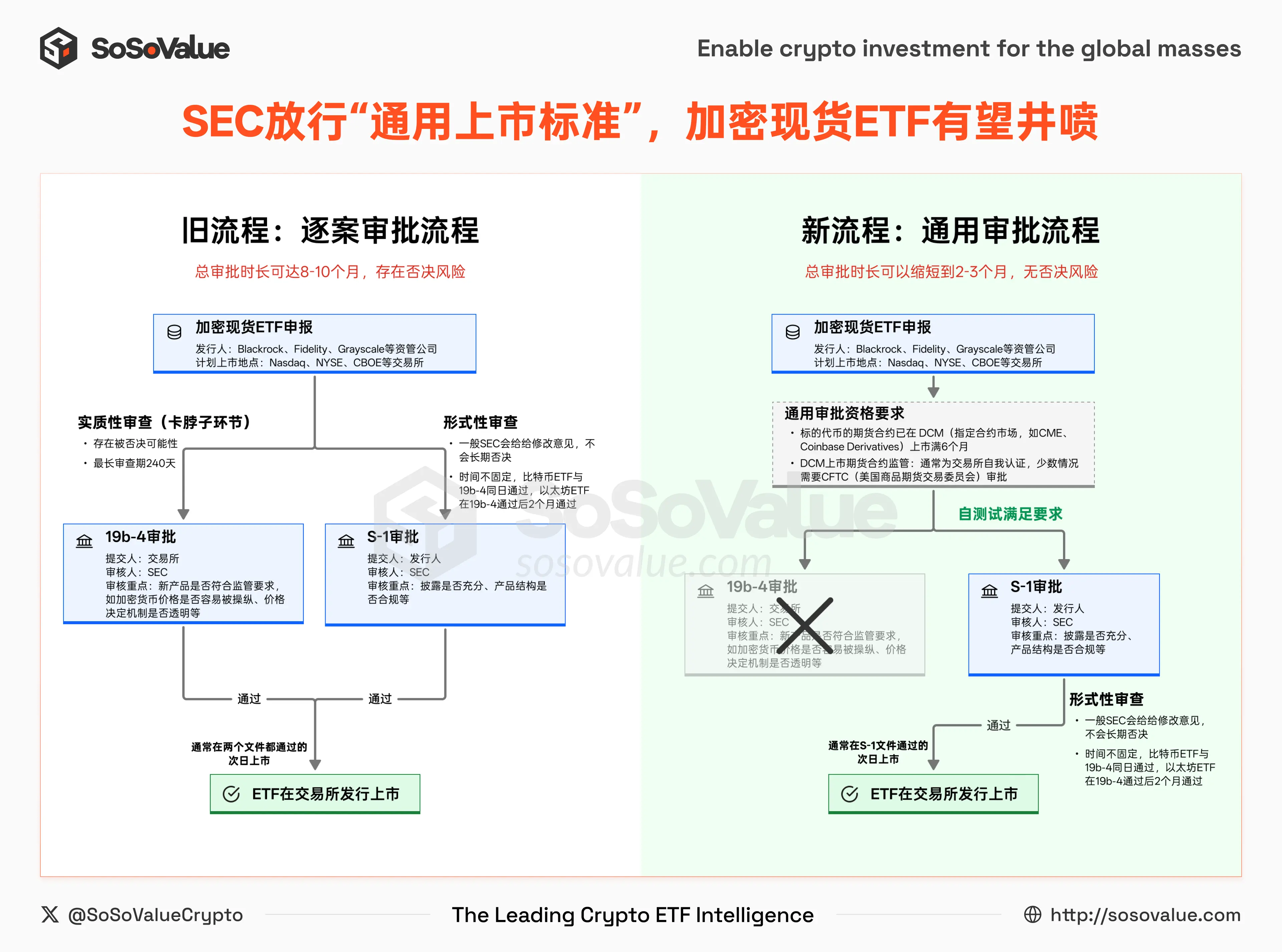
SEC

图1:新旧加密现货ETF上市审批流程(数据来源:SoSoValue)

相比旧有模式,新规带来的变化主要体现在两方面:

1)审批路径简化:19b-4 不再是“拦路虎”。

在旧模式下,加密现货ETF需要同时完成 19b-4 规则变更和 S-1 招股书的双重审批,缺一不可。过去的比特币和以太坊ETF就是如此:19b-4 的审核时间长达 240 天,成为拖慢节奏的关键因素。而在新规下,只要产品符合统一标准,交易所即可直接走 S-1 审批环节,省去了 19b-4 反复博弈的过程,大幅缩短上市周期。

2)审核权的重心转移:CFTC 与 DCM 扮演更关键角色。

期货合约的合格性审查逐渐由 SEC 转移至 DCM(指定合约市场)和 CFTC(美国商品期货交易委员会)。根据现行制度,DCM 上线新合约主要有两种方式:

  • 自我认证(Self-Certification):DCM 只需在合约上线前一工作日日向 CFTC 提交自我声明,若未被反对,合约即可自动生效。这通常要求现货市场具备价格透明度、充足流动性,并且市场操纵风险可控。
  • 主动审批(Voluntary Approval):若合约存在争议,DCM 可主动申请 CFTC 审批,以获得更强的法律保障。

这意味着,只要某类加密资产的现货市场足够健康,DCM 就有较大自主权推动其期货上市。与此同时,SEC 对 S-1 的审核则主要聚焦在信息披露是否充分、产品结构是否合规,更多是“形式审查”。

总体来看,SEC 正在从逐案审批者转型为规则制定者。 监管态度也从“是否允许”转向“如何规范”。在这一框架下,加密现货ETF的推出将更高效、更标准化。


二、哪些加密货币最可能受益?已有期货合约&提交ETF申请的10个主流币将率先迎来ETF落地。

在现有的 DCM(指定合约市场)中,Coinbase 旗下的 Coinbase Derivatives Exchange 拥有最全面的加密期货产品线,目前已涵盖 14 种加密货币。(详见图2)。
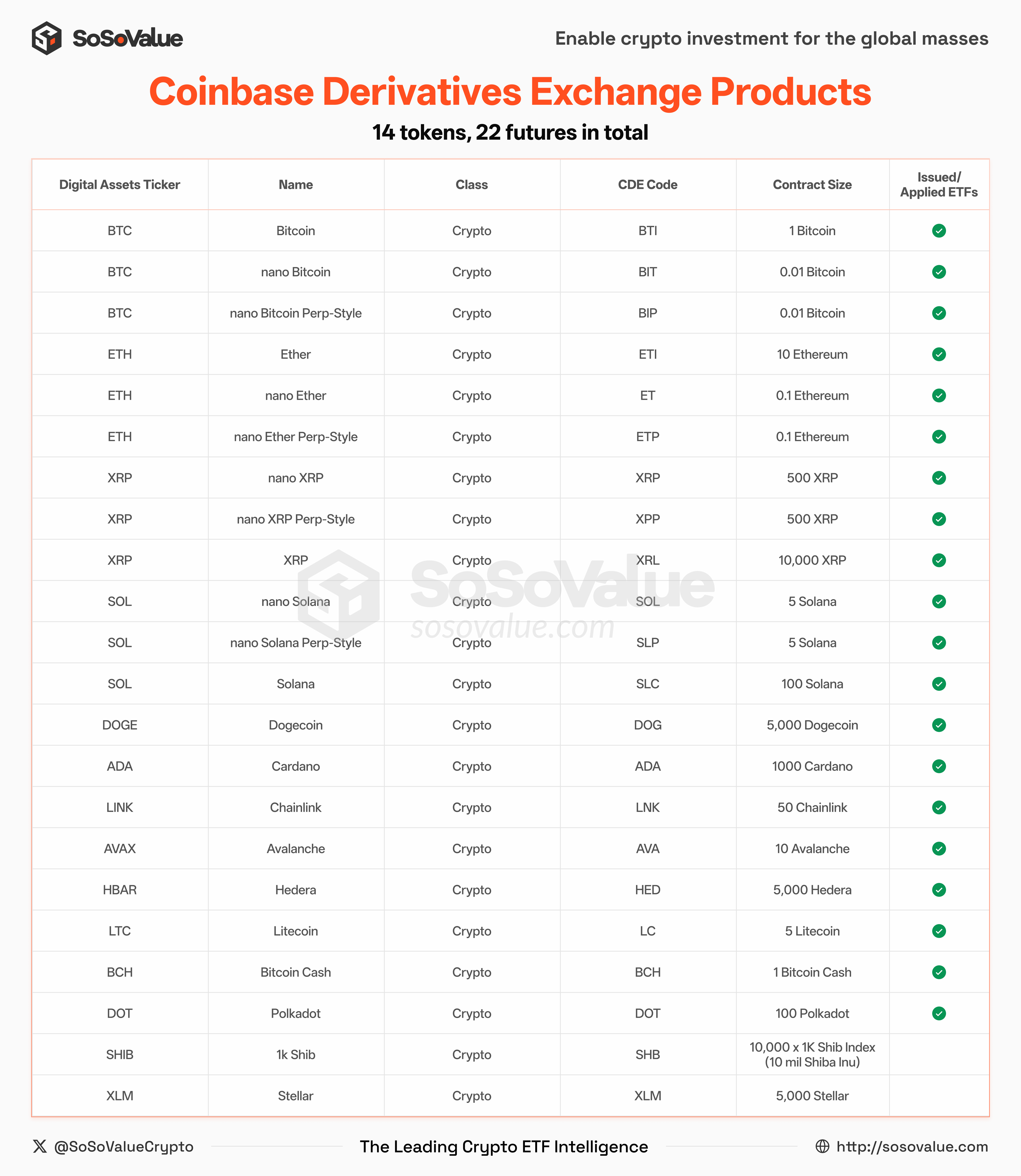
SEC

图2:Coinbase上已经上市的期货list(数据来源:SoSoValue)

根据SoSoValue数据,目前有 35只加密现货ETF在排队审批,涵盖13个币种。除SUI、TRX和JitoSOL外,其余10个币都已经在Coinbase Derivatives交易所上线了期货超6个月,因此完全符合新规的通用要求。
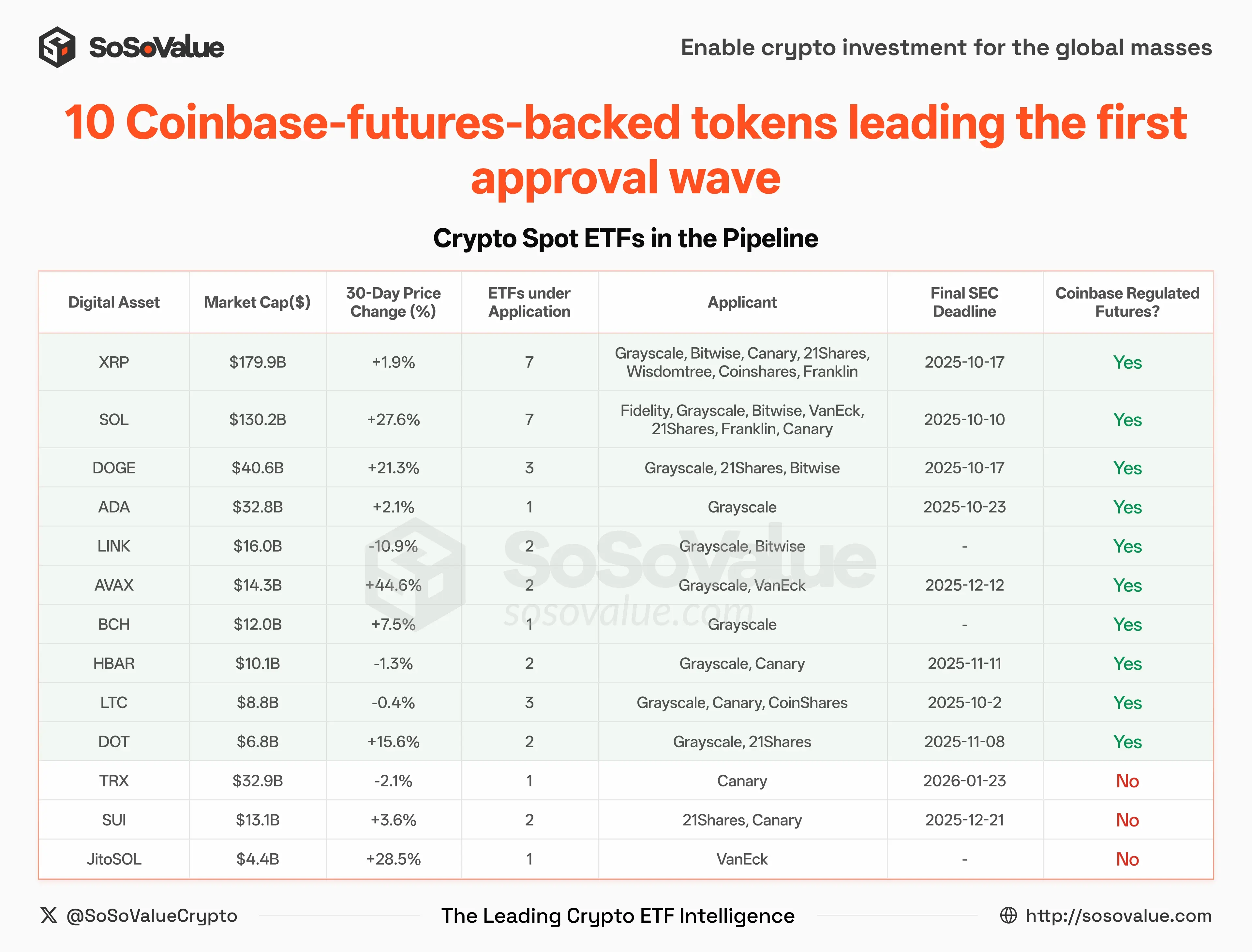
SEC

图3:已有期货合约&提交ETF申请的10个主流币将率先迎来ETF落地(数据来源:SoSoValue)

这意味着:

  • 覆盖10个币种LTC,SOL,XRP,DOGE,ADA,DOT,HBAR,AVAX,LINK,BCH的约30只现货ETF有望在未来几周或几个月内快速获批
  • 市场正酝酿下一波 ETF“井喷潮”。例如,XLM 和 SHIB 等币种虽然已有期货,但至今尚无人提交现货 ETF 申请,极可能成为下一批管理人的重点目标。


三、当降息周期遇上ETF井喷,投资者应该关注什么?ETF发行进度、宏观利率走势、跨资产配置和资金流向

短期来看,通用标准的落地将显著加快加密ETF的推出节奏,降低发行门槛,吸引更多机构资金和合规产品入场。

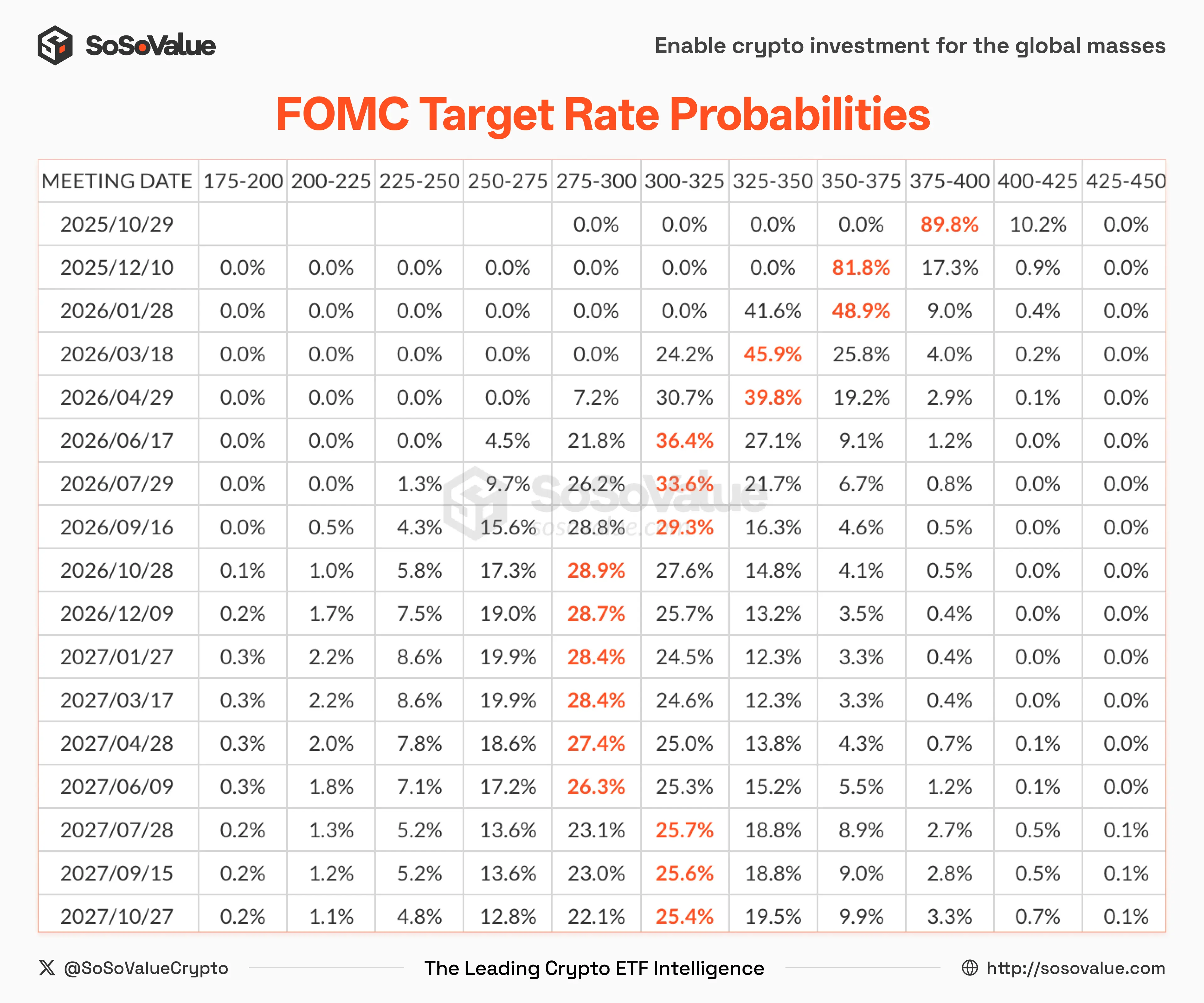
同时,美联储周四如期降息25个基点,点阵图释放年内再降两次的信号,降息周期正在开启,美元贬值的预期开始发酵,全球资本正在寻找新的资产锚点。

宏观流动性与制度革新两股力量正面相撞:一边是美元体系释放出的庞大流动性,另一边是加密资产ETF潜在的产品井喷。二者交织,或将重塑资金配置逻辑,加速传统资本市场与加密资产的深度融合,甚至可能成为未来十年全球资产版图重绘的起点。

在这一背景下,投资者需要重点关注四方面:

  • ETF发行节奏:对于符合通用规则的加密现货ETF,S-1 在最终获批前往往会多次更新招股说明书,补充费率、初始发行规模等细节。这些更新往往意味着产品距离上市已进入“倒计时”。
  • 宏观环境:美联储的利率路径、点阵图预期以及美元指数走势,将决定风险偏好的切换方向,是资产定价的核心线索。
SEC

图4:美联储降息路径预期(数据来源:SoSoValue)

  • 跨资产的配置:在美元弱势周期,黄金、大宗商品与加密资产往往互为补充。通过分散敞口,投资者既能降低风险,也能捕捉多条收益曲线。
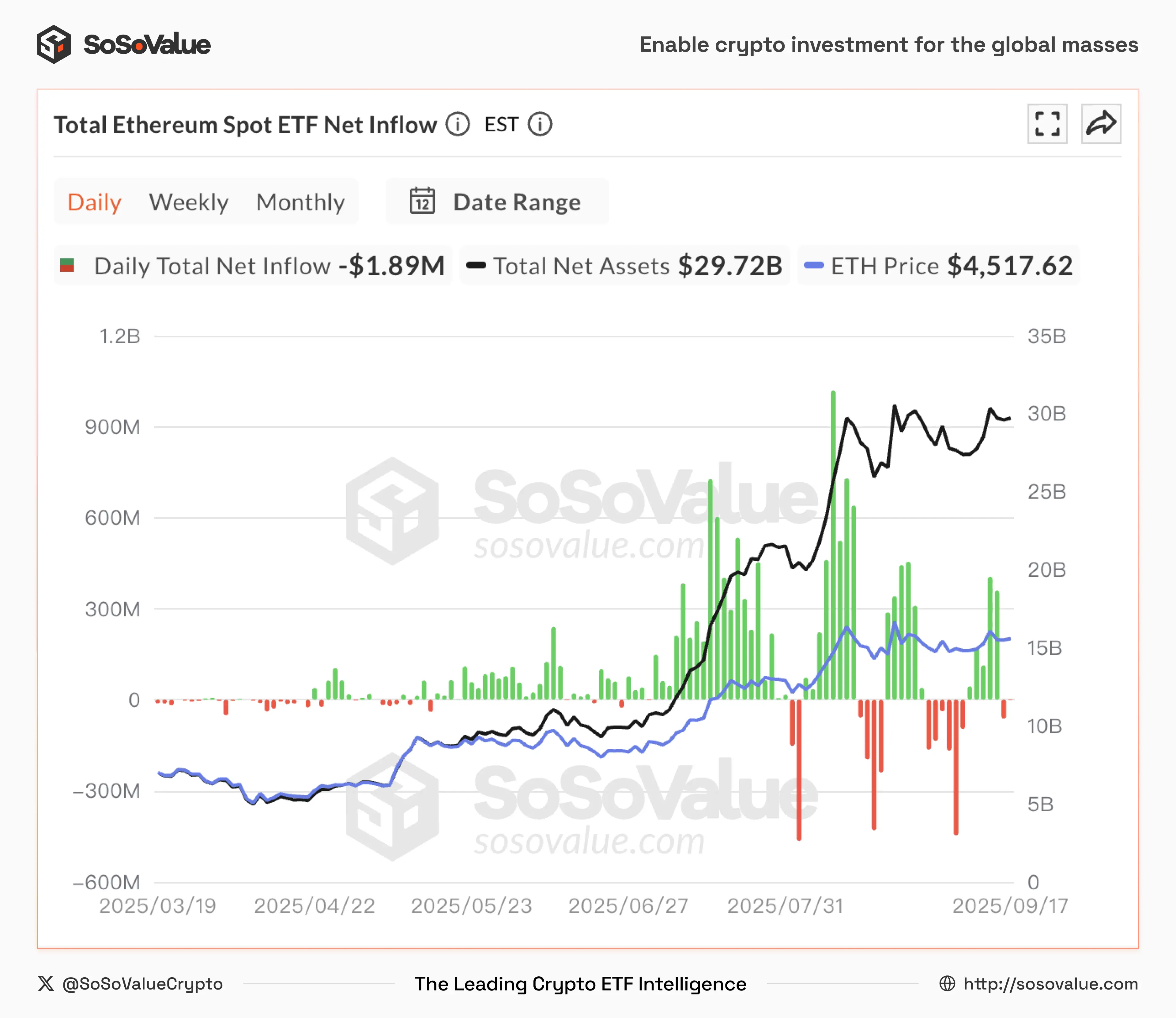
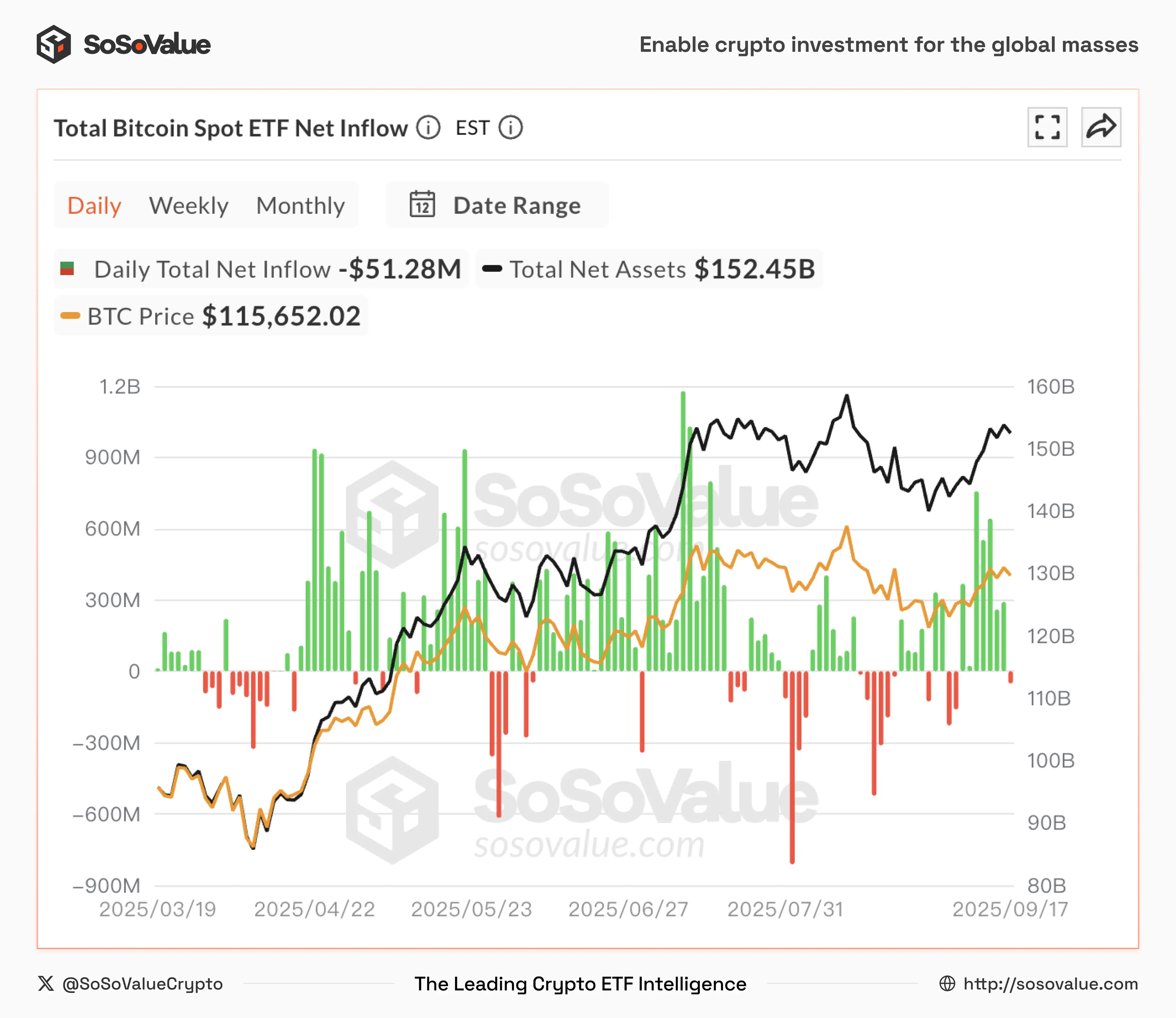
  • 资金流向:与价格波动相比,ETF 的日度净流入更能反映市场情绪和趋势,往往具有更强的前瞻性,帮助投资者在行情反转前抢占先机。
SEC

图5:比特币现货ETF单日净流入(数据来源:SoSoValue)

SEC

图6:以太坊现货ETF单日净流入(数据来源:SoSoValue)

总结来看,新规叠加降息周期,正为加密ETF打开制度与流动性的“双重闸门”。对投资者而言,这既是新的机遇窗口,也是一场资产配置逻辑的深度重塑。

Related Reads

a16z: How Tokenization is Transforming the Nature of Assets in 7 Charts

"Tokenized Assets: How Tokenization Changes the Nature of Assets" by a16z Crypto The market for tokenized assets, excluding stablecoins, has grown from under $3 billion two years ago to over $340 billion today. US Treasury bonds are the primary growth driver, allowing investors to hold yield-bearing assets digitally and enabling more efficient settlement. Other key sectors include private credit (growing fastest), commodities (dominated by gold), and niche financial assets. However, the market remains concentrated in tokenized US Treasuries and gold. A critical insight is that most tokenized assets currently lack "composability." While the total market is large, only a small fraction is actively used within DeFi protocols. For instance, only about 5% of tokenized bonds and a low percentage of tokenized gold are utilized on-chain. In contrast, assets like reinsurance and private credit tokens show much higher on-chain usage rates (84% and 33%, respectively). This highlights a divide: many tokenized assets are merely digital records on a blockchain without enabling new, programmable financial applications. The Pantera Capital Token Native Index indicates over 70% of tokenized assets have minimal on-chain native functionality. Ethereum remains the dominant blockchain for tokenized assets (over $150B), but the ecosystem is diversifying across chains like BNB Chain, Solana, and Stellar, based on factors like cost and compliance. Major institutions forecast massive future growth, with predictions for the tokenized asset market ranging from $2 trillion to over $30 trillion by the early 2030s. However, compared to the global financial system (e.g., ~$140T bonds, multi-trillion dollar gold market), tokenized assets currently represent a tiny fraction (0.01% or less). The conclusion is that while tokenization has begun by digitizing and streamlining settlement for simpler assets, the next phase involves bringing more complex financial instruments on-chain and deeply integrating them into composable, internet-native financial infrastructure.

Odaily星球日报24m ago

a16z: How Tokenization is Transforming the Nature of Assets in 7 Charts

Odaily星球日报24m ago

The Revived Codex, Carrying OpenAI's Hopes for IPO

This article analyzes the intense recent development of OpenAI's Codex, positioning it as a crucial component for OpenAI's impending IPO. Over the past two months, Codex has seen a rapid series of major updates focused on integrating into real enterprise workflows. Key new features include enhanced context capture (Appshots, file previews, built-in browser), long-running task execution ("Goal Mode"), remote operation (phone control, lock-screen access), and enterprise management tools (plugin sharing, access tokens, automated risk review). These updates aim to make Codex a comprehensive AI workbench that can "see the scene, push tasks, and manage risks." The author argues that while ChatGPT proves OpenAI's massive user base and API provides foundational revenue, Codex represents OpenAI's clearest path to demonstrating tangible, high-value commercial viability. It targets developers and engineering teams—a segment already accustomed to paying for efficiency gains in costly software development cycles. This is critical because, despite higher overall revenue, OpenAI's adjusted operating margins remain deeply negative, highlighting the challenge of outrunning immense compute costs. The pressure is amplified by competitor Anthropic's success with Claude Code, which has shown that a focused approach on high-value enterprise and developer workflows can lead to a path toward profitability. Codex's aggressive evolution is thus seen as OpenAI's strategic move to capture a similar enterprise-ready, revenue-generating narrative essential for its market debut. In essence, "ChatGPT proved OpenAI has users. Codex needs to prove OpenAI is a business that can make money."

marsbit1h ago

The Revived Codex, Carrying OpenAI's Hopes for IPO

marsbit1h ago

a16z: 7 Charts to Understand How Tokenization Is Changing the Nature of Assets

a16z: 7 Charts on How Tokenization is Transforming the Nature of Assets Tokenized Assets, often referred to as "real-world assets" (RWA), are altering the form, flow, and structure of the financial system. The market recently surpassed $30 billion (excluding stablecoins), driven largely by tokenized U.S. Treasuries. These offer investors digital, yield-bearing assets with efficient settlement. Growth varies significantly by asset class. Asset-backed credit leads in speed, followed by niche financial assets, while venture capital and active strategies took longer to scale. U.S. Treasuries and commodities dominate, holding about two-thirds of the current market share. Within commodities, gold tokenization dominates entirely due to its standardization and historical appeal in crypto. The ecosystem is spread across multiple blockchains. Ethereum holds over half the market, with others like BNB Chain, Solana, and Stellar holding significant shares. However, a key insight is that most tokenized assets currently lack "composability." While the total market is large, only a small fraction (e.g., 5% of tokenized bonds) is used within DeFi protocols. Many tokens are simply digital records of off-chain assets, not natively programmable financial building blocks. In contrast, smaller categories like reinsurance tokens see very high on-chain usage. Looking ahead, forecasts for the tokenized asset market by 2030 range from $2 trillion to over $30 trillion, representing immense potential growth from today's ~$340 billion base. Yet, relative to global markets (e.g., $140T+ in bonds), tokenization's penetration remains minuscule (<0.02%). The current phase focuses on digitizing straightforward assets for efficiency. The next major challenge is bringing more complex financial instruments on-chain and integrating tokenized assets into truly composable, internet-native financial infrastructure.

marsbit1h ago

a16z: 7 Charts to Understand How Tokenization Is Changing the Nature of Assets

marsbit1h ago

Trading

Spot
Futures
活动图片