Отложенный эффект закона GENIUS: изменения на рынке стейблкоинов США

cryptonews.ruPublished on 2025-04-15Last updated on 2025-09-16

Рыночная капитализация стейблкоинов уверенно приближается к $300 млрд, а компания Tether, эмитент USDT, заявила о планах по запуску новой монеты, обеспеченной долларом. Рассмотрим, что происходит на рынке стабильных криптовалют.

Расширение рынка стейблкоинов

Практически каждый месяц появляются новые стейблкоины с привязкой к доллару. Компании понимают, что это перспективное направление еще только формируется на рынке, и не хотят упустить возможность «поймать удачу за хвост». Даже связанная с Дональдом Трампом World Liberty Financial успела запустить свой стейблкоин USD1. Вместе с этим лидер рынка Tether готовится представить еще одну монету — USAT. В чем же причины этих событий?

Закон GENIUS

Пожалуй, главная причина — GENIUS. Это федеральный закон, который по-новому очертил регулирование стейблкоинов в США. Он был подписан Дональдом Трампом еще в июле. В соответствии с GENIUS, к компаниям, занимающимся выпуском стейблкоинов, предъявляется ряд новых требований:

  • Все организации обязаны вести свою деятельность прозрачно. С этой целью они обязуются раскрывать детали, касающиеся резервов, которыми обеспечены стейблкоины, на ежемесячной основе.

  • Компании должны применять строгие процедуры KYC («Знай своего клиента») и AML (борьба с отмыванием денег).

  • Резервы должны состоять из ликвидных активов: преимущественно из денежных средств и американских трежерис.

  • Компании, выпускающие стейблкоины, обязаны разработать специальную политику по защите своих пользователей.

  • Помимо ежемесячного раскрытия резервов, они должны подвергаться независимому аудиту со стороны.

В итоге в США сложилась ситуация, когда регулирующие правила оказались новые, а многие стейблкоины остались старые. Получилась некоторая несостыковка законодательства и реального предложения монет, находящихся в обращении. Учитывая, что рынок США достаточно обширный, новые компании решили, что это подходящий момент для завоевания доли у действующих лидеров.

При этом некоторые криптоэнтузиасты резонно задались вопросом — а не является ли GENIUS и запуск Трампом USD1 спланированной операцией?

USD1

Однозначного ответа никто, кроме американского президента, дать не может. Любые предположения, связанные с USD1 и теориями заговора по захвату семьей Трампа крипторынка, представляют собой лишь домыслы. Хотя и говорить о том, что запущенный World Liberty Financial стейблкоин — исключительно бескорыстный «акт альтруизма», не приходится. Конечно, основная его цель, как и других проектов семьи Трампа в криптоиндустрии, состоит в получении прибыли. В этом отношении не стоит удивляться, если USD1 окажется абсолютно соответствующим требованиям GENIUS.

Делает ли это Трампа или World Liberty Financial мошенниками? Если по существу — нет. Введение GENIUS не сформировало монополии на выпуск стейблкоинов в США. Этот закон лишь ввел некоторые новые ограничения. Различные компании по-прежнему могут выпускать стейблкоины. Просто в американской законодательной базе стало одним пятном меньше в отношении криптовалюты.

Причины появления USAT

Другой интересный вопрос — зачем Tether запускает новый стейблкоин, который, как и USDT, будет привязан к доллару США?

Новый продукт компании, получивший название USAT, выступает аналогом USDT с той только разницей, что этот стейблкоин будет соответствовать требованиям GENIUS. Проблема в том, что к USDT всегда были вопросы по поводу резервов, и их аудит носил спорный характер. Кроме того, сама штаб-квартира Tether базируется в Сальвадоре, а законодательная база этой страны сильно разнится с текущей американской. Изменить текущие разночтения с GENIUS в отношении USDT достаточно сложно, а рынок США терять не хочется. Поэтому Tether и представил USAT.

Интересно, что для управления своим американским подразделением компания выбрала Бо Хайнса (Bo Hines), который ранее был одним из советников Дональда Трампа в отношении государственной политики в области криптовалют.

А изменится ли кардинально ситуация на рынке стейблкоинов?

Стейблкоины в сентябре 2025 года

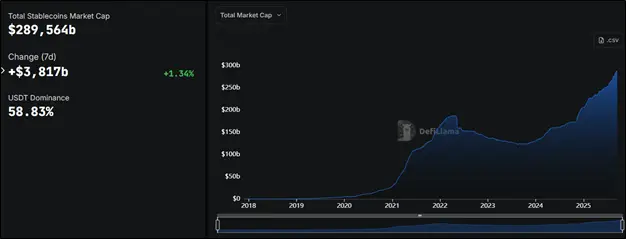
Что точно меняется на постоянной основе — это капитализация стейблкоинов. С начала 2025 года она поднялась более чем на 40%, и нет никаких оснований предполагать, что что-то принципиально изменится в ближайшее время.
15092501.png

Источник: defillama.com

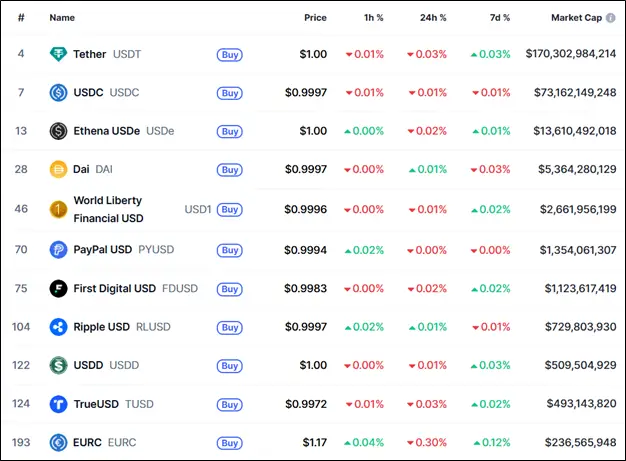
Далее стоит обратить внимание на крупнейшие стейблкоины. USDT от Tether как был самым крупным, так и остается. Его капитализация превышает идущий вторым USDC в 2,3 раза. Вопросы к аудиту резервов этому не мешают. Стейблкоин USD1 совершил гигантский скачок, если брать в разрезе всех криптовалют: он занимает 46 место по капитализации. Однако он в 66 с лишним раз меньше USDT.
15092502.png

Источник: coinmarketcap.com

Ну, и наконец затронем вопрос — а не станет ли USAT новым гегемоном рынка стейблкоинов? Вполне вероятно, что USAT ворвется в топ-10 или хотя бы в топ-20 стейблкоинов по капитализации. Но обойдет ли он USDT? Вряд ли. Во всяком случае, в обозримом будущем.

USAT — это продукт, направленный на американский рынок. Безусловно, экономика США играет заметную роль на мировой арене. Тем не менее, мир не замыкается на одной стране. USDT — это стейблкоин, который заслужил свою популярность временем. В одночасье лишить его звания лидера не получится.

Вывод

Таким образом, запуск нового стейблкоина Tether — это лишь шаг, направленный на то, чтобы соответствовать нынешнему американскому законодательству, в частности GENIUS. USD1 от World Liberty Financial, связанной с Дональдом Трампом, занял свою нишу на рынке. Однако назвать его попыткой захвата американским президентом рынка стейблкоинов нельзя.

Данный материал и информация в нем не является индивидуальной или иной другой инвестиционной рекомендацией. Мнение редакции может не совпадать с мнениями аналитических порталов и экспертов.

Related Reads

Foundation Steps Back, Ethlabs Steps Forward: Ethereum Undergoes Its Largest Restructuring in History

On June 23rd, the Ethereum ecosystem witnessed two major shifts, signaling a significant governance realignment. First, former Ethereum Foundation researchers established Ethlabs, a new independent non-profit. Backed by major ETH holders like Bitmine and SharpLink, Ethlabs aims to address practical needs for institutional adoption, including faster settlement, native asset issuance, cross-chain transactions, and mainnet scaling. Secondly, the Ethereum Foundation announced a major restructuring, laying off 54 employees (20% of its staff) to become a leaner entity focused on protocol governance and maintenance rather than being the primary builder. This move represents a pivotal correction. Criticisms had mounted over the Foundation's perceived slowness, lack of clear strategy, and over-reliance on Vitalik Buterin's influence. Ethlabs emerges as a more execution-oriented, "industrialized" layer focused on market adoption—bridging the gap between research and real-world use. Notably, Vitalik Buterin is absent from its list of supporters, interpreted as an intentional step to avoid excessive personal endorsement and allow the organization to build independent credibility. The Ethereum Foundation's downsizing and redefinition mark a retreat from its former central coordinating role. It now aims to share the "privilege of stewarding Ethereum" with other emerging groups like Ethlabs, the Ethereum Applications Guild, and The Ethereum Economic Zone. Analysts frame this dual shift as the Foundation ensuring Ethereum remains "correct" (credibly neutral), while Ethlabs must prove it remains "effective" (competitive and attractive for capital and adoption). This addresses community "shareholder-like anxiety" about ETH's market performance. While risks exist—such as concerns over shifting from Foundation centrality to large-holder influence—the consensus is that the greater risk for Ethereum was inaction, caught between technical idealism and organizational inertia. These steps aim to create a more multi-stakeholder, execution-driven future for the network.

链捕手6h ago

Foundation Steps Back, Ethlabs Steps Forward: Ethereum Undergoes Its Largest Restructuring in History

链捕手6h ago

Second Half of U.S. Crypto Policy: The Clarity Act Aims for 60 Votes, CFTC's "One-Person Commission" Becomes Biggest Variable

In a pivotal year for US crypto policy, the "CLARITY Act" is advancing in the Senate but faces a high hurdle, needing 60 votes to pass. Key challenges include bridging partisan divides on ethics and swaying undecided Republican senators within a tight legislative calendar of only about 40 working days. The policy "second half" involves intense negotiations on a broader framework for Web3 and DeFi, including crypto tax reforms and the Blockchain Regulatory Certainty Act. A significant uncertainty is the understaffed CFTC, operating with four commissioner vacancies, which complicates regulatory clarity. Meanwhile, the departure of key "crypto champions"—SEC Commissioner Hester Peirce and Senator Cynthia Lummis—will impact ongoing policy efforts. Industry experts are cautiously optimistic but realistic. Sara K. Weed notes that while progress is being made, CLARITY is unlikely to pass this Congress, pushing agencies like the SEC and CFTC to provide more guidance. Sulolit Mukherjee suggests meaningful crypto tax legislation is more likely to be attached to larger must-pass bills. Rashan Colbert discusses the jurisdictional debate over prediction markets, emphasizing the need for a regulatory framework that fosters their development as financial tools rather than treating them broadly as gambling. The clock is ticking, but opportunities remain for substantive progress through continued bipartisan dialogue and pragmatic efforts.

marsbit9h ago

Second Half of U.S. Crypto Policy: The Clarity Act Aims for 60 Votes, CFTC's "One-Person Commission" Becomes Biggest Variable

marsbit9h ago

Dan Koe's New Essay: Escaping the Fate of the Wage Slave, How to Survive the AI Replacement Wave?

Dan Koe argues that the true threat in the AI era isn't technology itself, but a reliance on others for one's livelihood and happiness. The core problem is "wage slavery"—spending life on unfulfilling work. To survive and thrive, one must escape this by building their own enterprise. The key is developing five elements: Agency (initiative), Taste (discernment), Persuasion, Persistence, and Iteration. These boil down to problem-solving skills and experiential knowledge, which cannot be learned passively but only through doing your own projects. The solution is to become "unemployable" by shifting your identity. This requires: 1) Radically changing your environment to force growth, 2) Choosing a medium (like content creation) that provides real feedback through trial and error, and 3) Mastering either code or, preferably, media (content). Content creation is more valuable because its subjective nature and need for human perspective create a durable advantage over generic AI output. To start, define your life's work by answering foundational questions about your innate knowledge, unique abilities, and contrarian beliefs. Then, immediately act by publishing your first piece of content. The cycle of creating, receiving feedback, and iterating is the essential path to developing the skills needed for an independent, meaningful career and financial resilience.

marsbit10h ago

Dan Koe's New Essay: Escaping the Fate of the Wage Slave, How to Survive the AI Replacement Wave?

marsbit10h ago

Research Report Analysis: Morgan Stanley Details SanDisk SNDK, The Truth About Cloud Data Center Pricing Power and AI Inference Benefits

Morgan Stanley raised its price target for SanDisk (SNDK) from $1100 to $1750 on June 22, maintaining an Overweight rating. The upgrade is driven by AI inference demand reshaping the NAND market, particularly for KV Cache and context window storage in cloud data centers. These cloud clients exhibit price inelasticity and sign long-term contracts, granting SanDisk significant pricing power. SanDisk's New Business Model (NBM) agreements, covering over one-third of FY27 bit shipments with 3-5 year terms and fixed price/price collar structures, are crucial. They are projected to sustain gross margins around 80% even at floor prices, providing a buffer against cyclical downturns. Morgan Stanley forecasts gross margins to surge from 30.3% in FY25 to 86.7% in FY27e. With NAND supply expected to remain tight into 2026/2027 and cloud/data centers becoming the largest end-market, SanDisk holds supply-side pricing power. The company targets 15-19% bit growth via technology transitions, not capacity expansion. Revenue is projected to grow ~6.6x from FY25 to FY27, with EPS rising from $2.74 to $14.73, driven by high-margin cloud business. Key upside catalysts include faster enterprise SSD adoption and edge AI growth. Downside risks involve slower industry growth, competitor capex increases, market share loss, and competition from Chinese players like YMTC. The investment thesis rests on AI-driven structural demand, NBM's margin protection, and sustained supply tightness. The $1750 target implies ~28x FY27e P/E.

marsbit10h ago

Research Report Analysis: Morgan Stanley Details SanDisk SNDK, The Truth About Cloud Data Center Pricing Power and AI Inference Benefits

marsbit10h ago

Trading

Spot
Futures
活动图片