InfoFi 为何不香了?

marsbitPublished on 2025-09-04Last updated on 2025-09-05

如果我们已迎来 InfoFi 时代的终结,或是正一步步逼近这个节点,我并不会感到意外。

自 InfoFi 兴起以来,许多人借此赚取了可观的收益,有人累计赚了 5 位数,有人甚至赚到了 6 位数。但如今,一些信号值得我们高度警惕。


门槛规则变更

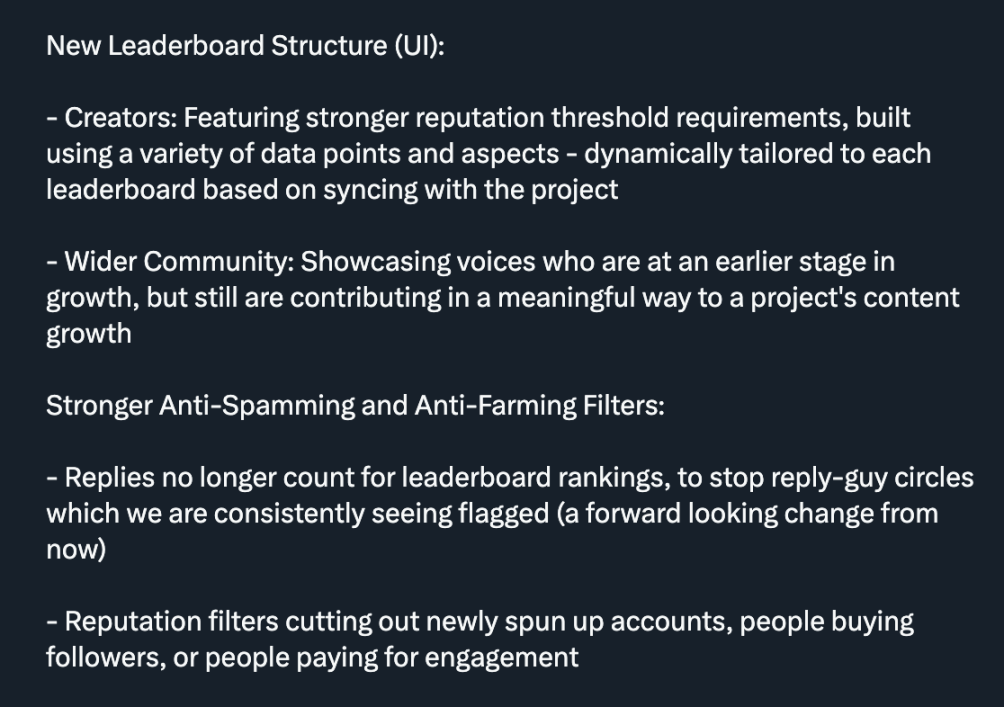
严格来说,我并不认为 Kaito 这次升级完全是件坏事,它或许能有效杜绝大量账号用 AI 生成劣质内容 「刷量」 的行为,同时提升内容质量。

但升级后,不仅小号受到冲击,许多大号也未能幸免。这导致大量依赖 Kaito 的用户选择离开,因为升级后,他们几乎没有机会再通过平台赚到钱。
 Capital Launchpad

对此,一些项目方选择取消门槛,以吸引小号入驻。这恰恰说明:在大多数情况下,小号群体是至关重要的。

我的看法是:Kaito 似乎对这次升级的方向感到困惑,而且很多项目方显然不喜欢这种 「门槛限制」。不过不可否认的是,在过去几个月里,Kaito 的表现一直相当出色。


代币分配方案拉胯

对于内容创作者(yappers)而言,如今常规的 0.5%-1% 代币分配比例已远远不够,因为这些代币上线时的估值往往很低。

早期,有些账号通过 1-2 个月的推广活动就能赚到 4-5 位数收益;而现在,即便是参与 3-6 个月的活动,也只能赚 3-4 位数,这让很多人感到心灰意冷。

甚至连头部账号,即便产出了优质内容,也很难赚到可观的 4 位数收益。

这对依赖 InfoFi 的创作者来说为何是坏消息?在 InfoFi 兴起之前,许多创作者作为品牌大使或 KOL 推广内容,就能获得不错的收入。而现在 Kaito 上的项目方给出的报酬,根本无法与外部合作相提并论 。鉴于这一事实,越来越多创作者选择离开 InfoFi 平台,也就不足为奇了。


「Capital Launchpad」 主导地位凸显

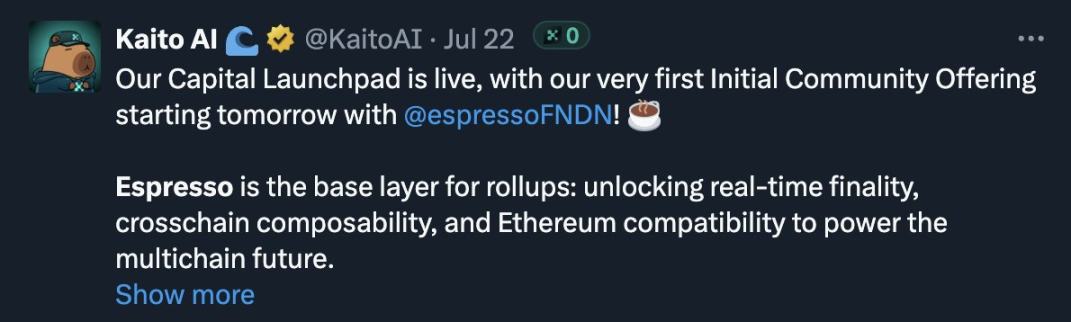
7 月 22 日,Kaito 的 「Capital Launchpad」正式上线,首个上线项目是 Espresso,随后有更多项目陆续入驻。
 Capital Launchpad

对 Kaito 而言,这无疑是个不错的产品,但我也有几点担忧:

  • 通过 Kaito 首次代币发行的项目,至今没有一个在公开市场上线;
  • 这些项目均未公布上线日期;
  • 大多数项目的估值过高,且代币解锁方案对投资者不友好。

我的补充观点:Kaito 最初是专为 InfoFi 打造的平台,后来才决定增加额外的平台功能(如 Launchpad),这本身是很棒的尝试。但最近,越来越多项目选择入驻 「Capital Launchpad」,而非参与 「创作者排行榜」。对于一个 InfoFi 平台来说,这种趋势显然不太乐观。

不过,这只是我观察到的明显现象,似乎没多少人对此提出质疑。


项目方更倾向于与 KOL 直接合作,而非通过 Kaito 平台

这一点很明显:项目方已不再那么热衷于参与 InfoFi 合作了。

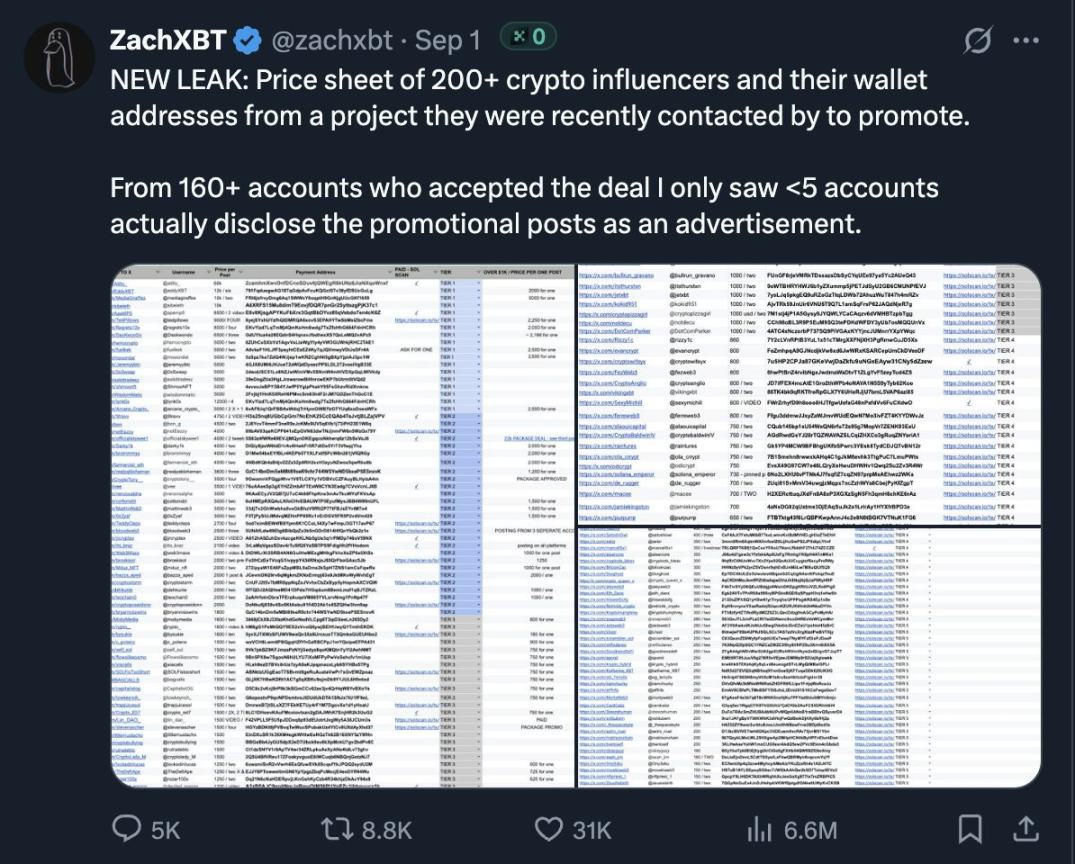
最近,Zachxbt 发布了一个谷歌表格,列出了一批从某项目方获得报酬的账号。我提及此事并非因为惊讶,而是因为这些报酬金额相当可观,尤其是与 Kaito 「创作者排行榜」 上的项目相比。
 Capital Launchpad

我相信,这已经让不少人意识到:除了 InfoFi,还有很多赚钱的方式。而人性的现实是 「想尽办法多赚钱」,因此我认为这对 Kaito 构成了直接竞争。

Related Reads

Agentized OS: It's Not About AI, It's About the Foundation

The Agentic OS: Beyond AI, It's About the Foundational Stack In 2026, major operating systems like Android, iOS, HarmonyOS, and Windows are entering the "Agentic" era, integrating proactive AI assistants deeply into the system layer. However, the real competition lies not in the flashy AI features showcased at events, but in the three-layer foundational stack that enables them: the system-level AI Runtime, proprietary/controllable chips, and the on-device/cloud model matrix. The AI Runtime acts as the central scheduler, managing model inference, resource allocation, and exposing capabilities to apps. Controllable chips (e.g., Apple Silicon, Google Tensor, Huawei Kirin) are crucial for deep hardware-software co-optimization, determining the efficiency and experience limits of on-device Agents. The on-device/cloud model matrix provides the "intelligence," with proprietary, chip-optimized small models (like Gemini Nano, Apple's ~3B model) handling daily tasks locally for low latency, privacy, and reliability, while cloud models tackle complex requests. Deep synergy between these three layers enables key Agent differentiators: ultra-low latency and power efficiency, genuine "on-device first" privacy, access to system-level personal context across apps, and reliable performance as a system service even offline. OS vendors with strong integration across this stack (like Apple, Google, and Huawei) build a deeper moat. Beyond this core stack, long-term competitiveness depends on variables like structured App integration (e.g., App Intents/AppFunctions) for reliable multi-step workflows, and robust privacy frameworks that build user trust. This shift towards Agentic OS extends beyond phones and PCs to IoT, cars, and XR glasses via existing multi-device ecosystems. The race is won not in a keynote, but through generations of meticulously co-developed chips, models, and system software.

marsbit1h ago

Agentized OS: It's Not About AI, It's About the Foundation

marsbit1h ago

Why Sam Altman's 'Water and Electricity Theory' Sparks Copyright Controversy

OpenAI CEO Sam Altman's recent statement that "intelligence will become a utility like electricity or water" has sparked significant controversy, primarily around copyright issues and the nature of AI development. While positioning AI as a utility serves as a compelling narrative for infrastructure investors, critics argue the analogy is flawed in three key areas. First, there's a fundamental "property gap." Traditional utilities like water and power create new, physical infrastructure from scratch. In contrast, major AI models are trained by reorganizing vast amounts of existing human-created content—books, articles, code, etc.—often scraped from the web without explicit permission or compensation to creators. This "free acquisition, paid resale" model is seen by many as ethically problematic. Second, there's a "pricing gap." True public utilities are typically regulated to ensure universal service with non-discriminatory, cost-plus pricing. AI's token-based pricing, however, involves significant price discrimination (e.g., output tokens costing much more than input tokens) and is designed for revenue maximization, not equitable access. Third, a "governance gap" exists. Utilities operate under public oversight, while AI pricing and development are currently controlled by a few private companies. Furthermore, the industry's own shift toward buying licensed training data (e.g., deals with Reddit or news publishers) undermines its previous legal reliance on "fair use" for freely scraped data. In conclusion, while AI is indeed becoming a foundational technology, calling it a public utility remains contentious. The title requires not just scale and a pay-per-use model, but also credible solutions for data provenance, equitable pricing, and public governance.

marsbit1h ago

Why Sam Altman's 'Water and Electricity Theory' Sparks Copyright Controversy

marsbit1h ago

Trading

Spot
Futures
活动图片