加密货币正式进入美国养老金套餐,最大增量入口开闸

marsbitPublished on 2025-08-07Last updated on 2025-08-08

昨日彭博社披露,特朗普将于周四签署行政命令,旨在允许私募股权、房地产、加密货币及其他另类资产纳入 401(k)养老金计划。该消息一出,一扫关税带来的多日阴霾,加密市场表现强劲。比特币强势突破 115500 美元附近压力位,以太坊再度冲击 4000 美元关口,山寨币板块全线躁动。那场迟迟未至的“山寨季”,终于要来了?

401(k)是什么?新政为何意义深远?

401(k)计划是美国最重要的退休储蓄工具之一,管理着约 9 万亿美元的资产,覆盖数千万美国人的养老资金。作为雇主赞助的长期储蓄方案,401(k)传统上以低风险、高流动性的资产为核心,例如股票、债券和共同基金,旨在为退休者提供稳定、长期的回报。

特朗普此次行政命令,直接撕开了这一保守框架——首次明确允许高风险、高回报的另类资产进入 401(k)体系,其中包括加密货币、黄金、私募股权和房地产。这意味着,未来数万亿美元的退休资金,可能涌入此前被视为“非主流”的市场,重塑美国养老金的投资版图,相关阅读参考《凶猛利好:特朗普拟开放美国退休金投资加密,万亿美元涌入市场?》。

这并非特朗普首次试图松绑 401(k)的投资范围。早在 2020 年,其任内的劳工部就曾释放过允许 401(k)接触私募资产的信号,但因缺乏总统行政命令的背书,加之私募资产流动性低、透明度有限,最终未能引发广泛跟进。而这一次,总统亲自签署的新政,不仅力度更大,执行决心也更为明确。

2025 年 5 月,美国劳工部率先撤销拜登时期对加密货币纳入 401(k) 的限制性指导意见,为这一步铺平道路。与此同时,联邦住房金融局也要求房利美(Fannie Mae)与房地美(Freddie Mac)将借款人持有的加密资产纳入住房抵押贷款评估体系,显示特朗普政府正试图在多个层面将加密资产纳入美国经济主流。

市场测算,如果 401(k) 计划仅将 2% 的资产配置至加密货币,就意味着约 1,700 亿美元的新增资金流入——相当于现有加密现货 ETF 和上市储备市值的三分之二。这样的资金体量,足以令整个加密市场沸腾。

不过,政策落地并非立刻奏效。行政命令要求劳工部与美国证监会(SEC)制定详细的监管细则,并为 401(k)计划管理方设立“安全港”机制,以降低其因提供高风险资产而可能面临的法律风险。监管框架的制定,可能需要数月甚至数年,投资比例与具体资产范围也有待明确。但即便如此,其象征意义与潜在冲击,已足以点燃市场的想象力。

州级先行试水,机构抢跑布局

在联邦政策尚未完全落地之前,一些州政府已经率先试水。

北卡罗来纳州在 2025 年 3 月提出《北卡罗来纳数字资产投资法案》(House Bill 92),授权州财政部长可将州公共退休基金最高 5% 的资产投资于比特币等数字资产。法案支持者、共和党众议员 Mike Schietzelt 称,这为州财政健康“打开了新的资产类别”。截至 2025 年 5 月,该法案已在州众议院通过,参议院仍在审议中。

威斯康星州与密歇根州则已走在前列。2024 年 5 月,威斯康星州投资委员会披露,已购买价值约 1.6 亿美元的比特币现货 ETF(主要投向贝莱德 ETF),占其逾 1,000 亿美元养老基金的 0.1%。虽然 9 月缩减至 1.04 亿美元,但已成为美国州级养老金配置加密的先例。密歇根州则在 2024 年 7 月披露,其养老基金购入约 650 万美元的比特币 ETF,纳入州政府雇员及教师的退休投资组合。

亚利桑那州同样积极。2025 年 2 月,共和党州参议员 Jake Hoffman 提案,建议州退休系统考虑配置比特币 ETF。

这些投资规模虽不算庞大,但被视为州级养老金“试水”的信号,为其他州提供了参考样本。

与此同时,华尔街机构也在敏锐捕捉政策风向,加速布局以抢占 401(k)市场先机。富达投资(Fidelity),管理 5.9 万亿美元资产的行业巨头,于 2024 年 4 月推出支持加密货币的退休账户产品,允许投资者通过自选经纪账户(Self-Directed Brokerage, SDB)投资于比特币和以太坊现货 ETF。

Blackstone 总裁 Jon Gray 表示,另类资产领域的头部机构将率先受益于 401(k)新政,预计吸引数千亿美元资金流入。Blackstone 正与摩根士丹利合作开发面向 401(k)计划的私募股权投资工具,降低进入门槛以吸引中小投资者。阿波罗全球管理公司(Apollo Global Management)与道富银行(State Street)合作,推出包含私募股权的目标日期基金(TDF),专为退休储蓄设计,兼顾收益与风险控制。贝莱德(BlackRock)也在积极开发支持加密现货 ETF 和房地产投资信托(REITs)的 401(k)产品,其数字资产负责人 Robert Mitchnick 表示,正与养老基金管理人进行深入研究和教育,助力其了解加密资产投资。

这些州级和机构的动作表明,无论是地方政策试验还是华尔街的战略布局,都在为 401(k)开放另类资产铺路。加密货币作为高风险高回报的资产类别,正逐步融入美国退休储蓄体系。

资金流向具体何处?加密赛道迎新机遇

9 万亿美元的 401(k)资产基数,让加密市场看到了前所未有的增量想象,即便仅有小比例资金流入,也可能显著推高比特币、以太坊等主流加密资产的价格。尤其是加密现货 ETF,在合规性、托管安全与流动性方面均具优势,或将成为首批获益的资金承载体。

此前在机构主导的新资金周期中,流动性高、透明度强的标的更易获青睐。除比特币、以太坊现货 ETF 外,SOL、XRP、LTC、DOGE 等项目也有较大概率获得 ETF 批准,从而受益于这一波退休金流入浪潮。
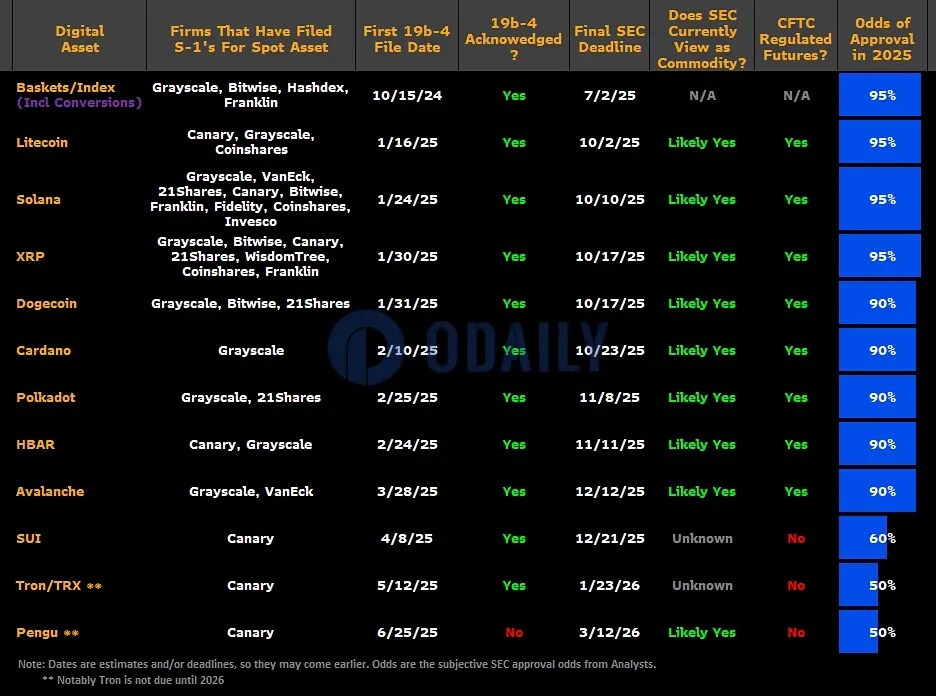
401(k)

市场争议与风险警示

尽管市场热情高涨,学术界和监管层对另类资产的高风险特性表达了强烈担忧。

约翰斯·霍普金斯大学教授 Jeffrey Hooke 直言,将私募股权和加密货币纳入 401(k)是个“坏主意”。他指出,私募股权流动性差、费用高昂,长期收益未必优于传统股市;而加密货币因波动性极高(例如 2022 年比特币暴跌超 60%)和历史较短,难以作为退休储蓄的可靠选择。

专门代理 401(k)高收费诉讼的 Schlichter Bogard 律所合伙人 Jerry Schlichter 警告:“普通人的退休目标是安全和稳定,加密货币充满未知风险,短期到中期波动剧烈,不适合作为养老资产的核心。”

民主党人也对政策持谨慎态度。参议员 Elizabeth Warren 等人批评《天才法案》的监管框架过于宽松,担心允许大企业发行私有加密货币可能动摇金融系统稳定。他们形容普通储户可能沦为“政策实验的小白鼠”,呼吁更严格的监管和风险评估。

结语

特朗普的行政命令,正在为加密与另类资产行业推开一扇前所未有的政策之门。若数万亿美元的 401(k)资金分批流入,这不仅会改变资金流向,也将提升加密资产在主流金融体系中的合法性与话语权。

但机会伴随风险。监管细则的制定、市场教育的普及以及投资比例的设定,都将决定这场变革的实际成色。未来几个月,投资者需密切跟踪劳工部与 SEC 的后续动作,以及机构资金的真实落地节奏。

对于加密市场而言,这或许不仅是一场资金盛宴,更可能是加密资产真正走向主流金融舞台的关键拐点。

Related Reads

Can DeepSeek Save China One Trillion Dollars?

"DeepSeek and the $1 Trillion Infrastructure Question" The article examines whether DeepSeek's AI optimization breakthroughs could potentially save China $1 trillion in future AI infrastructure costs. The analysis begins with Nvidia's upcoming Vera Rubin AI platform, costing ~$7.8 million, where memory (HBM4/LPDDR5X) constitutes $2 million—a 435% cost increase in one year, highlighting how AI hardware spending is shifting toward expensive memory components. DeepSeek's approach works in the opposite direction. Through three key technical innovations showcased in DeepSeek V4, the company dramatically improves hardware efficiency: 1. **Memory Compression (MLA)**: Re-engineers the attention mechanism to compress long-context memory (KV Cache) by over 90%, drastically reducing expensive HBM usage. 2. **Selective Activation (MoE)**: Employs Mixture-of-Experts architecture where only a small fraction of parameters (e.g., 49B out of 1.6T in V4-Pro) are activated per token, allowing most parameters to reside in cheaper memory/SSD. 3. **Computation Caching**: Reuses previously computed results via cache hits, replacing expensive GPU computations with cheap memory reads. Combined, these optimizations allow the same hardware to produce approximately 4x more tokens, effectively reducing required hardware investment by 75%. DeepSeek's pricing reflects this: a 10-billion token workload costs ~$522 monthly versus ~$9,000-$10,000 for competitors. The $1 trillion savings projection stems from McKinsey's estimate that global AI infrastructure will require ~$5.2 trillion investment by 2030. As China's daily token consumption grows toward quadrillions, even marginal efficiency gains scale massively. With a conservative 4x throughput improvement, China could avoid building tens of thousands of AI data centers equivalent to ~7 trillion RMB ($1 trillion) in saved investment. Critically, this strategy shifts dependency from scarce, expensive GPU/HBM—where China lags—toward more accessible storage, caching, and systems engineering where domestic suppliers like CXMT are gaining strength. Rather than "replacing Nvidia," DeepSeek rebalances AI's value chain away from monolithic hardware dependency. Ultimately, DeepSeek's technical breakthroughs could lower the barrier to AI adoption across Chinese industries by making advanced capabilities affordable at scale—transforming who can access next-generation AI.

marsbit58m ago

Can DeepSeek Save China One Trillion Dollars?

marsbit58m ago

Overturning the Mainstream Approach to Hallucinations: Metacognition is the New Solution for Large Models to Break the Hallucination Barrier

This paper, "Hallucinations Undermine Trust; Metacognition is a Way Forward," proposes a paradigm shift in combating AI hallucination. It argues that the current mainstream approaches—striving for omniscience by scaling data/models or having AI abstain from uncertain answers—are fundamentally flawed. The former has inevitable knowledge gaps, while the latter imposes a crippling "utility tax," requiring the rejection of many correct answers to achieve high accuracy, due to models' poor "discrimination" (the ability to distinguish correct from incorrect answers internally). The core contribution is redefining hallucination not as "being wrong," but as "expressing false information with unwarranted certainty." The proposed solution is **Faithful Uncertainty** or **Metacognition**: enabling AI to accurately perceive its internal uncertainty and honestly express it in its language (e.g., using hedging phrases when unsure). This creates a more reliable assistant that provides useful information while signaling its confidence, minimizing harm from errors. The paper emphasizes that metacognition is critical for the era of AI Agents. Without it, Agents cannot intelligently decide when to use tools like search engines, leading to inefficiency and misuse. Key implementation challenges are highlighted: the "bootstrapping paradox" of training with static uncertainty data, the "alignment distortion signal" where human preference training suppresses internal uncertainty cues, and the difficulty of causally evaluating true metacognition vs. its superficial imitation. The paper concludes that the goal should not be an infallible AI, but one that is honest about the limits of its knowledge, thereby building user trust through transparent communication of its certainty.

marsbit1h ago

Overturning the Mainstream Approach to Hallucinations: Metacognition is the New Solution for Large Models to Break the Hallucination Barrier

marsbit1h ago

Hedge by Buying Gold and Oil, Chase Soaring Returns with AI. ‘Dated’ Bitcoin Enters a Bear Market

Bitcoin has recently declined, hitting a two-month low near $66,123, while Ethereum fell to a three-month low around $1,837. Analysts suggest the drop is not merely due to factors like ETF outflows or MicroStrategy's selling but reflects a deeper issue: Bitcoin is losing a broader asset competition. In a near-zero interest rate environment, Bitcoin previously thrived as an outlet for investor dissatisfaction with inflation and limited options. However, the market landscape has shifted. Bitcoin now occupies an "awkward middle ground," facing competition on three fronts. For inflation hedging, investors prefer gold, energy stocks, and commodity producers—assets with tangible backing and clearer pricing power. For growth exposure, AI-related companies with actual revenues and profits are more attractive. Even within crypto, investors can choose stablecoins, exchanges, or infrastructure firms tied directly to adoption, offering clearer business models and leverage. Thus, Bitcoin is no longer the top choice for hedging, growth, or crypto exposure. This shift is evident in market reactions: despite recent warnings about persistent inflation from a Fed official, Bitcoin did not rally as it might have in the past. Instead, capital flowed to assets with direct commodity or energy exposure. The recent ETF outflows and MicroStrategy sales are symptoms, not causes, of this new reality. Investors are becoming more selective, demanding clearer value propositions beyond mere scarcity. The emerging bear case for Bitcoin is not about it being a bubble or failed technology, but that scarcity alone is no longer sufficient.

华尔街日报1h ago

Hedge by Buying Gold and Oil, Chase Soaring Returns with AI. ‘Dated’ Bitcoin Enters a Bear Market

华尔街日报1h ago

Trading

Spot
Futures
活动图片