在币圈赚钱的人,未必会交易

marsbitPublished on 2025-08-07Last updated on 2025-08-08

「一个人若能洞察自己对某些模式或技能的天生直觉,便能在从事同类活动时获得他人无法比拟的优势。」—— 出自沃勒《认知法则》

如果你身处加密货币领域,很可能在追逐一些宏大的目标:财务自由、人生意义,或许是一个持久的品牌。但大多数人都心照不宣地认为:实现这些目标的唯一途径就是通过交易

要是这个假设根本不成立呢?


你可能在玩别人的游戏

加密货币世界喧嚣嘈杂。

从 Telegram 频道到 Twitter 推文,再到 Discord 群组,你被期待照单全收所有信息、快速行动,然后莫名其妙地大获成功。但这种多线操作带不来清晰的思路,只会造成混乱。信息过载往往被伪装成洞见。

在一个缺乏结构的领域,同时追逐多个目标,恰恰可能阻碍你精通其中任何一个。大多数人觉得自己必须整天盯着订单簿,但万一你真正的优势根本不在这呢?


我曾经想成为一名前锋

那时候我刚加入学校足球队,一门心思想当前锋。我渴望进球,甚至整天做着进球的白日梦。但三次训练后,教练把我调到了防守位。我很生气,跑去质问他原因。他平静地解释道,说我视野开阔,反应敏捷,而且能把握好铲球时机。我起初不喜欢这个位置,但三场比赛后,我逐渐适应了,甚至开始享受它。久而久之,我成了球队不可或缺的一员,我们配合得更默契,赢的比赛也越来越多。

那时我才意识到:有时候你的价值并不在你预期的地方。但一旦你认清它并全身心投入,一切都会改变。


被你忽视的优势

技能叠加

每个人都想成为那个把 100 美元变成 1000 万美元的交易员。但或许你更应该停下来问问自己:「我天生擅长什么?」

也许你是:

  • 沟通者
  • 艺术家
  • 研究者
  • 开发者
  • UI/UX 设计师
  • 营销人员
  • 网络安全分析师
  • 战略家
  • 娱乐从业者

又或者你拥有天生的软技能:

  • 领导力
  • 组织能力
  • 模式识别能力
  • 社交亲和力
  • 敏锐的直觉

这些并非次要技能,而是核心能力。因为在加密货币这种去中心化、充满创造力且快速变化的生态中,它们能直接转化为影响力。

具体来说:

  • 艺术家可以设计 PFPs、NFT、横幅;
  • 营销人员可以打造关注度和叙事;
  • 研究者可以写推文、发现趋势、拆解复杂问题;
  • 会计师可以成为钱包侦探和资产管理者;
  • 开发者可以创建工具、被聘用或独立开发项目;
  • UI/UX 专家可以设计去中心化应用(dApp)、仪表盘和用户流程;
  • 娱乐从业者可以运营直播、扩大影响力、引领文化。

在加密货币领域,几乎所有现实世界的技能都能找到用武之地。你越早认清自己的技能,前进的道路就越清晰。


即便是交易者,也需要专业化

我们也不能忽视交易。但即便是在交易领域,成功者也不是通才,而是专才。找到你的交易优势的路径通常是这样的:

  1. 你尝试所有领域 —— 从 Meme 币到永续合约;
  2. 你不断失败;
  3. 你注意到零星的清晰思路或成功案例;
  4. 你在那些感觉自然的领域加倍投入。

然后一个细分领域开始浮现:

  • 有人交易每日热门 Meme 币;
  • 有人追踪资金流入;
  • 有人紧盯聪明钱包(指交易策略出色的钱包地址);
  • 有人只交易技术相关代币;
  • 有人围绕炒作周期建立交易系统。

每种风格都需要尝试、反馈和模式识别。而你真正的优势,往往在你经历最糟糕的连续亏损后才会显现。你只需要留心观察。


认清优势后的精进与叠加

你的优势通常存在于三个层面:

  • 交易层
  • 建设层
  • 社交层


交易层

你对叙事有敏锐的洞察力,能及早发现规律,擅长技术分析、侦查、识别资金流入或规划退出时机。你理解入场、出场和逐步减仓,行动迅速。在这一层,信念 + 技能 = 优势。


建设层

你是开发者、设计师或管理者,了解链上机制,能快速搭建网站、工具、视频或仪表盘,具备组织能力,知道如何领导团队并交付成果。在这一层,结构 + 产品 = 优势。


社交层

你是沟通者,表达清晰、富有娱乐性,能吸引观众,能把复杂的事情变简单,能凝聚社区,懂注意力经济且知道如何掌控它。在这一层,活力 + 信息传递 = 优势。
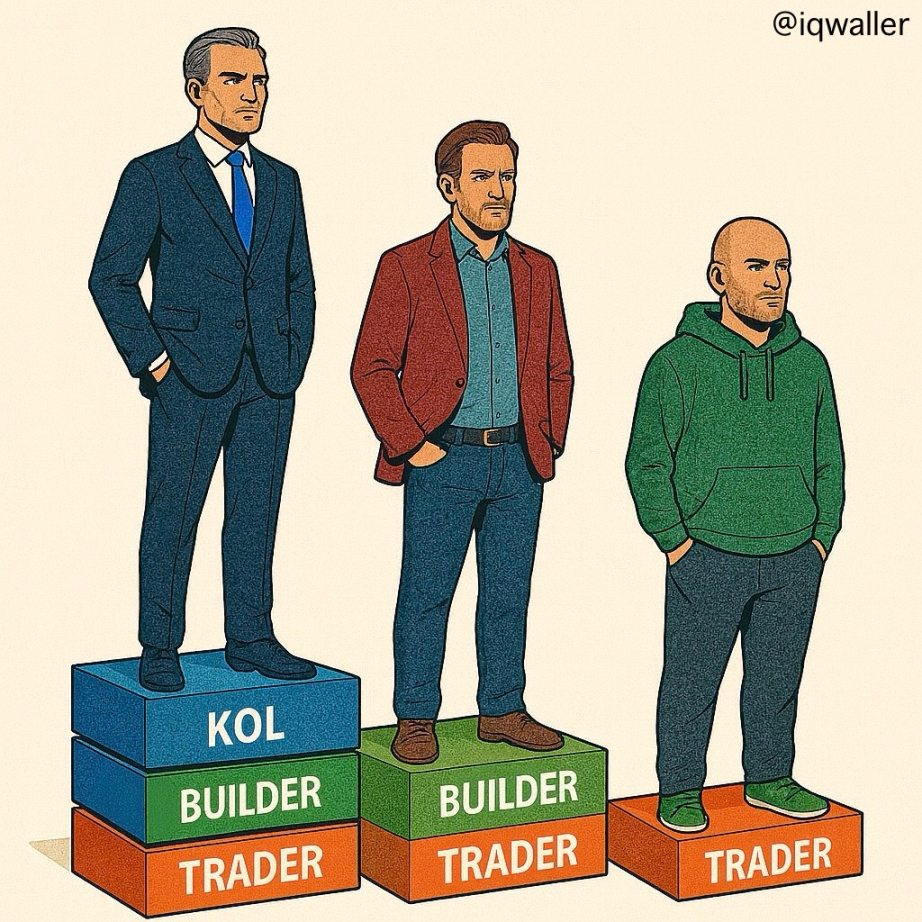
技能叠加

你叠加的层面越多,就越无可替代


叠加技能,而非频繁跳转 ,但也不要停滞不前

虽然很多人在这三个层面都有天生的技能,但最成功的人之所以脱颖而出,是因为他们能学习新技能并将其添加到已有的技能库中。

我不是说你要频繁跳转领域,而是说在舒适区里自满会限制你的全部潜力。

  • 一个擅长沟通的人如果学会交易,就能向更广泛的受众表达观点(交易 + 社交 = 影响力);
  • 一个建设者如果理解社交层面,花时间研究营销艺术,就能有效推广产品并打入市场,曝光度是王道(建设 + 社交 = 被广泛使用的产品 / 代币);
  • 一个交易员如果理解建设的复杂性,就知道市场需要什么,并能恰好打造出这样的东西(交易 + 建设 = 更好的产品)。

最终,精通这三个层面的人会成为加密货币市场中强大且无可替代的参与者(交易 + 建设 + 社交 = 顶级水平)。

那些精通这三个层面的人,通常能达到加密货币职业生涯的顶峰。他们并不罕见,也不难找到;事实上,他们是最受关注的一群人。

他们拥有庞大的追随者,建立了 alpha 群组(指分享内部信息的私密群组),推出了交易产品,活跃在每个领域中。他们仍会给出交易信号,清晰地表达观点,无所不能。

这个过程需要时间和努力,但它带来的机会是无限的。


从哪里开始?

从行动开始。

  • 免费工作。曝光度比完美更重要。加入团队,积极发声。设计横幅、制作视频、搭建简单网站。如果你擅长交易或侦查,分享你的观点和发现,不期待任何回报。有技能且慷慨的人总会被注意到。
  • 多发布内容。不要怕犯错。你的观点和其他人的一样重要。如果害怕公开出丑阻碍了你,记住这句话:总有人需要听到你想说的话。
  • 申请 Web3 相关工作。如果你有专业技能,申请加入团队和协议项目。你会惊讶地发现,一旦进入这个领域,即使是小团队,也会为你打开很多扇门。
  • 在各处提供价值。传递有效信息、分享洞见、传授知识,不求回报地帮助他人。价值终将回归。
  • 不要诈骗或耍手段。这可能一开始看起来有利可图,但会迅速摧毁信任。你不是要一时走红,而是要长久存续。要表现得像一个五年后还会活跃在这个领域的人。


总结

找到你天生擅长的事,精进它,然后在它之上叠加新技能。不是为了炫耀,而是为了扩大你的优势。赢得这场游戏的方式不止一种。你自身就有 「作弊码」,好好利用它。

Related Reads

How to Define "Real U.S. Stocks": Differences Between On-Chain Tokens, Price Contracts, and Direct Broker Connections

**Title:** Defining "Real US Stocks": Differences Among On-Chain Tokens, Price Contracts, and Broker-Direct Access **Summary:** In 2026, using stablecoins to purchase US stocks is mainstream, but products marketed as "buying US stocks with USDT" offer fundamentally different assets. This article analyzes three primary models. **1. Tokenized Stocks:** These are on-chain tokens representing economic exposure to underlying stocks, held by an issuer or custodian. They offer benefits like 24/7 trading and DeFi composability (e.g., use as loan collateral). However, users lack direct legal shareholder status; dividends may not be paid in cash, and voting rights are typically non-binding advisory expressions. Examples include platforms like Ondo Finance. **2. Stock Futures / Equity Perpetuals:** These are derivative contracts tracking a stock's price, allowing leveraged long/short positions 24/7, similar to crypto perpetuals. They offer high efficiency and flexibility but involve funding fees, which can be a significant long-term cost, especially during strong trends. Crucially, they confer no ownership rights (dividends, voting) to the holder. **3. Broker-Direct Model:** This model provides access to real securities via licensed broker-dealers. Stocks/ETFs are bought and held within the US clearing and custodial system (e.g., DTCC), making it the only path to genuine stock ownership. Users receive cash dividends and formal proxy voting rights (where applicable). It supports thousands of stocks and ETFs, far exceeding the coverage of the other two models. Key advantages include no funding fees, a clean cost structure for long-term holds, and the potential to transfer holdings to other brokers. Some platforms facilitate stablecoin (USDT/USDC) deposits, reducing reliance on traditional banking. A critical distinction exists *within* the broker-direct model: the underlying brokerage architecture (e.g., Fully Disclosed IB, Omnibus IB, Self-Clearing) determines how client assets are held, protected, and how safeguards like SIPC insurance are conveyed. Users should verify the specific clearing structure and regulatory compliance of any platform. In conclusion, "buying US stocks with USDT" can mean holding an on-chain economic proxy (Tokenized Stocks), trading a price derivative (Stock Futures), or owning the actual security (Broker-Direct). For users seeking full ownership rights and long-term investment, the broker-direct model is the definitive choice, though its implementation details require careful scrutiny.

marsbit29m ago

How to Define "Real U.S. Stocks": Differences Between On-Chain Tokens, Price Contracts, and Direct Broker Connections

marsbit29m ago

NVIDIA Launches DSX Platform, Expanding into AI Factory Infrastructure

NVIDIA has unveiled the DSX platform at its GTC Taipei event, marking a strategic expansion from GPU sales into comprehensive AI factory infrastructure solutions. The platform addresses challenges like power supply, cooling, and resource orchestration as AI models scale, shifting the industry focus from single-chip performance to overall infrastructure efficiency. DSX integrates NVIDIA's chips, systems, software, and partner technologies to cover the entire AI factory lifecycle—from design and simulation to deployment and operations. It aims to accelerate deployment, improve reliability and operational efficiency, and reduce the cost per generated token in AI inference. The software suite includes DSX MaxLPS, which uses 45°C liquid cooling and rack-level optimization to allow up to 40% more GPUs per megawatt, and DSX OS, an open-source platform for AI factory operations. The platform also encompasses reference designs, digital twin simulation (DSX Sim), dynamic workload adjustment based on grid conditions (DSX Flex), and data exchange between systems. Early adopters include cloud providers like CoreWeave and Lambda. Major hardware partners, including Dell, HPE, Lenovo, and Supermicro, are developing DSX-ready systems. Pilot projects for DSX Flex are underway with energy providers. Strategically, DSX represents NVIDIA's ongoing transition from an AI chip supplier to a full-stack AI infrastructure platform provider, aiming to set industry standards and solidify its market leadership.

marsbit34m ago

NVIDIA Launches DSX Platform, Expanding into AI Factory Infrastructure

marsbit34m ago

After Burning Tens of Billions of Dollars in Tokens, Silicon Valley Giants Start Limiting Employee Token Usage

After burning tens of billions of dollars on AI tokens, major Silicon Valley firms are now restricting employee usage. Companies like Microsoft, Uber, and Salesforce, which heavily promoted AI for "efficiency," are facing a cost crisis. The practice of "tokenmaxxing"—pushing employees to maximize AI tool usage—led to wasteful spending on trivial tasks like checking the weather or writing birthday messages, with studies showing significant hidden costs for bug fixes and code rewrites. The core issue is a misalignment between individual productivity gains and actual business value. While employees use AI to automate tasks they dislike, such as writing reports, this often doesn't translate to increased company revenue or improved core business outcomes. For instance, AI-generated code speeds up development but also sees an 800% increase in "code churn" (code being discarded or rewritten). As a result, only 14% of CFOs report seeing a clear, measurable return on AI investments. Firms are now shifting strategies. Microsoft has revoked most internal licenses for Claude Code, while others are implementing monitoring and cost controls. New tools from companies like Harness and CloudZero aim to track AI spending and tie costs to business results. Some AI vendors, like HubSpot, are moving from token-based pricing to charging based on outcomes, such as "resolved conversations" or "leads generated." This represents a necessary correction in the AI adoption cycle. The challenge now is for companies to move beyond using AI merely to speed up old tasks and instead rethink their workflows and business models fundamentally. The future of enterprise AI depends on proving its value, not just its usage.

marsbit55m ago

After Burning Tens of Billions of Dollars in Tokens, Silicon Valley Giants Start Limiting Employee Token Usage

marsbit55m ago

Trading

Spot
Futures
活动图片