Buy the dip: корпорации вложили в биткоин $72 млн — ETF потеряли $323 млн

cryptonews.ruPublished on 2025-08-26Last updated on 2025-08-26

Биткоин-резервы компаний добавили более 600 монет 4 августа, несмотря на нервозность рынка. Данные фонда цифровых активов Capriole Investments подтверждают, что корпоративные покупатели пользуются падением цены BTC, покупая со скидкой.

Резервы идут против тренда распродажи ETF

Эта цифра является новым максимумом августа и отражает расхождение в настроениях между корпоративными резервами и другими крупными инвесторами. В тот же день американские спотовые биткоин-ETF зафиксировали чистый отток $323,5 млн. Крупнейший ETF, iShares Bitcoin Trust (IBIT) от BlackRock, потерял $292,2 млн в один из самых больших дневных оттоков 2025 года.
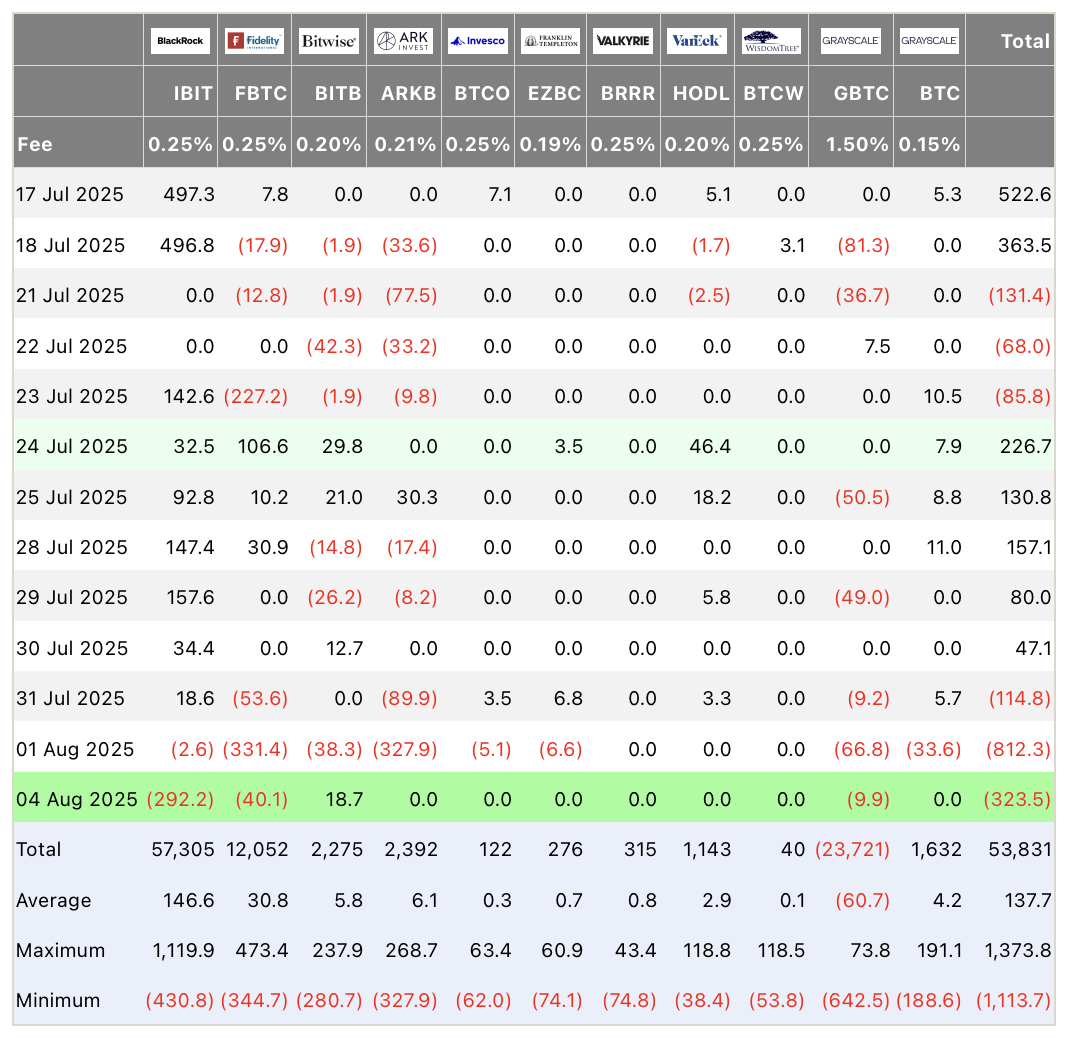
Движение средств в биткоин-ETF США. Источник: Farside Investors

Capriole показывает, что интерес корпораций к биткоину оставался сильным на протяжении всего июля. Самый активный день, 21 июля, показал покупки более 26 700 BTC ($3 млрд).

Исторические сигналы покупки

Комментируя данные, основатель Capriole Чарльз Эдвардс (Charles Edwards) отметил, что в редких случаях, когда корпоративные резервы фиксируют крупный отток копитала, это совпадает с локальными минимумами цены биткоина.

«Каждый раз, когда ежедневные продажи биткоин-компаний превышали 1 500 монет за последний цикл, это происходило на локальных ценовых минимумах, что означала сигнал к покупке», — сообщил он подписчикам в соцсети X.

Последний раз такой отток был зафиксирован 31 марта, когда корпоративные резервы продали более 1 700 BTC ($194 млн). BTC/USD упал до исторического минимума $74 500 примерно через неделю.

Аналитик ETF не обращает внимания на рыночный «апокалипсис»

Ожидания от результатов ETF 4 августа были высокими, торговая фирма QCP Capital заявила, что они будут определять краткосрочные рыночные настроения.

«Если приток капитала возобновится и показатели волатильности начнут сжиматься, это даст более веские доказательства того, что текущие условия соответствуют стратегии покупки на падениях», — заявили они.

Однако с точки зрения аналитика ETF Bloomberg Эрика Балчунаса (Eric Balchunas) сейчас уже есть отличные условия игры на повышение.

«Много апокалиптических настроений, но не удивляйтесь, если трейдеры купят на падении», — написал он в соцсети X, представив с график доходности от покупок на падениях. «Почему? Потому что это работает — и работает буквально ДЕСЯТИЛЕТИЯМИ».
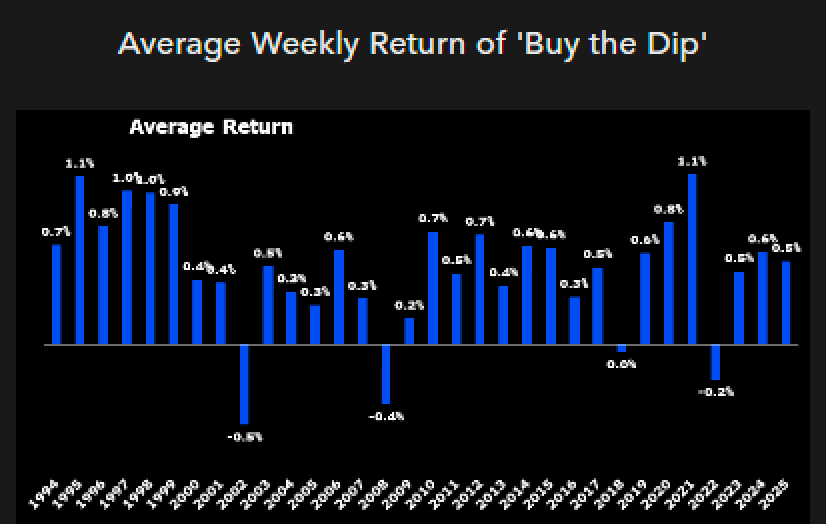
Средняя недельная доходность стратегии «покупай на падениях». Источник: Эрик Балчунас

Текущая ситуация демонстрирует разделение рынка: корпоративные резервы видят в падении возможность для накопления, в то время как ETF-инвесторы предпочитают фиксировать позиции. Исторические данные указывают на то, что активность корпоративных резервов может служить индикатором близости локальных ценовых минимумов.
Related Reads

Upbit is Anxious: A Hasty Counterattack Aimed at Regaining Stablecoin Market Share

Title: Upbit's Rushed Counterattack to Reclaim Stablecoin Market Share Facing a dramatic shift in South Korea's stablecoin market, leading exchange Upbit launched a promotional campaign from July 26 to August 9, waiving the 0.05% trading fee for stablecoins paired with the Korean Won (KRW) and rapidly listing new stablecoins like RLUSD and USDG. This move is a direct response to its plummeting market share in this sector. Historically a duopoly with Bithumb, the market has been reshaped since October 2025 when Coinone permanently removed fees for USDC trading. By June 2026, Coinone led with 34.8% of stablecoin volume, followed by Bithumb (31.1%) and Upbit (30.1%). This contrasts sharply with the overall crypto market, where Upbit commands 60%. The data shows stablecoin demand is highly sensitive to fees, as users primarily buy them to transfer capital overseas for derivatives trading or forex arbitrage. South Korean exchanges have seen a net outflow of stablecoins for 18 consecutive months, totaling approximately 14.9 trillion KRW, underscoring their role as a cross-border capital conduit. Upbit's limited-time promotion initially boosted its daily stablecoin volume by 162%, but the surge was almost entirely in USDT (98.1% of volume). The newly listed stablecoins saw negligible, fleeting interest. Furthermore, the promotional effect quickly waned in the second week, with volume dropping 33% on weekdays. A concurrent weakening of the KRW also contributed to the trading spike, independent of the fee waiver. The analysis suggests that once the promotion ends, Upbit is unlikely to retain its temporary gains unless it matches Coinone's permanent zero-fee policy, forcing a choice between market share and fee revenue. Upbit's strategic push may be less about immediate profit and more about preparing for future regulatory shifts. With South Korea's *Digital Asset Basic Act* on the horizon, which will regulate KRW-backed stablecoins, and following Dunamu's (Upbit's parent) integration into Naver Financial to build a payment ecosystem, securing a dominant position in the dollar stablecoin distribution channel holds long-term strategic value. However, potential regulatory conflicts could prevent Upbit from listing a future Naver-issued KRW stablecoin, making the current fight for dollar stablecoin flow even more critical.

marsbit3h ago

Upbit is Anxious: A Hasty Counterattack Aimed at Regaining Stablecoin Market Share

marsbit3h ago

Michael Saylor Compares Bitcoin and Gold!

Michael Saylor, founder of MicroStrategy, argues that Bitcoin fundamentally changes how wealth is stored and transferred by transforming digital scarcity into economic value. He describes Bitcoin as the first digital monetary network, combining computers, digital networks, and cryptography. It digitizes monetary assets, allowing their supply to be controlled by public protocols rather than institutions, thus converting economic value into information transmissible over global networks. Comparing Bitcoin to gold, Saylor states that while increasing Bitcoin's supply is harder, its integration with software and transfer is easier. He highlights Bitcoin's proof-of-work mechanism, which ties it to the physical world by consuming real energy to secure the ledger, making past transactions immutable. This creates a shared security system involving miners, energy companies, and investors. Saylor suggests "digital monetary energy" is a more accurate term than "digital gold." He emphasizes that the Bitcoin network is an adaptive ecosystem of miners, nodes, developers, and users. Its core design is intentionally simple, focused on maintaining a secure ledger for scarce digital assets, with complex functionalities built in higher-layer applications. This architecture allows Bitcoin to serve as a foundation for transmitting value and fostering innovation in payments and financial services. Saylor notes Bitcoin's deeper impact lies in creating digital sovereignty, where private keys give individuals permissionless control over their economic power, with ownership verified mathematically, not by institutions. He concludes that while gold's physical scarcity makes it money, Bitcoin's digital scarcity does the same, characterizing Bitcoin as the monetary energy of the digital age.

cryptonews.ru4h ago

Michael Saylor Compares Bitcoin and Gold!

cryptonews.ru4h ago

Trading

Spot
活动图片