Ripple Vs SEC: Will the August 15 Deadline Bring Closure?

TheCryptoTimesPublished on 2025-08-04Last updated on 2025-08-04

The months-long court fight between the U.S. Securities and Exchange Commission (SEC) and Ripple Labs is nearing another crucial juncture, with a key development due by mid-August. The SEC has an August 15, 2025 deadline to report back to the appellate court a development that might finally provide an end to an open-ended lawsuit that has left the XRP token in limbo for years.

The December 2020 suit was over whether or not Ripple’s sales of XRP constitute unregistered securities transactions. In a 2023 milestone ruling, U.S. District Judge Analisa Torres held that institutional sales of XRP did constitute securities but programmatic sales on exchanges did not. 

Xrp Sale On Exchanges Is Not Securities
XRP sale on Exchanges is not Securities| Source: Judge Ruling

This limited win for Ripple was considered a milestone moment for crypto regulation, leading to more broad-based institutional interest in XRP.

While Ripple has dropped its appeal in the case, the SEC has not. Legal commentator Bill Morgan recently tweeted that while there’s no hard and fast requirement for the SEC to drop its appeal, it is required to bring the appellate court up to date by August 15. 

Whether this leads to action or merely another plea for delay remains to be seen but crypto watchers are anticipating action in the next few weeks.

Judge Torres recently denied a suggested settlement between the SEC and Ripple, which would see fines cut back and certain injunctions terminated. 

Judge Torres Denied Settlement Between Ripple And Sec
Judge Torres Denied Settlement between Ripple and SEC | Source: Court Document

That decision has added to the uncertainty, though XRP enthusiasts are optimistic in the wake of recent institutional and market developments.

Regardless of all the legal back-and-forth, XRP continues to climb. Its speed and low transaction fees have made it appealing for cross-border transactions and banks.

The growing likelihood of an XRP spot ETF has also contributed to the optimism, with some companies having reportedly started holding XRP as part of their treasury reserves.

While regulatory stress mounts, so does mainstream interest in XRP. The end result of this judicial drama may influence not only the fate of Ripple itself, but the overall landscape of crypto regulation within the U.S.

Also Read: Ripple SEC Case Update: Judge Torres Signs Memo Endorsement, XRP Price to $15?


Related Reads

77 Bloody Codes: When the '$5 Wrench' Shatters the Privacy Myth of France's Crypto Elite

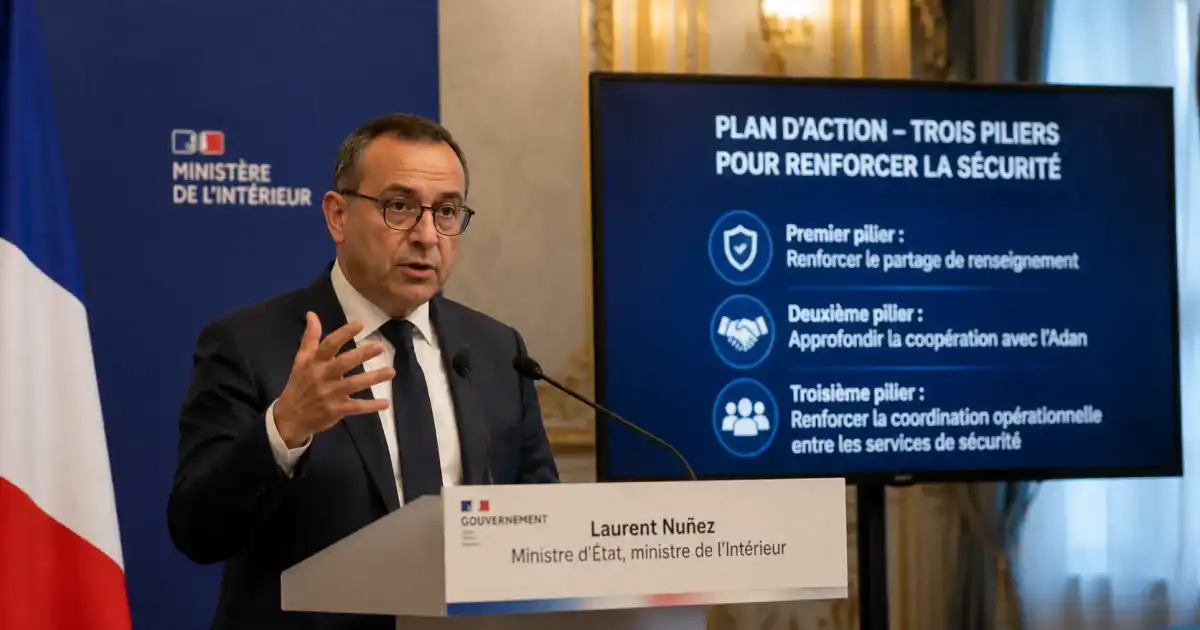
**Summary** In the first half of 2026, France recorded 77 violent crimes—including kidnappings, illegal confinement, and extortion—targeting cryptocurrency holders, a 71% increase over the 45 cases in all of 2025. This equates to an attack every 2.3 days, making France a global hotspot for so-called "wrench attacks," where criminals use physical violence to coerce victims into surrendering crypto assets. High-profile cases include the 2025 kidnapping of Ledger co-founder David Balland, who was shown with a severed finger in a ransom video, and an attempted kidnapping of the family of Paymium's CEO in Paris. Prosecutors note these are not isolated incidents but part of structured criminal networks, sometimes involving minors. Several factors contribute to France's vulnerability: a large holder base (approx. 7.3 million people), the presence of major crypto firms and executives, a culture of public disclosure among enthusiasts, and potential data leaks. The trend is spreading across Europe, which now accounts for over 40% of such global attacks. Research indicates a correlation between Bitcoin price surges and increased wrench attacks. In response, French Interior Minister Laurent Nuñez announced a three-pillar action plan focusing on enhanced intelligence sharing, deeper cooperation with the industry association Adan, and improved operational and cross-border coordination. Authorities have made over 200 arrests in the past year. Security experts warn that digital asset safety now extends to the physical world. They advise holders to use hardware wallets, avoid disclosing holdings on social media, enable multi-factor authentication, and report suspicious activity. The situation underscores the urgent need for the crypto community to shift from a "show-off" culture to one of discretion as physical security becomes paramount.

marsbit52m ago

77 Bloody Codes: When the '$5 Wrench' Shatters the Privacy Myth of France's Crypto Elite

marsbit52m ago

Both OpenAI and Anthropic are 'Developing Their Own Chips' — Beyond Cost, the Control Over Computing Power is Paramount

OpenAI and Anthropic are both advancing plans to develop custom AI chips, driven by the need to control computing power and reduce costs. According to reports, Anthropic is in early-stage development of its own chips and in talks with Samsung for manufacturing, while OpenAI is collaborating with Broadcom and TSMC, aiming to deploy its first inference chip by late 2026. The primary motivation extends beyond just lowering expenses. For these large model companies, chips are core production assets. By designing specialized hardware (ASICs) tailored to their specific model architectures—OpenAI's being more sparse and Anthropic's more dense—they aim to achieve deeper software-hardware co-design. This synergy can significantly improve inference speed, energy efficiency, and overall unit economics, offering advantages that off-the-shelf GPUs cannot. This move does not signify an immediate replacement for suppliers like Nvidia. The process from design to deployment takes 18-24 months, and Nvidia's GPU ecosystem remains deeply entrenched. Instead, custom chips provide a strategic alternative and negotiating leverage, allowing companies to use them for specific, high-volume workloads like inference while still relying on external GPUs and TPUs for other tasks. The trend reflects a broader industry shift where AI competition is evolving from pure algorithmic prowess to integrated control over the entire software-hardware stack. Companies like Google, Amazon, Meta, and Microsoft are already on this path. For foundries like Samsung, securing orders from AI leaders like Anthropic represents a significant opportunity to expand its footprint in the advanced semiconductor market for AI. Ultimately, the race for "computing sovereignty" is now a central battleground for major AI players.

marsbit58m ago

Both OpenAI and Anthropic are 'Developing Their Own Chips' — Beyond Cost, the Control Over Computing Power is Paramount

marsbit58m ago

Trading

Spot
活动图片