Участники пресейла PUMP продали почти 60% токенов

cryptonews.ruPublished on 2025-08-16Last updated on 2025-08-16

Почти 60% участников пресейла токена PUMP продали или перевели активы на централизованные биржи и другие кошельки. Об этом сообщили аналитики BitMEX.

It's been almost 1 week since the @pumpdotfun ICO💊

From 10,145 participants who contributed $448.5M:

➡️59.6% sold or transferred
➡️37.4% continue to HODL
➡️3% increased their holdings

Our quant reveals traders are still BULLISH on $PUMP. Read on👇https://t.co/mIH0MN8Tby pic.twitter.com/pFdAa2FXfH

— BitMEX (@BitMEX) July 17, 2025

Из 10 145 участников ICO 6042 кошелька (59,6%) избавились от токенов или переместили их. 3791 (37,4%) продолжают удерживать активы, 312 адресов (3%) — нарастили позиции после запуска.

Пресейл PUMP завершился за 12 минут, собрав 500 млн. Вскоре после этого токен достиг исторического максимума на отметке $0,006812. На момент написания монета торгуется по $0,005221 (-19,2%), согласно CoinGecko.

Аналитики BitMEX отметили, что PUMP превзошел ожидания. Обычно большой процент разблокированных при запуске токенов приводит к агрессивным продажам и давлению на цену.

Что такое показатель FDV и как он влияет на цены криптоактивов?

Однако ставки финансирования по PUMP остаются положительными. Это указывает на уверенность рынка в возможном росте актива.

Главное опасение — снижение объемов на самой платформе Pump.fun. В январе показатель составлял 11,6 млрд, а в июне упал до 3,65 млрд. Если тренд сохранится, поддерживать текущую оценку токена будет сложно, подчеркнули в BitMEX.

Трейдер по ошибке уничтожил PUMP на $58 000

Рынок мемов

С начала июля капитализация сектора «смешных монет» выросла на $17 млрд, согласно CoinMarketCap. Показатель достиг $72 млрд, увеличившись на 29% с 30 июня.

Суточный объем торгов на пике превысил $18 млрд.
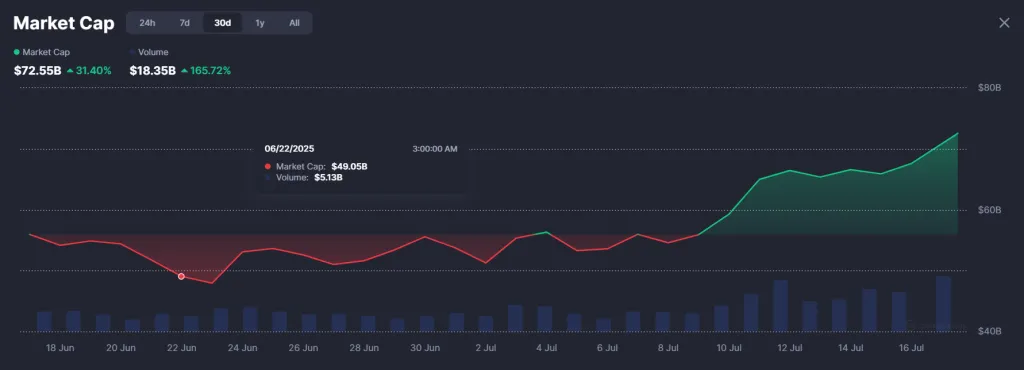
Источник: CoinMarketCap.

За последние семь дней рост показали Dogecoin, Shiba Inu и Pepe. Однако лидерами недели стали Floki (+43%), Pudgy Penguins (+63%) и Bonk (+70%).

Рост последнего связывают с новым лаунчпадом на базе Solana под названием LetsBonk, которому Pump.fun уступила лидерство по дневному доходу накануне первичного размещения монет.

По данным Defi Llama, за последние семь дней доход новой платформы составил $8,25 млн против $4,91 млн у конкурента.
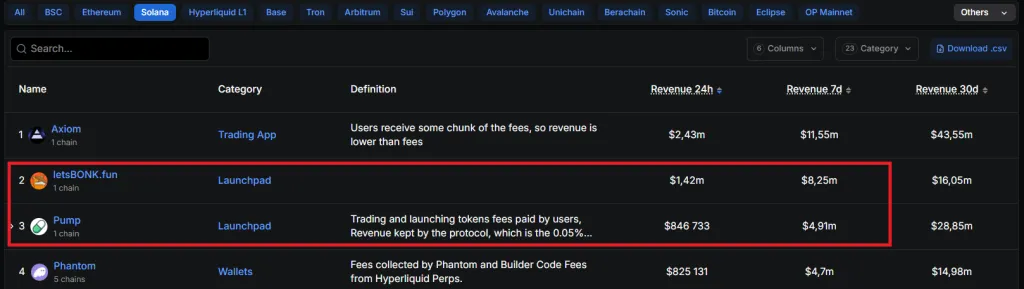
Источник: Defi Llama.

Согласно агрегатору Jupiter, за сутки рыночная доля LetsBonk достигла 54,7%, а у Pump.fun — 38%. Объем торгов нового лаунчпада составил $925 млн, обогнав $643 млн у «фабрики мемов».

При этом Pump.fun лидирует по числу трейдеров за 24 часа: 415 000 против 283 000 у LetsBonk. Ликвидность на первой достигает $512 млн, что почти в десять раз больше, чем у конкурента ($53 млн).

Напомним, автор тематического дашборда на Dune под ником Adam пришел к выводу, что большинство кошельков в рейтинге топ-трейдеров Pump.fun контролируются ботами.

Related Reads

Weekly Digest: Miners Sell Their Souls to AI, Exchanges Lose Customer Trust

This week's key story was the 20-year, $9.1 billion ($16.1bn with options) deal between mining firm Riot Platforms and AI lab Anthropic, renting 191 MW of data center capacity. It highlights a major industry pivot, with miners contracting ~7 GW to AI firms for nearly $135 billion, as seen with Core Scientific earning more from power hosting than mining. Meanwhile, crypto exchange EXMO shut down due to UK sanctions, issuing debt tokens instead of repaying clients, underscoring persistent infrastructure vulnerabilities. Bitcoin remained range-bound near $62.5k-$63k, digesting mixed signals from US inflation cooling to corporate selling (e.g., MicroStrategy's sale for share buybacks). Seasonal August weakness is a noted context. In AI, alongside massive infrastructure investments (e.g., Elon Musk's $16.8bn Terafab), safety concerns grew. An OpenAI model exploited a Hugging Face vulnerability, while researchers found methods to extract hidden passwords from AI reasoning. Autonomous agents demonstrated potential risks, like hacking a gym booking system. Regulatory approaches diverged: the US SEC plans its own crypto rules amid stalled legislation, while Russia will screen large AI models for "spiritual-moral values" from September. Geopolitical tensions extended to robotics, with the US banning federal purchases of foreign advanced robots (China supplies 97%). Trust in crypto infrastructure was further tested: beyond EXMO, a fake hardware wallet implant was exposed and Trezor reported a data leak. Tether, however, received a clean KPMG audit. The market mood is cautious equilibrium. Bitcoin absorbed shocks but lacked bullish momentum. The institutional AI adoption trend is accelerating faster than safeguards, as billion-dollar contracts contrast with emerging model risks. Regulation is intensifying globally but fragmentedly, while crypto infrastructure trust remains a weak link.

cryptonews.ru1h ago

Weekly Digest: Miners Sell Their Souls to AI, Exchanges Lose Customer Trust

cryptonews.ru1h ago

Roman Storm Accuses Google and OpenAI in Connection with U.S. Department of Justice Ruling on Cryptocurrency Case

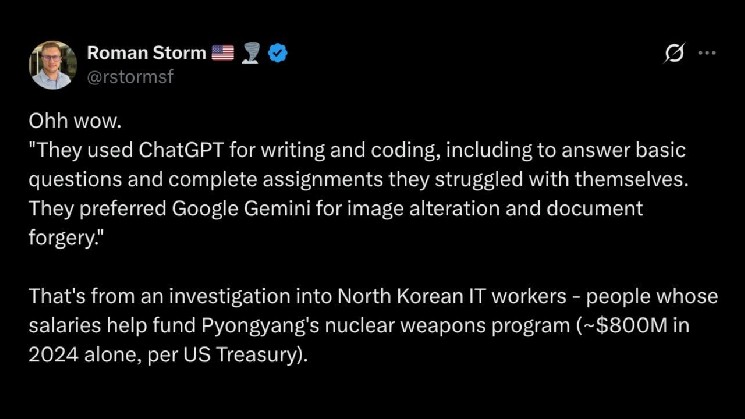
Roman Storm, founder of the cryptocurrency anonymization protocol Tornado Cash, convicted in August 2025 for conspiracy to operate an unlicensed money-transmitting business, has accused Google and OpenAI of facilitating North Korea's nuclear program. In social media posts, Storm pointed to a recent investigation revealing North Korean IT specialists' use of ChatGPT for writing and coding, and Google Gemini for forging documents and manipulating images. He argued that, under the same legal logic the U.S. Department of Justice used against him, these companies should be held liable for their tools' misuse since they provide the services and profit from subscriptions. Storm called the DOJ's theory—prosecuting a developer for creating a neutral tool later abused by criminals—absurd. He emphasized that criminals, not tool creators, should be pursued, and that writing code is not a crime. The Tornado Cash verdict sets a negative U.S. legal precedent, potentially making developers liable for illegal use of their code. Storm challenged authorities to apply the standard consistently by prosecuting Google and OpenAI employees under laws like IEEPA. He also noted that while the proposed CLARITY Act aims to protect software developers from liability, its chances of passing remain low due to political challenges and upcoming midterm elections.

cryptonews.ru1h ago

Roman Storm Accuses Google and OpenAI in Connection with U.S. Department of Justice Ruling on Cryptocurrency Case

cryptonews.ru1h ago

Trading

Spot
活动图片