泽连斯基穿什么背后:预测市场,正在变成操纵市场

链捕手Published on 2025-07-09Last updated on 2025-07-09

作者:Omer Goldberg,Founder of Chaos Labs

编译:深潮 TechFlow
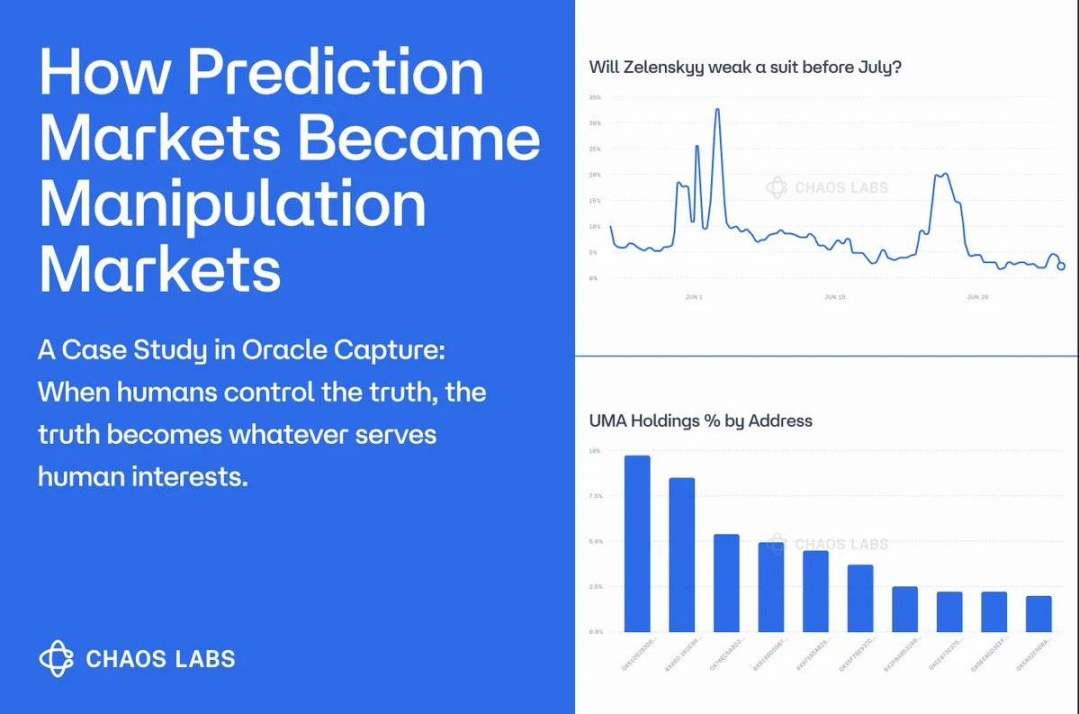
关于 Polymarket 的 Zelensky 诉讼的争议并不是一个小故障。而是价值 2 亿美元的人类控制的预言机中的致命缺陷:当腐败的成本低于回报时,真相就会成为一种商品,卖给出价最高的人。

泽连斯基的 2 亿美元时装秀
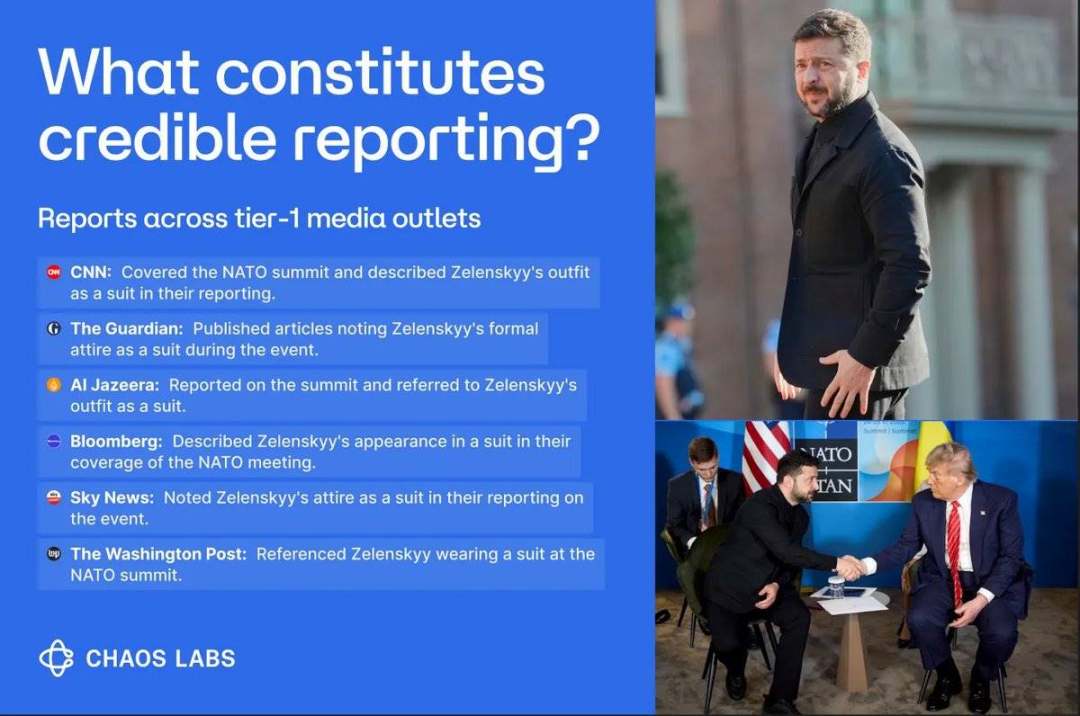
想象一下:泽连斯基穿着每个主要新闻媒体都称之为西装的西装走进北约峰会。该市场的交易量为 2 亿美元。结果似乎很明显。然后,UMA 的预言机投了「反对票」。

这并不是因为泽连斯基没穿西装,也不是因为证据不明确,而是因为控制预言机的人押注数千万美元投「反对票」,他们只需要利用自己的投票权来改写现实,而无需承担任何实际风险。

(深潮注:UMA 是一个开源协议,全称是 Universal Market Access。其依赖于经济激励和争议解决来确保价格数据的准确性。)

预言机操纵入门

关于人类控制的预言机令人不安的事实是:人类存在偏见。

  • 一些最大的 UMA 持有者对「否」持重要看好。
  • 当 「赞成票」 看起来是正确的结果时,他们不接受失败;他们翻转了投票结果。
  • 投出超过 2300 万的 UMA,价值约 2500 万美元,以质疑结果。

这不是去中心化。而是鲸鱼在保护自己的利益。有了足够的 UMA 和协调,真相并不重要,结果才重要。

更广泛的预言机危机

这个问题远远超出了 Polymarket 和 UMA 的范围。人为控制的预言机容易受到各种操纵和激励设计陷阱的影响。
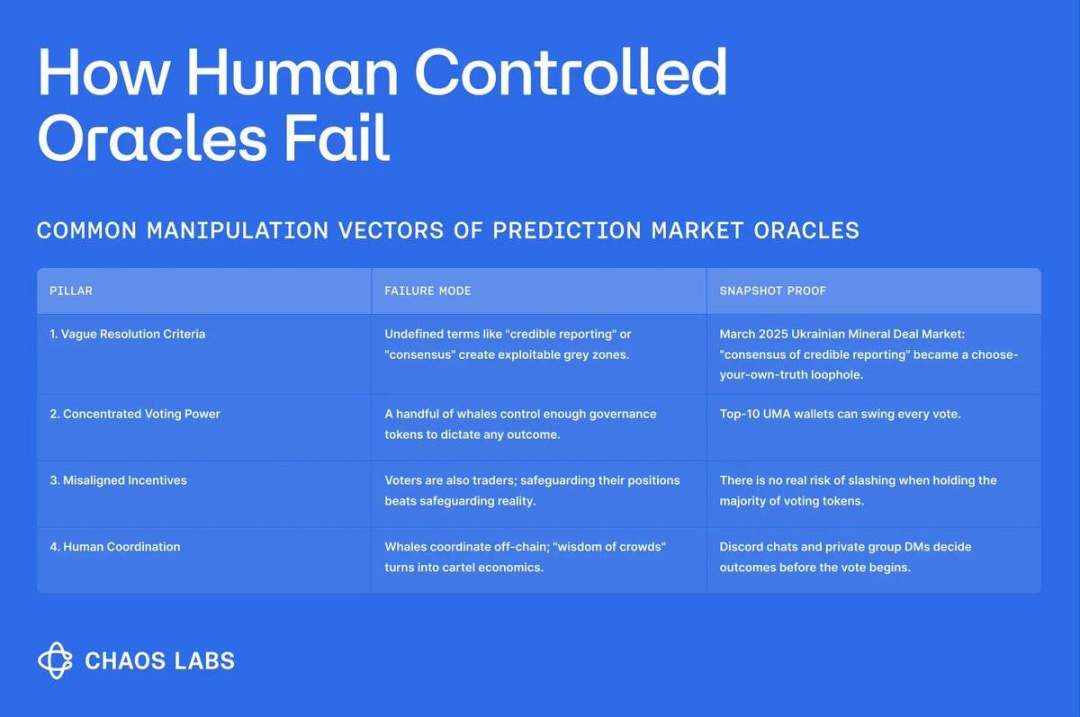
虽然我们以 Zelensky Suit Market 作为案例研究,但我们会注意到,我们之前已经观察到这个问题,即 2025 年 3 月的乌克兰矿产交易市场。
每个主要的预测市场都面临着相同的基本挑战。

当人类控制真理时,真理就会屈服于人类的利益:摆脱人为控制的预言机:用智能取代意图。

对付人类预言机的唯一真正解决办法是移除人类。

AI 驱动的预言机改变了这一点:

  • 没有经济激励:模型不持有立场或关心谁赢。
  • 抗偏差决策规则:相同的训练权重、相同的提示、相同的温度 = 模型以相同的基本标准对证据进行评分。AI 没有情绪,没有附带赌注,没有幕后协调。
  • 推理管道:每个中间步骤都可以记录、检查和重放。
  • 机器规模的吞吐量:并行摄取数千个信息来源,没有倦怠或附带交易。

残差仍然存在,但它是随机统计噪声。这对交易者来说要难得多。凭借清晰的分辨率标准和经过身份验证的数据馈送,最先进的模型已经提供了生产级的准确性,并且曲线还在急剧改善。

残余噪声胜过计算的谎言

预测市场的未来需要将人类完全从真相认定中剔除。

此体系结构如下所示:

  • 预定义的来源层次结构: 路透社 > BBC > 本地新闻 > 博客
  • 数据来源的加密证明:验证信息未被篡改
  • 多智能体共识:多个 AI 系统得出独立结论
  • 透明推理:每个决策的完整审计跟踪
  • 不可变证据:区块链存储的无法修改或删除的证明

后真相世界中的真相发现

预测市场是一个更大挑战的缩影。当维基百科可以编辑,新闻可以修改,「事实」可以协商时,我们需要能够建立基本事实真相的系统。

这涵盖了以下领域:

  • 选举完整性和验证
  • 科学共识和研究验证
  • 深度伪造时代的新闻真实性
  • 历史记录保存和防篡改
  • 企业透明度和问责制

最后的思考

预测市场面临的选择是严峻的:继续假装激励驱动的人类可以成为真理的中立仲裁者,或者建立完全消除人类偏见的真理确定系统。

市场本身已经回答了这个问题。当 2 亿美元流入市场,一个显而易见的结果,而这个显而易见的结果却又失败时,这个系统就暴露了它的本质。

真相发现太重要了,不能拍卖给出价最高的人。

Related Reads

The Full Story Behind Encryption Unicorn Blockstream's Deep Entanglement in Serious Fraud Allegations

This article details allegations of serious fraud surrounding the crypto company Blockstream, founded by Bitcoin pioneer Adam Back. Investigation account NatInfoSec accuses Blockstream of raising billions through its Blockstream Mining Note (BMN) products, which offer high fixed yields of up to 20% from purported mining revenue. The core allegations are: 1) Blockstream's public mining hash rate (15 EH/s) appears insufficient to cover the massive payout obligations from sold BMN notes, raising questions about the true source of investor payouts. 2) Key executive Christopher William Cook, central to the mining operations, has a prior federal conviction for mail fraud, a fact not disclosed to investors. Cook's background and lavish lifestyle are highlighted as red flags. 3) The structure allows payouts from any source of BTC, not necessarily mining revenue, which critics argue gives it Ponzi-like characteristics. The controversy also touches on Bitcoin Standard Treasury Company (BSTR), a related entity planning a SPAC上市. Critics question whether BMN's liabilities and Cook's record should be disclosed in BSTR's filings. BitMEX Research offered a tempered analysis, confirming Cook's criminal record is likely true and the high yields concerning, but found other claims like insufficient抵押证据 less substantiated. Community debate centers on the need for verifiable proof of Blockstream's mining output and revenue. The article concludes that while fraud is not proven, BMN presents significant, unresolved questions regarding its actual scale, the source of its high fixed returns, the verifiability of its mining operations and payouts, and the full disclosure of associated risks and personnel backgrounds. Blockstream has not yet issued a formal response.

链捕手45m ago

The Full Story Behind Encryption Unicorn Blockstream's Deep Entanglement in Serious Fraud Allegations

链捕手45m ago

a16z: In the AI Era, Company Competition for Talent Starts with Job Title Naming

The article discusses how companies in the AI era are competing for talent through strategic "title arbitrage," or the renaming of key roles to reflect and attract new, high-value capabilities. It uses Palantir's creation of the "Forward-Deployed Engineer" (FDE) as a prime example. This title reframed client-facing technical work from a peripheral "implementation" role into a core, high-status engineering function. The move was strategic, allowing Palantir to attract talent that blended technical skill with business acumen and to dominate the market's perception of this capability. The piece argues that job titles are an organizational language that signals the value and authority of certain work. Effective new titles, like "Data Scientist" or "Site Reliability Engineer," emerge when a role's strategic importance genuinely outgrows its old name. Conversely, mere title inflation without substantive change is ineffective. For AI companies, particularly in B2B, this is a crucial strategy. AI transformation creates new high-leverage roles (e.g., "Legal Engineer," "GTM Engineer") that combine domain expertise with technical automation. By naming these roles, a company can help clients internally legitimize these change-makers. This, in turn, builds market mindshare, associating the company with the new capability. In conclusion, as AI blurs the lines between product and service, the ability to accurately name and organize the critical, client-adjacent work that defines product learning will be a key competitive advantage. The first to define this new organizational language plants a flag in the market's mind.

marsbit2h ago

a16z: In the AI Era, Company Competition for Talent Starts with Job Title Naming

marsbit2h ago

Trading

Spot
Futures
活动图片