STARTUP 半小时涨 40 倍,him 如何成为 Believe 的情绪之王?

深潮Published on 2025-05-15Last updated on 2025-05-15

既是KOL,又懂市场剧本,him在玩一场注意力就是货币的博弈。

作者:Zhouzhou

5 月 15 日链上信息显示,一名加密 KOL him(@himgajria)通过喊单让一个 meme 币一小时翻 40 倍,莫非比特币重回 10 万美元后,Solana 链上的春天又回来了?

一大早,him 在 meme 币 STARTUP 的最低点,砸下 1 万刀,捡了近 2500 万枚代币。随后一边买一边在 X 上连环喊单,不出半小时,STARTUP 直接起飞,价格从 0.0004 一路飙到 0.016,短线拉升超 40 倍,市值从 45 万美元一口气冲上 2000 万,him 的仓位也直接膨胀成 43 万刀。
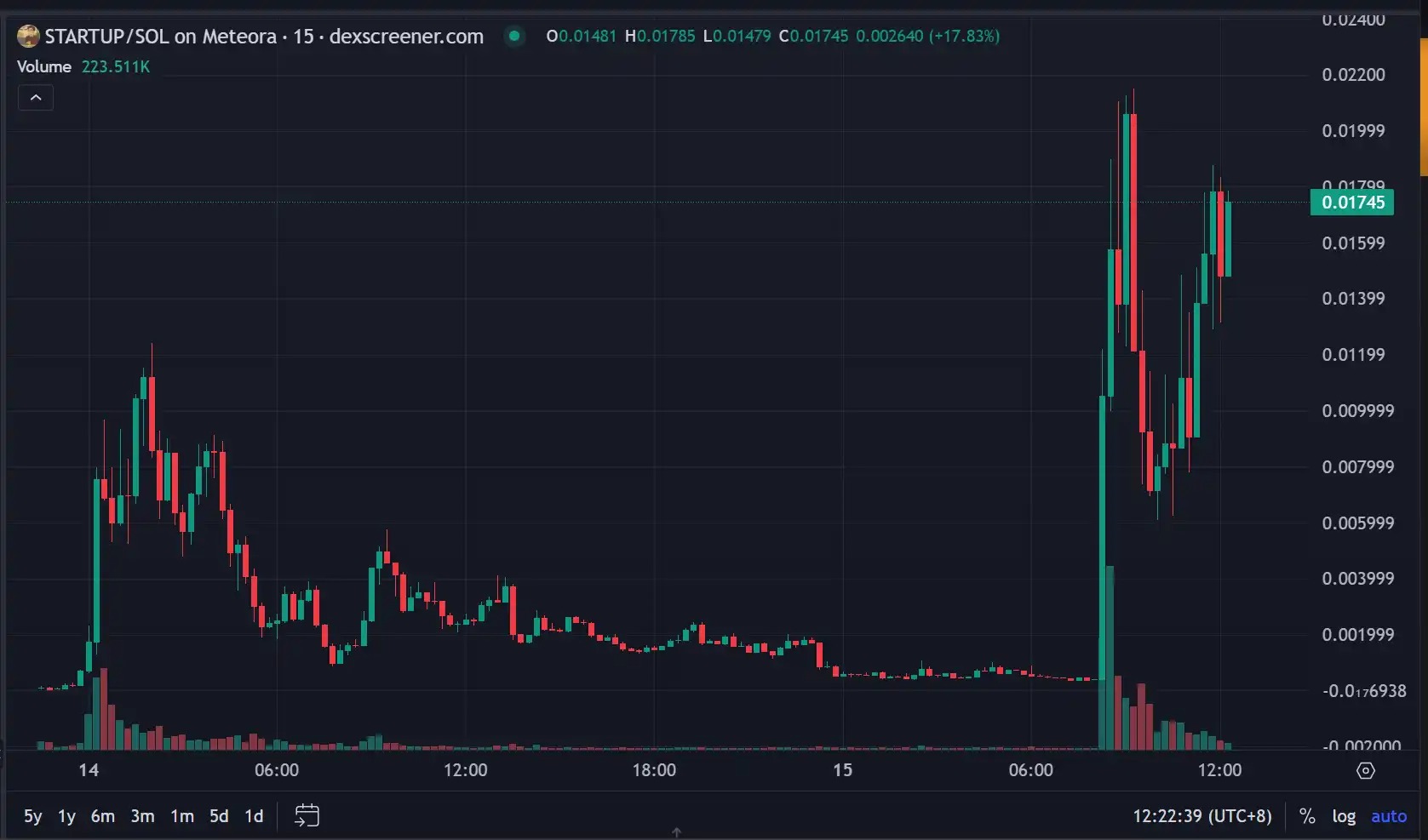
果然,早起的不只是鸟,还有靠喊单捡钱的狠人。

披着创业外衣的情绪加速器

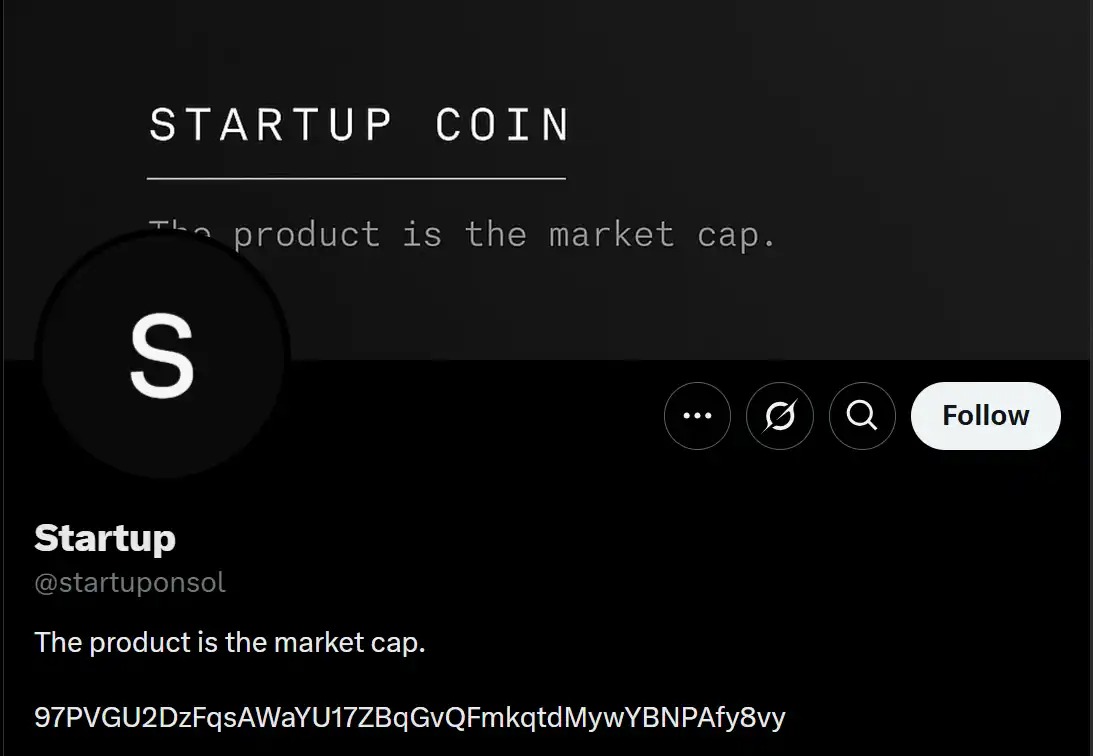
STARTUP 的概念是主打「初创公司」,不搞产品、不谈交付,直接把市值当商业模式,口号就一句话:「The product is the market cap.」嘲讽意味拉满,精准狙击传统 VC 高估值空转的叙事。

项目是从 Launchcoin 起盘的,天然带点内圈基因。官方一上来就放话:没有执行风险、没有 roadmap,涨跌全靠社区和情绪。
STARTUP 在 X 上频繁喊着「实时回购+销毁」,不管你信不信,反正市场信了。叙事号称「区块链上的 Y Combinator」,每个买家都是天使投资人,TAM 无限——听起来像是 Web2 创投的 PPT。

玩得明明白白也炒得干脆利落,一场披着创业外衣的情绪加速器,和昨天涨的猛烈的 goonc 有异曲同工之处。

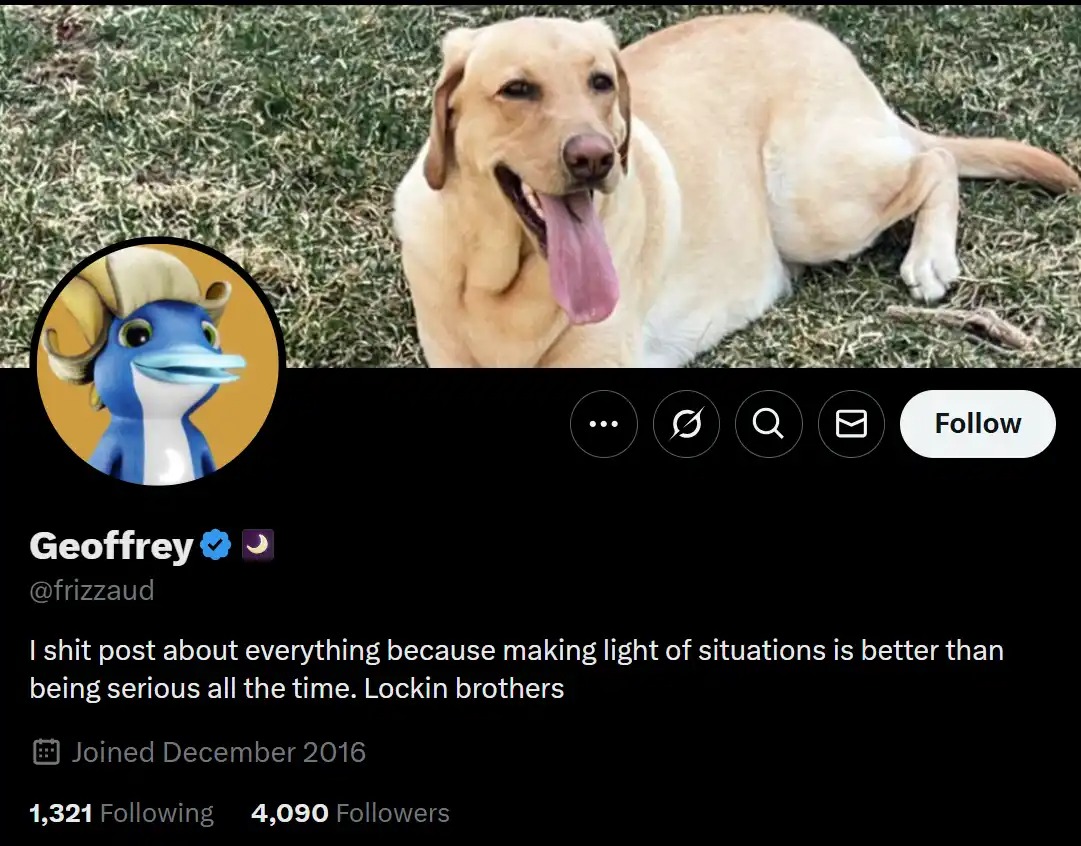
在 STARTUP 的官方叙事中,团队标注直接是「NA」(不存在),初期流通量和总供应量也未公开,就连创始人的推特都没有官方认证,是网友们一点点扒出来的,整个项目充满了野生气息和草根传奇感。
我不是在讲故事,是在制造叙事

从 45 万美元市值暴涨至最高超过 2000 万美元,涨幅逾 40 倍,背后推手喊单王 kol,him 在其社交平台回应带货喊单质疑:正在考虑为这个 meme 元添加 4 个模因,因为很明显这就是注意力集中的地方——「没有执行风险」。
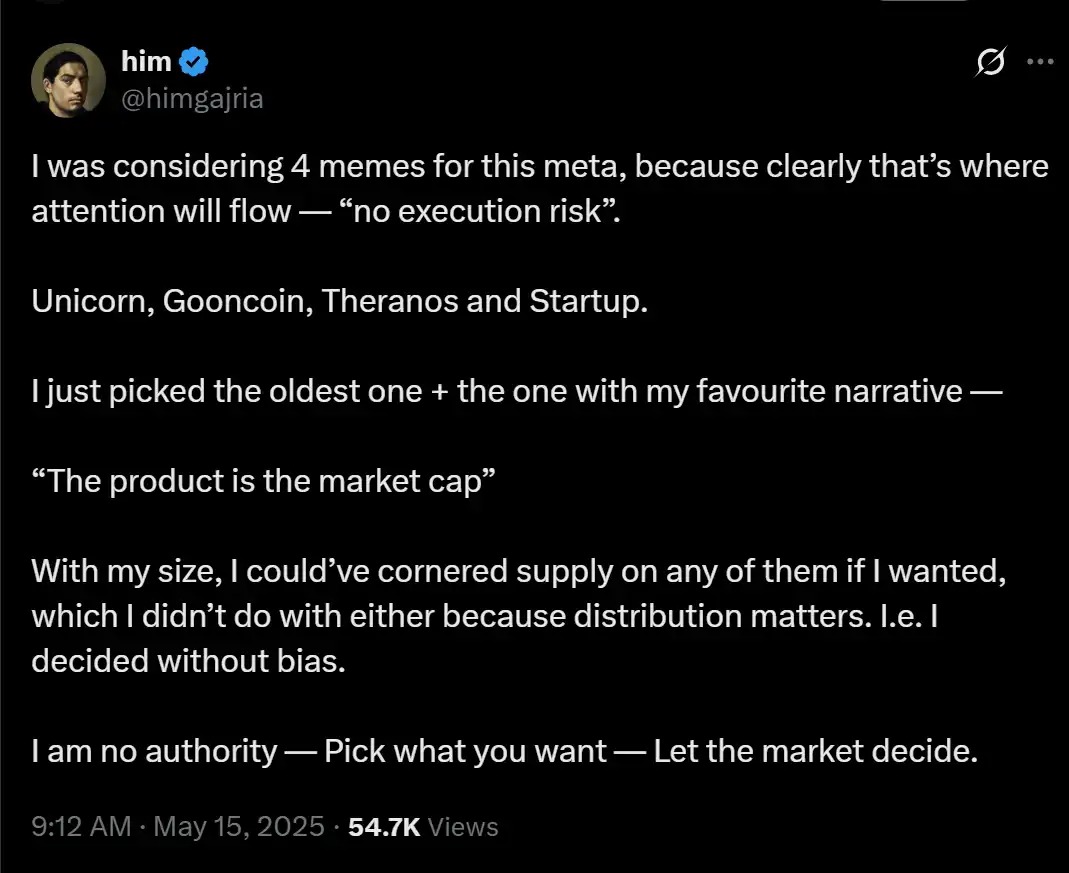
Unicorn、Gooncoin、Theranos 和 Startup,我只是选了最古老的一个+我最喜欢的一个故事——「产品就是市值」(这句话是 meme 币 Startup 官方 X 账号 bio)。

以我的规模,如果我想的话,我可以垄断任何一家的供应,但我没有这么做,因为分销很重要。也就是说,我的决定没有偏见。我不是权威——选择你想要的——让市场决定。

him 这波操作可以总结为:精准卡点 + 舆论引爆 + 响应争议。

他不仅踩准低点买入,还用社交平台持续放大注意力,面对「带货喊单」质疑,他巧妙回应,强调自己关注的是「注意力聚焦处」,并引用 Startup 的口号「产品就是市值」来反向印证价值逻辑。同时,他也撇清操控嫌疑,表示自己有能力垄断供应却选择分销,试图树立一个「去中心化价值发现者」的形象。
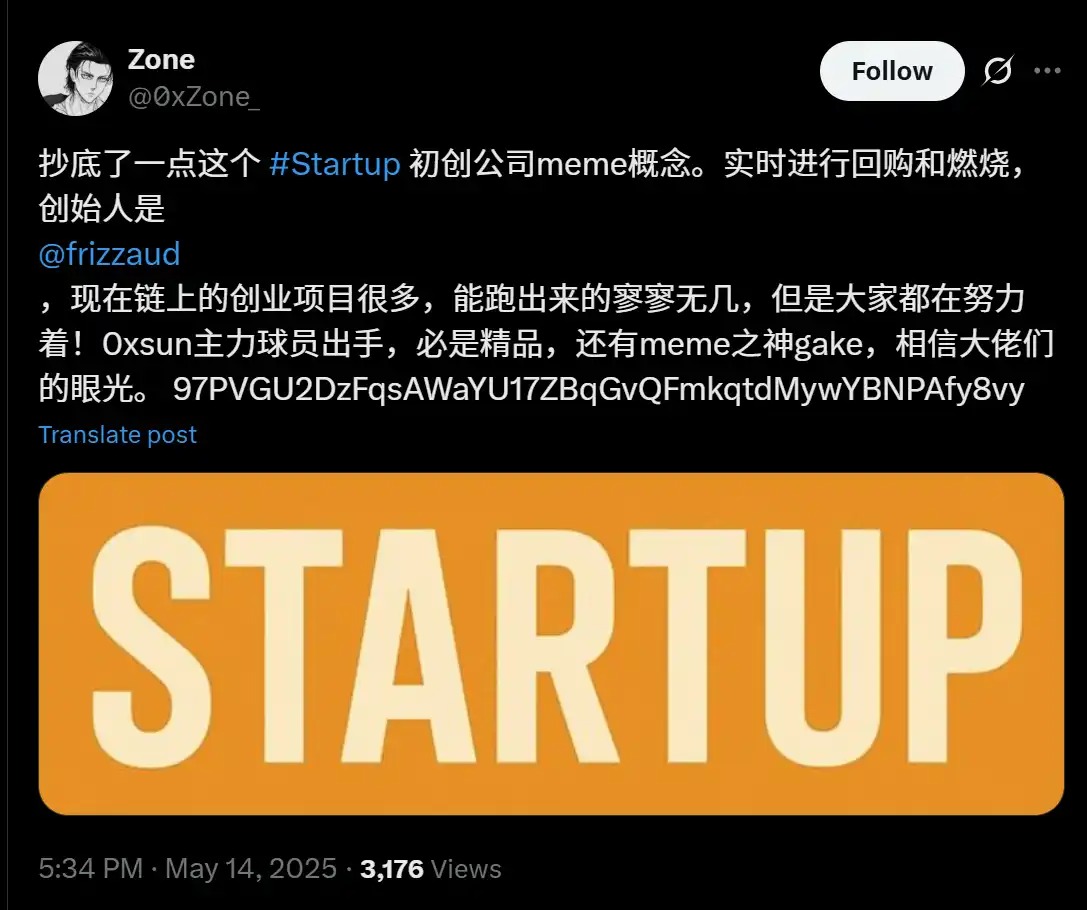
与此同时,其他账号如 @0xZone_、0xsun、meme 之神 gake 也同步跟进,社区热度迅速堆高,叙事氛围拉满。

再叠加 STARTUP 本身低市值、流动性小的特性,him 这类 KOL 的资金几乎具备控盘能力。加之现在 Solana 生态 meme 币交易回温,整个市场正处于高度投机氛围中,STARTUP 顺势而起,成为当日最强情绪票。

暴涨后的回调如期而至,但 STARTUP 已锁定 meme 热榜,成为 Solana 情绪周期里的重要注脚。

Related Reads

Faked Trades, Clone Websites, 1105 Videos: Polymarket Under CFTC Scrutiny

The U.S. Commodity Futures Trading Commission (CFTC) has launched a wide-ranging investigation into prediction market platform Polymarket. The probe, triggered by a Wall Street Journal report, focuses on allegations of systematic marketing fraud. The report revealed Polymarket allegedly hired dozens of student content creators to post over 1,100 videos showing fake, profitable trades on cloned websites, without disclosing the paid relationships. These videos, with over 140 million views, were pivotal to user growth. Simultaneously, the National Association of Consumer Advocates (NACA) filed a lawsuit in Washington D.C., accusing Polymarket and its executives of deceptive advertising targeting college students. The suit details off-campus promotions and payments made through the CMO's personal PayPal account to influencers who failed to disclose sponsorships. The investigation places CFTC Chairman Michael Selig in a difficult position, as he has been a vocal advocate for prediction markets and is currently suing multiple states to assert federal jurisdiction over them. This case tests the CFTC's dual role as both promoter and enforcer. This marks Polymarket's second major clash with the CFTC. After a 2022 settlement and U.S. ban, it regained approval to operate in September 2025, secured a $20 billion investment, and saw its valuation soar. The current crisis, compounded by a recent $3.1 million front-end supply chain attack, represents the platform's most severe multi-front challenge since its founding.

Foresight NewsJust now

Faked Trades, Clone Websites, 1105 Videos: Polymarket Under CFTC Scrutiny

Foresight NewsJust now

Real-Life 'Black Mirror' Pumpfun Go: 40 Yuan to Lick a Toilet, $14,000 to Tattoo a Logo on Your Forehead

Pumpfun Go, a bounty task platform launched by the meme coin platform Pump.fun, is facing intense controversy. The platform's slogan "Pay anyone to do anything" has manifested in real-world tasks where participants perform increasingly extreme or demeaning acts for cryptocurrency rewards. These tasks range from licking a gas station toilet floor for roughly $5.63 to getting a permanent "bounty.fun" logo tattooed on one's forehead for $14,000. Other completed challenges include eating live insects and quitting a job on camera. The highest-value active bounty offers approximately $560,000 for climbing Mount Everest and placing a bet on a specified platform. While some tasks involve promoting meme coins or community events, the platform has drawn widespread criticism for incentivizing the exploitation of economic desperation. Participants, often citing "we need money" as their motivation, complete these tasks for sums that can far exceed their regular income. Critics, including New York Governor Kathy Hochul, have condemned Pumpfun Go as a dystopian system that commodifies human dignity and preys on the vulnerable. Supporters argue it provides a novel income opportunity for those in need. The debate highlights deeper societal issues around power, inequality, and the historical human fascination with spectacles of humiliation. The platform's existence raises questions about the ethical limits of anonymous online markets and the persistent reality where financial need forces individuals to trade their dignity for survival.

Odaily星球日报7m ago

Real-Life 'Black Mirror' Pumpfun Go: 40 Yuan to Lick a Toilet, $14,000 to Tattoo a Logo on Your Forehead

Odaily星球日报7m ago

The Strategy That Would Never Sell Bitcoin Opened a Permanent Sales Channel

MicroStrategy, a company long known for its "never sell Bitcoin" mantra, announced a "Digital Credit Capital Framework" allowing it to sell up to $1.25 billion worth of Bitcoin. Surprisingly, its stock (MSTR) rose nearly 7% pre-market. This shift, coming just a month after a small, "ad-hoc" sale of 32 BTC for dividends, transitions from a temporary action to a formal, institutional tool. The framework outlines four clear purposes for potential sales: bolstering USD reserves, paying preferred stock dividends/interest, and repurchasing its own preferred and common stock. The key driver for this change is the immense financial pressure from MicroStrategy's complex capital structure, specifically its massive $8.5 billion perpetual preferred stock (STRC). STRC features a variable interest rate that has been reset upward eight times in a year to 12% in an attempt to stabilize its price. However, the stock has fallen over 25% below its face value. Combined with other preferred stocks and convertible notes, MicroStrategy's total annual fixed obligations now stand at $1.76 billion, equating to a daily burn of roughly $4.8 million. While its $2.55 billion in USD reserves and the new $1.25 billion BTC sales framework provide a two-year+ runway, a dangerous feedback loop exists. Falling Bitcoin prices would force the sale of more BTC to meet fixed obligations, potentially creating further sell-side pressure and lowering MSTR's asset valuation multiple. This, in turn, limits its ability to raise cash through stock issuance. The market's positive reaction likely stems from relief; the framework replaces fears of a forced, disorderly sell-off with a structured plan. However, it does not resolve the underlying high-cost capital structure, leaving the company's long-term health heavily dependent on Bitcoin's price performance.

marsbit40m ago

The Strategy That Would Never Sell Bitcoin Opened a Permanent Sales Channel

marsbit40m ago

Trading

Spot
活动图片