Cardano Founder: Ethereum Won’t Survive The Next 10 To 15 Years

bitcoinistPublished on 2025-04-24Last updated on 2025-04-24

Abstract

In his latest ask-me-anything session streamed on April 23, Cardano founder Charles Hoskinson delivered a sweeping critique of Ethereum’s long-term...

Trusted Editorial content, reviewed by leading industry experts and seasoned editors. Ad Disclosure

In his latest ask-me-anything session streamed on April 23, Cardano founder Charles Hoskinson delivered a sweeping critique of Ethereum’s long-term prospects, arguing that the world’s second-largest smart-contract platform is encumbered by what he called three “self-inflicted wounds” and lacks the on-chain governance needed to heal them.

Ethereum Faces 15-Year Deadline: Cardano Founder

Responding to an audience question—“If you were running the Ethereum Foundation, what would you do differently?”—Hoskinson said the project chose “the wrong accounting model, the wrong virtual machine, and the wrong consensus model,” a triad of design decisions he believes now threaten Ethereum’s survival. “People told them not to do it, they did it, and they got where they needed to go,” he said, before warning that the fixes adopted so far “put in all these weird slashing economics and layer twos and other things,” whose unintended consequences are starting to bite.

Hoskinson, who co-founded Ethereum in 2014 before leaving to launch Cardano two years later, insisted that a viable turnaround would require parallel workstreams. “First off, you have to solve your technological problems,” he said, pointing to Ethereum’s proof-of-stake implementation as something the network “needs to wean itself off of.”

He suggested a shift to what he called a “telescoping protocol design” such as Ouroboros-Leios—Cardano’s forthcoming upgrade path—and urged Ethereum developers to look at the “object model of SWE,” along with Narwhal-and-Tusk-style consensus, and a move to the RISC-V instruction set. “Something like RISC-V with intent, with an object model like SWE, probably would fit their ecosystem quite well,” he argued.

Yet the bigger obstacle, in Hoskinson’s view, is Ethereum’s lack of formalized self-governance. “They really don’t have a good on-chain governance system,” he said. Building one, he estimates, would take “five to seven years” given the network’s size and entrenched stakeholders. Without it, he warned, protocol upgrades and community coordination will remain fragile.

Hoskinson’s most pointed forecast came midway through the session: “I don’t think Ethereum will survive more than 10 years to 15 years.” He predicted that layer-2 networks will continue to “suckle out all of the alpha,” eroding the base chain’s utility while sparking internal conflict that will grow “harder and harder for Vitalik to be able to hold […] together through sheer force of will.”

He also contended that a revitalized Bitcoin ecosystem by Cardano’s efforts and faster monolithic chains could outcompete Ethereum on both liquidity and user experience. “Once [Bitcoin DeFi] turns on, the TVL will be larger than Ethereum […] and the other thing is they’re being eaten alive by Solana and SUI and these other things,” he said, likening Ethereum’s predicament to companies such as MySpace and BlackBerry that struggled to pivot when “fundamentally different paradigms […] creep up on you.”

Hoskinson also contrasted Ethereum’s roadmap with Cardano’s own. He highlighted Cardano’s RISC-V-based virtual machine, its extended UTXO accounting, and its “non-parasitic” approach to layer-2 scaling—namely Hydra and the Midnight sidechain—as evidence that Cardano already embodies the architectural decisions he is urging Ethereum to adopt.

Hoskinson conceded that some of Cardano’s governance tooling is “kind of weird now,” but maintained it will be “awesome in three to five years.” By contrast, he warned, Ethereum’s transition would be slower and more contentious, giving alternative platforms time to attract developers and liquidity. “Users will gradually migrate to other places and then they’re gonna get eclipsed by Bitcoin DeFi,” he said.

The remarks come at a sensitive moment for Ethereum, which completed its proof-of-stake merge 18 months ago and is preparing for upgrades aimed at lowering transaction costs and boosting throughput. Hoskinson’s comments are unlikely to sway Ethereum’s core developers, but they underscore a growing debate over whether modular, rollup-centric roadmaps can maintain network coherence as competing ecosystems evolve.

Asked to sum up his outlook, Hoskinson reverted to first principles. “A brilliant project,” he said of Ethereum, “it’s just [a] victim of its own success.” Without decisive architectural and governance reforms, he concluded, the platform risks “a very hostile divorce” between the base layer and its scaling solutions and, ultimately, obsolescence within the coming decade.

At press time, ADA traded at $0.6872.

Cardano price
Cardano remains below the key resistance zone, 1-day chart | Source: ADAUSDT on TradingView.com
Featured image from YouTube, chart from TradingView.com
Editorial Process for bitcoinist is centered on delivering thoroughly researched, accurate, and unbiased content. We uphold strict sourcing standards, and each page undergoes diligent review by our team of top technology experts and seasoned editors. This process ensures the integrity, relevance, and value of our content for our readers.

Jake Simmons has been a Bitcoin enthusiast since 2016. Ever since he heard about Bitcoin, he has been studying the topic every day and trying to share his knowledge with others. His goal is to contribute to Bitcoin's financial revolution, which will replace the fiat money system. Besides BTC and crypto, Jake studied Business Informatics at a university. After graduation in 2017, he has been working in the blockchain and crypto sector. You can follow Jake on Twitter at @realJakeSimmons.

Related Reads

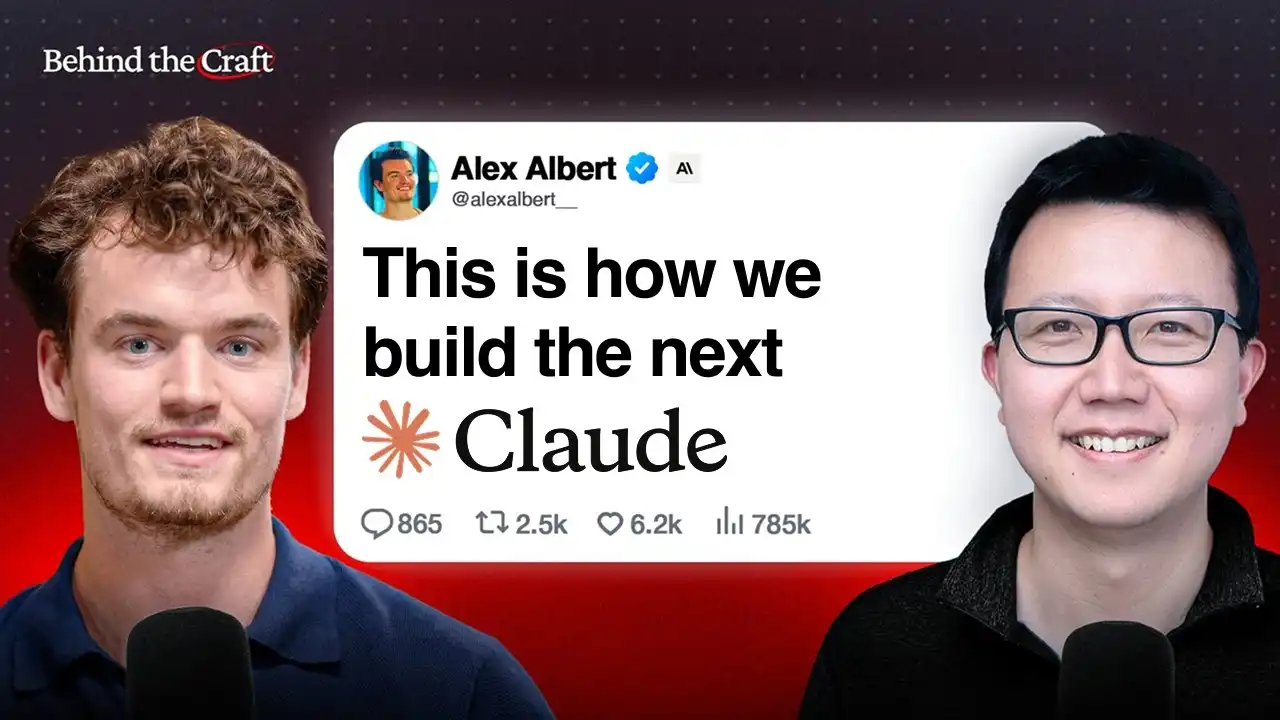
Interview with Anthropic's Product Manager: Claude 'Dreams' in the Background, We Study Its Consciousness Formation Like Raising a Child

**Title**: Anthropic Product Manager Interview: Claude "Dreams" in the Background, We Study Its Consciousness Formation Like Raising a Child **Summary**: In this interview, Anthropic Research Product Manager Alex Albert discusses the development of the next-generation Claude model. He explains that Anthropic treats each new model as a product, defining its intended capabilities and desired "personality" from the start. The development process is likened to "raising" a model, where the final traits emerge during training. Key focus areas include integrating user feedback into training, prioritizing key capabilities like coding and knowledge work, and refining Claude's interactive personality. Albert highlights the importance of Claude's character as models evolve into autonomous agents making unsupervised decisions. He details features like "adaptive thinking," which lets Claude decide when to reason deeply, and a "dreaming" process where the agent reviews and consolidates its memories offline, akin to human memory reconsolidation. The interview also covers how AI accelerates product development, shifting bottlenecks from building to strategic coordination. Albert describes using Claude as a brainstorming partner and research tool internally. While Anthropic has researchers exploring questions of AI consciousness, the company has no official stance on whether Claude is conscious. The focus remains on ensuring Claude is trustworthy and aligned as it takes on more complex, long-term tasks.

marsbit47m ago

Interview with Anthropic's Product Manager: Claude 'Dreams' in the Background, We Study Its Consciousness Formation Like Raising a Child

marsbit47m ago

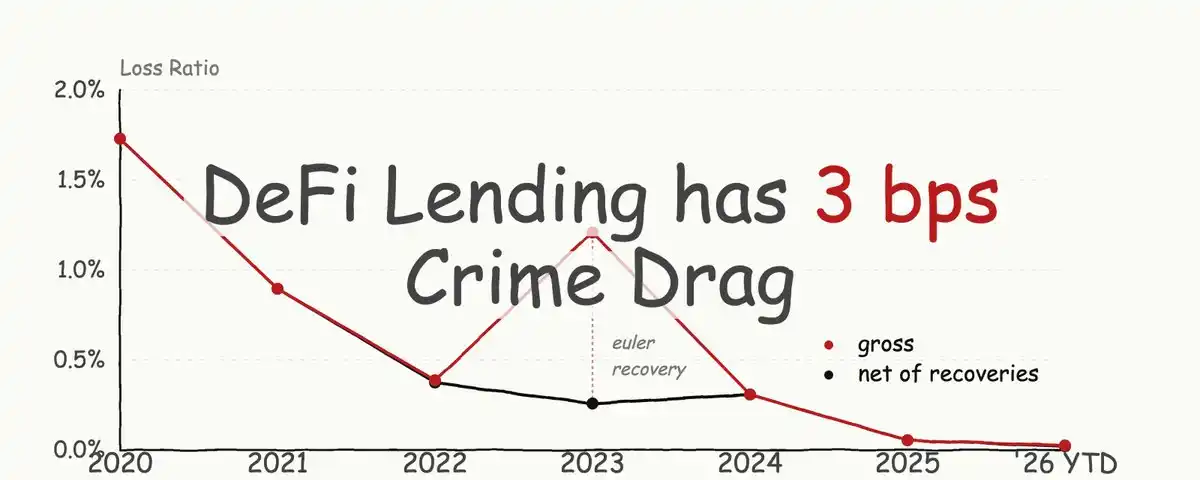
Annual Loss Rate Only 0.03%: Data Disassembles the Real Risk of DeFi Lending

DeFi lending's real-world annual loss rate from hacks and exploits is approximately 0.03% of the Total Value Locked (TVL), excluding cross-chain bridge incidents. This analysis, based on data from DeFi Llama, shows that while lending protocols are frequent targets due to their concentrated assets, the actual financial impact relative to the sector's massive scale is minimal. The overall DeFi hack total of $77.51B is heavily skewed by cross-chain bridge breaches. Removing those, losses drop to $45.18B, with lending and AMM protocols being the most affected non-bridge categories. Risk has significantly improved as the ecosystem has matured. For the year leading to May 2026, net losses in EVM and Solana lending protocols were $30.1 million against an average daily TVL of $99.6 billion, resulting in the 0.03% loss rate. Notably, the industry's asset recovery capability, exemplified by the full recovery and surplus from the Euler Finance hack, mitigates net losses, with a ~20% recovery rate for non-bridge lending incidents. Attack scale follows a log-normal distribution, meaning most incidents are small, and catastrophic losses are rare. This demonstrates that diversification across protocols is an effective risk mitigation strategy. The data indicates that DeFi lending has evolved into a measurable, compartmentalized, and relatively low-risk sector within the broader digital asset landscape.

marsbit1h ago

Annual Loss Rate Only 0.03%: Data Disassembles the Real Risk of DeFi Lending

marsbit1h ago

Trading

Spot
Futures

Hot Articles

How to Buy T

Welcome to HTX.com! We've made purchasing Threshold Network Token (T) simple and convenient. Follow our step-by-step guide to embark on your crypto journey.Step 1: Create Your HTX AccountUse your email or phone number to sign up for a free account on HTX. Experience a hassle-free registration journey and unlock all features.Get My AccountStep 2: Go to Buy Crypto and Choose Your Payment MethodCredit/Debit Card: Use your Visa or Mastercard to buy Threshold Network Token (T) instantly.Balance: Use funds from your HTX account balance to trade seamlessly.Third Parties: We've added popular payment methods such as Google Pay and Apple Pay to enhance convenience.P2P: Trade directly with other users on HTX.Over-the-Counter (OTC): We offer tailor-made services and competitive exchange rates for traders.Step 3: Store Your Threshold Network Token (T)After purchasing your Threshold Network Token (T), store it in your HTX account. Alternatively, you can send it elsewhere via blockchain transfer or use it to trade other cryptocurrencies.Step 4: Trade Threshold Network Token (T)Easily trade Threshold Network Token (T) on HTX's spot market. Simply access your account, select your trading pair, execute your trades, and monitor in real-time. We offer a user-friendly experience for both beginners and seasoned traders.

11.5k Total ViewsPublished 2024.03.29Updated 2025.03.21

How to Buy T

Discussions

Welcome to the HTX Community. Here, you can stay informed about the latest platform developments and gain access to professional market insights. Users' opinions on the price of T (T) are presented below.

活动图片