Топ-8 самых кринжовых пампов в истории криптоиндустрии

cryptonews.ruPublished on 2021-12-22Last updated on 2025-04-22

В мире криптовалют каждый день появляются новости о пампах, стремительном взлете курса криптовалюты, который носит искусственный характер. Многие успевают озолотиться на «накачке». При этом не всегда такие пампы выглядят благопристойно. Некоторые из них — откровенно кринжовые

Редакция BeInCrypto собрала в одном обзоре самые неоднозначные пампы криптовалют. Рассказываем, какие эпизоды искусственной накачки курса монет криптаны считают отборным кринжом.


1. LUCE: памп на фоне новостей о смерти Папы Римского

LUCE — мемкоин, вдохновленный маскотом Ватикана для Святого года 2025. Его запустили на Pump.fun. 21 апреля 2025 года за пару часов капитализация проекта выросла до $53 миллионов. Проблема в том, что токен взлетел одновременно с новостью о смерти Папы Франциска. Люди шутили и делали ставки на мем, связанный с религией и смертью. Это выглядело особенно неуместно и оскорбительно.
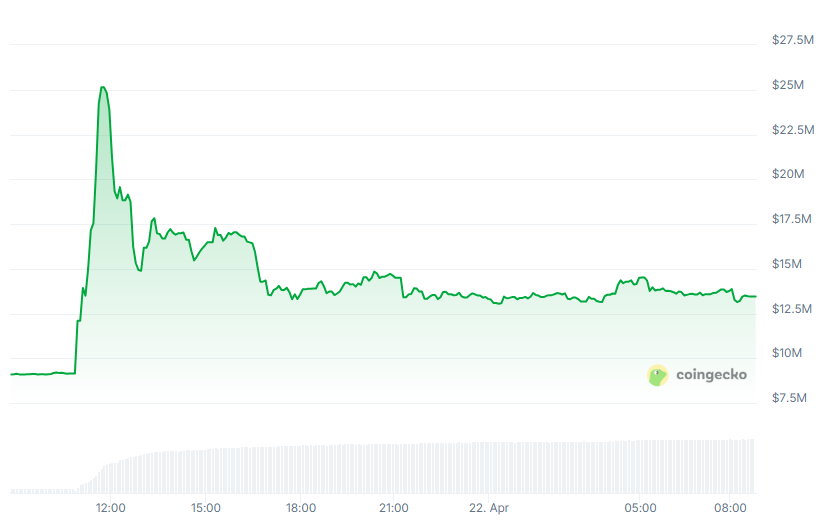
Памп LUCE. График: CoinGecko

2. $HAWK: скандал вокруг Хейли Уэлч

Хейли Уэлч — девушка из мема «Hawk Tuah Girl». Она выпустила токен $HAWK на блокчейне Solana. На фоне запуска криптовалюты в декабре 2024 ее капитализация почти достигла $500 миллионов. Потом токен упал до $25 миллионов, а затем совсем соскамился. Пользователи обвинили создателей в схеме памп и дамп. Кринж — в том, что миллионы долларов залили в монету из-за одного рандомного мема с девушкой, плюющейся в микрофон. Если вы не в курсе, о чем речь, вот видео.


3. $LIBRA: аргентинский криптоскандал

$LIBRA — токен, связанный с проектом Viva La Libertad и президентом Аргентины Хавьером Милеем. Политик, по его словам, якобы из доброты душевной поддержал проект, за что столкнулся с угрозой импичмента. В феврале 2025 токен резко подорожал. Затем произошло падение. Из страны вывели $100 миллионов. Организаторов обвинили в мошенничестве. Один из них оказался в международном розыске. Кринж — государственная идеология превратилась в хайповую схему по выводу средств.
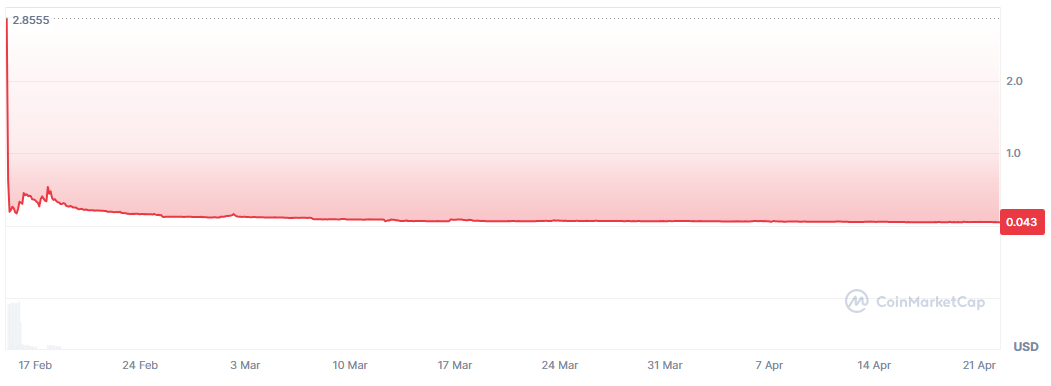
График LIBRA. Источник: CoinGecko

4. MistaFuccYou: мемкоин на фоне трагедии

В феврале 2025 Арнольд Роберт Харо (MistaFuccYou) покончил с собой в прямом эфире из-за финансовых потерь на крипте. Он призвал создать мемкоин в его честь. Так и сделали. Токен вырос до $2,1 миллиона. Потом упал на 96%. Кринж — в циничной попытке заработать на самоубийстве. Некоторые реально инвестировали, как будто это была шутка.

Завещание MistaFuccYou

5. $QUANT: 13-летний стример и памп на $85 миллионов

13-летний школьник запустил $QUANT на Pump.fun. Собрал $30 тысяч и пропал. Сообщество не разозлилось, а решило отомстить. Оно «отпампило» токен до капитализации в $85 миллионов. Кринж — в том, что криптосообщество сделало школьника миллионером ради мемов и иронии.


6. $SHITCOIN: трейдер, запертый в туалете и $50 миллионов

Разработчик $SHITCOIN пообещал не выходить из туалета, пока его токен не вырастет до $50 миллионов. Все это время он стримил и люди реально покупали токен. Капитализация почти достигла цели. Кринж — в полном отказе от здравого смысла и достоинства. Мем стал важнее человека.

Кадр со стрима разработчика SHITCOIN


7. $TRUMP: памп и дамп мемкоина Дональда Трампа

17 января 2025 года Дональд Трамп запустил мемкоин $TRUMP на блокчейне Solana. Цена стартовала с $7–8, достигла пика в $75 уже 19 января, а затем упала до $38 к 21 января. Сейчас монета торгуется по $8. Кринж — в том, что президент США использовал свою политическую позицию для продвижения высокорискованного актива. Про потери инвесторов на фоне дампа — промолчим.


8. $MELANIA: мемкоин первой леди США

19 января 2025 года Мелания Трамп выпустила свой мемкоин $MELANIA, спустя два дня после релиза монеты супруга. Токен быстро достиг капитализации в $1,6 миллиарда, перетянув часть ликвидности с TRUMP. Однако вскоре его стоимость резко упала. Кринж — в том, что первая леди США, следом за мужем, использовала свою известность для продвижения сомнительного финансового инструмента. Как и в случае с TRUMP, инвесторы MELANIA столкнлись с крупными потерями на фоне последующего дампа.

Читайте также: За запуском MELANIA и LIBRA стоит одна и та же команда мошенников, выяснили эксперты

Related Reads

A Company Once on the Brink of Bankruptcy Just Surpassed Bitcoin in Market Cap

On June 22nd, driven by rising stock prices, SK Hynix’s market capitalization reached $1.35 trillion, surpassing Bitcoin's total market cap of approximately $1.29 trillion. This temporarily made it South Korea's highest-valued company. The core driver of this surge is HBM (High Bandwidth Memory), for which SK Hynix is the primary supplier to NVIDIA, holding over 60% market share. AI's demand for high memory bandwidth has translated into immense profitability, with SK Hynix reporting a 72% operating profit margin in Q1. The company's success follows a 13-year bet on HBM technology, beginning in 2009. It nearly failed after the 2001 dot-com bubble, was acquired by SK Group in 2012, and was subsequently recapitalized to continue its long-term HBM development. The article contrasts this with the Crypto AI narrative. Capital currently favors AI infrastructure players like SK Hynix due to "real orders, physical barriers, and quantifiable profit margins." In comparison, Crypto AI projects, promising decentralized compute and data markets, remain largely conceptual with limited tangible progress. Examples include Bittensor, whose core mechanisms are still under development, and Bitcoin miners transitioning to AI, who face significant funding gaps and execution challenges. The piece cites analysis suggesting the AI sector has absorbed nearly all new market liquidity since 2022, leaving little for crypto. It concludes that the current AI infrastructure红利 is captured by entities with proven technical barriers and supply capabilities, while crypto networks still need to define their concrete role in the value chain.

链捕手5m ago

A Company Once on the Brink of Bankruptcy Just Surpassed Bitcoin in Market Cap

链捕手5m ago

Bittensor Moves Towards Ultimate Decentralization: The Critical 18 Months for the TAO Ecosystem is Here?

Bittensor, a decentralized AI protocol, is accelerating its transition to full decentralization over the next 18 months, as outlined in a recent post by co-founder Const. The project currently operates in a "semi-decentralized" state: ownership and network participation are open and permissionless, with TAO distribution based on competitive contribution. However, protocol upgrades and governance have remained under core team control to enable rapid iteration in the fast-evolving AI sector. This strategic shift comes as the ecosystem matures, boasting 128 subnets and a large community. Const argues that continued centralization now poses risks, including single points of failure and regulatory scrutiny. The upcoming decentralization roadmap includes optimizing validator competition, opening liquidity pools, introducing governance rights for Alpha holders, and refining economic models. The move could fundamentally reshape TAO's value proposition, adding governance premiums to its existing valuation based on AI narrative and scarcity. It also signals a potential maturation of the AI crypto sector, where competition may shift from hype to sustainable protocol design and real economic activity. Bittensor positions itself not just as another AI token, but as foundational infrastructure aiming to decentralize intelligence production—analogous to Bitcoin's role in decentralizing money—with the goal of creating a resilient "Millennium Intelligence Federation."

marsbit17m ago

Bittensor Moves Towards Ultimate Decentralization: The Critical 18 Months for the TAO Ecosystem is Here?

marsbit17m ago

Japan's AI Dark Horse Emerges: How a 7B Small Model Challenges Fable and Mythos?

In June 2026, Sakana AI's new model Fugu caused a stir in the AI community. Its Fugu Ultra variant achieved scores of 73.7 on SWE-Bench Pro and 82.1 on TerminalBench 2.1, surpassing GPT-5.5 and Claude Opus 4.8, and was claimed to be comparable to export-restricted models like Fable 5 and Mythos Preview. Remarkably, the core of this high-performance system is not a massive model, but a small 7B-parameter RL Conductor model. Fugu operates as a multi-agent orchestrator: the 7B model acts as a "foreman," dynamically analyzing user tasks and delegating subtasks to a pool of top-tier global models (e.g., GPT-5, Gemini 3.1 Pro). It then synthesizes and verifies their outputs. This architecture represents a paradigm shift from monolithic models to an expert-team approach. It enhances performance in complex, multi-step engineering tasks like code review and security testing by enabling cross-validation from specialized models, improving long-session stability and token efficiency. However, Fugu's strengths come with trade-offs: it faces inherent latency due to multiple API calls, relies heavily on underlying US model APIs (creating dependency risks), and its benchmark comparisons with Fable/Mythos are based on reported scores, not head-to-head testing. For Japan's AI ecosystem, which lacks the massive compute and data resources of the US or China, Fugu exemplifies an "asymmetric breakthrough" strategy. Instead of competing directly in parameter scale, it focuses on intelligent orchestration of existing global models, offering a degree of AI sovereignty and resilience. While a significant system-level innovation, its ultimate capability is still bounded by the underlying models it coordinates.

marsbit17m ago

Japan's AI Dark Horse Emerges: How a 7B Small Model Challenges Fable and Mythos?

marsbit17m ago

Trading

Spot
Futures
活动图片