Джон Боллинджер: биткоин формирует классическое дно у отметки $80 000

cryptonews.ruPublished on 2024-07-11Last updated on 2025-04-11

Не спешите паниковать из-за текущей коррекции биткоина. Знаменитый технический аналитик Джон Боллинджер (John Bollinger) указал на формирование характерного паттерна, который может предвещать разворот рынка в ближайшем будущем.

10 апреля создатель популярнейшего индикатора волатильности Bollinger Bands опубликовал в соцсети X сообщение, которое должно порадовать криптоэнтузиастов, переживающих из-за недавнего снижения цены биткоина до $82 272.

Что показывает индикатор %b

Анализируя недельные графики, Боллинджер обратил внимание на свой проприетарный индикатор %b, который часто предоставляет важные подсказки о развороте рыночного тренда.
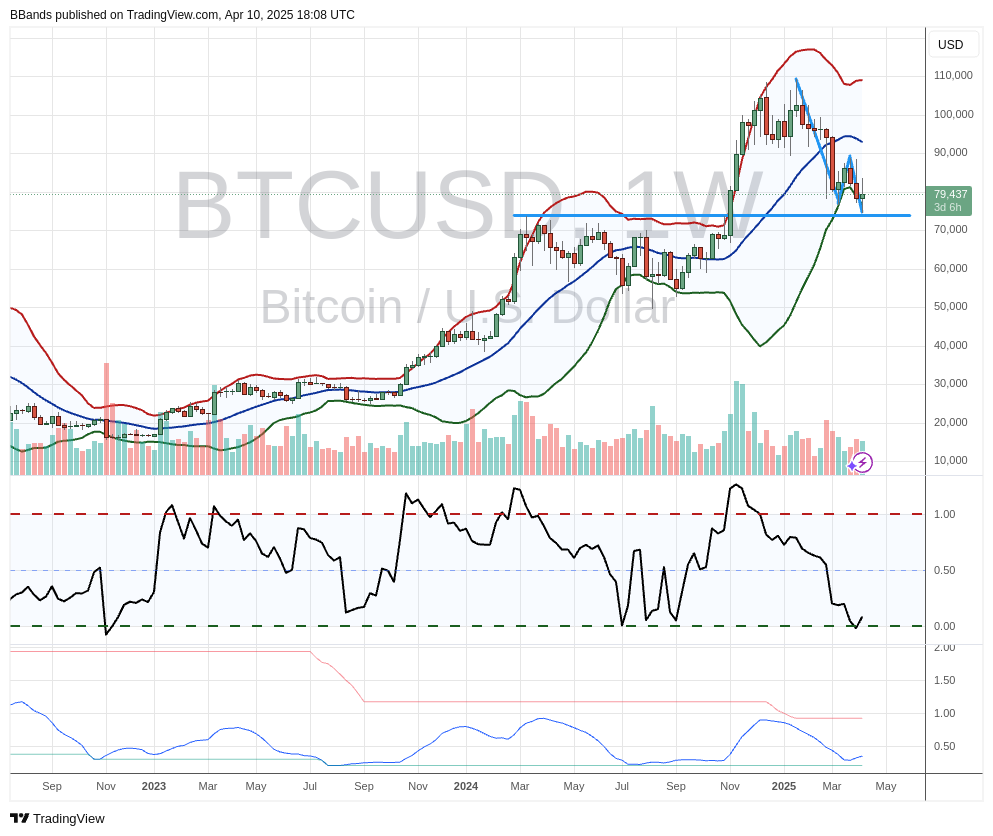
1-недельный график BTC/USD. Аналитика: Джон Боллинджер

Индикатор измеряет цену закрытия актива относительно положения полос Боллинджера, используя стандартное отклонение вокруг 20-периодной простой скользящей средней (SMA).

Одним из самых интересных сигналов этого индикатора является формирование «W-образного» дна, когда за первым минимумом ниже нуля следует повторный тест с более высоким минимумом. Похоже, именно такой сценарий сейчас разворачивается для пары BTC/USD.

«Классическое W-образное дно по Bollinger Bands формируется в BTCUSD. Пока еще нужно подтверждение», — написал Боллинджер своим подписчикам в X.

На обоих временных интервалах — недельном и дневном — полосы Боллинджера показывают, что смена тренда еще не произошла.

Корреляция с фондовым рынком

Обращаясь к фондовому рынку, с которым биткоин демонстрирует все более тесную корреляцию, Джуриен Тиммер (Jurrien Timmer), директор по глобальному макроанализу в Fidelity Investments, пришел к схожим выводам.

«Вернемся к полосам Боллинджера: мы перешли от 2 стандартных отклонений выше тренда к движению вдоль тренда, а теперь почти к 2 стандартным отклонениям ниже тренда», — отметил он 9 апреля, комментируя ситуацию с индексом S&P 500. «Опять же, перепроданность, но не на историческом экстремуме».
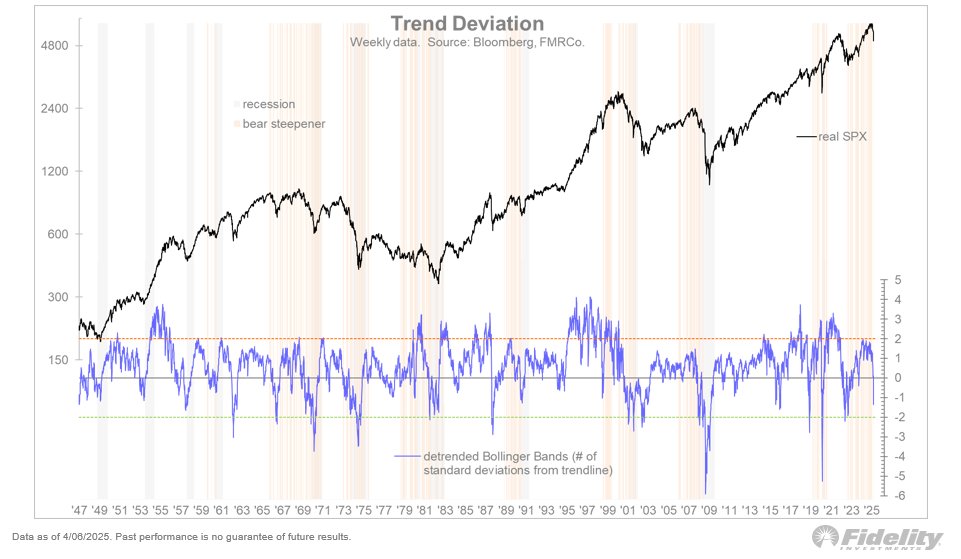
График S&P 500. Аналитика: Джуриен Тиммер

Прогнозы дна биткоина

Сетевой экономист Тимоти Петерсон (Timothy Peterson), чей индикатор Lowest Price Forward ранее давал 95% вероятность того, что уровень $69 000 останется неприкосновенным в качестве поддержки, теперь считает, что биткоин развернется только после того, как фондовый рынок найдет свое дно.

«Биткоин опередил NASDAQ в этом снижении. Поскольку этот актив воспринимается как находящийся на вершине пирамиды риска, я ожидаю, что сначала вырастет NASDAQ, а затем биткоин. Просто обратите на это внимание», — сообщил он на этой неделе. «Но я думаю, что NASDAQ предстоит упасть еще на 10%».
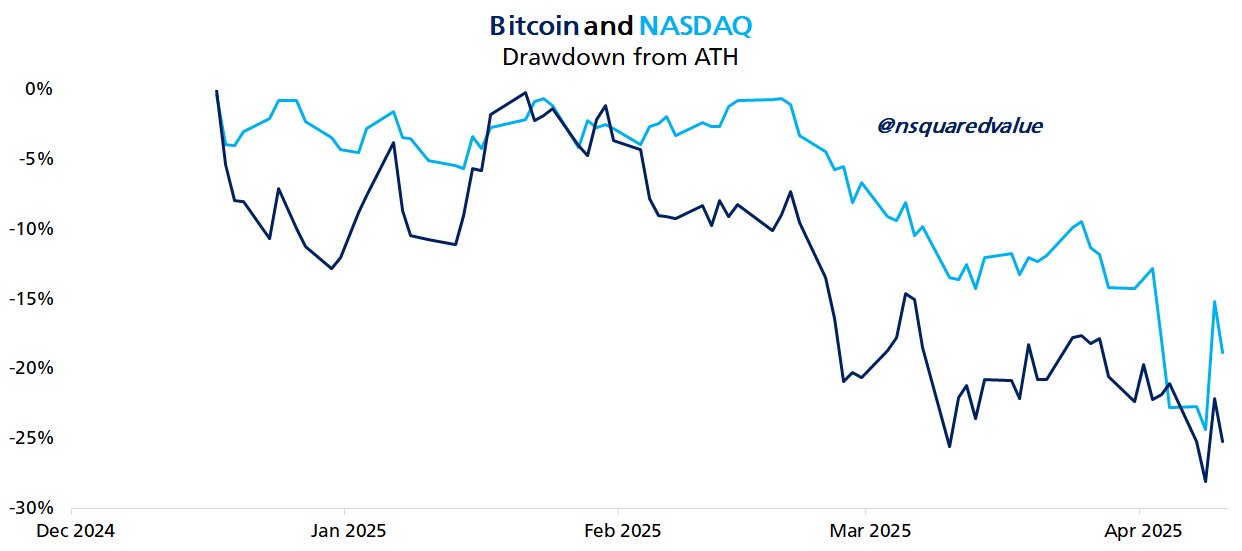
Сравнение графиков биткоина и NASDAQ. Источник: Тимоти Петерсон

Хотя мы наблюдаем признаки формирования технического дна для биткоина, окончательное подтверждение еще не получено. Тесная корреляция с фондовым рынком указывает на то, что для полноценного восстановления криптовалюты может потребоваться стабилизация традиционных финансовых рынков.

Related Reads

Tiger Research: Three Strategies for Financial Institutions to Keep Up with the Tokenization Wave

Tiger Research's in-depth report analyzes the strategic choices for financial institutions entering the rapidly growing Real-World Asset (RWA) tokenization market. With the market projected to be worth $25-36 billion and a lack of complete regulatory frameworks in many jurisdictions, institutions face three options: waiting for domestic legislation, using regulatory sandboxes for limited experiments, or moving first into established overseas markets to gain a competitive edge. Tokenization is not magic; it requires meticulous preparation. Before entry, institutions must strategically plan across six core areas: choosing a jurisdiction, obtaining necessary licenses, defining the asset type, targeting the appropriate investor base, selecting settlement currencies, and designing operational requirements like custody and governance. The report outlines two main operational paths. The first is a direct jurisdictional path, establishing a legal presence in mature markets like Hong Kong, Singapore, or the U.S., often leveraging local licensed platforms to accelerate market entry. The second is a chain-native path, using platforms like Ondo or Plume that are built with regulatory compliance embedded, allowing for faster, more flexible market access without being tied to a specific jurisdiction. Ultimately, the report advises against waiting for perfect regulation. The preparation process can take 6-12 months and requires thorough legal review. Using the example of a mid-sized securities firm, it details steps from evaluating existing entities to final execution. The core message is that accumulating real-world operational experience is paramount, as the market is moving ahead and will not wait for latecomers.

Foresight News1h ago

Tiger Research: Three Strategies for Financial Institutions to Keep Up with the Tokenization Wave

Foresight News1h ago

Unitree's IPO Frenzy: The Real Mystery is How It Will Spend the 42 Billion Raised

Unitree, a Chinese robotics company, is set for a public listing after its IPO registration was approved by regulators. The company, which started with quadruped robots and has expanded into humanoids, plans to raise approximately 4.2 billion yuan through its offering. The article traces Unitree's rapid growth from its founding in 2016 to its current status. It highlights key milestones like the 2021 CCTV Spring Festival Gala performance, the 2023 launch of its affordable Go2 robot dog and the H1 humanoid robot, and a series of subsequent product launches. By 2025, the company reported revenue of 1.71 billion yuan, profitability, and sales exceeding 5,500 humanoid robots. As the first publicly-listed humanoid robot company on China's STAR Market, Unitree's main challenges are sustaining growth and deploying its newly raised capital effectively. The humanoid robot sector in China is crowded, with over 140 companies. Competitors include UBTech (focusing on industrial and consumer markets), Fourier, and international players like Tesla Optimus and 1X NEO. The article outlines three critical challenges for Unitree: establishing a strong second product line beyond its quadruped robots, maintaining its price advantage while ensuring quality, and successfully advancing its embodied AI capabilities through partnerships like the one with NVIDIA for the H2 Plus platform. Unitree's likely strategy involves a "developer tools + industry benchmarks" approach: using low-cost models like the R1 and G1 to build developer adoption and volume, leveraging high-end platforms for AI training, and securing pilot projects in sectors like logistics and manufacturing to build case studies. The company's future success hinges on converting its current momentum in shipments and pilot programs into sustainable, large-scale commercial contracts as the broader market evolves.

marsbit2h ago

Unitree's IPO Frenzy: The Real Mystery is How It Will Spend the 42 Billion Raised

marsbit2h ago

Trading

Spot
活动图片