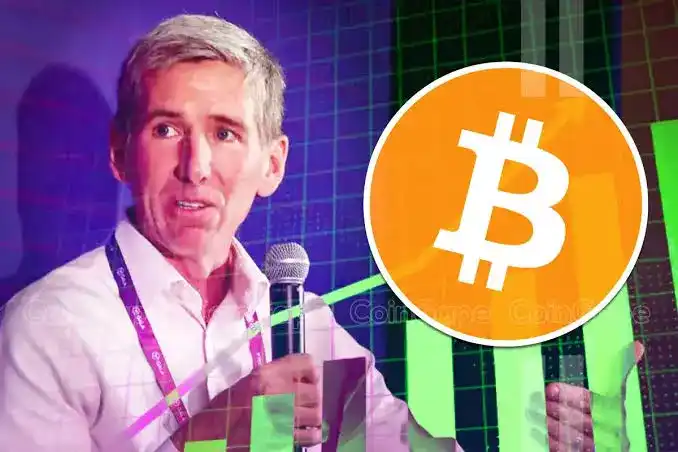
Криптокомпания Ripple покупает прайм-брокера Hidden Road

investing.ruPublished on 2025-04-09Last updated on 2025-04-09

Генеральный директор Ripple Брэд Гарлингхаус (Brad Garlinghouse) отметил, что рынок США становится все более открытым для криптоактивов благодаря смягчению регулирующих ограничений. По его словам, приобретение Hidden Road направлено на поддержание институционального принятия цифровых валют и создание надежной инфраструктуры, которая соединит традиционные финансы и децентрализованные технологии.

Гарлингхаус заявил, что это укрепит позиции Ripple на крипторынке. Во-первых, Hidden Road получит доступ к значительным финансовым ресурсам Ripple, что поможет компании стать крупнейшим небанковским прайм-брокером в мире. Во-вторых, стейблкоин Ripple USD (RLUSD) будет интегрирован в продукты Hidden Road как обеспечение, что повысит его полезность и обеспечит связь между традиционными и цифровыми рынками.

Hidden Road ежегодно совершает клиринговые операции на сумму около $3 трлн, работает с более чем 300 ведущими институциональными клиентами, а также обеспечивает корректное исполнение и учет сделок в области валютного рынка, цифровых активов, деривативов и прочих финансовых инструментов.

В рамках сделки Hidden Road перенесет свои постторговые операции на блокчейн XRP Ledger (XRPL), что снизит издержки и повысит эффективность. Ripple, в свою очередь, сможет оптимизировать решения для трансграничных платежей и предложить клиентам Hidden Road услуги хранения цифровых активов банковского уровня.

Ранее Брэд Гарлингхаус заявил, что технология блокчейна и криптовалюты способны значительно улучшить международные платежи и мировой финансовый рынок.


Читайте оригинальную статью на сайте Bits.media

Related Reads

Coldcard Theft Reflection: Source Code Visibility Does Not Equal Security

The article examines the open-source vs. closed-source debate in crypto, prompted by a theft of over $100M in Bitcoin from Coldcard hardware wallets. It clarifies key terminology: true "Free and Open Source Software" (FOSS) grants four essential freedoms (use, study, share, modify), while "source available" code, like Coldcard's firmware, may have usage restrictions. The piece argues that visible source code alone does not guarantee security; actual safety depends on the economic incentives for thorough, ongoing review by skilled individuals. Using Bitcoin Core as a model, the article describes a successful, transparent open-source development culture built on public review and consensus. It contrasts this with the Coldcard case, where a critical bug in a lightly-reviewed, source-available library went undetected for years, highlighting a "tragedy of the commons" scenario where assumed but absent scrutiny creates vulnerability. The economics of licensing are crucial: restrictive licenses can limit the pool of motivated commercial reviewers. Finally, the article explores AI's impact. It cites the Bitcoin Red Team's use of AI to rapidly audit codebases and find vulnerabilities at scale, demonstrating a powerful new tool for security. However, AI also floods projects with low-quality code, straining maintainers. The piece concludes that in high-stakes crypto, only well-audited projects—whether open or closed-source—can withstand evolving threats, with AI both challenging and aiding security practices.

marsbit3m ago

Coldcard Theft Reflection: Source Code Visibility Does Not Equal Security

marsbit3m ago

Mysterious "Ox Alpha" Large Model Goes Viral with Limited-Time Free Access

A mysterious anonymous AI model named "Ox Alpha," nicknamed "Cow is Coming" by Chinese netizens, has appeared on OpenRouter, sparking widespread speculation. The model offers a 1 million token context, supports text, image, and video inputs, can call tools, and is currently free. Its standout feature is strong coding ability. Initial tests on the DeepSWE benchmark, which evaluates real-world software engineering tasks, showed an 80% pass rate on a subset of tasks, reportedly nearing top-tier code models. However, follow-up tests yielded a 63% score, with variations attributed to different task sets and configurations. The model's true developer is a major topic of debate. The prevailing theory points to Zhipu AI's unreleased GLM-5.3 Flash or its multimodal variant. Evidence cited includes identical visual token consumption patterns with GLM-5V-Turbo for videos, a consistent offset in text token counts compared to GLM-5.3, and similar behavioral traits like refusing audio processing. Zhipu has a precedent of anonymous testing. Simultaneously, another anonymous model, "korrine," appeared on Code Arena, with guesses ranging from Moonshot's Kimi K3.1 to models from Qwen or MiMo, adding to the industry's guessing game. This trend of anonymous "undercover" testing allows for unbiased performance evaluation in platforms like Arena and provides real-world, high-pressure testing through tools like OpenRouter before official release. It also serves as an effective marketing tactic, prolonging discussion through suspense. If Ox Alpha is indeed a "Flash" model, its performance raises expectations for the full-scale version's potential.

marsbit4h ago

Mysterious "Ox Alpha" Large Model Goes Viral with Limited-Time Free Access

marsbit4h ago

Trading

Spot
活动图片