Разблокировка 99,3M PI: что ждёт цену токена в ближайшее время?

cryptonews.ruPublished on 2023-10-25Last updated on 2025-03-25

PI – нативный токен Pi Network – летит в пропасть уже месяц, обвалившись более чем на 40%. Это полная неожиданность для тех, кто ждал роста после запуска мейннета.

Рынок крипты вроде как пытается ожить, но Pi Network с его мобильным майнингом пока буксует. Уникальная фишка с добычей монет прямо на смартфоне пока не превращается в устойчивую рыночную ценность.

Запуск основной сети должен был стать переломным моментом для PI, но вместо этого токен рухнул. Сначала он держался на $2,99 в феврале 2025, но к 25 марта уже скатился до $0,9287 – падение на 68,9%.

Это настоящий удар по энтузиастам проекта, которые верили в его доступность и растущую аудиторию. Эксперты винят давление со стороны растущего предложения и мутные перспективы листинга на топовых биржах.

Котировки актива уже трещат по швам, а тут ещё и надвигается гигантский разлок токенов. В течение следующих 30 дней на рынок вывалится 99,3 миллиона PI на сумму $91M. В день будет поступать в оборот около 3 миллионов токенов, а 3 апреля 2025 произойдёт пиковая разблокировка6,8 миллиона PI за раз.

Такой объём предложения может утопить цену ещё глубже. А если учесть, что в апреле, мае и июне разблокируются ещё 115,57M, 182M и 222M токенов соответственно, то перспектива ближайших месяцев выглядит мрачно.

На данный момент PI торгуется по $0,9287, балансируя на критических уровнях.

  • Ближайшая поддержка: $0,70
  • Сопротивление: $1,00

Полосы Боллинджера намекают на медвежий тренд – цена прижимается к нижней границе.

RSI на 4-часовом графике – 35,87, что близко к зоне перепроданности, но пока не говорит о развороте.
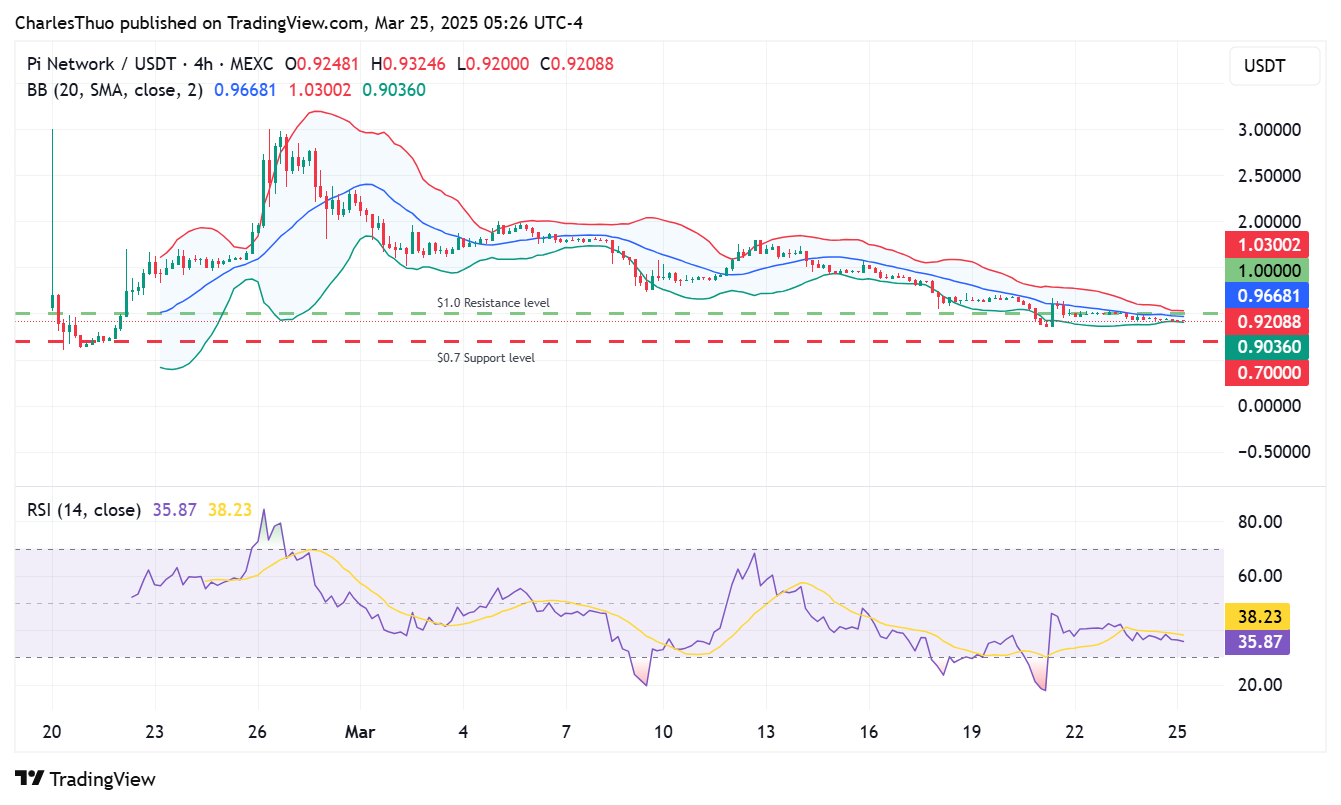
MACD и скользящие средние тоже указывают на продолжение падения. Если PI пробьёт $0,85, он протестирует $0,70. А если вдруг выберется выше $1,00, то может рвануть к $1,34.

На фоне всех этих проблем разработчики не сидят сложа руки. Недавно они внедрили поддержку кошелька Telegram, где можно отслеживать баланс PI (но без полноценного функционала).

Кроме того, они продлили льготный период миграции PiNet до 28 мая 2025. Это даёт разработчикам больше времени на защиту доменов без аукционов.

Хотя пока эти шаги не приносят мгновенного эффекта, они показывают, что команда продолжает работу над экосистемой. Главное – хватит ли у проекта запаса прочности, чтобы пережить этот шторм?

Related Reads

The Strategy That Would Never Sell Bitcoin Opened a Permanent Sales Channel

MicroStrategy, a company long known for its "never sell Bitcoin" mantra, announced a "Digital Credit Capital Framework" allowing it to sell up to $1.25 billion worth of Bitcoin. Surprisingly, its stock (MSTR) rose nearly 7% pre-market. This shift, coming just a month after a small, "ad-hoc" sale of 32 BTC for dividends, transitions from a temporary action to a formal, institutional tool. The framework outlines four clear purposes for potential sales: bolstering USD reserves, paying preferred stock dividends/interest, and repurchasing its own preferred and common stock. The key driver for this change is the immense financial pressure from MicroStrategy's complex capital structure, specifically its massive $8.5 billion perpetual preferred stock (STRC). STRC features a variable interest rate that has been reset upward eight times in a year to 12% in an attempt to stabilize its price. However, the stock has fallen over 25% below its face value. Combined with other preferred stocks and convertible notes, MicroStrategy's total annual fixed obligations now stand at $1.76 billion, equating to a daily burn of roughly $4.8 million. While its $2.55 billion in USD reserves and the new $1.25 billion BTC sales framework provide a two-year+ runway, a dangerous feedback loop exists. Falling Bitcoin prices would force the sale of more BTC to meet fixed obligations, potentially creating further sell-side pressure and lowering MSTR's asset valuation multiple. This, in turn, limits its ability to raise cash through stock issuance. The market's positive reaction likely stems from relief; the framework replaces fears of a forced, disorderly sell-off with a structured plan. However, it does not resolve the underlying high-cost capital structure, leaving the company's long-term health heavily dependent on Bitcoin's price performance.

marsbit10m ago

The Strategy That Would Never Sell Bitcoin Opened a Permanent Sales Channel

marsbit10m ago

OpenClaw and Cursor Just Invaded Phones! Agents Are Now in Your Pocket

AI Agents have officially arrived on mobile. In a landmark move, both OpenClaw and Cursor launched native mobile apps on the same day, fundamentally shifting how AI assistants are accessed and controlled. OpenClaw has released full-featured native apps for iOS and Android. Its "local-first" architecture, developed by the OpenClaw Foundation, keeps user data private by running the agent on a user's private Gateway. The mobile app now allows seamless remote control and approval of the agent's actions directly from a smartphone, with access to device capabilities like the camera, GPS, and contacts. Simultaneously, Cursor, the AI-powered coding tool, launched a public beta of its native iOS app. It enables developers to start and manage cloud-based AI coding agents from their phones. These agents can work asynchronously for extended periods—debugging, writing code, and creating pull requests—while developers are away from their computers. The app sends notifications for key decisions, allowing users to review and merge PRs from anywhere. Together, these releases signal a major shift: AI agents are no longer confined to desktop browsers or terminals. They are becoming persistent, autonomous assistants that work independently in the cloud, with humans transitioning from constant operators to mobile supervisors who approve key steps. The era of pocket-sized, on-demand AI is now here.

marsbit22m ago

OpenClaw and Cursor Just Invaded Phones! Agents Are Now in Your Pocket

marsbit22m ago

Trading

Spot
活动图片